See real examples of storm damage with our photo guide. Learn what does hail damage look like on roof, including granule loss, bruising, and gutter dents.

After a hailstorm rolls through Central Texas, the first question most homeowners ask is: what does hail damage look like on a roof? It's a fair question, and harder to answer than you'd think. Some signs are obvious from the ground. Others are nearly invisible unless you know exactly where to look and what patterns to watch for. Missing them can mean filing a claim too late or not realizing your roof's protective layers have already been compromised.
At Defend Roofing, our father-and-son team has inspected thousands of roofs across the Austin area after storms. Every assessment we perform includes 100+ photos documenting the exact condition of your roof, granule loss, soft spots, cracked shingles, dented flashing, all of it. We've seen what hail does to every type of roofing material common in this region, and we know how to separate real damage from normal wear.
This guide breaks down the specific visual signs of hail damage on shingles, metal, tile, and flat roofs, with photos and descriptions so you can start evaluating your own roof with confidence. We'll also cover what's commonly mistaken for hail damage and when it's time to call in a professional for a full inspection.
Hail damage rarely looks like the dramatic destruction most homeowners expect. After a storm, you walk outside, scan the yard for broken branches or dented gutters, and assume the roof is fine because nothing obviously fell off. That assumption costs homeowners thousands of dollars in deferred repairs every year, because the real signs are subtle, small, and located in spots you simply cannot see from the ground.
Hailstones between three-quarters of an inch and one inch in diameter create a specific type of damage that's nearly impossible to spot without getting onto the roof. Rather than cracking shingles outright, smaller stones knock granules loose from the asphalt surface and leave soft spots called bruises beneath the mat. Your shingles may look fully intact from twenty feet below while the protective layer underneath is already broken down.
A bruised shingle looks fine from the surface but has lost the structural integrity that keeps water from reaching the roof deck beneath it.
These granule losses also tend to scatter randomly across the shingle field rather than cluster in one obvious area, which makes the pattern much harder to recognize without hands-on experience. If you've wondered what does hail damage look like on a roof versus normal aging, that random, unpredictable impact pattern is one of the clearest distinctions a trained inspector will check for first.
Hail rarely falls straight down. In most Central Texas storms, wind drives hailstones at an angle, which means certain slopes take a far harder hit than others. South- and west-facing sections of your roof often absorb the most impact during a storm, while north-facing slopes may show almost no visible damage at all. This uneven pattern leads many homeowners to inspect one side, find nothing obvious, and conclude the roof came through clean.
Your roof's pitch also affects how impact force distributes across the surface. A shallow pitch takes the full force of a stone nearly head-on, while a steeper pitch deflects some energy sideways. Without examining each slope individually and knowing the specific signs to look for, it's easy to walk away from a storm inspection with a false sense of security.
Starting on the ground is always the right move. Before you climb anything, walk the perimeter of your home and look for secondary clues that confirm hail hit hard enough to cause damage. Dented gutters, cracked window screens, and dings on air conditioning units or metal vents are fast indicators that your roof likely absorbed similar punishment.
If your gutters show circular impact marks, there's a strong chance your shingles took the same kind of hits.
You can spot several important signs without leaving the ground. Scan the edges of the roof for lifted, cracked, or missing shingles visible along the fascia line, and look for granule buildup at the base of your downspouts. While a ground scan won't reveal the full picture of what hail damage looks like on a roof, it gives you enough early evidence to decide whether a professional inspection is warranted.
A few specific ground-level clues worth checking:
Climbing onto a wet or steep roof after a storm creates serious fall risk, especially if you're unfamiliar with the surface conditions. If the pitch exceeds a 4:12 slope or the surface is still damp, stay down. A professional inspector brings non-slip footwear, safety equipment, and a trained eye that catches damage patterns you'd walk right past. Getting a documented inspection also gives you the detailed photo record you'll need if you decide to file an insurance claim.
Different roofing materials show hail impact in completely different ways, so knowing what to look for on your specific roof type matters. Central Texas homes commonly use asphalt shingles, metal panels, clay tile, and flat membrane systems, and each tells a different story after a storm.
On asphalt shingles, the most consistent sign is granule loss in circular patterns scattered across the shingle face. These bare spots expose the darker asphalt mat beneath. You may also find soft bruised areas where the mat has fractured without the shingle splitting outright. This is exactly what hail damage looks like on a roof when smaller hailstones cause hidden structural harm beneath an otherwise intact-looking surface.
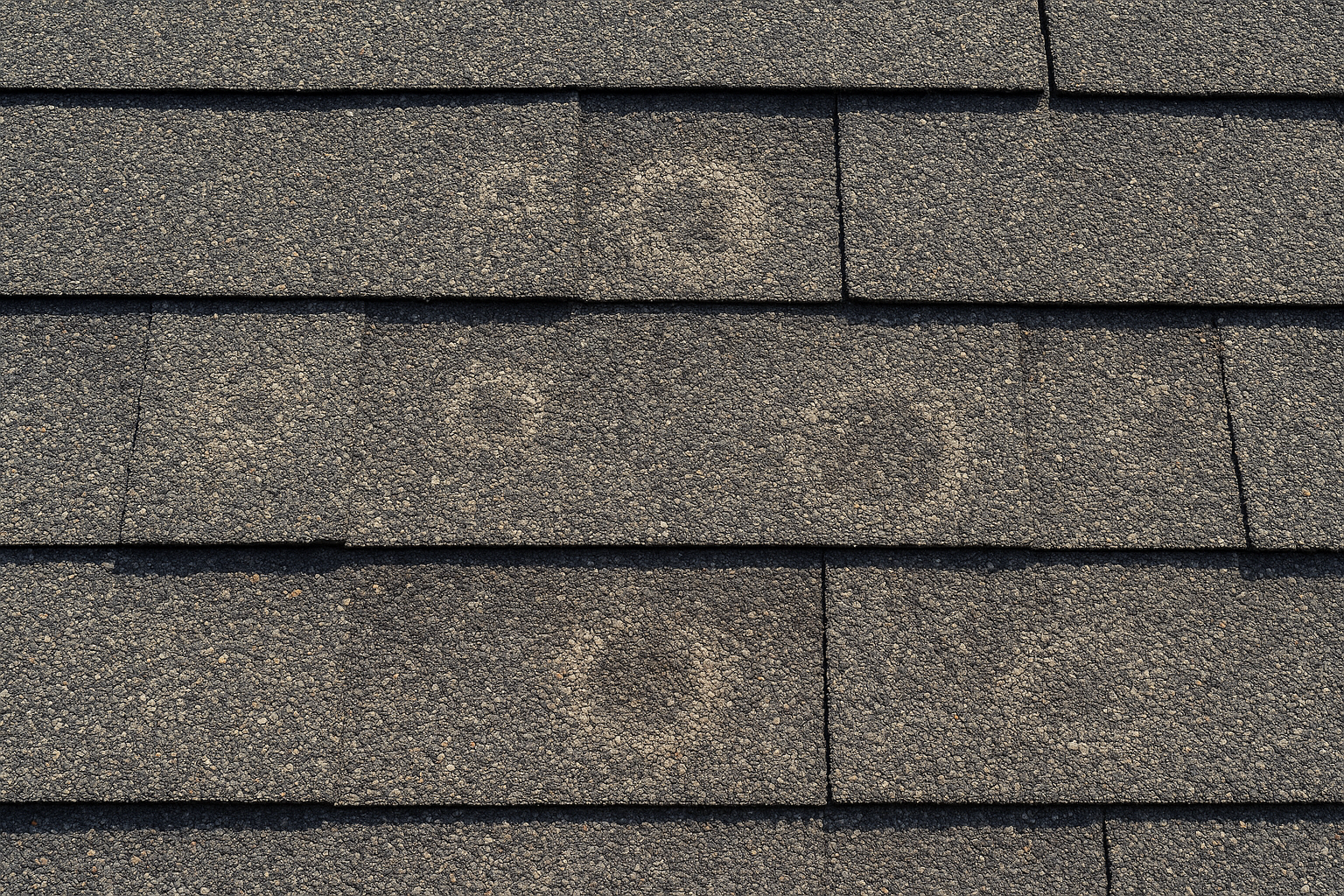
Bruising on asphalt shingles is nearly impossible to detect without pressing your thumb against the surface and feeling for softness beneath the granule layer.
Metal roofing shows visible circular dents across flat panel sections and seams, often with the paint coating cracked at each impact point. Both standing seam and corrugated styles develop consistent impact patterns tied to hailstone diameter and storm direction, which trained inspectors use to distinguish storm damage from installation wear.
Clay and concrete tiles crack or chip along their edges when hail strikes at an angle, and even small chips compromise your tile's ability to shed water properly. Flat membrane roofs develop punctures or surface tears that may not leak right away but allow moisture to penetrate the insulation layer below, making early detection especially important.
Knowing what hail damage looks like on a roof also means knowing what it does not look like. Several common roofing problems mimic hail impact closely enough to cause confusion, even for experienced homeowners. Misidentifying the cause of damage can lead you to file a claim that gets denied or skip a legitimate one entirely.
If you're uncertain whether what you're seeing is hail-related, a documented inspection with timestamped photos is the fastest way to settle the question.
Asphalt shingles sometimes develop blisters that pop and leave circular bare patches almost identical to hail impact points. These blisters form when moisture or volatile compounds get trapped during manufacturing and push through the granule surface over time. The key difference is pattern and location: blistering tends to cluster in areas with poor attic ventilation and spreads gradually, while hail impacts are random and tied directly to storm events on your records.

Granule loss from foot traffic during previous roof work leaves scrape marks and bare streaks rather than circular spots. Tree branches, acorns, and other falling debris also dent metal components and crack tile in ways that look storm-related but follow the path of overhanging limbs rather than a scattered impact pattern. Aged shingles losing granules from general weathering shed material uniformly from the shingle tabs rather than in the random, storm-directional clusters hail produces. Checking your local weather records for confirmed hail events is one of the simplest ways to separate coincidence from actual storm damage.
Once you've identified signs of damage, the order of your next steps matters more than most homeowners realize. Acting too quickly without documentation can cost you a legitimate insurance claim, while waiting too long gives insurers grounds to argue the damage predates the storm. The right sequence is straightforward: document first, then get a professional assessment, then contact your insurer.
Your photos are your claim. Before any contractor touches your roof, take dated, high-resolution photos of every damaged area you can safely observe from the ground, including gutters, vents, and window screens. If you understand what does hail damage look like on roof surfaces, you can capture the specific circular granule-loss patterns and soft spots that support your claim. A professional inspection adds 100+ timestamped photos that adjusters treat with far more credibility than homeowner snapshots alone.
The more visual evidence you gather before repairs begin, the stronger your position when an insurance adjuster reviews your claim.
Contact your insurance company within the timeframe your policy specifies, which is typically one year from the storm date in Texas. You'll need to provide a detailed scope of damage, which your roofing contractor can help prepare. Ask your contractor whether they offer adjuster coordination, where they attend the inspection alongside the insurance adjuster and walk through documented findings directly. This keeps the scope honest on both sides and reduces the chance that covered damage gets overlooked or minimized during the review process.

Hail damage is easy to miss because it hides in plain sight. Granule loss, soft spots, cracked tile edges, and dented metal panels all answer the question of what does hail damage look like on roof surfaces, and none of them are obvious from the ground. Normal aging, blistering, and debris impact can mimic the same signs, which is why pattern, timing, and storm records matter as much as the visual itself. Document what you find before any repairs start.
Call a roofer when your ground-level inspection turns up dented gutters, granule deposits at downspouts, or any impact marks on metal components. Waiting costs you time on your claim and lets hidden moisture work deeper into your roof deck. The Defend Roofing team provides a full documented inspection with 100+ photos, honest repair-or-replace guidance, and direct adjuster coordination if you decide to file an insurance claim. Get the full picture before the damage gets worse.