Comparing roof replacement near me options? See how family crews, big-box stores, franchises & directories stack up, plus a contractor checklist.
Typing "roof replacement near me" into Google gets you a wall of ads, five-star reviews that all sound the same, and no real way to tell who actually does honest work. In Central Texas, where hailstorms and summer heat wreck roofs on a regular cycle, that search usually means something is already leaking, missing shingles, or flagged by an insurance adjuster. You need a contractor fast, but picking the wrong one costs thousands and years of headaches.
This article gives you a straight answer: what separates a trustworthy local roofer from someone chasing a quick sale. You'll learn exactly what to check before signing anything, including licensing, warranty terms, and how a contractor documents damage for your insurance claim.
We cover the questions to ask during estimates, red flags that signal a fly-by-night crew, and how to compare quotes that look wildly different for the same job. As a family-run crew with three generations in the trade, we've seen homeowners get burned by rushed inspections and vague scope-based pricing. This guide walks you through choosing a contractor who documents everything, tells you the truth about repair versus replace, and treats your property like their own.
A local, family-owned roofer is a small crew rooted in your community, often run by the same family for multiple generations. These contractors handle everything themselves rather than farming out the work, and they typically know the specific weather patterns and building codes for your area better than anyone driving in from out of state. In Central Texas, that means understanding how hail size and wind direction actually damage a roof, not just reciting a generic checklist.
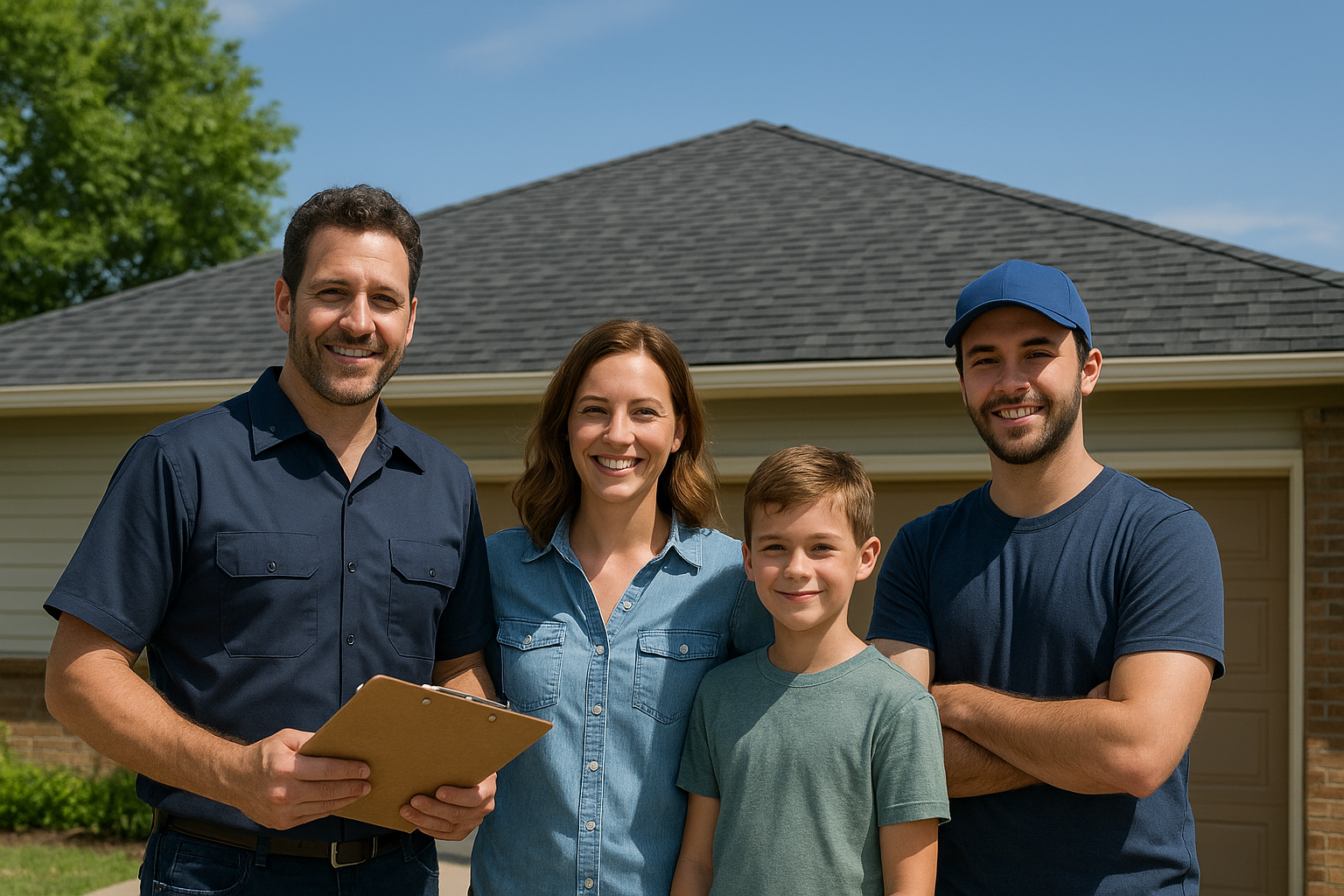
You call, and often the owner or a family member shows up for the on-site roof assessment instead of a rotating sales rep. They walk the roof, document damage with photos, and give you a written scope of work before asking for a signature. Because the crew is small, communication stays consistent from the first phone call through final cleanup. You're usually talking to the same person the whole way through, which matters when questions come up mid-project.
This option suits homeowners who want accountability and a single point of contact, especially if you're also dealing with an insurance claim. It works well for people in Cedar Park, Steiner Ranch, Avery Ranch, and similar communities who plan to stay in their home long term and care about workmanship warranties holding up over decades, not just the length of the project.
A family-owned roofer stakes its reputation on your neighborhood, not a national ad budget.
Expect a full roof replacement cost in the Austin area to run roughly $9,000 to $18,000 for an average-sized asphalt shingle roof, depending on pitch, materials, and how much decking needs replacing. Local crews tend to price by scope rather than a flat per-square rate, so ask for an itemized quote. Watch for contractors who skip a written inspection report or push you to sign before showing photo documentation. A legitimate local company will gladly show you 100+ photos of your roof's actual condition before recommending repair or full replacement.
Home improvement chains like Home Depot and Lowe's offer roof replacement services through their in-house installation programs, though the actual labor is subcontracted to local crews the store has vetted. Homeowners often start here because they already trust the brand from buying lumber or appliances, and the financing options tied to store credit cards feel familiar.
You schedule a consultation through the store's website or in-store service desk, and a project coordinator connects you with a licensed subcontractor in your area. The store handles scheduling, material ordering, and payment processing, but you rarely meet the actual crew until installation day.
This route suits homeowners who want one-stop shopping and store-backed financing, especially if you're already comfortable with limited direct contact with the installer. It's less ideal if you want a direct relationship with the crew doing the roof replacement near you.
You're buying a brand name, not necessarily the crew standing on your roof.
Pricing often runs slightly higher than hiring local directly, since the store takes a coordination fee. Confirm which company actually performs the work, check their license separately, and ask who handles warranty claims if problems surface later.
National roofing franchises operate under one recognizable brand name, but each location is typically owned and run by a different local operator who bought the rights to that territory. You'll recognize names from television ads and yard signs across multiple states, and the marketing budget behind them is far bigger than anything a small local crew could spend. That scale brings polish, but it also means the quality of the actual install crew can vary wildly from one franchise location to the next.
Corporate handles the branding, lead generation, and sales training, while the local franchise owner hires and manages the crews doing the physical work. Sales reps often follow a scripted pitch and use a standardized estimating tool rather than a hands-on inspection tailored to your specific roof.
This fits homeowners who want a well-known name and don't mind a more corporate, sales-driven process. It works less well if you want a flexible, custom repair plan instead of a packaged replacement.
A recognizable logo doesn't guarantee the crew on your roof follows through on quality.
Expect pricing similar to or higher than local independents, since franchise fees get built into the quote. Ask how long the specific franchise location has operated in your area before signing anything.
Sites like Angi, HomeAdvisor, and Thumbtack connect you with multiple roofers by collecting your project details and passing them along to contractors who pay for those leads. Typing "roof replacement near me" often surfaces these directories before you ever see an actual local company's website, since they spend heavily on search advertising. The convenience is real: you fill out one form and get several quotes without calling around yourself.
You submit your address and a description of the job, then the platform sells that lead to several paying contractors in your zip code. Multiple companies call within hours, sometimes competing aggressively for your business before anyone has stepped foot on your roof.
Directories suit homeowners who want quick, side-by-side quotes and don't mind vetting contractors themselves. It works less well if you value a pre-screened, trusted crew over volume, since membership on these platforms usually just requires a paid subscription, not proven quality.
A directory listing tells you a contractor paid for leads, not that they do good work.
Pricing varies widely because you're comparing unrelated companies, not apples-to-apples quotes. Cross-check every license number independently, read reviews outside the platform itself, and confirm each contractor actually inspects your roof before quoting.
Storm restoration specialists focus almost entirely on hail and wind claims, chasing damage reports across a region right after severe weather hits. Some of these crews are legitimate local businesses that expanded their service area temporarily, while others are traveling storm chasers who show up with out-of-state plates and disappear once the season ends. In Central Texas, spring hail events bring a flood of these companies into neighborhoods within days.
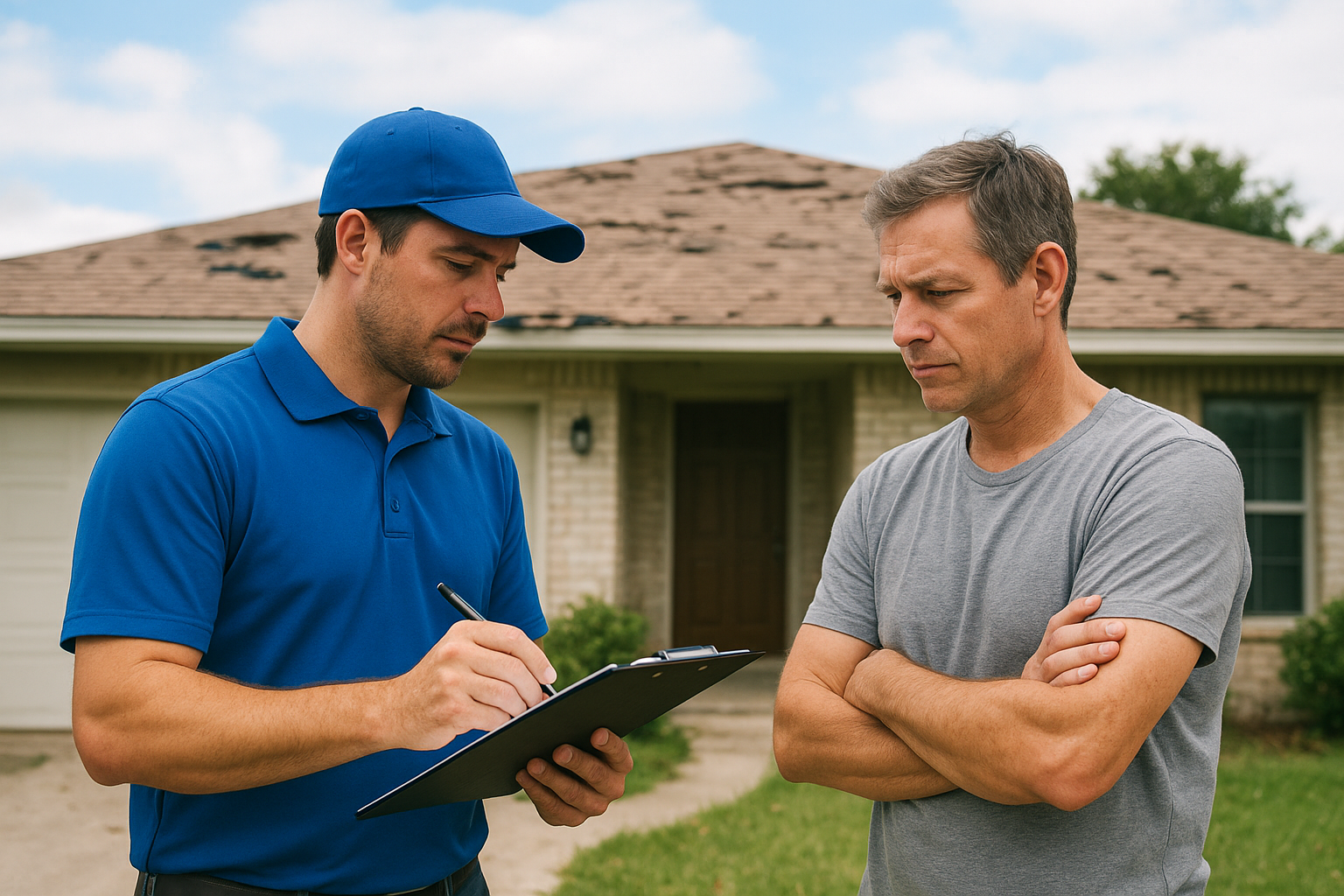
A rep typically canvasses your street after a storm, offers a free inspection, and pushes you toward filing an insurance claim immediately. They document damage specifically for adjuster review, sometimes meeting the adjuster on-site to argue for full replacement coverage.
This fits homeowners whose roof genuinely sustained storm damage and want a company experienced in insurance claim navigation. It's risky if the company has no permanent local address or track record beyond this season.
If a company can't show you a local address from before the last storm, don't trust them with your roof after this one.
Pricing usually matches your insurance settlement, but watch for contractors who ask you to sign an assignment of benefits before inspecting the roof, or who guarantee your deductible will be waived.
General contractors who take on roofing as one of many services, along with handymen who advertise roof repair alongside deck building and gutter cleaning, show up often when you search for a roofing contractor near me. They're not roofing specialists, but they'll quote a replacement if you ask, sometimes subcontracting the actual work to a crew they've used before on other projects.
Most general contractors bid the job themselves, then hire a roofing crew to execute it while they manage scheduling and permits. You end up with a middleman between you and the people actually on your roof, which adds a layer of communication that can slow down decisions when something unexpected turns up under the shingles.
This option works if you're already using a general contractor for a larger renovation and want to bundle the roof into that project. It's a poor fit for anything involving storm damage documentation or insurance claims, since roofing-specific expertise matters most there.
A generalist can build you a deck and still have no idea how to spot hidden hail damage.
Pricing often includes a markup on top of the subcontractor's rate, so ask for the roofer's direct quote. Confirm the actual installer carries a roofing-specific license and warranty, not just the general contractor's coverage.
Before you sign anything, walk through a short list of questions with every contractor you're considering. This step matters more than reading another batch of reviews, because the answers reveal how a company actually operates once the truck pulls into your driveway. Whether you found them through a roof replacement near me search, a neighbor's referral, or a storm-chaser knocking on your door, the same questions apply.
The right questions expose a contractor's habits faster than any five-star review ever will.
Use this checklist during your estimate:
A contractor who answers these without hesitation, and backs it up with documentation rather than a sales pitch, has already shown you more than any online rating could.
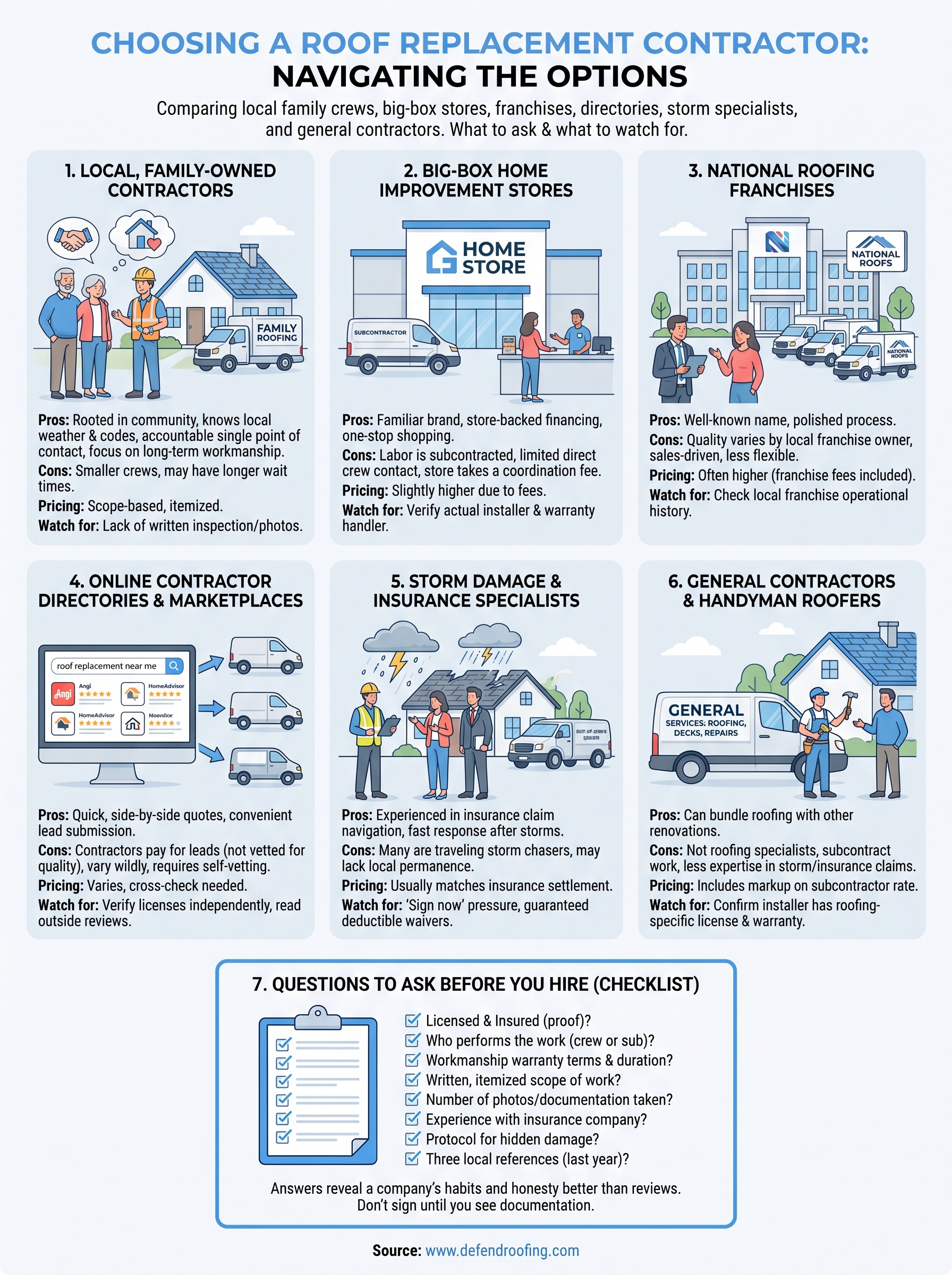
Six options, one decision: who actually shows up, does honest work, and stands behind it years later. Big-box stores, franchises, and directories all add a layer between you and the crew on your roof. Storm chasers vanish once the season ends. General contractors treat roofing as a side job. A local, family-owned crew remains the option where the person quoting the job is the same person checking it a decade from now.
Run through the checklist from section seven with anyone you're considering, and don't sign until you've seen photo documentation of your roof's actual condition. That's how you avoid overpaying for work you didn't need, or underpaying for work that gets skipped.
If you're in the Austin area and want a straight answer about your roof, no pressure and no scripted pitch, get in touch with our team for a quote and honest assessment.