Stop leaks fast. Follow these essential steps for emergency roof repair Austin TX to secure your home, document damage, and navigate insurance claims safely.

A tree limb crashes through your roof at 2 a.m. Water pours into your living room during a Central Texas hailstorm. The ceiling in your hallway starts sagging after a heavy downpour. When moments like these happen, you need emergency roof repair Austin TX homeowners can actually reach, not a voicemail box or a scheduling form that won't get checked until Monday. What you do in the first 30 to 60 minutes matters more than most people realize.
The wrong move, climbing onto a wet roof, ignoring interior water damage, or waiting too long to document what happened, can turn a manageable repair into a denied insurance claim or a full replacement. The right move starts with knowing exactly which steps to take, in what order, before a contractor even arrives. That's what this guide covers: a clear, step-by-step breakdown built from what we actually see on roofs across Austin, Cedar Park, Leander, and surrounding areas after storms roll through Central Texas.
At Defend Roofing, Chris and Greyson Buster have walked homeowners through these situations across three generations of roofing work. We've seen what happens when people act fast and smart, and what happens when they don't. Below, you'll find everything from immediate safety steps to how emergency tarping works, what your insurance company needs from you, and how to tell the difference between a contractor who's there to help and one who showed up to sell you something you don't need.
When a roof fails, the clock starts immediately. A small breach in your roof deck can let in several gallons of water per hour during a heavy Central Texas rainstorm, and that water doesn't stay at the entry point. It spreads through insulation, follows framing members, and pools behind walls and above ceilings in ways that aren't visible until real damage has already set in. Acting on emergency roof repair Austin TX problems within the first hour, rather than waiting until morning, can mean the difference between a straightforward repair and a project that reaches your drywall, electrical system, and subfloor.
The damage you see right away is rarely the full picture. Water that enters through a compromised roof moves horizontally along rafters and sheathing before it ever drips down to your ceiling. By the time you notice a stain or a drip, the moisture has likely been spreading longer than you think. Insulation that gets wet loses its thermal value and becomes a breeding ground for mold within 24 to 48 hours of sustained moisture exposure, according to EPA guidance on mold and moisture in buildings.
The longer water sits in your attic or wall cavities, the more of your repair budget shifts away from roofing work and toward interior remediation.
Wet insulation becomes heavy, and that added weight stresses ceiling drywall past its limits. What starts as a slow drip can turn into a ceiling collapse if the water load builds long enough without intervention. This risk is higher in older Austin-area homes where aging insulation and drywall may already be working against you.
Roof decking, the plywood or OSB beneath your shingles, starts to delaminate when it absorbs water. Once that process begins, the affected panels lose structural integrity quickly and no longer hold fasteners reliably. This means that even after a contractor dries out the area, decking that got soaked may need full replacement rather than repair.
Hidden structural damage is one of the main reasons prompt inspection matters after any storm event. A contractor who gets on your roof the same day can confirm whether the decking is still sound, whether any rafters took impact damage, and whether a tarp or emergency patch will hold until permanent work is scheduled. Waiting until the next dry day without checking first is a gamble that routinely costs homeowners far more than the original repair would have run.
Your insurance policy requires you to take reasonable steps to prevent further damage after a loss event. If you wait two days before calling anyone and interior damage worsens in the meantime, your insurer can argue that the additional damage resulted from your inaction rather than the original storm. That distinction can reduce or eliminate part of your payout.
Documentation created on the day of the event carries far more weight with adjusters than photos taken a week later. Time-stamped images of the roof breach, interior water intrusion, and any temporary measures you took form the foundation of a strong claim. Moving fast protects both your home and your ability to recover costs through your policy.
Not every roof problem qualifies as an emergency, but misidentifying the severity of your situation can lead you to act too slowly when speed is critical. In Central Texas, the line between a manageable repair and an urgent one usually comes down to two factors: whether water is actively entering your home and whether structural components took direct impact. If either condition is true, you're dealing with an emergency, and waiting until business hours is the wrong call.
Certain situations demand you contact an emergency roof repair Austin TX contractor right away, regardless of the time or day. A visible hole or breach in your roof deck, whether from a fallen tree, wind-lifted sections, or hail impact that cracked shingles all the way through, creates an open path for water and should be tarped or patched the same day. Similarly, if you see active water dripping from your ceiling, notice bulging drywall, or find pooling water near electrical fixtures, treat it as an emergency.
Interior water near electrical panels or outlets is a fire risk, not just a water damage issue.
Other same-day situations include missing large sections of shingles after a severe storm, any visible daylight through your attic ceiling when looking up from inside, and physical sagging along your roof line that wasn't present before the storm. In the Austin area, spring and fall storms can pull ridge caps and flashings loose in ways that leave your roof exposed even when the damage isn't obvious from the ground.
Some roof problems are urgent without being true emergencies. Minor granule loss, a single cracked shingle with no underlying breach, or small soffit damage from wind generally won't let water in immediately. These issues still need attention within a week or two because Central Texas weather rarely gives you a long dry window before the next storm system moves through.
Loose flashing around chimneys or skylights also falls into this category. It's not an emergency today, but it becomes one the next time it rains heavily, so scheduling an inspection quickly is still the right move.
The moment you spot an active leak, your first priority is protecting the people and contents inside your home, not assessing the roof. Acting in the right sequence keeps a bad situation from getting worse. Most homeowners instinctively look up at the ceiling, but the smarter move is to work from the inside out, starting at ground level before you ever think about what's happening on the roof.
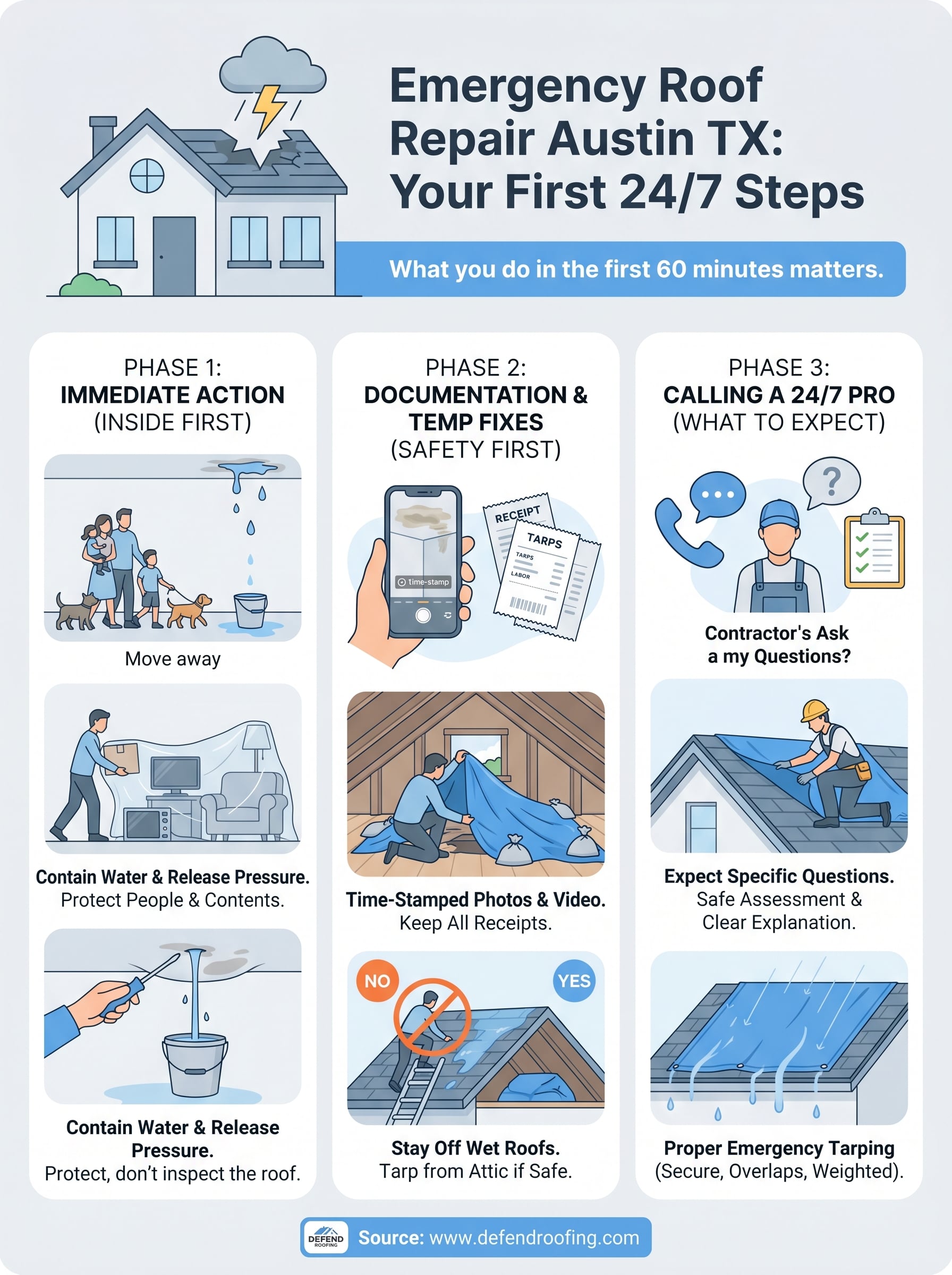
Get everyone out of the room where water is coming in and move furniture, electronics, and anything irreplaceable out of the affected area immediately. Water that drips from a ceiling is already past your insulation, which means the volume and spread can increase quickly without warning. If you see any bulging or sagging in the drywall, do not stand beneath it. A saturated ceiling panel can release suddenly and drop a significant amount of water and debris at once.
Once people and valuables are clear, place buckets or large containers under active drip points to limit floor damage. Lay down towels or plastic sheeting around the containers to catch splash. If water is running along a ceiling beam or pooling behind a light fixture, use a screwdriver or small nail to poke a small hole at the lowest point of the bulge. This sounds counterintuitive, but it lets the water drain in a controlled stream rather than building pressure until the drywall gives way suddenly.

Releasing a concentrated drip through a small hole prevents a much larger ceiling failure later.
Before you move anything else or start mopping up, take photos and short video clips of every area showing active water intrusion. Time-stamped documentation is the foundation of any solid insurance claim. Capture the ceiling stain, the drip point, any damaged belongings, and the room as a whole. This is the same evidence that makes emergency roof repair Austin TX claims easier to process when your adjuster reviews the loss.
Your goal with any temporary fix is simple: slow or stop water intrusion without putting yourself at risk. Most of the useful work you can do happens from inside your attic or from the ground, not from the roof itself. Before you attempt anything, check whether the storm has fully passed and whether there is any lightning risk still in the area. Central Texas weather can stall or double back, and a second line of storms is a real possibility after major events.
Wet roofs are dangerous even for experienced contractors with proper equipment. Sloped surfaces covered in wet shingles have almost no traction, and the pitch that looks manageable from the ground is much steeper when you're on it. If you feel any urgency to act on the roof itself, contact an emergency roof repair Austin TX professional instead of attempting it yourself. No temporary repair is worth a fall from height.
The safest temporary action you can take from the ground is placing buckets, protecting your interior, and documenting the damage thoroughly until a contractor arrives.
If you can access your attic safely and the breach is visible from below, placing a heavy-duty plastic tarp directly over the damaged area from the attic side is the most effective interior-based temporary measure. Use a tarp rated at least 6 mil thick for meaningful water resistance. Weigh down or secure the edges with heavy objects like sandbags, full water bottles, or scrap lumber you find in the space. This approach keeps you off the roof entirely while still redirecting most active water intrusion.
Wind-driven rain causes far more interior damage than vertical rain alone because it forces water into gaps that would otherwise drain outward. If the breach is accessible from inside, press a folded moving blanket or heavy towel against the interior side of the damaged area to reduce airflow and slow water movement until your contractor arrives.
A legitimate emergency roof repair Austin TX contractor operates differently from a standard roofing company during business hours. When you call after midnight or on a Sunday afternoon after a storm, you should reach a real person, not an answering service that schedules a callback for the next business day. Knowing what a qualified emergency roofer actually does when they arrive helps you recognize whether the contractor showing up is there to help you or to sell you something.
When you contact a 24/7 emergency roofer, the first thing they should do is ask specific questions about your situation before quoting anything or committing to a timeline. Expect questions about whether water is actively entering the home, where you see damage from the ground or inside, and whether any structural components look visibly compromised. A contractor who jumps straight to pricing without gathering this information is working a sales call, not an emergency response.
A professional emergency roofer prioritizes your safety and the scope of damage before they discuss cost.
Once on site, a qualified contractor will access your roof safely using proper equipment, inspect the breach, and give you a clear verbal explanation of what they found before touching anything. They should be able to tell you whether a tarp will hold until a permanent repair is scheduled or whether the damage requires immediate structural attention.
Emergency tarping is the most common immediate intervention after storm damage, and it should be done with materials rated for weather exposure rather than lightweight poly sheeting. A proper tarp installation overlaps the ridge of the roof on at least one side, gets secured with weighted boards or fasteners along the edges, and covers all damaged sections with several feet of margin on each side. This setup sheds water rather than pooling it.
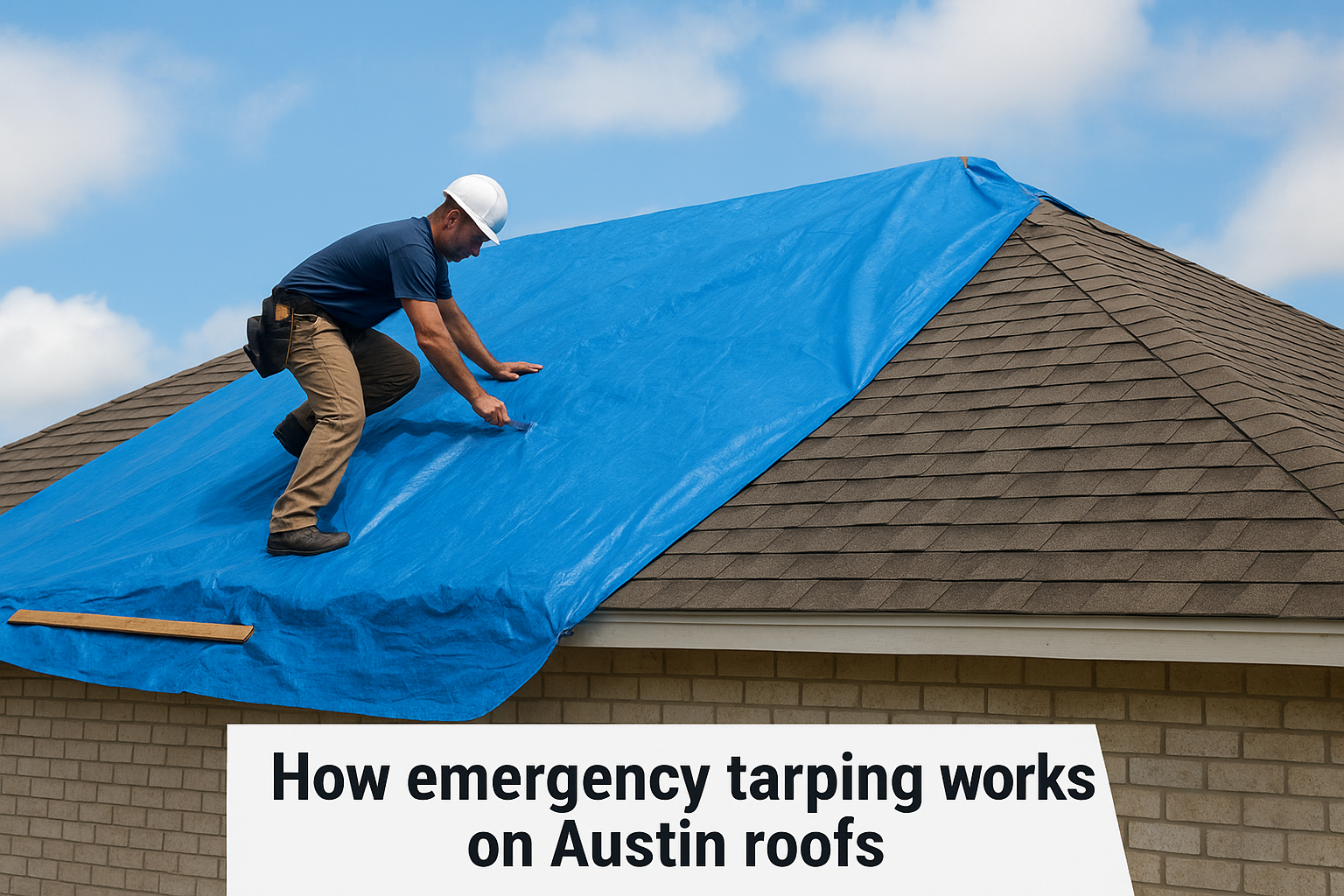
Tarps installed correctly can protect your roof deck for days or even a week or two while you wait for a full repair appointment. Tarps installed carelessly create new leak points at their edges and give you a false sense that the problem is solved. Ask your contractor specifically how they plan to secure the perimeter and what happens if another storm moves through before your repair date.
Your insurance claim lives or dies on the quality of your documentation, and that documentation starts the moment the storm passes, not the day you call your adjuster. Most homeowners wait until after they've cleaned up to contact their insurer, which removes evidence that supports the claim. Treating documentation as your first post-storm priority puts you in a far stronger position when the adjuster arrives.
Your insurer will want proof that the damage resulted from a covered event and evidence that you took reasonable steps to prevent further loss. Both requirements tie directly back to what you capture in the first hours after the storm. Pull up your phone and photograph every area showing damage, inside and out, before you move anything, dry anything, or place any covering over the roof. Time-stamped photos and video carry more weight than anything you describe verbally to an adjuster weeks later.
The single most common reason storm damage claims get reduced is insufficient documentation at the time of loss, not the damage itself.
Beyond photos, keep records of everything you spend on emergency measures, including tarps, labor, or any materials you purchase to protect the interior. Receipts for emergency roof repair Austin TX services and any temporary supplies you buy are reimbursable in most standard homeowner policies as "reasonable mitigation expenses." Save all of them.
Contact your insurance company's claims line as soon as possible after you've secured the interior and captured documentation. Most major insurers have 24-hour claims lines that allow you to open a file the same day. Give them a factual description of what happened, and avoid speculating about the cause or extent of damage beyond what you can directly observe. Your adjuster will schedule an inspection, and having a contractor's written assessment ready when that inspection happens gives you independent documentation of the scope before any negotiation begins.
When your roof is failing, every step in this guide exists to protect you, your family, and your home before a contractor even pulls into your driveway. Start inside, document everything, and skip the roof until conditions are safe and a professional is on the way. The homeowners who come out ahead after storm damage are the ones who act quickly, capture solid documentation from the first hour, and reach a contractor they can trust rather than the first number they find online.
If you're dealing with an active leak or storm damage right now, Defend Roofing provides emergency roof repair Austin TX homeowners count on, day or night. Chris and Greyson Buster are local, transparent, and will tell you exactly what your roof needs without pressure or guesswork. Contact Defend Roofing for a free emergency roof assessment and get a real answer from a contractor who will show up and do the work right.