Don't wait for a leak. Learn how to know when to replace your roof by spotting these 6 warning signs, from storm damage to age, tailored for Texas homes.
Most Texas homeowners don't think about their roof until something goes wrong, a leak after a storm, granules clogging the gutters, or a neighbor's insurance claim that sparks a closer look at their own shingles. The truth is, knowing how to know when to replace your roof comes down to recognizing a handful of clear, physical warning signs before they turn into expensive interior damage.
At Defend Roofing, we inspect roofs across Central Texas every week as a family-owned contractor with three generations of roofing experience. Some roofs need a straightforward repair. Others are well past their useful life and need full replacement, and we tell homeowners the difference honestly, backed by 100+ photos documenting exactly what we find. That approach is why we put this guide together.
Below, we'll walk you through six specific signs that a roof replacement is the right call. These aren't vague rules of thumb. They're the same indicators we evaluate during our Precision Roof Assessments, real conditions that affect your home's protection, your insurance options, and your long-term costs. If even one or two of these apply to your roof, it's worth getting a professional set of eyes on it.
Texas sees hail, high winds, and fast-moving storm systems more than most states. After a major weather event, a single damaged area might call for a spot repair. But when damage spreads across large portions of the roof, replacement becomes the more practical and cost-effective path forward.
Walk the perimeter of your home after a storm and look for missing shingles, lifted edges, or debris scattered across the yard. You might also spot dented gutters, damaged fascia, or bruised soffit panels, all signs that the storm hit hard enough to affect more than a few shingles. If metal components took visible hits, assume the shingles did too.
Hail leaves circular impact marks or soft spots on shingles that feel spongy when pressed. Wind damage often shows up as cracked, torn, or completely missing shingles across large sections of the surface. Either pattern signals that the roof's protective layer has been compromised well beyond what a repair can reliably address.
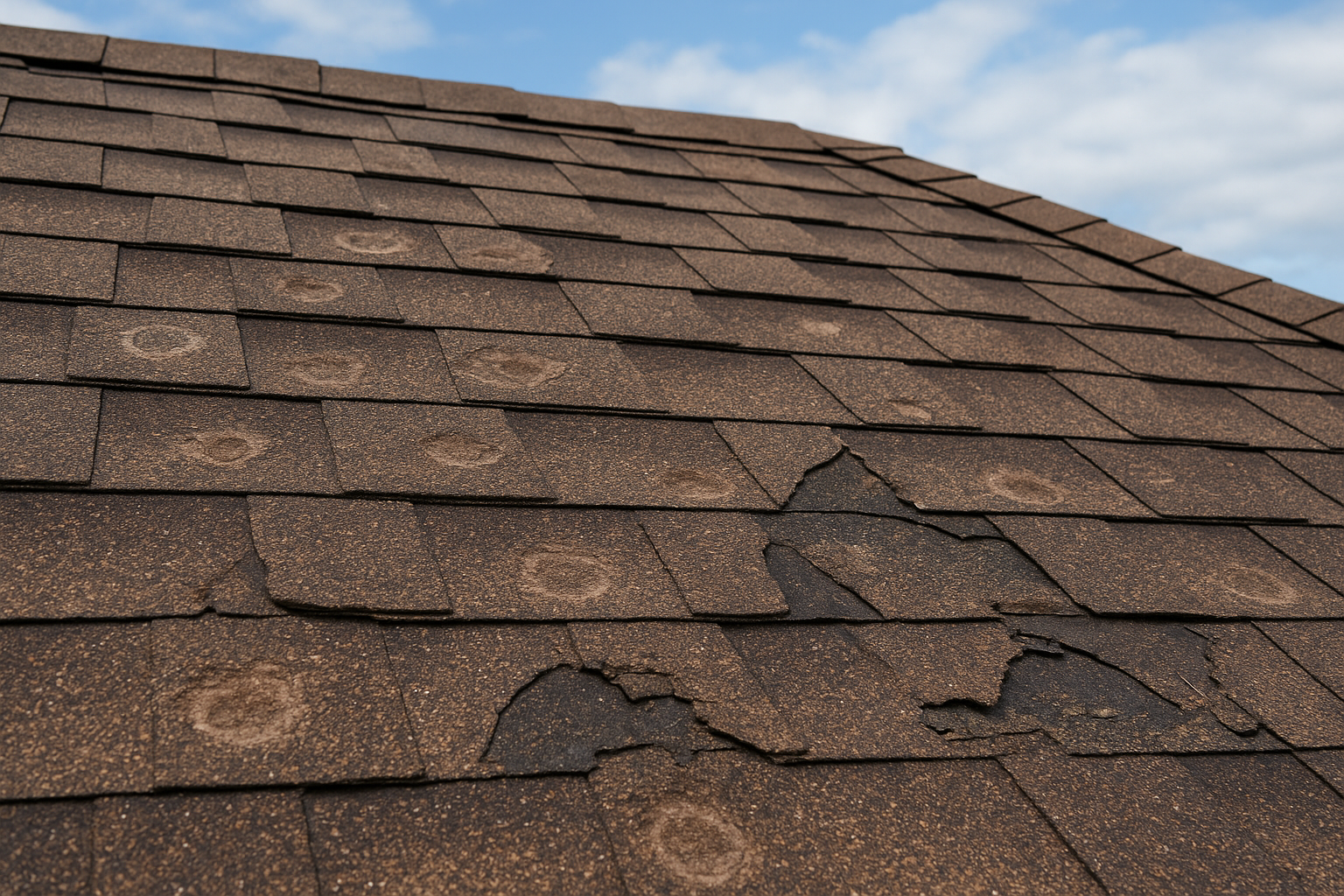
When hail hits hard enough to dent metal components like vents and flashing, it almost certainly damaged your shingles at the same scale.
Central Texas storms regularly produce large hail and sustained wind gusts that hit the entire roof surface at once rather than isolated spots. If your shingles were already aging, a single storm can push borderline material past its breaking point across the whole system. Patching one section while the rest continues to degrade rarely solves the underlying problem, and it often delays a necessary replacement by only one or two seasons.
Document everything before any cleanup begins. Take timestamped photos of your gutters, shingles, and any damaged exterior components. Then contact a licensed roofer who can provide adjuster-ready documentation to support your claim. Insurers require clear evidence tied to a specific storm event, and a thorough inspection report with detailed photos gives you the strongest position when the adjuster arrives.
Age alone is one of the clearest indicators in how to know when to replace your roof. Even a roof that looks intact from the street can be quietly failing if it has outlived its designed service life.
Most 3-tab asphalt shingles last 15 to 20 years, while architectural shingles typically hold up 25 to 30 years under normal conditions. Metal roofs can push 40 to 50 years with proper maintenance. If your roof is approaching or past these ranges, replacement is the logical next step regardless of visible surface damage.
Central Texas heat accelerates material breakdown faster than cooler climates. Prolonged UV exposure dries out shingles and weakens their adhesive strips, while poor attic ventilation traps heat that bakes the roof deck from below, cutting years off its lifespan.
A poorly ventilated attic in Texas heat can shorten a shingle roof's life by 5 to 10 years.
An aging roof can look intact while granule adhesion, flexibility, and sealing capacity quietly deteriorate. By the time a leak appears, the underlying deck often carries hidden moisture damage that makes the replacement job more involved and costly.
Check your home inspection report or permit history through your local municipality. You can also ask a roofer to evaluate shingle generation and weathering patterns, which reveal a rough installation window even without paperwork.
Shingles in good condition lie flat, hold their shape, and keep their surface intact. When you start seeing curling edges, surface cracking, or blistering across multiple sections, the roof is signaling that its protective layer is failing. A few isolated shingles can be swapped out, but widespread shingle failure is one of the clearest answers to how to know when to replace your roof.
Normal wear looks like minor scuffing or slight color fading across a surface that still lies flat. Curling at the edges (cupping) or lifting at the center (clawing) points to material that has dried out or lost its bond. When more than a couple of sections show the same pattern, the damage is systemic, not isolated.
Cracked or curled shingles let moisture reach the underlayment and wood deck below. Repeated water exposure leads to soft spots and rot that turn a straightforward replacement into a more involved job.
Surface shingle failure almost always signals deeper moisture infiltration that isn't visible without a close inspection.
Repairs hold when damage is limited to a small, clearly defined area surrounded by healthy shingles. When curling or cracking spans multiple roof planes, patching one section leaves the rest exposed and rarely extends the roof's life by more than a season.
Walking on a failing roof risks injuring yourself and causing further damage to already weakened shingles. Use binoculars from the ground or hire a licensed roofer who carries proper insurance and knows how to move across the surface without making conditions worse.
Granule loss is easy to miss until it becomes obvious and widespread. Those small, sand-like particles coating your shingles aren't decorative; they shield the asphalt layer beneath from UV rays and physical impact. When they disappear, your roof's protective capacity drops fast.
Bald patches on shingles expose raw asphalt that cracks and deteriorates quickly under direct sun. Once the granule coating breaks down, the shingle loses the ability to repel heat and moisture, which shortens whatever remaining lifespan the material had left.
After rain, check your gutters for dark, gritty buildup that looks like coarse sand. A heavy accumulation in one cleaning cycle, especially combined with visible bald spots on the shingles themselves, confirms the problem is active and progressing.
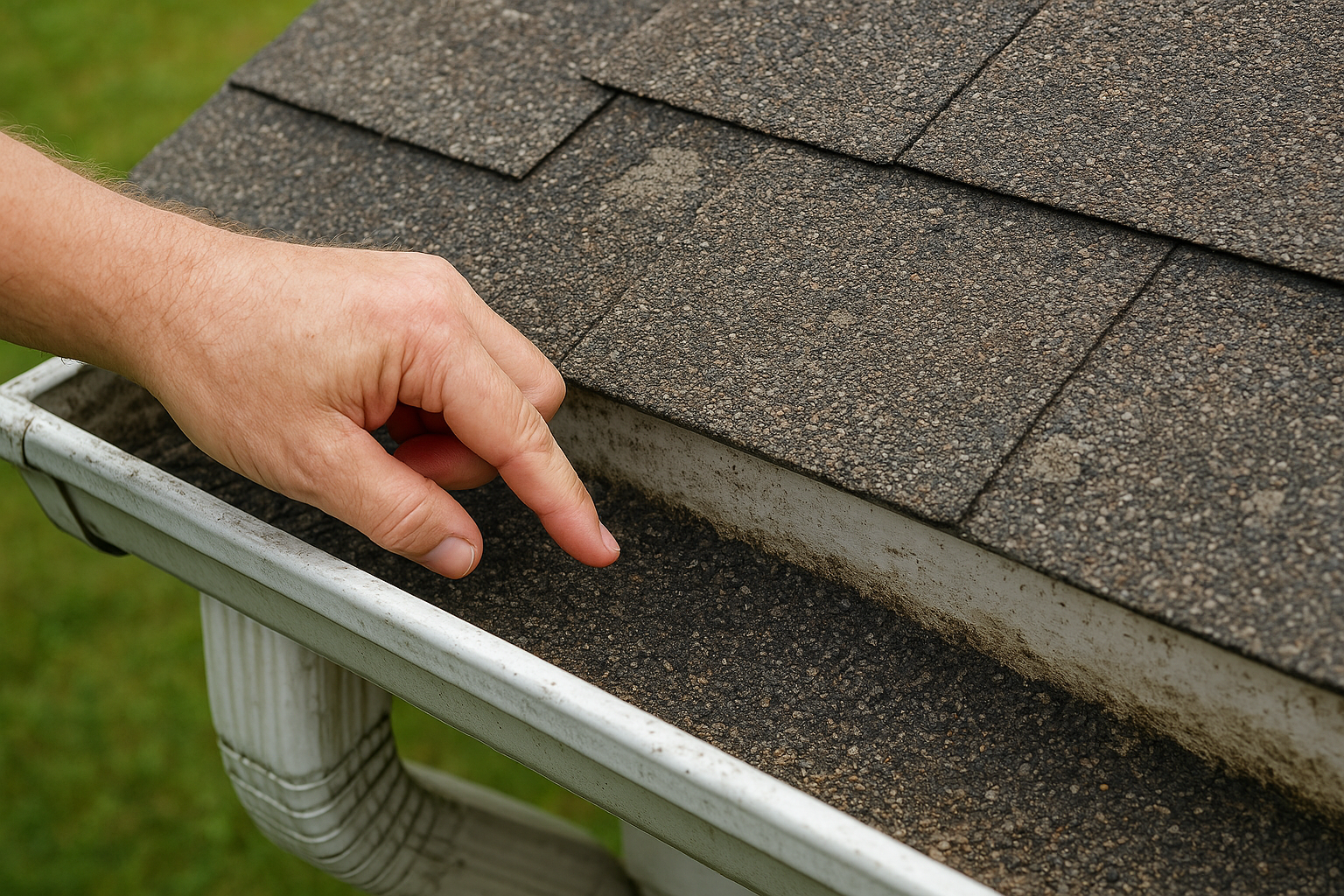
Finding a thick layer of granules in your gutters after a single storm means the shingles are shedding material fast, not just settling normally.
Central Texas sun is relentless. Shingles without intact granule coverage absorb heat that would otherwise reflect away, which bakes the asphalt and accelerates cracking. This is a critical factor in how to know when to replace your roof in a high-UV climate.
Spot losses near vents or edges can sometimes be monitored. But when bald areas appear across multiple roof planes, no repair restores the lost UV protection. At that point, a full replacement is the only reliable fix.
One leak after a major storm isn't a guaranteed replacement trigger. But when water stains return on your ceiling, moisture builds in your attic repeatedly, or the same spot drips every season, you're dealing with systemic failure rather than an isolated fixable problem.
Look for brown or yellow stains on ceilings and upper walls, bubbling paint, or soft drywall. Water typically travels along rafters and insulation before dripping through, so the entry point is usually far from where the stain appears indoors.
Within 24 hours of rain, look for wet insulation, dark staining on the wood deck, or daylight showing through the sheathing. Wet insulation holds moisture long enough to rot surrounding structural wood even after the surface looks dry.
Attic moisture that persists between storms almost always points to roof failure that no spot repair will fully address.
When the same spot leaks more than once, the deck beneath has absorbed enough moisture to weaken the repair's bond. Patching the surface leaves saturated wood continuing to break down underneath, and the cycle repeats.
Take timestamped photos of every stain, wet spot, and attic concern before things dry out. This documentation is part of how to know when to replace your roof versus repair it, and it gives your adjuster clear evidence tied directly to a specific storm event.
A sagging roofline or repeated flashing failures are among the most serious signals in how to know when to replace your roof. These issues point to structural weakness or systemic deterioration that patching simply cannot fix.
If your roofline looks uneven or dips between rafters, the deck or structural framing below has likely weakened. Walk the perimeter and look for waves, dips, or visible bowing along ridges and flat sections.
Flashing seals the joints where roofing meets vertical surfaces. When it lifts, cracks, or pulls away repeatedly, water works its way into the deck below. Recurring flashing failures on an aging roof usually mean the surrounding material can no longer hold a proper seal.
When flashing fails more than once in the same spot, the problem is rarely the flashing itself.
Water that sits in the deck rots the wood sheathing and weakens the rafters beneath. Soft spots underfoot and dark staining on attic framing confirm that moisture has moved past the surface and into the structure.
At this stage, each repair only delays the inevitable while allowing structural damage to deepen. If your roof shows sagging, repeated flashing failures, or deck rot, a full replacement protects your home and your budget far better than continued patchwork.
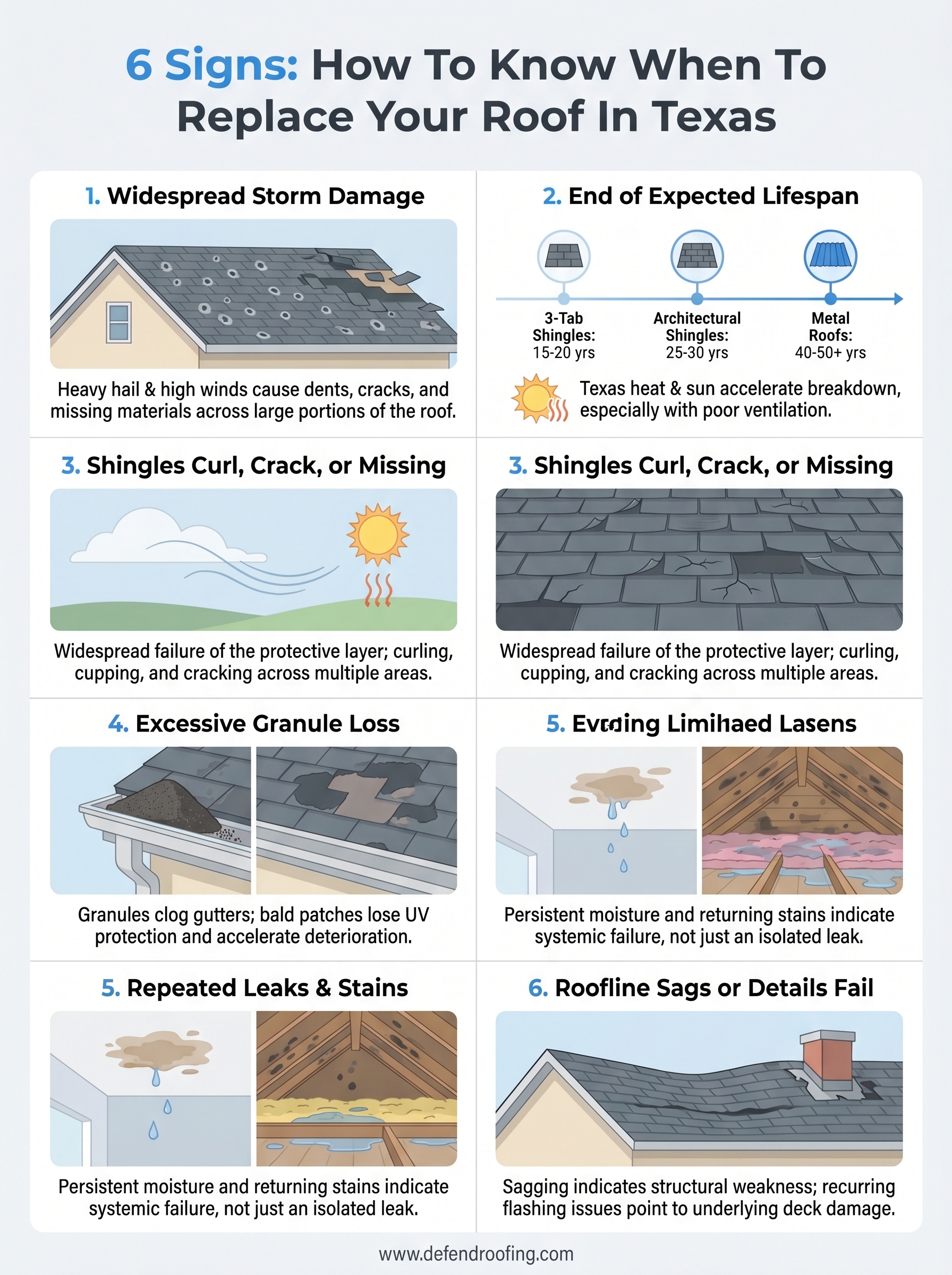
The six signs above give you a clear framework for how to know when to replace your roof before a storm forces the decision. Waiting until water stains appear on your ceiling or your roofline begins to sag means the damage has already spread well beyond the surface, and repair costs climb sharply once structural wood gets involved. At that point, you're paying more for a replacement that could have been planned on your own terms.
Texas storm seasons don't pause while you weigh your options. If your roof checks one or more boxes from this list, get a professional inspection with documented findings before the next weather event hits. Defend Roofing provides a 100+ photo Precision Roof Assessment for every project, giving you honest repair-versus-replace guidance backed by real evidence, not a sales pitch. Schedule your roof assessment today and go into storm season knowing exactly where your roof stands.