Spot the 6 signs of roof damage like hail marks and failed flashing. Learn how to protect your Texas home from leaks and navigate insurance claims today.
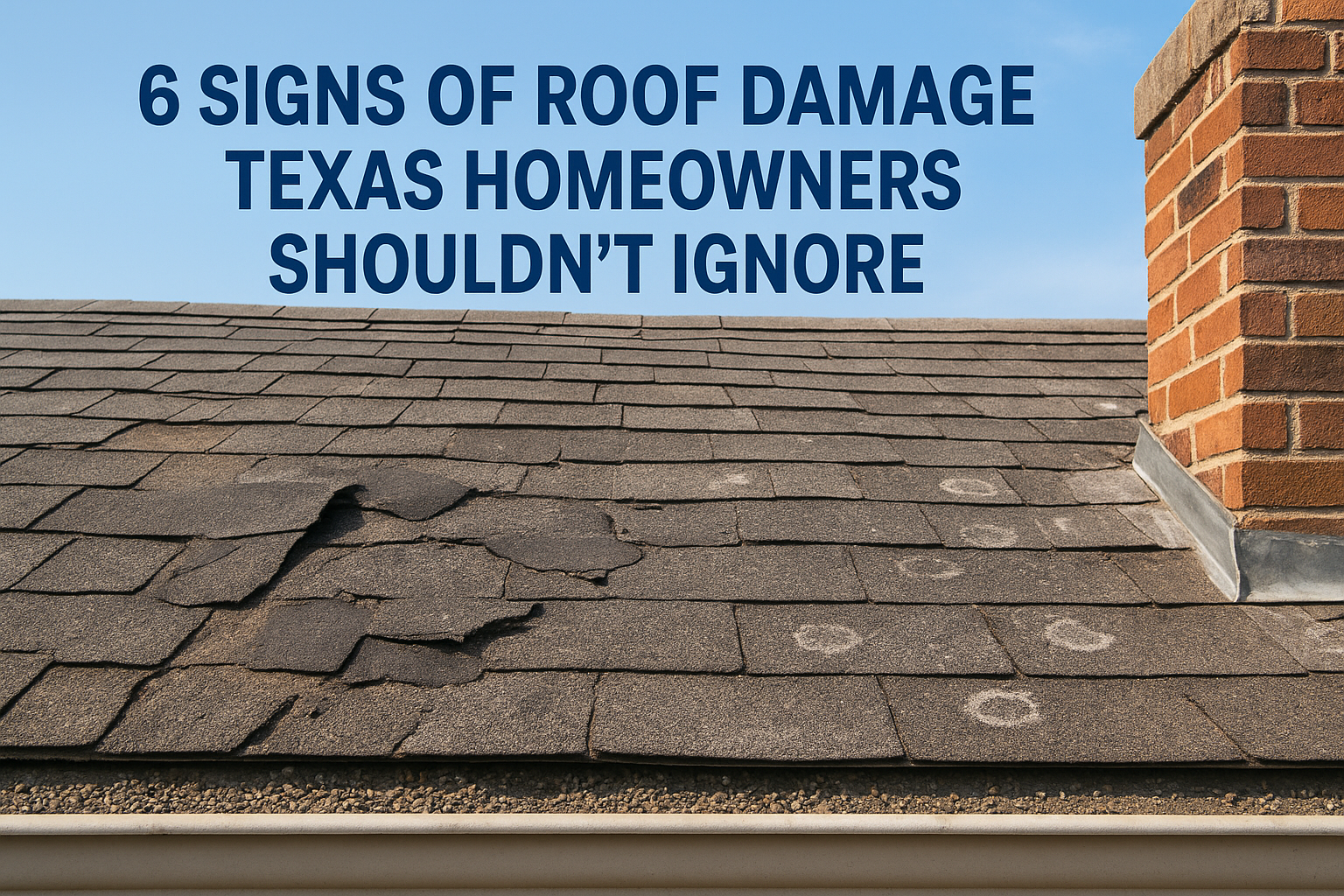
Most signs of roof damage don't announce themselves with a dramatic leak in your living room. They start small, a cracked shingle here, a subtle stain there, and by the time you notice something obvious, the underlying problem has often been growing for months. In Central Texas, where hailstorms, intense UV exposure, and high winds are part of life, your roof takes a beating whether you realize it or not.
The tricky part is knowing what to look for. Some damage is visible from the ground. Other issues hide under shingles or in your attic, quietly getting worse. Catching these problems early is the difference between a straightforward repair and a full replacement that costs ten times more.
At Defend Roofing, we're a father-and-son team with three generations of roofing experience across Central Texas. Every inspection we perform includes 100+ photos documenting exactly what we find, no guesswork, no pressure. We built our process around giving homeowners honest answers, whether that means a minor fix or a bigger conversation. This article breaks down six specific warning signs that tell you your roof needs attention, so you can act before a small issue turns into a serious one.
Before you can fix a problem, you need to know exactly what you're dealing with. Getting a professional, photo-documented roof assessment is the smartest first move any Central Texas homeowner can make when you notice early signs of roof damage or after a significant storm rolls through.
You should schedule an assessment any time you spot stains on interior ceilings, missing shingles, or granule buildup in your gutters. In Central Texas, hail and high-wind events hit regularly from spring through early fall, so your roof takes repeated punishment. If your home is 10 or more years old and hasn't had a professional inspection recently, that alone is reason enough to get one scheduled.
A solid assessment covers every section of your roof with close-up photos of each problem area, including shingles, flashing, ridge caps, gutters, and all penetrations like vents and chimneys. You should also receive written notes explaining each issue found, not just a verbal summary that fades by the time you talk to your insurance company.
When a roofer hands you actual photos of your specific roof, the repair-vs-replacement conversation becomes straightforward. You can see the damage yourself, ask direct questions, and make a decision based on evidence.
Documented proof of your roof's condition removes guesswork from the equation and puts you in control of what happens next.
Insurance adjusters need clear, timestamped evidence of storm damage to approve a claim. Photos that show hail strikes, broken shingles, or damaged flashing give your adjuster exactly what they need. Without that documentation, claims frequently get delayed or denied because the damage can't be verified after the fact.
Defend Roofing's Precision Roof Assessment produces more than 100 photos from every single inspection, covering your full roof from every relevant angle. Chris and Greyson Buster personally handle every assessment, which means you get three generations of roofing experience applied to your specific situation with full transparency and no pressure.
Damaged shingles are among the clearest signs of roof damage you can catch early. When shingles are missing, cracked, or curling at the edges, your roof's first layer of protection against rain and UV is already breaking down.
Stand back from your home and scan the roofline. Missing shingles show up as darker rectangular patches, while curled or buckled shingles create an uneven, wavy texture across the surface that you can often spot with the naked eye.
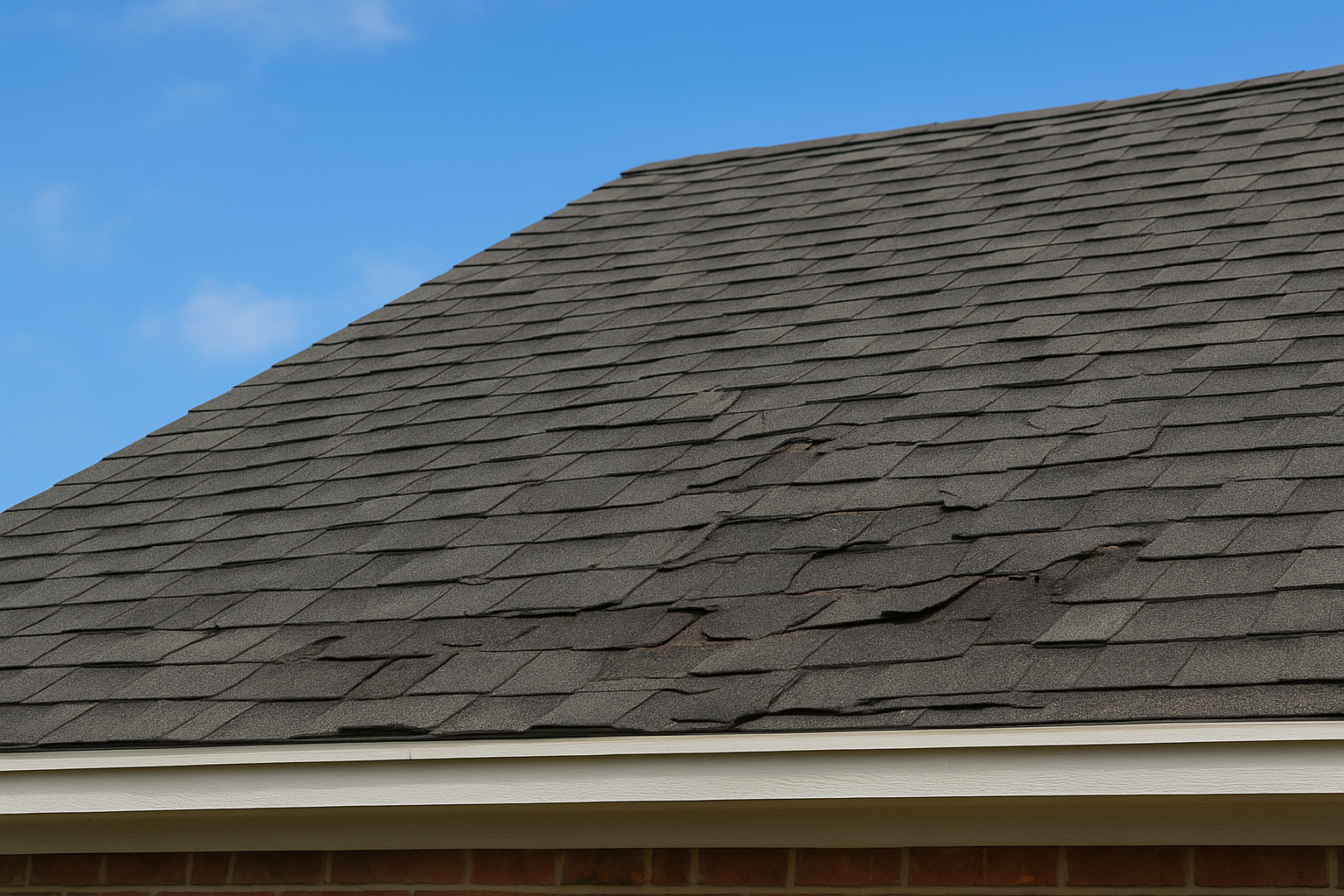
Central Texas summers push attic temperatures well above 140°F, which accelerates shingle aging faster than in most states. High winds during storm season can lift and crack shingles that are already brittle from prolonged heat exposure.
When shingles start curling in Central Texas, the next storm hits with fewer intact shingles protecting the roof deck below.
Walk your property perimeter after any major wind event. Look for these specific indicators:
A roofer will check for nail pops, cracking patterns, and soft spots that ground-level viewing misses. They'll also examine the underlying decking for moisture intrusion that's already working through compromised shingles.
Missing or heavily damaged shingles need attention fast. Every rainstorm that hits exposed roof decking drives moisture deeper into your home's structure, turning a straightforward shingle repair into a much larger project.
Granule loss and hail marks are two of the most commonly missed signs of roof damage in Central Texas. Both can look minor at a glance, but they signal that your shingles are losing the protection they need to keep water out of your home.
Asphalt shingles are coated with small mineral granules that block UV rays and protect the underlying mat. When those granules loosen, you'll find gritty, sand-like buildup collecting in your gutters or washed out through your downspouts onto the ground below.
Hail strikes leave circular impact marks that look like small dark bruises or dents across your shingles. Each impact knocks granules loose and compresses the asphalt mat underneath, weakening that spot's ability to shed water.
A roof that has taken hail damage across multiple spots is already accelerating toward early failure, even when it still looks intact from the street.
Normal aging produces gradual, even granule loss spread across the whole roof over many years. Storm damage concentrates the loss in random circular patterns tied to hail impact zones, often appearing on one side of the roof that faced the storm.
Take close-up photos of your gutters showing granule buildup and wide shots of any impact marks visible on your shingles. Note the date of the storm and collect any weather reports that confirm hail activity in your area.
Schedule an inspection within a few weeks of any hail event. Insurance claims for storm damage have filing windows, and waiting too long can cost you coverage for repairs your roof genuinely needs.
Flashing failures are some of the sneakiest signs of roof damage because the damage often starts somewhere that's hard to see until water has already found its way inside. Metal flashing seals the joints where your roof meets vertical surfaces, and when that seal breaks, water moves straight into your home's structure.
Scan your roofline from the ground and focus on spots where the roof meets chimneys, walls, dormers, and skylights. These transition points rely on properly installed flashing to stay watertight, and they're the first areas to show wear after years of heat expansion and contraction in Central Texas.
Look for rust streaks, lifted metal edges, or visible gaps where flashing meets masonry or framing. Around plumbing vents, cracked rubber boots are a common failure point that lets water run straight down the pipe and into your ceiling.
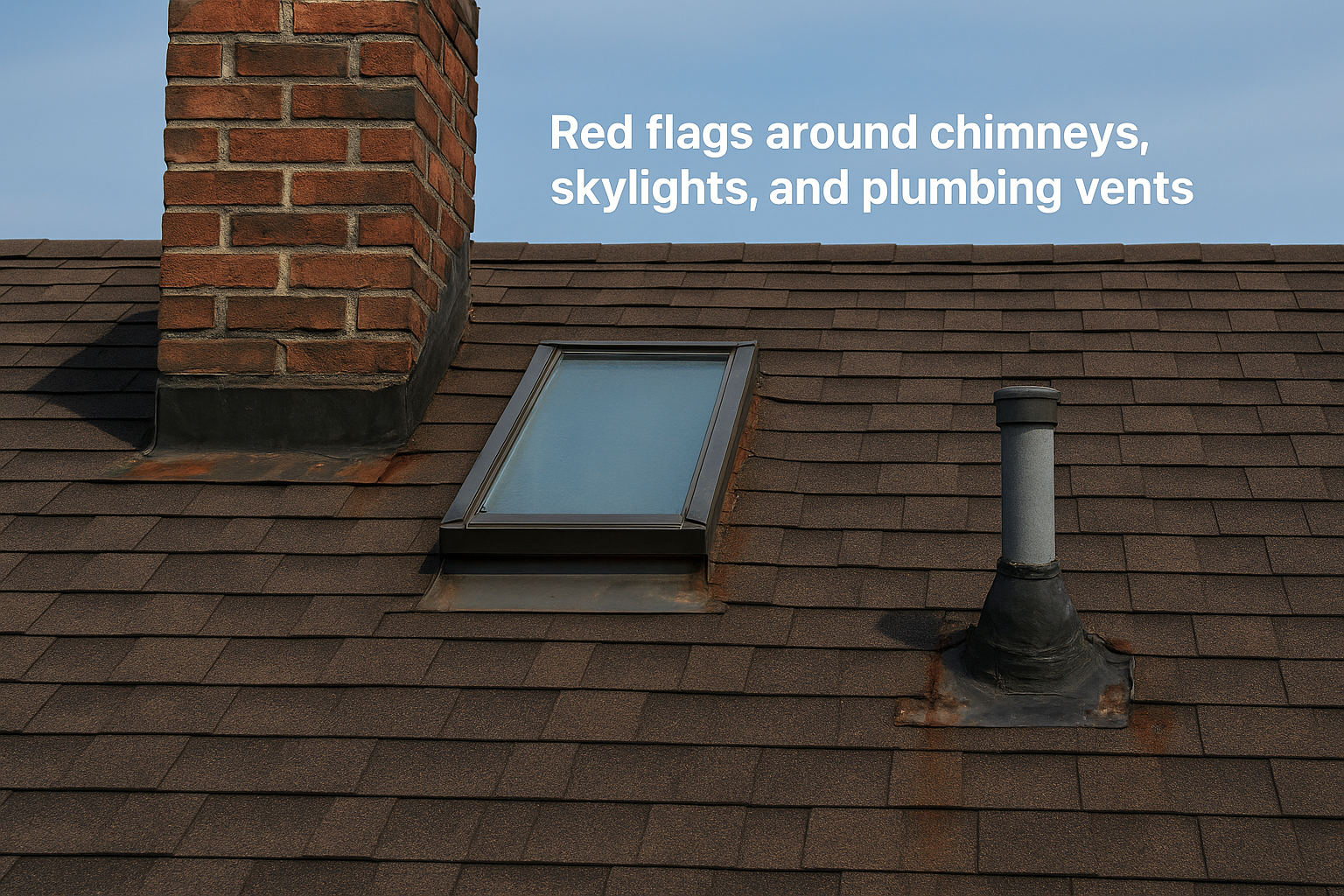
A gap the width of a pencil around a chimney flashing is enough to let several gallons of water in during a single storm.
Caulk expands and contracts with temperature swings, and Central Texas sees some of the most extreme cycles in the country. Caulk-only repairs typically last one or two seasons before the seal breaks again, making them a short-term patch rather than a real fix.
A proper repair means removing the damaged section and installing new metal flashing that's integrated into the shingle layers correctly, not just sealed over the top.
Flashing failures need prompt attention because the leak zone widens with every rain event. Schedule an inspection as soon as you notice any of these warning signs to keep water out of your walls and decking.
Water stains on your ceiling and a sagging roofline are two of the most serious signs of roof damage you can find. Both tell you the problem has moved past the shingles and into your home's structure, which means the clock is already running.
Brown or yellow ceiling stains and peeling paint near exterior walls point directly to water that has worked through your roof. Check wall corners and light fixtures too, since water travels along framing before it pools and drips, so the stain rarely appears directly below the entry point.
Pull down your attic access and look for dark staining on the decking or rafters and any soft or spongy wood you can press with your hand. Daylight visible through the roof boards is an immediate red flag that needs professional attention the same week.
Once wood rot sets into roof decking or rafters, the repair scope and cost grow significantly with every rain event.
Not every attic moisture problem means your shingles are failing. Poor attic ventilation traps humid air that condenses on cooler surfaces and mimics a leak. A roofer can distinguish between condensation damage and active water intrusion by checking insulation saturation and ventilation flow.
A roofline that dips or curves in the middle signals compromised decking or weakened rafters beneath. Walk your yard and look at the ridge line straight on for any visible dip.
Call a roofer the same day you notice sagging or active interior dripping. Place buckets to catch water and avoid walking in rooms directly below soft spots until a professional confirms the structure is sound.
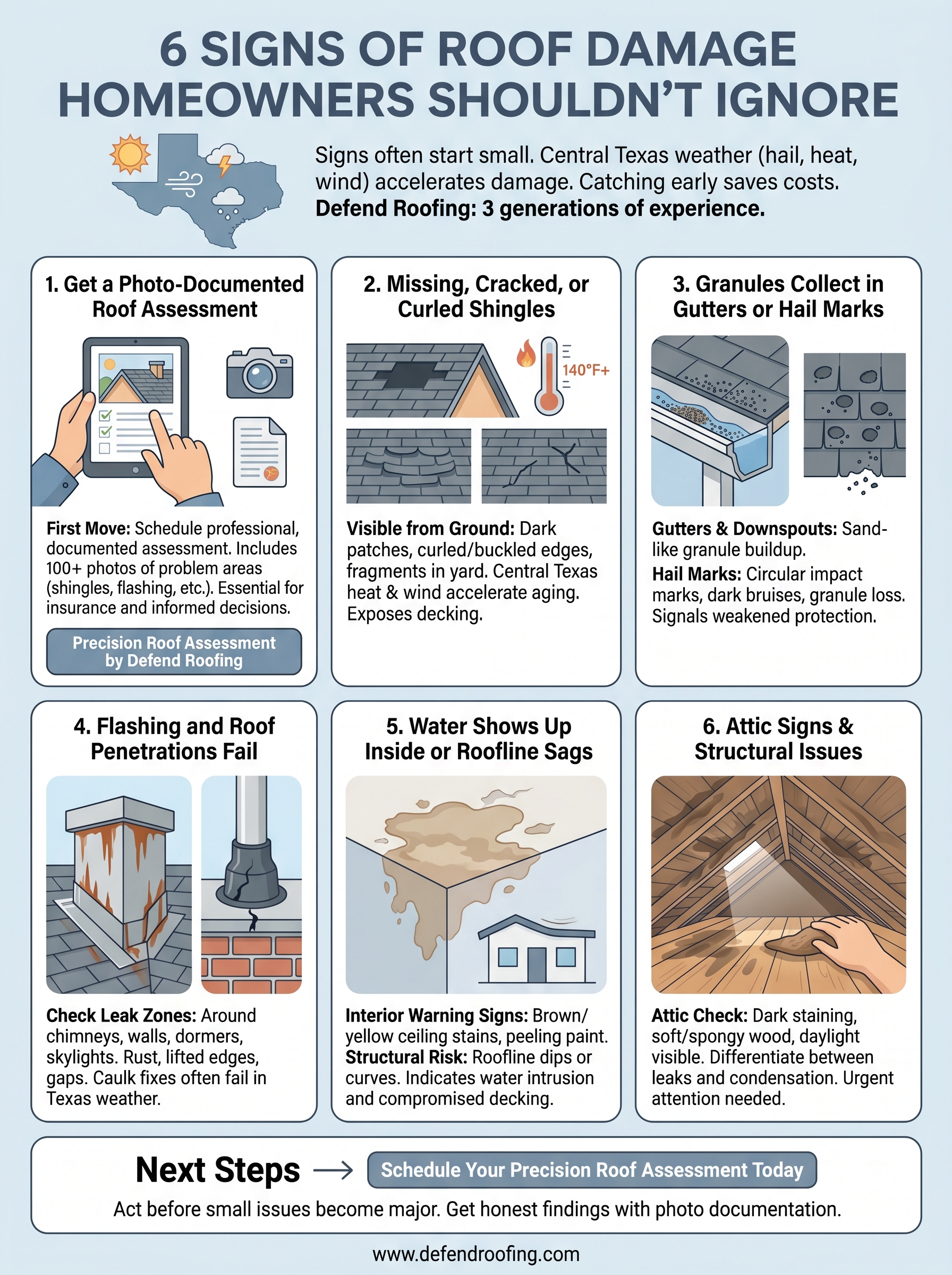
These six signs of roof damage give you a clear starting point for evaluating your roof before a small problem turns into a major expense. Missing shingles, granule loss, failed flashing, and interior water stains each tell you something specific about what your roof needs right now. The earlier you catch them, the more options you have and the lower the repair cost tends to be.
Your next move is straightforward. Schedule a professional assessment and get eyes on your roof with photo documentation you can actually use, whether that leads to a targeted repair, a full replacement conversation, or an insurance claim. Chris and Greyson Buster have inspected and repaired roofs across Central Texas for three generations, and every assessment starts with honest findings and zero pressure.
Schedule your Precision Roof Assessment today and find out exactly what your roof needs before the next storm hits.