Learn how long do gutters last by comparing material lifespans. Spot early signs of failure to protect your home and foundation from costly water damage.
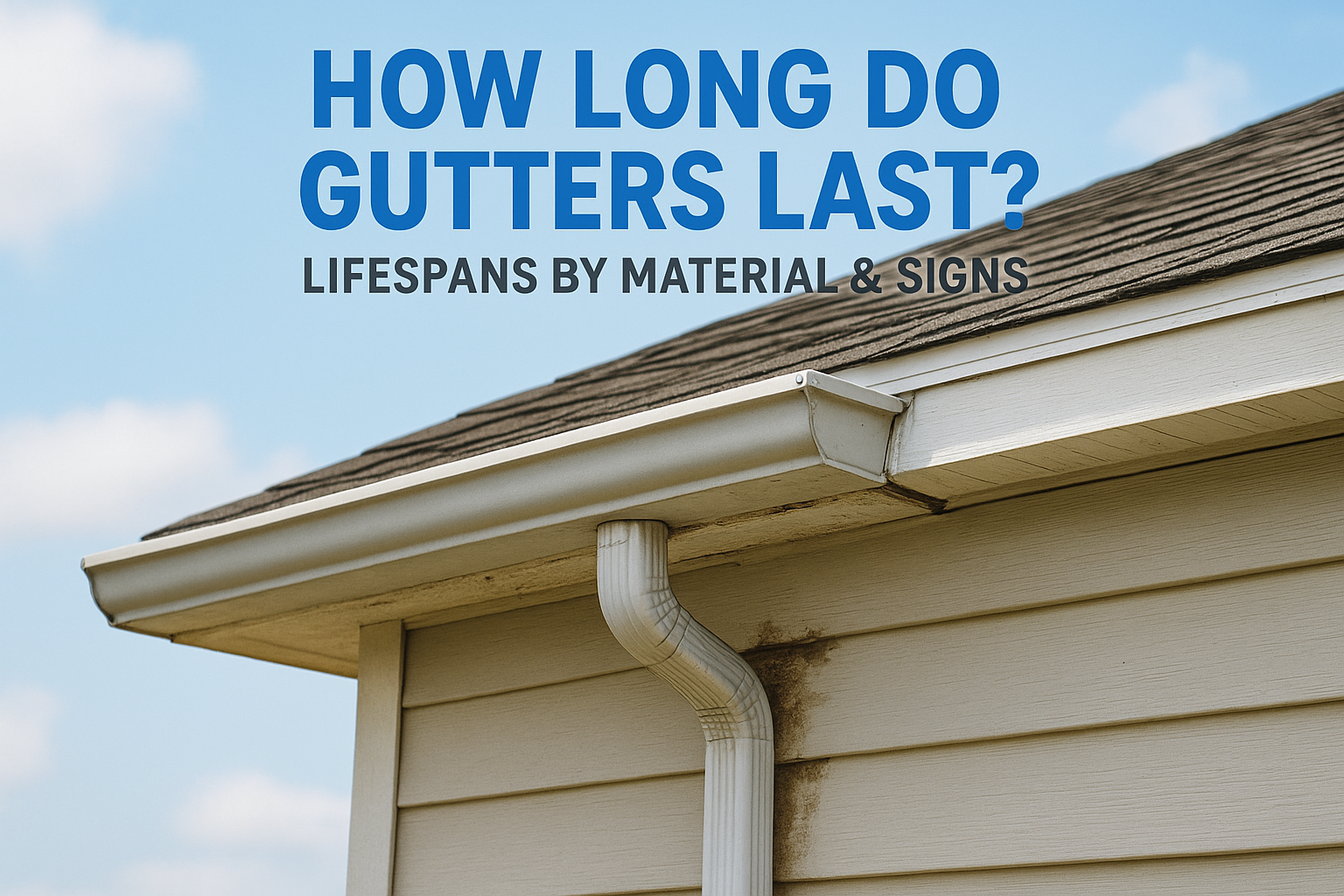
Gutters don't get much attention until they fail, and by then, you're usually dealing with water damage to your fascia, foundation, or siding. Knowing how long do gutters last depends on the material they're made from, how well they've been maintained, and the kind of weather they've endured. In Central Texas, where hailstorms and intense UV exposure take a real toll on exterior components, gutters often wear out faster than homeowners expect.
At Defend Roofing, gutter condition is something we assess on every project. Our 100+ photo Precision Roof Assessments document not just your roof but the full picture, including gutters, downspouts, and drainage. Chris and Greyson Buster have seen firsthand how neglected gutters lead to bigger problems down the line, and we'd rather help you catch issues early than deal with the fallout later.
This article breaks down the expected lifespan of each major gutter material, aluminum, vinyl, copper, and steel, along with the warning signs that replacement is due and the maintenance habits that can add years to your system. Whether your gutters are brand new or pushing two decades, this guide will help you know exactly where you stand.
Most homeowners think about gutters only when water is visibly pouring over the sides or pooling near the foundation. But gutter failure is rarely sudden. It builds gradually, and by the time you notice a visible problem, the damage has often already spread to places you cannot easily see. Understanding how long do gutters last puts you in a position to act before a manageable repair turns into a major expense.
Gutters that fail quietly cause some of the most expensive water damage homeowners face, because the source is easy to overlook until the bill arrives.
When gutters stop directing water away from your home correctly, the consequences move fast. Fascia boards directly behind the gutter absorb constant moisture and rot, which can compromise the roof's edge and require full fascia replacement. Water that pools at the base of your exterior walls works into siding, framing, and insulation, creating conditions for mold and structural decay that cost far more to fix than a straightforward gutter swap.
Your foundation is equally at risk. Soil around your home expands and contracts with repeated water saturation, which can cause settling, cracking, and in serious cases, foundation movement. In Central Texas, where clay-heavy soil shifts dramatically with moisture changes, this is a real and documented concern for homeowners.
Replacing gutters at the right time keeps your overall maintenance costs lower. Waiting until gutters have already caused rot or foundation issues multiplies your repair bill significantly. Getting ahead of the problem means you control the scope and the cost. Here are the core areas where late gutter replacement drives up expenses:
Each of these repairs costs more than the gutters themselves, which makes timing your replacement based on material lifespan a genuinely smart financial move.
Material choice determines more about gutter longevity than almost any other factor. The same installation conditions, the same storms, and the same maintenance routine will produce very different results depending on what your gutters are made of.
Understanding how long do gutters last starts with knowing what material you have. The four most common options each carry a distinct lifespan range:
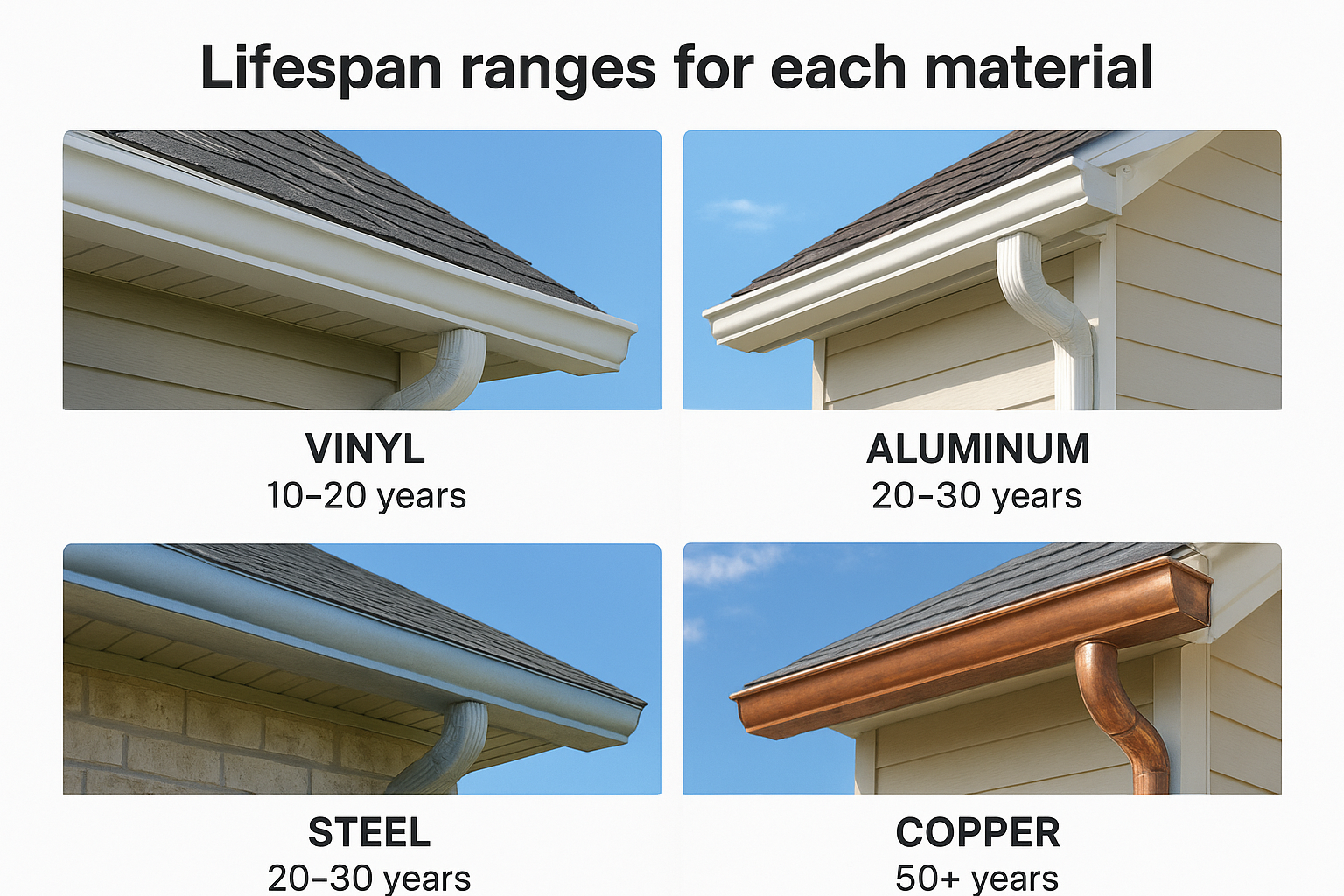
| Material | Average Lifespan |
|---|---|
| Vinyl | 10-20 years |
| Aluminum | 20-30 years |
| Steel | 20-30 years |
| Copper | 50+ years |
Vinyl is the most affordable option but becomes brittle under intense heat and UV exposure, so Central Texas homeowners should expect it to land near the lower end of that range. Aluminum is the most widely installed material in the area because it resists rust, handles temperature swings well, and sits in a reasonable middle range on cost. Steel matches aluminum on lifespan but needs more consistent upkeep to hold off rust. Copper lasts generations and can outlast the roof itself, but the premium price point keeps it out of most residential projects.
Aluminum hits the right balance of cost, durability, and low maintenance for most Central Texas homes, which is why you see it on the majority of houses in the Austin area.
Material gives you a starting point, but real-world conditions determine where your gutters actually land within that range. Understanding how long do gutters last in practice means looking at the specific factors that speed up or slow down deterioration on your property.
Central Texas puts gutters under consistent stress. Intense UV radiation breaks down vinyl quickly and fades sealants, while hail events dent aluminum and crack older, brittle materials. Summer heat causes metal gutters to expand and contract repeatedly, which loosens fasteners over time and creates small gaps at the seams where leaks start.
In the Austin area, gutters face more UV stress and hail exposure than in most northern climates, which pushes expected lifespans toward the lower end of published ranges.
Even the best material fails early if the installation is poor. Improperly pitched gutters trap standing water, which accelerates corrosion and pulls the system away from the fascia under the added weight. Clogged gutters create the same problem; water sitting in the channel for days after a rain event does far more damage than water flowing through freely. Cleaning your gutters at least twice a year removes debris before it compounds into a structural issue.
Knowing how long do gutters last in theory only helps if you can also recognize the signs that your specific gutters have reached the end of their useful life. Some warning signs are obvious from the ground, while others require a closer look during a proper inspection.
If you spot more than one of these signs at the same time, replacement is almost always the smarter call over repeated patching.
Sagging sections are one of the clearest indicators that your gutters have failed structurally. When the channel pulls away from the fascia or sags between hangers, the system can no longer move water effectively. Cracks, holes, or separated seams tell you the material has degraded past the point where sealant repairs will hold long-term.
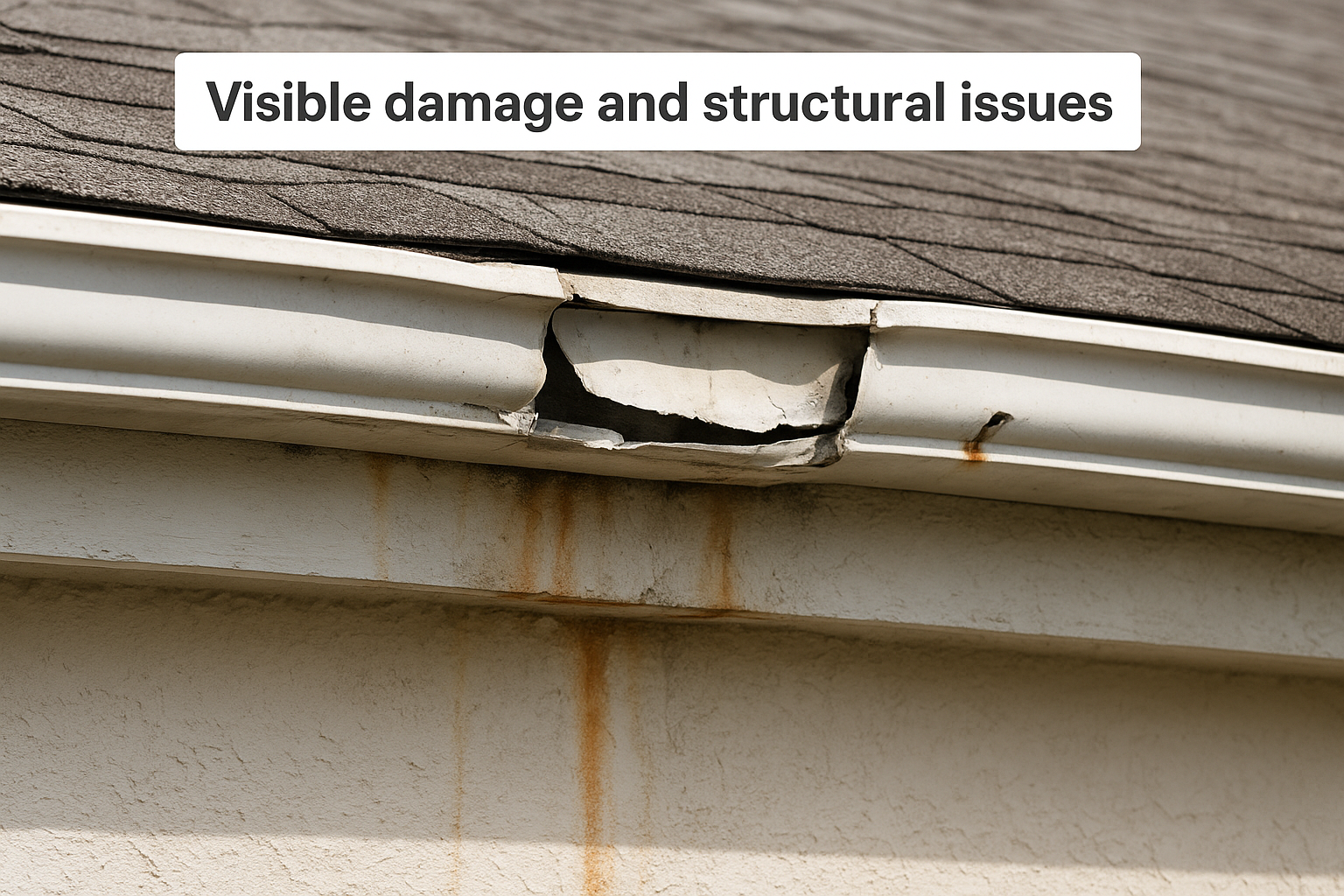
Pay attention to what happens during and after rain. Water spilling over the sides of your gutters instead of flowing to the downspout points to blockage or warping. Rust streaks, peeling paint on the fascia, or staining along your foundation indicate water has been running in the wrong direction for an extended period. If you see soil erosion directly below the gutter line, your system is no longer doing its job.
How long do gutters last depends heavily on how well you maintain them. A well-maintained aluminum gutter system can push toward the 30-year end of its range, while the same system that goes years without cleaning will fail much earlier. The good news is that the habits that extend gutter life are straightforward and do not require professional help every time.
Consistent cleaning and early repairs are the two biggest factors you control when it comes to getting full value out of your gutters.
Clear your gutters at least twice a year, ideally in late spring and late fall once the trees have finished dropping debris. During each cleaning, inspect the seams, hangers, and downspout connections for any signs of separation or corrosion. Running water through the system with a hose lets you confirm that water moves freely and exits at the downspout without backing up.
Small cracks and loose fasteners are inexpensive to address when caught early. Gutter sealant handles minor seam gaps, and replacing a single loose hanger takes minutes compared to re-hanging an entire sagging section. Waiting on these small fixes allows water to sit, weight to build, and damage to spread to your fascia before you realize the repair window has passed.
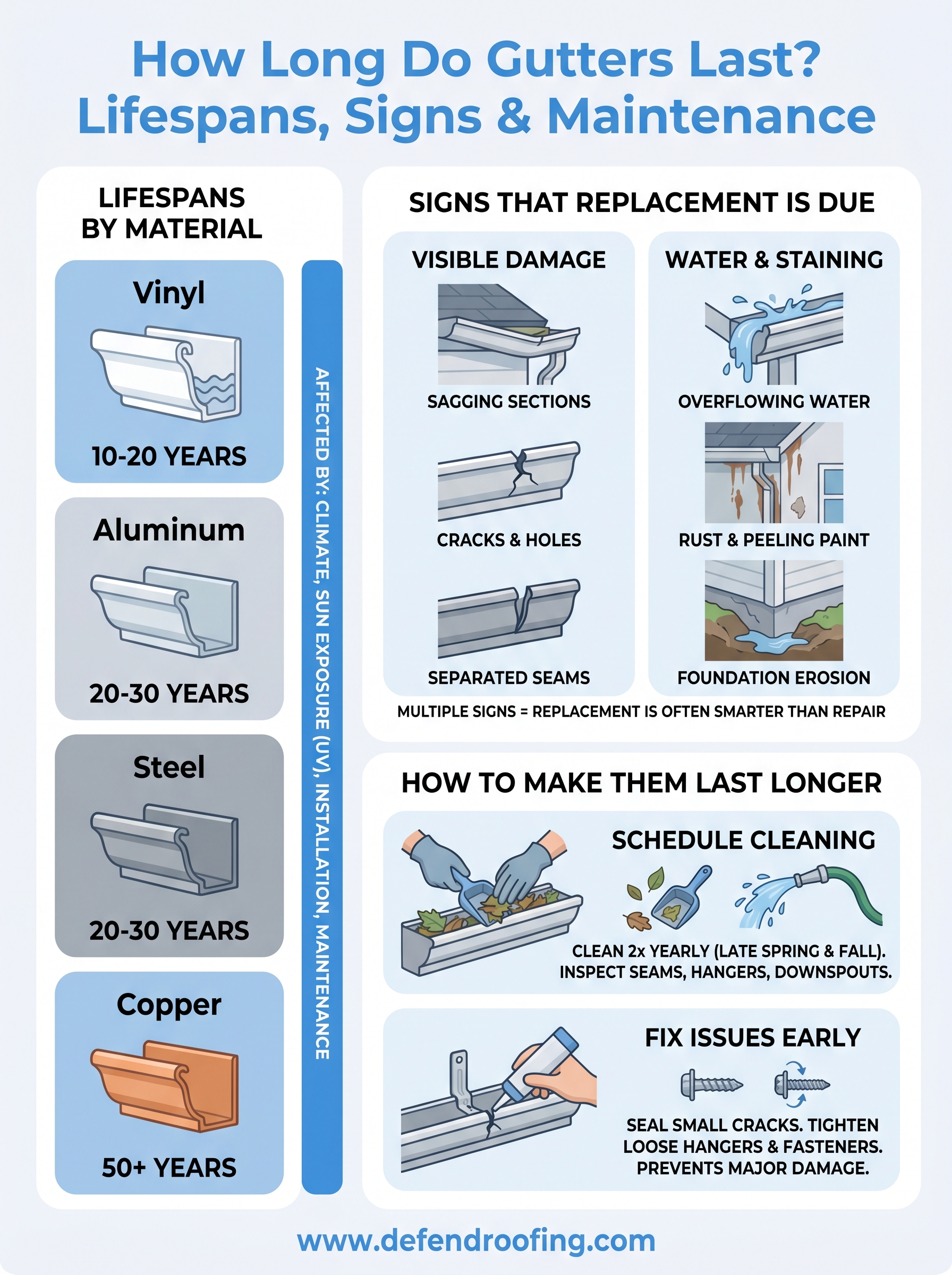
How long do gutters last comes down to material, maintenance, and the conditions your home faces. Vinyl systems give you 10 to 20 years, aluminum and steel run 20 to 30, and copper can outlast everything else on your roof. Central Texas heat, UV exposure, and hail push most systems toward the lower end of those ranges unless you stay on top of cleaning and minor repairs.
Your gutters protect far more than your roofline. Fascia rot, foundation issues, and interior water damage all start with a gutter system that stopped working before anyone noticed. Catching the warning signs early, sagging, cracks, overflow, and staining, gives you a chance to replace on your own terms rather than in response to a bigger problem.
If you want a clear picture of where your gutters stand right now, schedule a Precision Roof Assessment with Defend Roofing and get 100+ photos of your full exterior condition with honest recommendations.