Learn the 10 essential questions to ask a roofing contractor about licensing, insurance, warranties, and pricing before you hire in Central Texas.
You've got three roofing quotes sitting on your kitchen table, and they're all over the place on price. One contractor talked fast, another wouldn't give you a straight answer about warranties, and now you're wondering who you can actually trust with your roof. That's exactly why questions to ask a roofing contractor matter more than the glossy brochure or the smooth sales pitch.
The right questions expose the difference between a crew that shows up, patches things fast, and disappears, and one that stands behind its work for years. Ask about licensing and insurance, warranty terms, and how they document damage, and you'll quickly see which contractors are prepared to earn your trust and which ones are hoping you won't ask.
We've spent three generations climbing Central Texas roofs, so we know which questions separate a solid contractor from a risky one. Below, you'll find 10 essential questions covering everything from insurance claims to workmanship guarantees, plus what a good answer actually sounds like.
Most homeowners can't tell the difference between a roof that needs a full tear-off and one that needs a $400 repair. That gap in knowledge is exactly where shady contractors make their money, pushing replacements on roofs that had years of life left, or worse, patching over damage that needed real attention. The single best safeguard against this is photo documentation, and asking about it upfront tells you a lot about how a contractor operates before they ever climb a ladder.
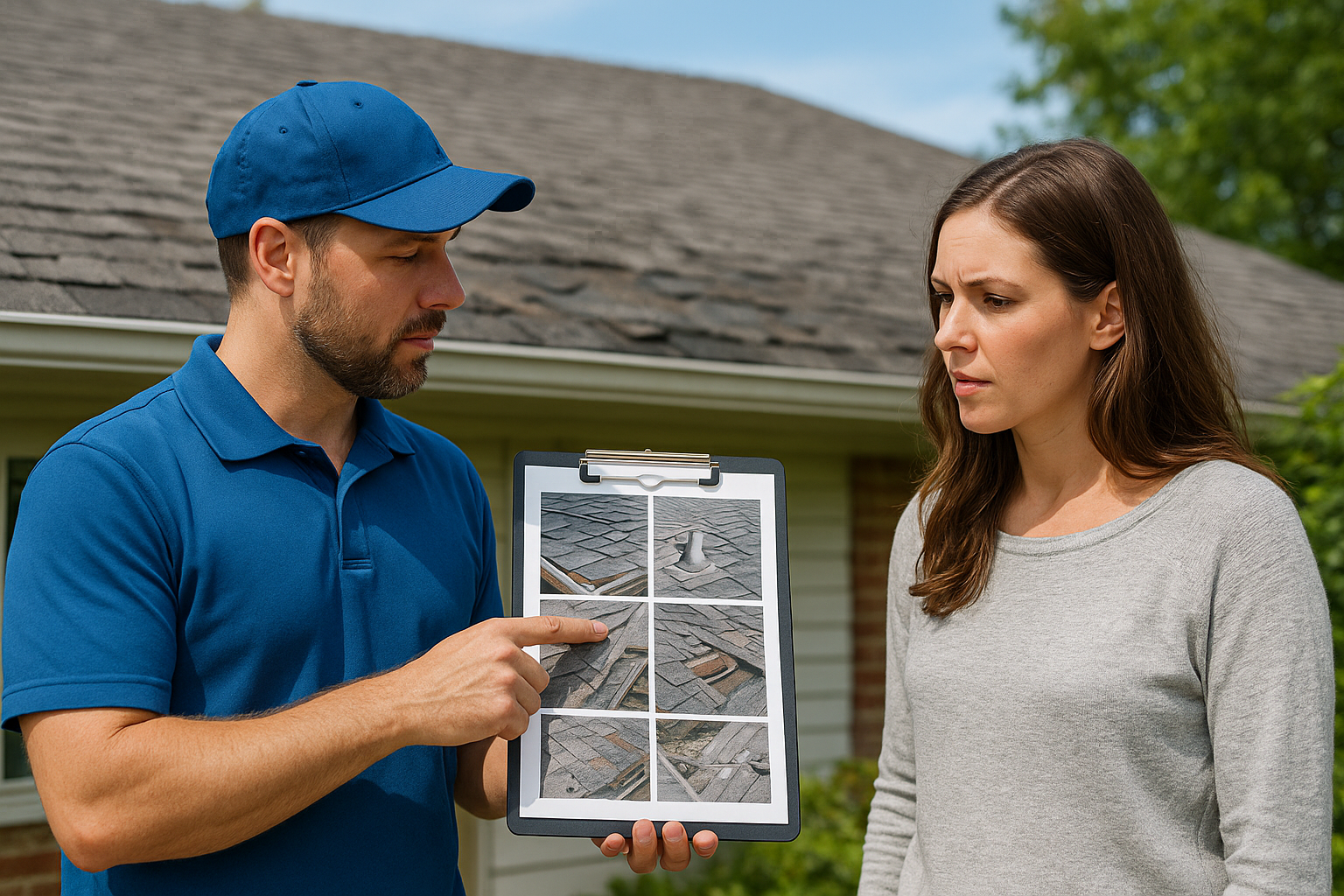
A contractor who won't show you proof of damage is asking you to trust their word alone, and your roof is too expensive for that.
At Defend Roofing, every project starts with a 100+ photo Precision Roof Assessment. That means we document every slope, every vent, every flash point, and every sign of wear before we recommend anything. You get to see exactly what we saw, not a verbal summary you have to take on faith.
Use these to find out how thorough and transparent a contractor really is:
A contractor who hesitates, offers vague reassurances, or says photos
Before you talk pricing or timelines, confirm the contractor is legally allowed to work on your roof and financially protected if something goes wrong. Licensing and insurance aren't formalities, they're the difference between a protected homeowner and one stuck paying out of pocket for a worker's injury or a botched job with no recourse. Texas doesn't require a statewide roofing license, which means anyone with a truck and a ladder can call themselves a contractor, so this verification step matters even more here than in states with stricter rules.
If a contractor can't produce proof of insurance on the spot, don't let them on your roof.
Beyond paperwork, local reputation tells you how a company treats real customers after the check clears. A contractor rooted in Central Texas, with reviews from your actual neighborhood, has a track record you can verify. One that just moved into town chasing storm damage doesn't.
Contractors who dodge these questions or offer outdated insurance certificates are gambling with your liability. A company that hands over documentation without hesitation, and points you toward real local reviews, has nothing to hide and a reputation worth protecting.
Anyone can hang a sign that says "roofer," but years on actual roofs teach lessons no sales training ever will. Chris and Greyson Buster bring three generations of combined roofing experience to every Central Texas job, and that history shows up in how they spot problems other crews miss. Experience matters, but so does what happens after the crew packs up, which is where a workmanship warranty separates a serious contractor from one hoping you never call back.
A contractor who won't put their labor in writing doesn't believe in their own work.
General contractors often lean on manufacturer material warranties alone, leaving you exposed if the installation itself fails. Defend Roofing backs every install with a Limited Lifetime Workmanship Warranty, covering the labor, not just the shingles.
Vague answers about "years in the business" without specifics usually mean limited hands-on experience. A contractor who clearly explains warranty terms, timelines, and exclusions has dealt with failures before and built a process to stand behind their work instead of just their sales pitch.
A cheap quote often hides a thin scope of work, missing details like flashing replacement, ice and water shield, or proper ventilation upgrades. When you compare bids, line up the actual materials and labor covered, not just the bottom-line number. Two estimates for the same roof shouldn't differ by thousands of dollars unless something meaningfully different is happening underneath the price.

If two quotes look wildly different, the cheaper one is probably missing something you'll pay for later.
Ask every contractor to spell out shingle brand, underlayment type, and ventilation plan in writing, not just verbally during the walkthrough. A detailed, written estimate protects you if a dispute comes up later, and it forces the contractor to think through the job instead of guessing at a number to win your business.
A contractor who rattles off specific products and explains why they chose them for your roof has done real homework on your project. One who gives a round number with no breakdown, or gets defensive when you ask for specifics, is often padding margin somewhere you won't see until the invoice arrives.
Storm damage claims turn a straightforward roof job into a negotiation with your insurer, and the wrong contractor leaves you stuck between the adjuster's lowball and the actual repair cost. Insurance claim support should mean a contractor who documents damage thoroughly, meets your adjuster on-site, and pushes back with evidence when the initial scope falls short. Payment structure and job logistics matter just as much, since a contractor who wants full payment upfront or can't give you a realistic timeline is setting you up for problems before the first shingle comes off.
A contractor who won't meet your adjuster on the roof isn't fighting for your claim, they're hoping you don't notice the gap.
Defend Roofing coordinates directly with adjusters and brings the same 100+ photo documentation into the claims process, so nothing gets underpaid because it wasn't proven.
A contractor who avoids adjuster meetings or demands large upfront deposits is prioritizing cash flow over your outcome. One who explains claim documentation clearly, offers reasonable payment terms, and gives a realistic project timeline has done this enough times to know exactly where homeowners get burned, and has built a process to prevent it.
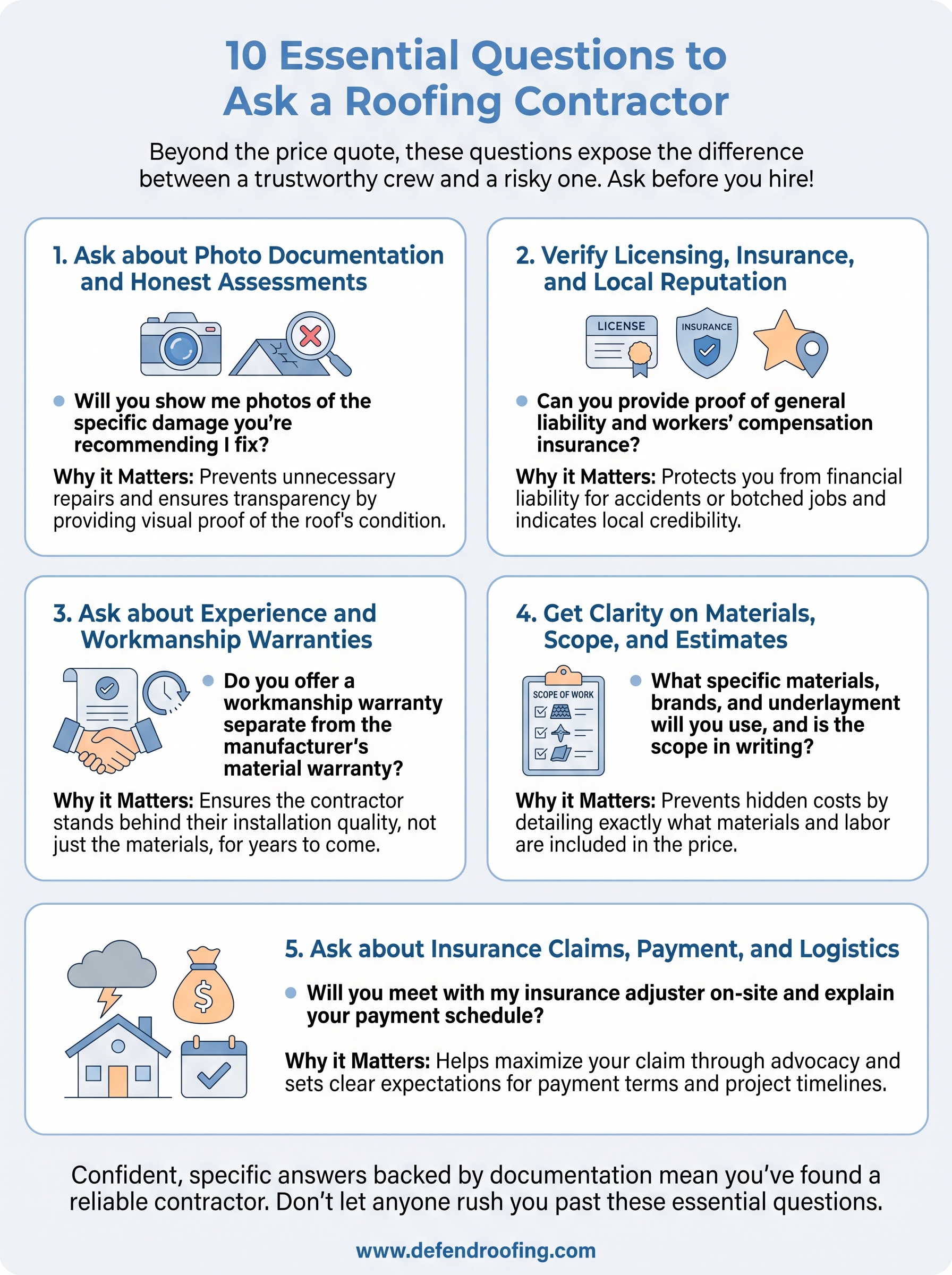
You don't need a roofing background to hire well. You just need to ask the right questions to ask a roofing contractor before signing anything, then pay attention to how each company answers. Confident, specific responses backed by documentation mean you're talking to a contractor who's done this right for years. Vague answers, dodged questions, or pressure to sign fast mean you should keep looking.
Write these ten questions down, bring them to every estimate, and don't let anyone rush you past them. Three generations of roofing experience taught the Buster family that homeowners who ask good questions end up with better roofs and fewer regrets.
Ready to see how we answer them? Reach out for a free quote and put us to the test.