How long does a roof replacement take? See timelines for shingles, metal, and tile roofs, plus how Central Texas weather and size impact your schedule.

One of the first questions homeowners ask us is how long does a roof replacement take, and the honest answer is that it depends. A straightforward asphalt shingle job on a single-story ranch home might wrap up in a day. A complex, multi-layer tear-off with architectural slate tiles? That could stretch into a week or more. Material choice, roof size, and weather all play a role in the final timeline.
At Defend Roofing, we've handled hundreds of replacements across Central Texas as a three-generation, family-owned roofing contractor. Chris and Greyson Buster work directly with every homeowner to set clear expectations before a single shingle comes off. That starts with understanding realistic project timelines, not vague estimates.
This article breaks down average roof replacement durations by material type, walks through the factors that speed things up or slow things down, and gives you a practical framework for planning your project. Whether you're coordinating around an insurance claim or just trying to schedule around your life, you'll leave with a clear picture of what to expect.
No two roofs are alike, which is why how long does a roof replacement take rarely has one clean answer. Your home's specific combination of size, pitch, materials, and local weather creates a unique set of variables that a roofing crew has to account for before committing to a firm schedule. Understanding those variables helps you plan your project without surprises.
Square footage is the most obvious factor, but roof pitch (how steep the slope is) adds complexity that raw numbers alone don't capture. A steep 12/12 pitch slows down every movement on the roof, requires additional safety rigging, and extends the workday even on a modest-sized home. Flat or low-slope roofs move faster in terms of footing but come with their own material and drainage prep that adds time on the front end.
The roofing material you choose directly controls how fast installation moves. Asphalt shingles go on quickly, and most experienced crews can cover a standard roof in a single day. Heavier products like metal panels or clay tiles take longer to handle, cut, and fasten properly. Beyond the new material, your contractor also has to deal with what's currently on the roof. One existing layer tears off fast. Two layers, or a layer sitting over damaged decking, adds significant time for removal and wood replacement before anything new can go down.
If your crew finds rotted decking during tear-off, budget at least a half-day for repairs before new material goes on.
A larger, well-organized crew works faster than a small team on the same footprint. Material delivery timing matters just as much because your contractor needs shingles, underlayment, and accessories on-site before work begins. Supply delays or a back-ordered product can push your start date back by several days, regardless of crew availability.
Most homeowners want to know how long does a roof replacement take from the moment the crew pulls up to the final walkthrough. For a standard asphalt shingle home, the entire process typically runs one to three days, broken into clear, sequential phases you can track from inside your house.
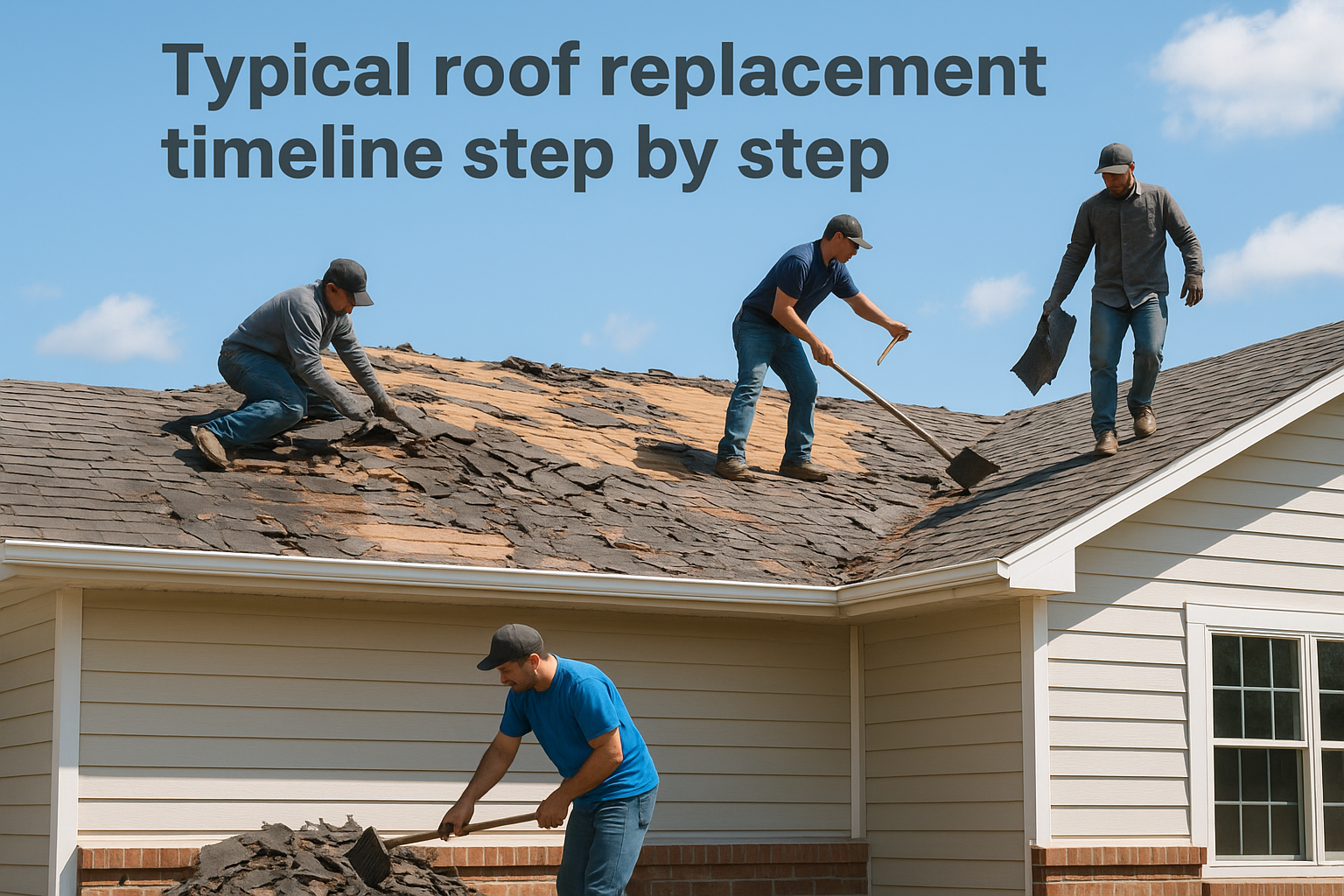
Your crew starts by stripping all existing material down to the roof deck. This is the most physically demanding phase of the job. Once the deck is exposed, the team inspects every board for rot, soft spots, or water damage before anything new goes down. Replacing deteriorated decking adds time, but skipping it shortens the life of your new roof significantly.
Decking repairs are non-negotiable. Installing new shingles over damaged wood defeats the purpose of the replacement entirely.
With a solid deck confirmed, your crew lays underlayment, ice and water shield, and starter strips before shingles go on. Flashing gets installed around chimneys, vents, and every valley. The job closes with a magnetic nail sweep and full site cleanup. Most experienced crews complete this phase the same day as tear-off on homes under 2,500 square feet.
Material choice directly answers how long does a roof replacement take for your specific home. Different materials require different handling, tools, and installation sequences, which is why two houses the same size can have completely different project durations.
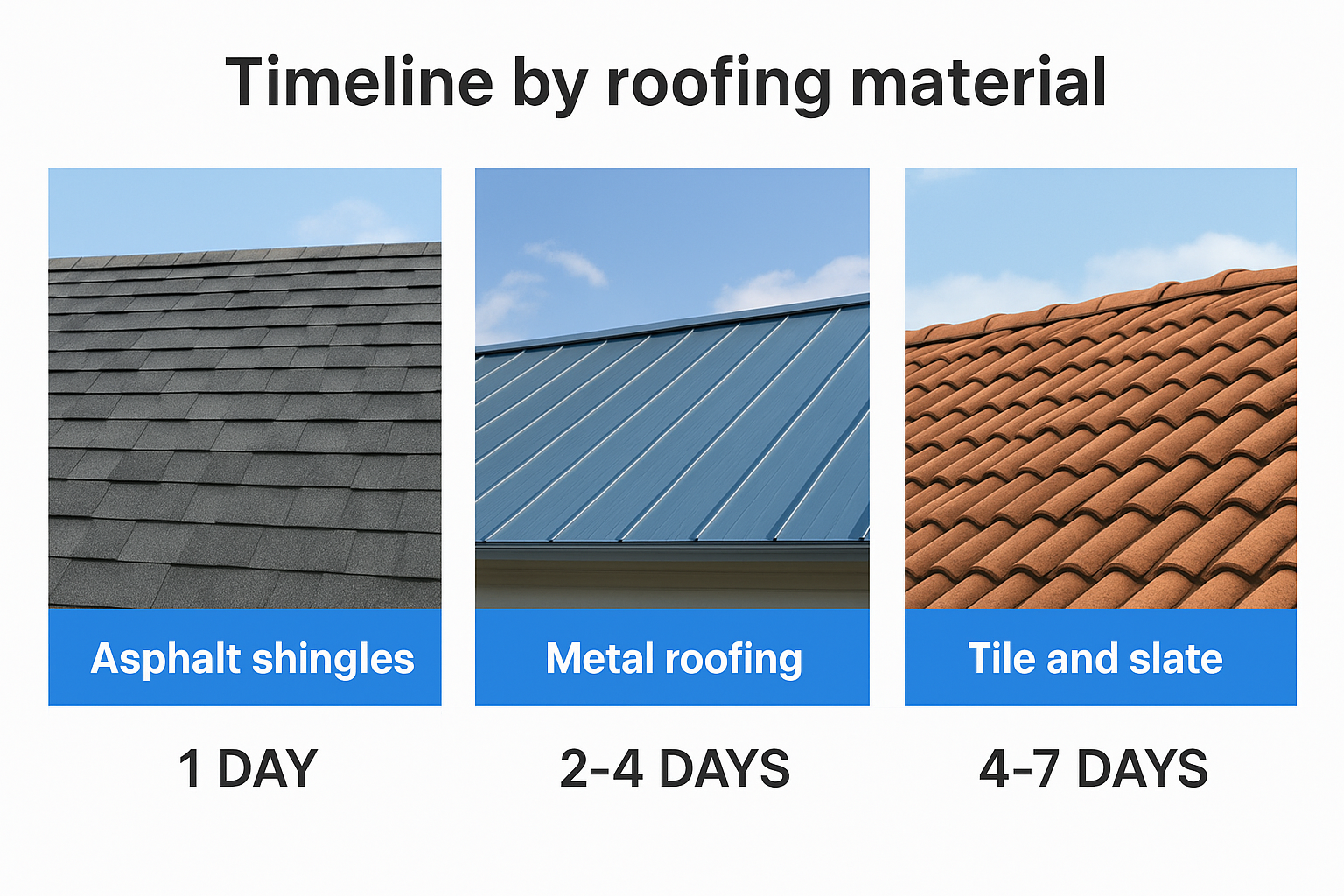
Asphalt shingles are the fastest material to install by a significant margin. Most experienced crews complete a full tear-off and reinstall in a single day on standard Central Texas homes.
This makes asphalt the most predictable scheduling option if you need a firm completion date and minimal disruption to your household.
Metal panels require two to four days on most homes. Each panel needs precise field measurements and careful cutting before it goes down.
Metal roofing installed too quickly is more likely to develop fastener problems within the first few years.
Seam alignment and fastening patterns demand attention that can't be rushed without compromising the roof's long-term performance.
Clay tile and natural slate are the most time-intensive materials available. Both are heavy and fragile during handling, which forces crews to work at a deliberate pace.
Expect your project to run four to seven days, with extra time possible if your decking needs reinforcement to carry the added structural load.
Roof size and structural complexity answer a big part of how long does a roof replacement take. Square footage sets the baseline, but features like multiple dormers, steep pitches, and intersecting roof planes add time on top of that baseline regardless of material choice.
Most homes under 2,000 square feet finish in a single day with an experienced crew. Your footprint is manageable, your crew can stage materials efficiently, and tear-off plus installation typically move in one continuous sequence without stopping for the night.
Simpler rooflines with fewer valleys and no dormers almost always finish fastest, even if the square footage pushes toward the higher end of this range.
Homes above 2,000 square feet generally require two to three days, and that timeline stretches further when your roof includes dormers, skylights, or multiple pitch changes. Each penetration and transition point requires individual flashing work that takes time to do correctly.
A multi-story home also slows the crew because material staging and crew movement between levels adds real hours to each phase of the project.
Even a well-planned project can run longer than expected. Central Texas throws specific curveballs at roofing crews that other regions don't face as often, and knowing what to watch for helps you build a smarter schedule before work begins.
Central Texas summers push daily temperatures above 100°F, which limits safe working hours for any crew. Your contractor may start earlier and finish by midday on the hottest days, which stretches a single-day job into two. Spring and fall bring afternoon thunderstorms that force mid-project shutdowns when lightning makes roof work dangerous.
Wet decking cannot accept new underlayment or shingles, so even a brief rain event can pause your project until surfaces dry completely.
Supply chain gaps affect how long does a roof replacement take just as much as weather does. Common delays in Central Texas include:
Confirm both material availability and local permit requirements before your crew schedules a firm start date to avoid last-minute holds.
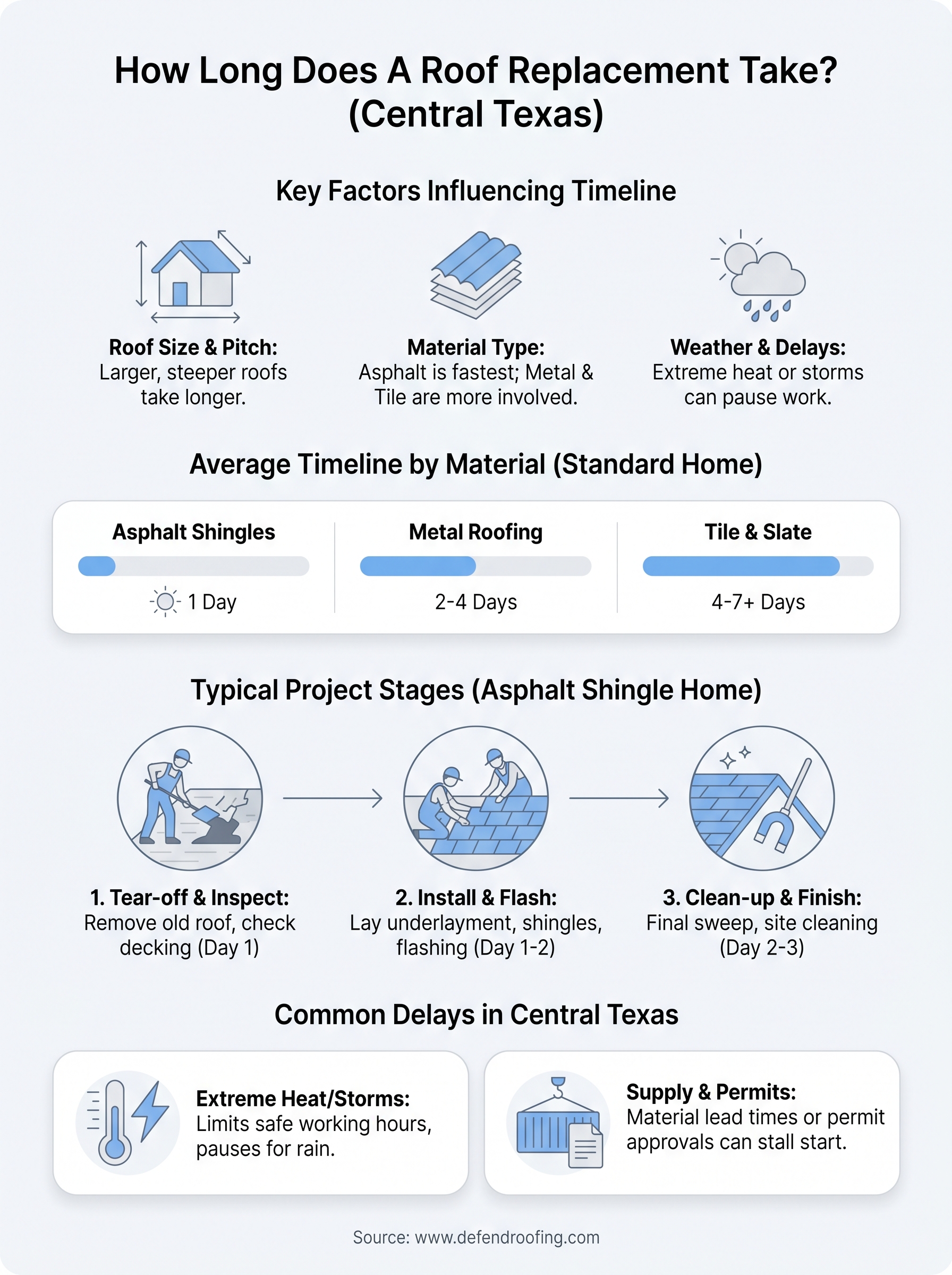
Now that you understand how long does a roof replacement take and what drives that timeline, you can plan your project with real confidence. Material choice, roof size, and Central Texas weather are the three factors that will shape your schedule more than anything else. Asphalt shingles finish fastest. Metal and tile take longer but deliver different long-term benefits depending on your home and budget.
Before any work begins, confirm material availability and local permit requirements with your contractor so your start date holds firm. A crew that shows up without materials on-site or without the right permits will burn days you didn't budget for.
At Defend Roofing, Chris and Greyson give every homeowner a clear, documented scope before scheduling begins, including realistic timeline expectations based on your specific roof. If you're ready to get started, request your free roof assessment and we'll walk you through every step.