Learn how often should you replace your roof by spotting 6 signs of damage, like shingle wear and leaks, to protect your home before issues get worse.
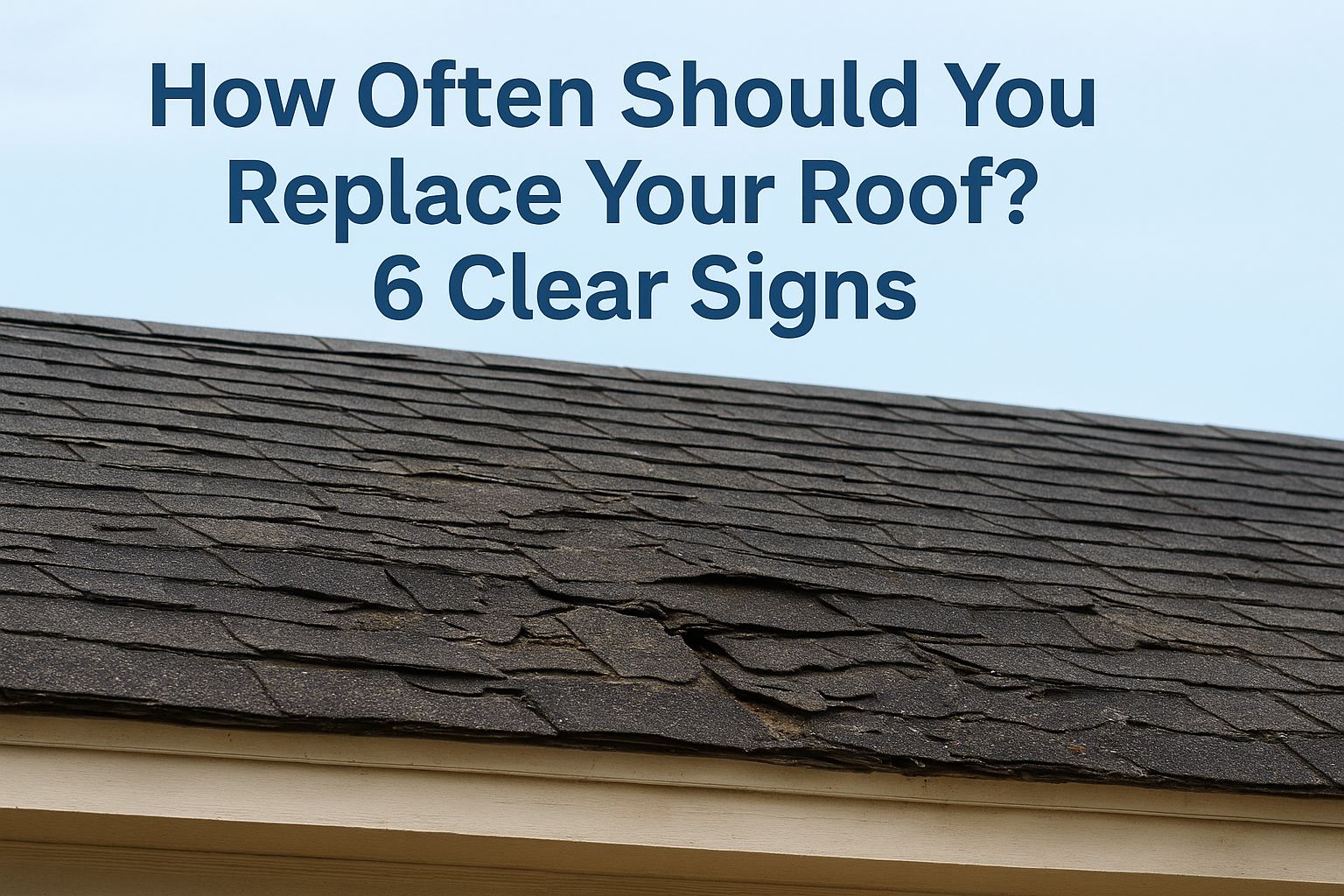
Most homeowners don't think about their roof until something goes wrong, a leak shows up, shingles blow off during a storm, or an inspector flags damage during a home sale. But knowing how often should you replace your roof matters long before those problems start. The answer depends on your roofing material, your local climate, and what's actually happening on your roof right now.
Here in Central Texas, roofs take a beating. Between hailstorms, UV exposure, and temperature swings, even well-installed roofs age faster than homeowners expect. At Defend Roofing, our father-and-son team, Chris and Greyson Buster, has seen it across three generations of roofing work. Some roofs last decades with minimal issues. Others need replacement well before the "expected" lifespan runs out.
This article breaks down typical roof lifespans by material, then walks you through six clear signs that your roof is ready for replacement. Whether you're dealing with storm damage or just wondering if your aging roof still has years left, you'll leave with a straightforward answer, and know exactly what to look for during your next inspection.
Before you can answer how often should you replace your roof, you need reliable information about what your roof actually looks like right now. Guessing based on age alone, or spotting a few damaged shingles from the ground, rarely tells the full story. A documented roof assessment gives you real data to make a confident repair or replacement decision.
A proper assessment isn't a quick walk-around. A qualified contractor gets on the roof, inspects every section, and documents what they find with photos. At Defend Roofing, every assessment includes 100+ photos covering shingle condition, flashing, valleys, gutters, and penetrations like vents and skylights. You get a clear picture of the roof's condition, not a verbal summary you have to accept on faith.
Most homeowners call a roofer only after visible damage appears indoors, such as a stain on the ceiling or a leak during a storm. By that point, underlying damage may have been building for months or years. A documented assessment catches problems before they escalate and provides evidence for insurance claims if storm damage is involved.
Photographic documentation of roof damage significantly strengthens insurance claims and prevents disputes with adjusters.
Your assessment results should drive the recommendation. Small, isolated damage on a roof with several years of life remaining typically warrants a repair. Widespread wear, failing materials, or structural problems across multiple sections usually point to replacement. A trustworthy contractor gives you honest guidance based on what the documentation shows, not what generates the larger invoice.
Schedule an assessment with a licensed, local roofing contractor who provides written findings and photos, not just a verbal quote. In Central Texas, that means finding someone familiar with hail patterns, intense UV exposure, and the specific materials common to the area. Defend Roofing's Precision Roof Assessment covers all of this with no pressure attached.
Age alone doesn't mean your roof needs replacement, but it's one of the clearest signals to start watching carefully. Knowing how often should you replace your roof starts with understanding what material you have and how many years it's already seen.
Roofing materials have well-established lifespans. If your roof is approaching or past its range, underlying materials are likely degrading even if the damage isn't obvious from the ground:
Roofing materials break down from UV exposure, heat cycling, and moisture accumulation over time. In Central Texas, intense sun and frequent hailstorms accelerate that process significantly. A roof past its prime loses its ability to shed water effectively, putting your attic, insulation, and interior structure at real risk.
An aging roof near the end of its lifespan carries increasing risk of failure even without a major storm event.
Repairs make sense when damage is isolated and the roof has at least five to seven years of life remaining. Once you're past that window, replacement delivers better long-term value than repeated patching.
Find out your roof's installation date from past permits or home inspection records, then schedule a professional documented assessment to know exactly where things stand.
Shingle condition is one of the most visible indicators of how often you should replace your roof. When shingles start curling at the edges, splitting down the middle, or disappearing entirely, your roof's primary water barrier is compromised.
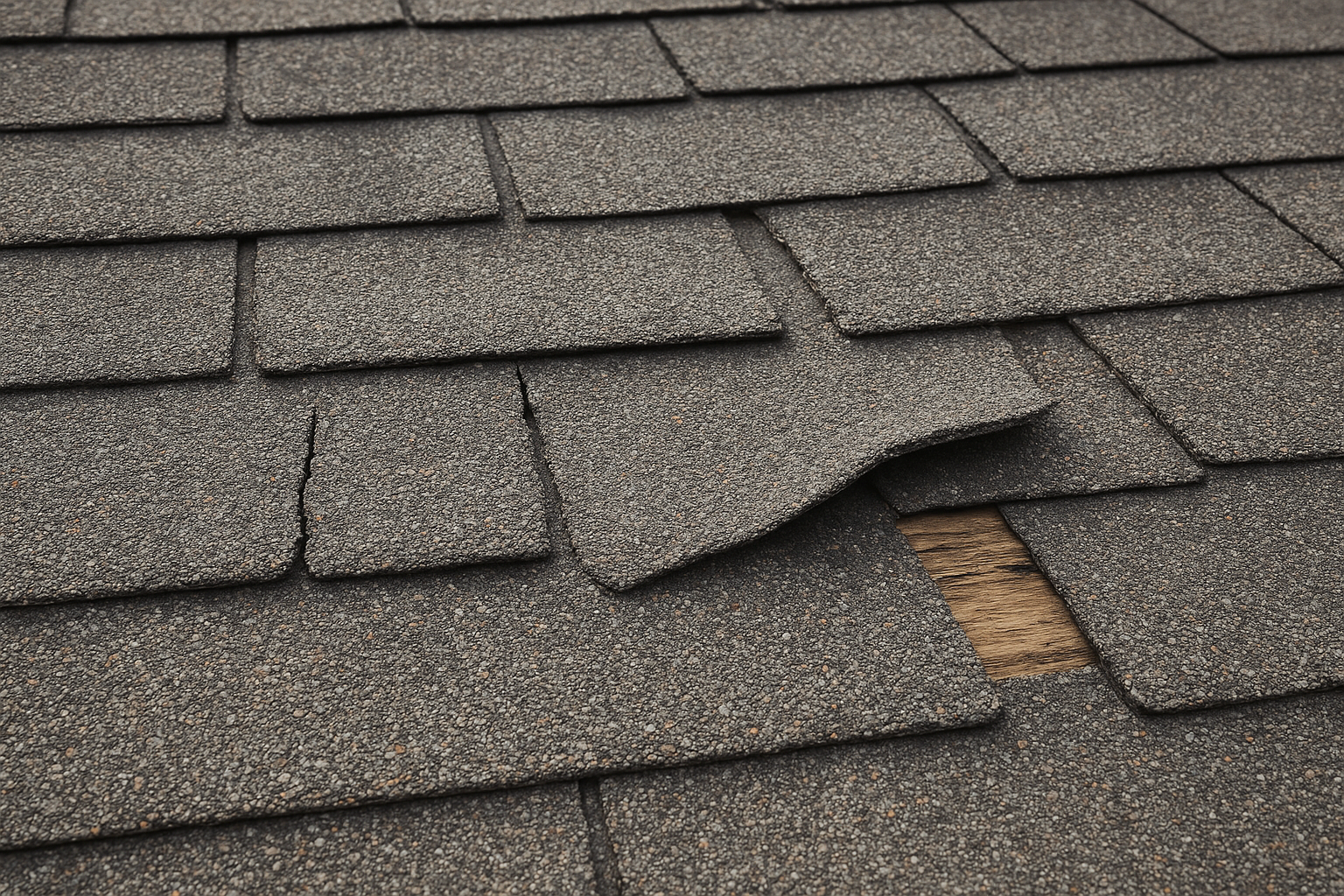
Curling shingles bend upward at the corners or buckle in the middle, a condition called cupping or clawing. Cracked shingles show visible splits or fractures across the surface, while missing shingles leave exposed decking with no protection from rain or UV damage at all.
Heat cycles, moisture absorption, and age dry out asphalt shingles over time, causing them to lose flexibility and warp. In Central Texas, intense summer heat accelerates this process considerably. Once shingles curl or crack, water works underneath them, soaking into the decking and insulation with every rainfall.
Missing shingles after a storm should be documented with photos immediately, as this supports insurance claims for hail or wind damage.
A small cluster of missing or cracked shingles on an otherwise sound roof is repairable. But if curling or cracking appears across multiple sections or slopes, the underlying material is failing broadly and replacement is the more cost-effective path forward.
Walk your property after any major storm and look for shingle debris in your yard or gutters. Then schedule a professional inspection to assess the full scope before making any repair or replacement decision.
Granule loss is one of the easiest signs to miss because it happens gradually. But when asphalt shingles shed their protective granule coating, the underlying material becomes exposed and your roof's ability to block UV rays and shed water drops significantly.
Check your gutters after heavy rain. Dark, sand-like granules accumulating at the bottom of your downspouts are a direct sign your shingles are wearing down. On the roof itself, worn patches look lighter or shinier than surrounding areas, and the shingle surface may feel smooth or rough instead of consistently textured.
Granules protect the asphalt layer beneath from sun and heat. Once they wash off, UV exposure accelerates shingle degradation rapidly. In Central Texas, intense summer heat and frequent hailstorms knock granules loose faster than in milder climates, shortening your roof's effective lifespan ahead of schedule.
Significant granule loss is one of the clearest indicators that a roof is approaching the end of its useful life and warrants a professional evaluation.
Localized granule loss on a relatively new roof can sometimes be patched. Widespread loss across multiple slopes or sections means the shingles are uniformly degraded and replacement is the practical choice.
Clean your gutters and inspect the downspout runoff after the next rain. If you spot heavy granule buildup, schedule a documented roof assessment to confirm how far the wear has progressed before the next storm season hits.
Water getting inside your home is one of the most urgent signals that your roof needs attention. When leaks, ceiling stains, or attic moisture appear, the question of how often should you replace your roof becomes much more immediate than a standard inspection timeline.
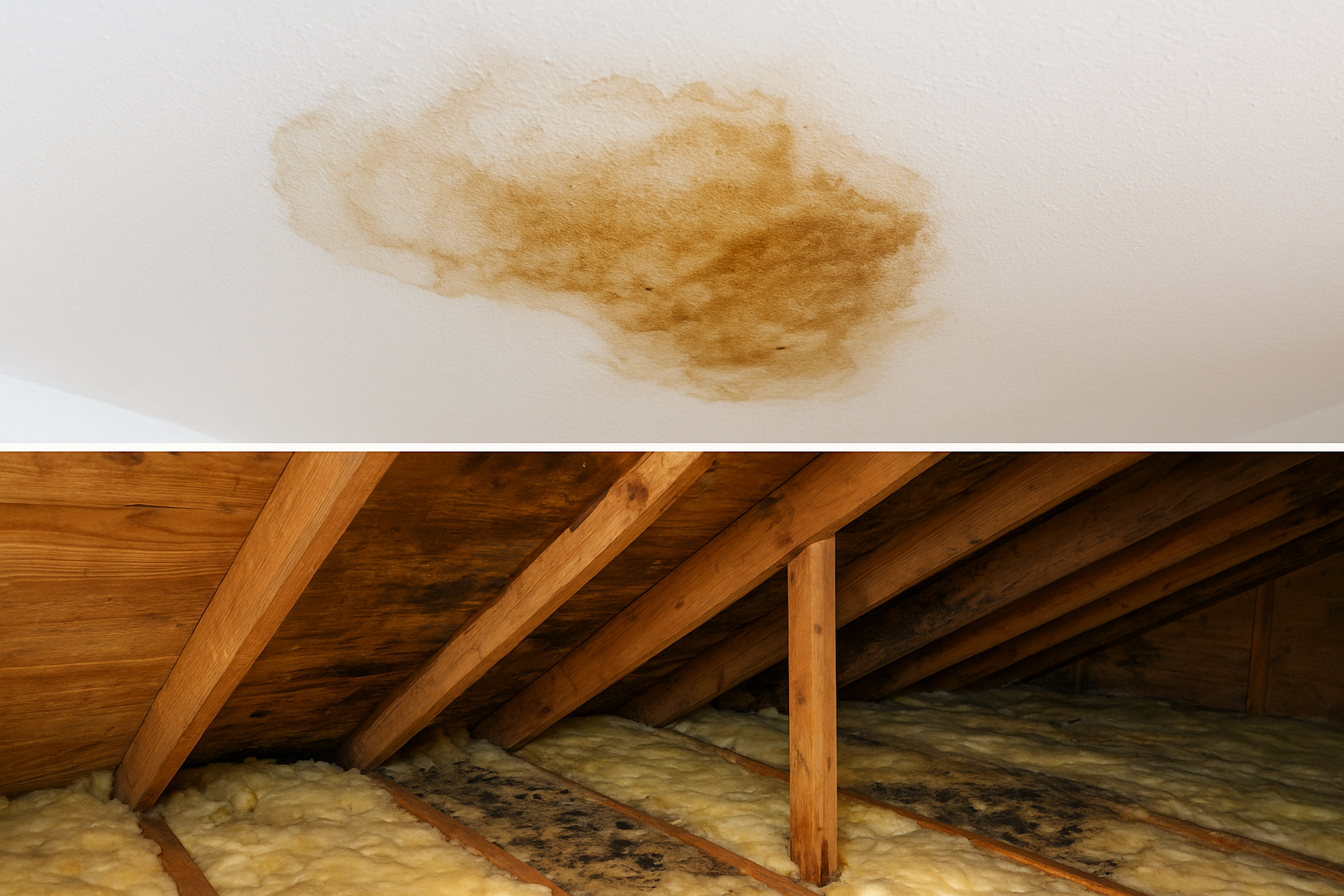
Brown or yellow stains on your ceiling indicate water has penetrated the roof surface and soaked through your insulation and drywall. In your attic, look for dark spots on the decking, wet or compressed insulation, and visible mold or mildew growth along rafters or sheathing.
Water infiltration usually starts at compromised flashing, failed sealants, or cracked shingles before spreading to surrounding materials. Left unaddressed, moisture destroys insulation, rots structural wood, and creates conditions for mold growth throughout your home.
Attic moisture that goes undetected for months can cause significant structural damage well beyond what a roof replacement alone will fix.
A single isolated leak near a flashing point or penetration on a younger roof is typically repairable. Multiple leak points or staining across different ceiling areas suggests the roof is failing broadly, making full replacement the more reliable and cost-effective solution.
Check your attic after every significant rain event, especially during Central Texas storm season. If you spot staining or active moisture, schedule a documented assessment immediately before the damage spreads further into your home's structure.
A sagging roofline or soft spots underfoot are among the most serious physical warnings on a roof. When structural deterioration reaches this level, the question of how often should you replace your roof has already been answered: replace it now.
From the street, a healthy roofline runs straight and level across every ridge and slope. Visible dips, waves, or curves indicate structural failure beneath the shingles. If you have attic access, press lightly on the decking. Soft or spongy areas mean the wood sheathing has absorbed enough moisture to fully break down.
Long-term moisture infiltration rots the wood decking and underlying structural framing. Once decking softens, it can no longer support the shingles above or handle load from rain, debris, or workers safely.
A sagging roof is a structural problem, not just a surface issue, and it requires immediate professional evaluation before the damage spreads further into your home.
Isolated soft spots on a small section of decking can sometimes be fixed by replacing the damaged boards only. But if sagging spans multiple sections or affects the ridge, full replacement is almost always the answer.
Contact a licensed roofing contractor immediately if you spot any visible sag or soft spots. This is not a wait-and-see situation. In Central Texas, Defend Roofing documents all structural findings with photos, giving you clear evidence for insurance claims and an honest repair or replacement recommendation.
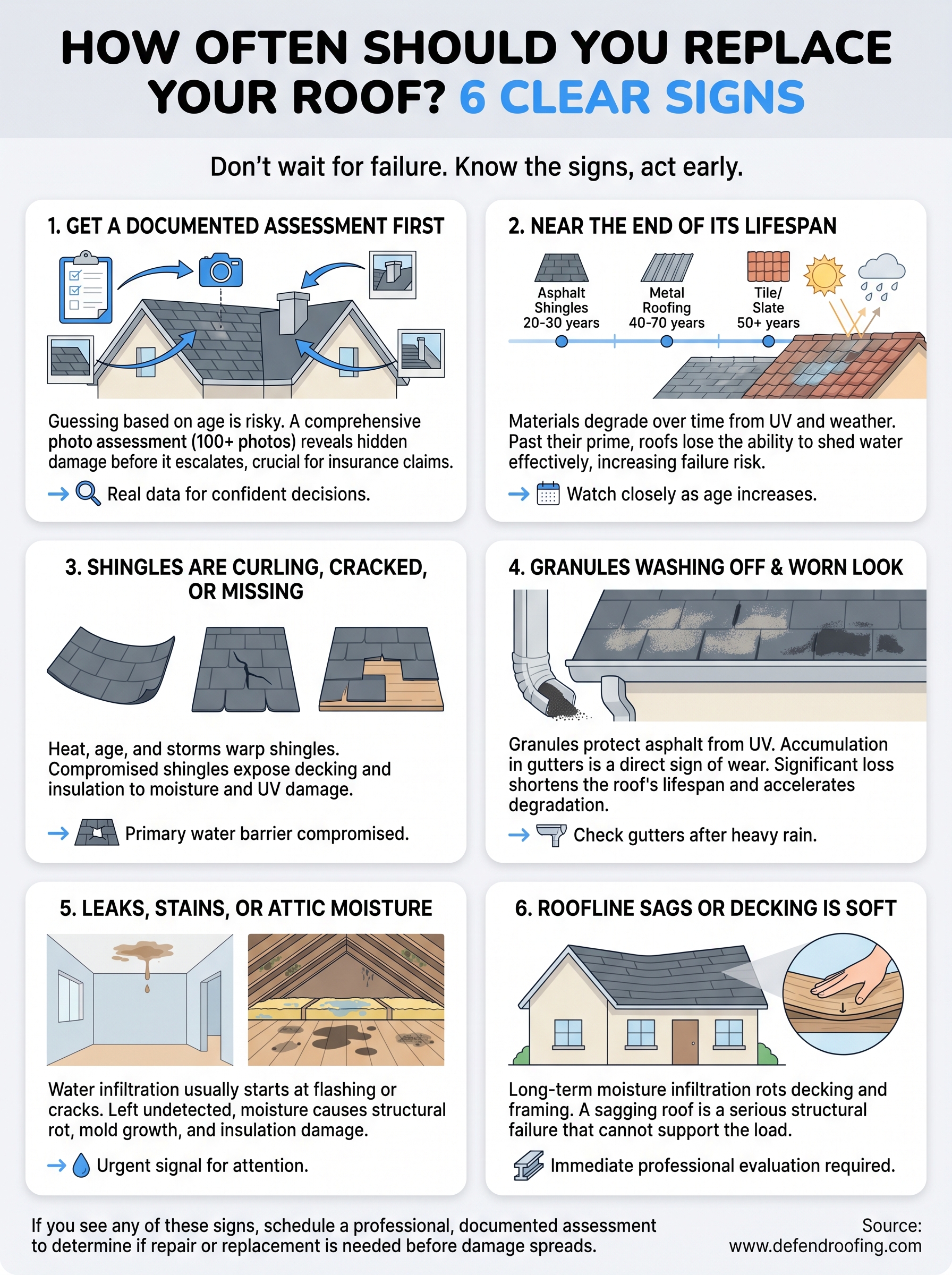
Knowing how often should you replace your roof comes down to two things: the age of your materials and what a documented inspection actually reveals. If any of the six signs in this article match what you're seeing on your roof or in your attic, don't delay getting professional eyes on it. Waiting gives moisture, UV damage, and structural wear more time to spread into areas that are expensive to fix.
Start by pulling your home's roofing records to confirm the installation date, then schedule a professional assessment before the next Central Texas storm season hits. If you're dealing with storm damage, get documentation in place quickly so your insurance claim has the evidence it needs. The Defend Roofing team provides a 100+ photo Precision Roof Assessment with honest repair or replacement guidance, no pressure attached. Schedule your roof assessment today and get a clear picture of exactly where your roof stands.