Learn the 5 signs you need a new roof in Central Texas. Spot storm damage, aging shingles, and leaks early to protect your home and avoid structural rot.

Most roof problems don't announce themselves with a dramatic leak in your living room. They start small, a few cracked shingles, some granules in the gutter, a water stain you keep meaning to look into. Knowing the signs you need a new roof can save you from a minor issue turning into a costly emergency repair or interior damage that insurance won't fully cover.
Here in Central Texas, our roofs take a beating. Between intense UV exposure, hailstorms, and sudden temperature swings, materials break down faster than homeowners expect. At Defend Roofing, our family has spent three generations inspecting and replacing roofs across the Austin area, and we've seen what happens when warning signs get ignored. We've also seen homeowners get pressured into replacements they didn't actually need, which is why honest assessment matters just as much as skilled installation.
This checklist covers five specific indicators that your roof may be at or past its useful life. Some you can spot from the ground. Others require a closer look. Either way, you'll walk away knowing exactly what to watch for and when it's time to call in a professional for a full evaluation.
Before you can act on the signs you need a new roof, you need a clear picture of what's actually happening up there. A photo-documented assessment gives you evidence you can review, share with your insurance adjuster, and reference over time. Without documentation, you're relying on someone's word, and that puts you in a weak position whether you're filing a claim or evaluating a contractor's recommendation.
A thorough inspection covers more than a quick visual scan from the driveway. A qualified inspector checks shingle condition, flashing integrity, ridge caps, valleys, and penetrations around vents and chimneys, along with drainage components like gutters and downspouts. In Central Texas specifically, inspectors also look for UV degradation and hail impact patterns, since the local climate accelerates certain failure modes that inspectors in cooler regions might not prioritize.
A professional assessment should include 100 or more photos covering every section of the roof, not just the areas that look obviously damaged.
You don't need to climb on your roof to gather useful information before calling a contractor. From the ground, look for missing or curled shingles, visible dark patches, and granule buildup collecting in your gutters or at the base of downspouts. Binoculars let you see detail without putting yourself at risk, and noting what you observe before a professional arrives helps them prioritize where to look first.
Any reputable contractor should deliver written findings backed by photos organized by roof section. For a repair recommendation, expect clear identification of the specific damaged areas and an explanation of why the surrounding structure still holds up. For a replacement recommendation, the documentation should show widespread failure patterns, material age indicators, and evidence that targeted repairs won't hold long-term. If a contractor can't produce this level of detail, treat it as a warning sign.
Your shingles are the first line of defense against Central Texas weather, and visible damage is one of the clearest signs you need a new roof. When shingles fail, they stop protecting the decking and underlayment beneath them from moisture and heat.
Curling, cupping, and cracking across multiple shingles point to widespread material failure rather than isolated wear. Look for bald spots where granules have worn away, leaving dark asphalt patches exposed across large sections of the roof.
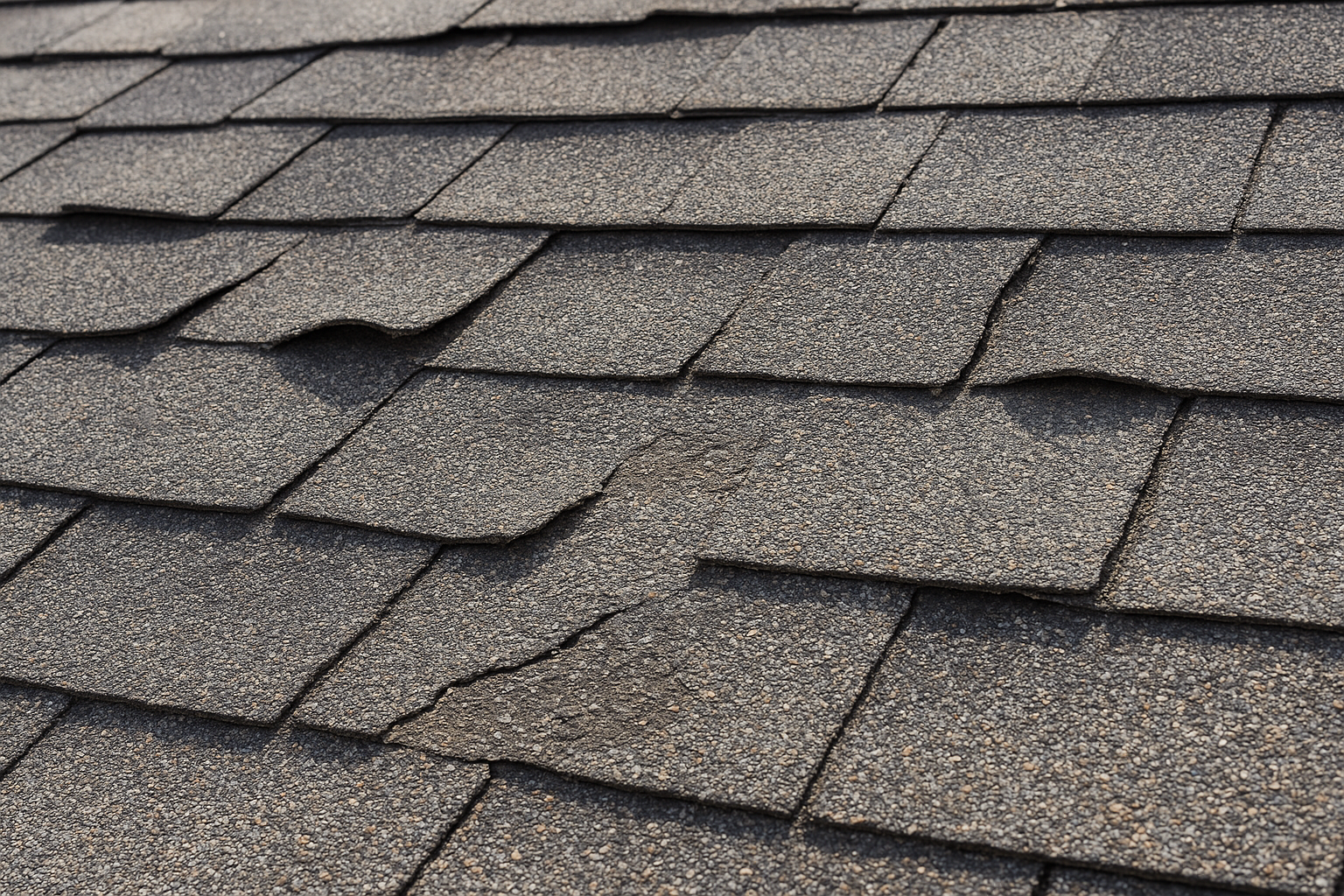
Central Texas hailstorms leave impact craters that damage the granule layer and crack the asphalt mat underneath. High winds break the adhesive seal strips, making those shingles vulnerable every time the next storm rolls through.
Granules collecting in your gutters after a storm are a reliable early warning sign, even when the roof damage isn't visible from the ground.
Localized damage covering less than 25 percent of the roof surface often warrants repair instead of full replacement. If the surrounding shingles remain structurally sound and well-bonded, a qualified contractor can match the material and extend your roof's useful life without a complete tear-off.
A second inspection after a major storm helps confirm whether the damage stayed contained or spread beyond what a repair can address long-term.
Interior water damage is one of the most direct signs you need a new roof. By the time moisture appears inside your home, the roof has already failed long enough for water to penetrate multiple layers.
Your attic reveals more than your ceiling does. Look for wet or compressed insulation, mold growth along the rafters, or daylight visible through the decking boards. These confirm the roof structure is compromised, not just the surface.
Stains that appear after rainfall point to the roof, while dripping from pipes or ductwork suggests a plumbing or HVAC source. Trace the stain toward an exterior wall or roof penetration to isolate the cause before you call a roofer.
If you can't isolate the source visually, a photo-documented inspection gives you clear evidence to separate roof failure from other system issues.
An intermittent leak still signals a failing roof system. Light rain may not expose damaged underlayment or flashing, but heavy rain does every time.
Each storm cycle worsens the underlying damage. What starts as a small wet spot expands into structural rot and mold growth if the root cause goes unaddressed.
Flashing failures are among the most overlooked signs you need a new roof or a targeted repair. Metal flashing seals the joints where your roof meets walls, chimneys, vents, and valleys, and when it fails, water finds a direct path into your home's structure.
Central Texas homes experience frequent thermal expansion and contraction due to sharp temperature swings between seasons. This movement pulls flashing away from its sealed positions, especially around chimney bases, pipe boots, and skylights.
Cracked or missing sealant around penetrations shows up as dried, shrinking material that no longer bridges the gap between the flashing and the roof surface. You may also spot rust stains, lifted metal edges, or visible gaps where the flashing has separated from the wall or chimney.
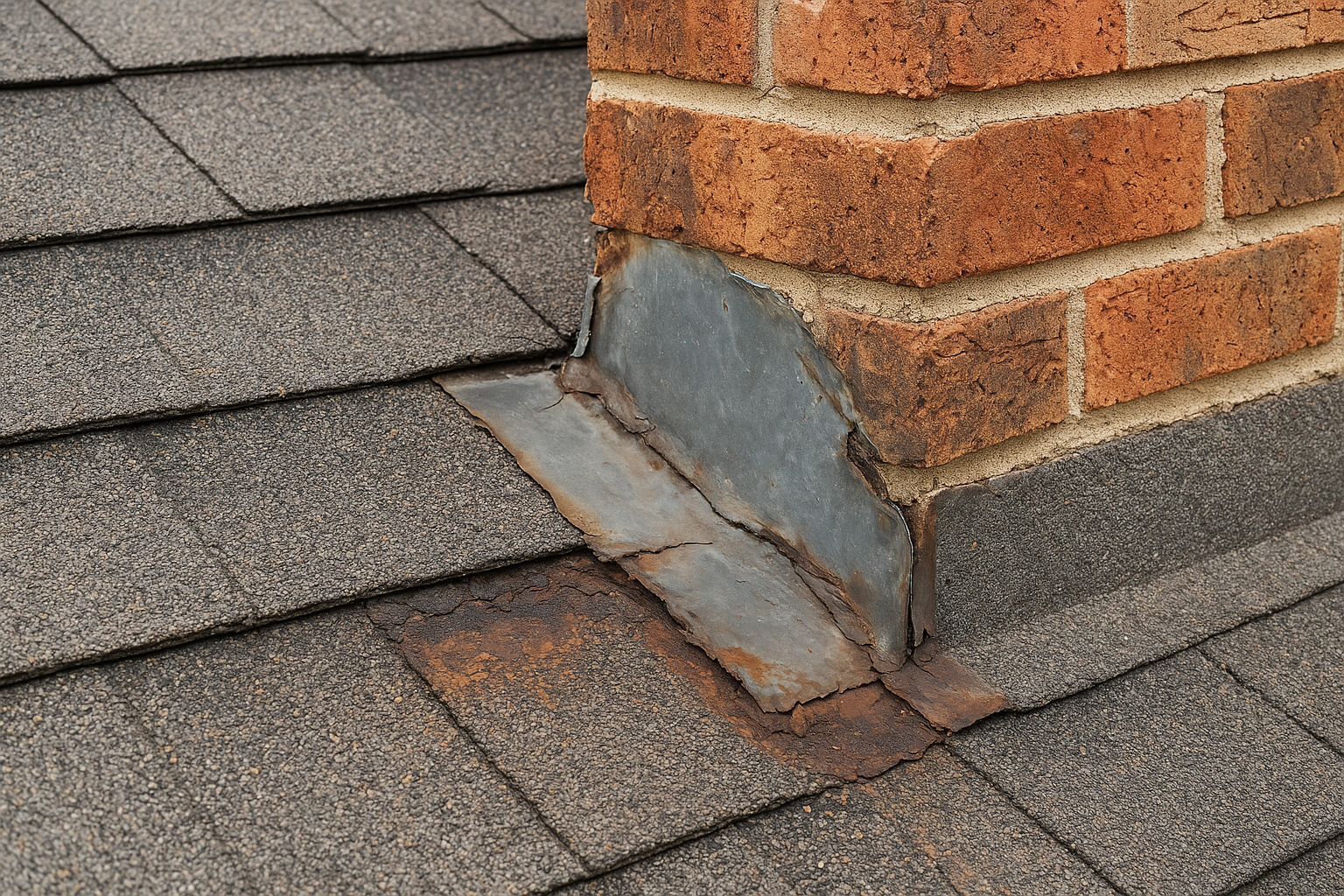
Flashing failures rarely fix themselves. Water intrusion from a small gap compounds with every rain cycle and drives rot into the decking below.
Roof valleys concentrate water flow from two adjoining slopes, making them high-wear zones that degrade faster than flat sections. Clogged gutters back water under your shingle edges and fascia boards, accelerating wood rot and pulling fasteners loose over time.
Sagging and soft spots are among the most serious signs you need a new roof. Unlike cosmetic damage, structural failure puts your home's interior at immediate risk and typically cannot be resolved with a targeted repair.
Walk your attic and press gently on the decking from below. Soft, spongy areas indicate rot in the decking boards, while visible dips along the roofline from outside signal that the underlying support structure has weakened. Both conditions require prompt professional evaluation before the next storm season arrives.
A sagging roofline signals structural failure, not surface wear. Each rain cycle adds weight and accelerates deterioration deeper into the decking.
Roof lifespan varies significantly by material and install quality. In Central Texas, UV intensity and frequent hailstorms push materials toward the lower end of their rated range, which means age alone can be enough justification for replacement.
If your roof is past 20 years old and shows two or more failure indicators from this checklist, replacement delivers better long-term value than repeated repairs. Damage limited to isolated zones on a younger roof with sound decking still warrants a targeted fix rather than a full tear-off.
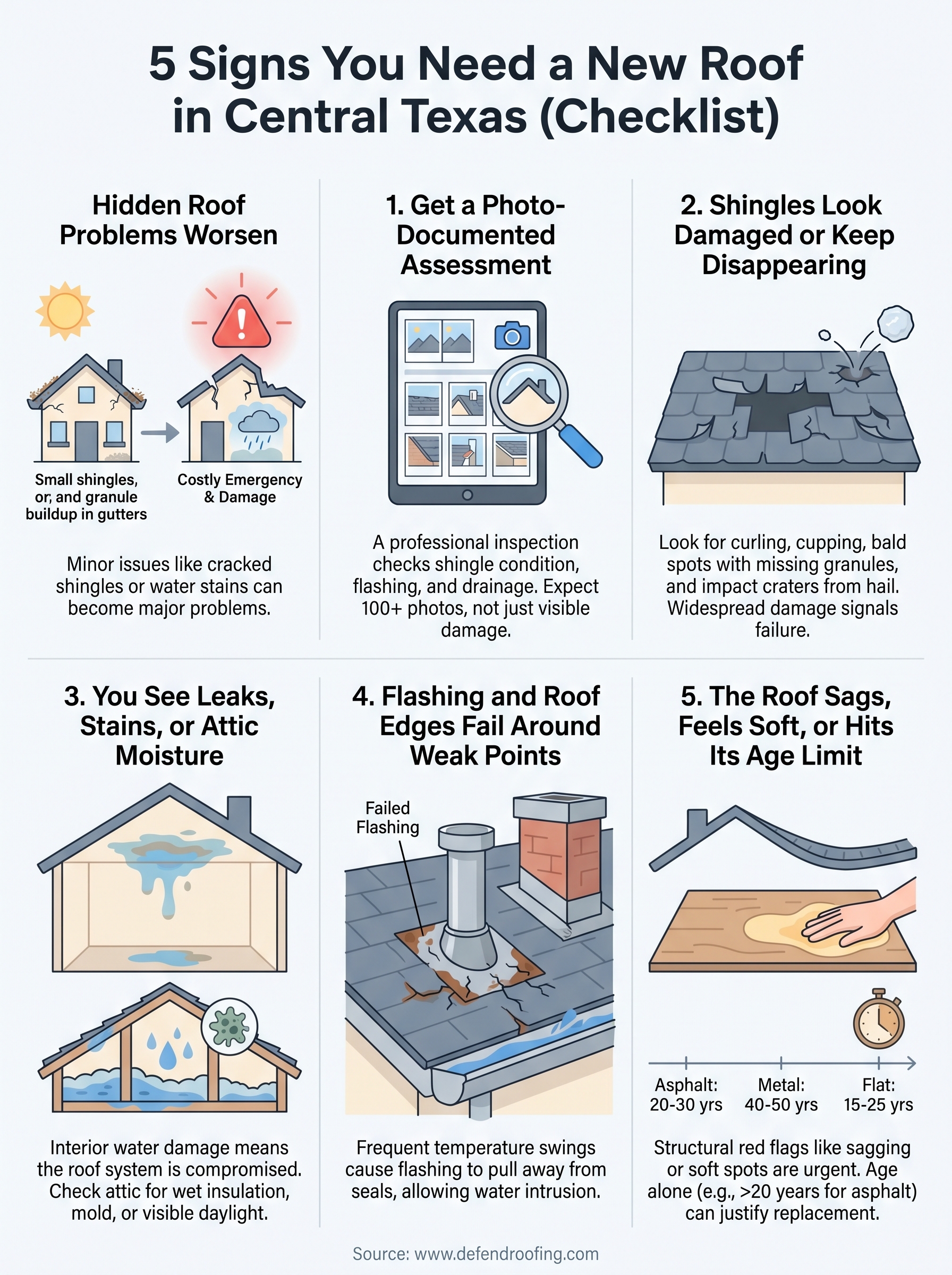
If you recognize multiple signs you need a new roof from this checklist, the clearest next step is getting a photo-documented professional assessment before minor damage compounds into something structural. Waiting rarely saves money, and most roof problems worsen with each storm cycle.
Start by noting what you can see from the ground: missing shingles, granule buildup in gutters, water stains inside, or any visible sagging along the roofline. Write those observations down before you call so your inspector knows exactly where to focus.
Defend Roofing serves homeowners across Austin, Cedar Park, Leander, and surrounding Central Texas communities. Our assessments include 100-plus photos organized by roof section, honest repair-versus-replace recommendations, and insurance claim support if you need it. There's no pressure and no upselling. Schedule your roof assessment today and get the documented answers you need to make a confident decision.