Learn how to choose a roofing contractor and avoid red flags. We cover how to verify insurance, compare bids, and protect your home from storm chasers.
Your roof is one of the most expensive components of your home, and the contractor you hire to work on it can either protect that investment or put it at risk. Knowing how to choose a roofing contractor matters because the gap between a great one and a terrible one is enormous, and the consequences show up in leaks, voided warranties, and thousands of dollars in avoidable damage.
Here's the uncomfortable truth: the roofing industry has a low barrier to entry. After every major storm in Central Texas, new "contractors" pop up, knock on doors, and disappear just as fast. As a family-owned roofing company with three generations of experience, we at Defend Roofing have seen the aftermath of these operations firsthand, homeowners left with shoddy work, no warranty to fall back on, and an uphill battle with their insurance company. It's exactly why transparency and documentation sit at the center of everything we do.
This guide breaks down seven practical tips to help you vet roofing contractors, spot red flags before you sign anything, and ask the right questions that separate professionals from pretenders. Whether you're dealing with storm damage or planning a roof replacement, these steps will put you in a much stronger position to make a confident hiring decision.
When you're figuring out how to choose a roofing contractor, the first step is understanding what's actually wrong with your roof before you accept any scope of work. At Defend Roofing, every project starts with a Precision Roof Assessment that gives you a clear, documented picture of your roof's condition, so you're never making decisions based on a contractor's word alone.
Our assessment covers every part of your roof system, not just the shingles. A trained inspector documents ridge lines, valleys, flashing, gutters, soffits, fascia, and any areas showing wear, damage, or improper installation. You receive more than 100 organized photos sorted by location and issue type, so you can see exactly what we see before any work begins.
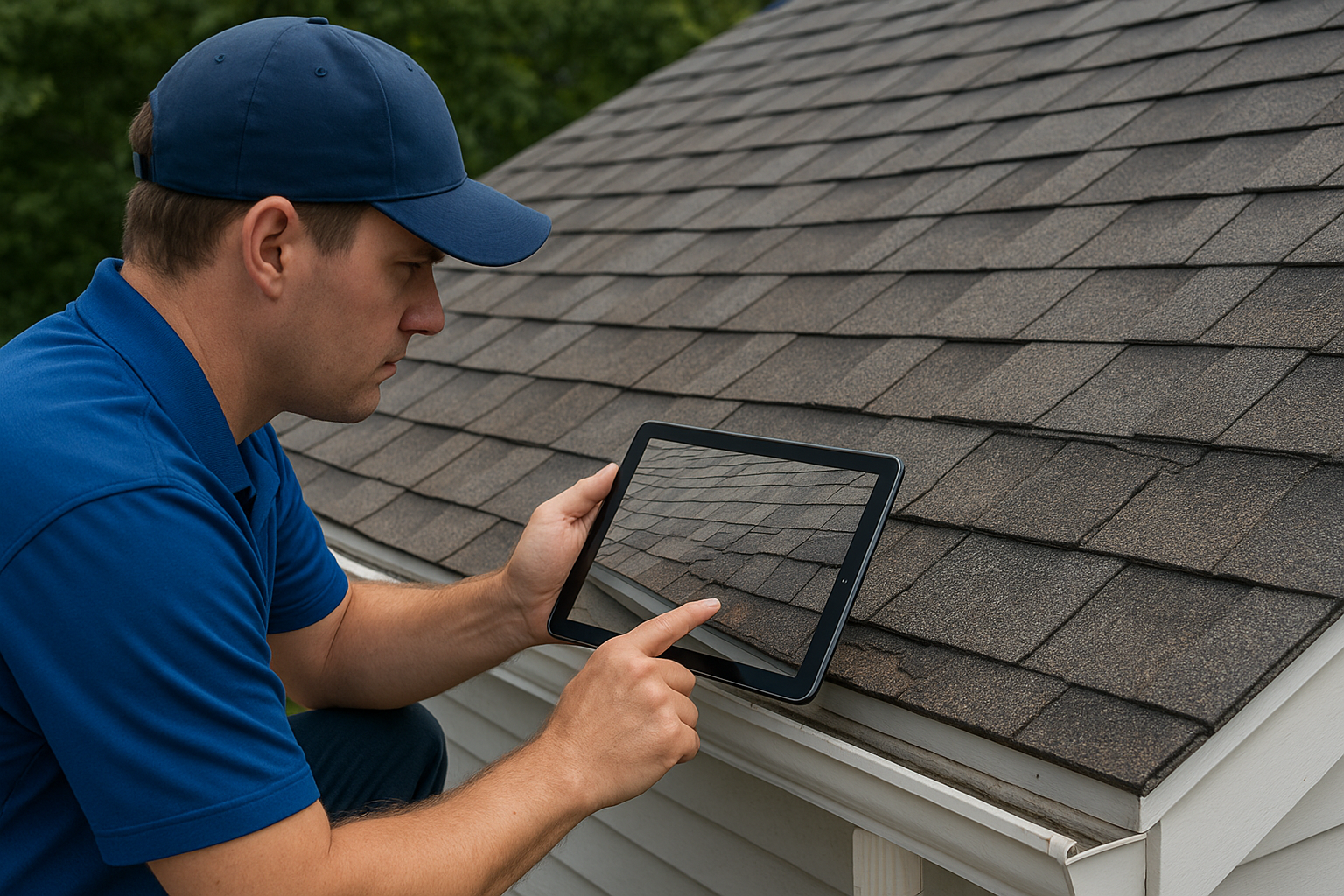
Not every damaged roof needs a full replacement, and pushing unnecessary work is never part of how we operate. After documenting the condition, we weigh the roof's age, the extent of damage, and whether repairs would fix the root problem or just delay a larger expense down the road.
A contractor who recommends replacement without documented evidence of widespread failure is protecting their profit margin, not your home.
When repairs can extend your roof's life at a reasonable cost, that is what we recommend. If the damage crosses a clear threshold where replacement is the more economical long-term decision, we show you exactly why using the photos to back up the call.
When storm damage is involved, thorough photo documentation is the difference between a smooth insurance claim and a disputed one. Insurance adjusters need clear evidence of the damage, its location, and its probable cause, and our assessment produces adjuster-ready materials that give your claim a solid foundation from the start.
You also walk away with a complete record of your roof's pre-repair condition, which protects you if any questions come up later about what work was done and why it was necessary.
One of the most practical steps in figuring out how to choose a roofing contractor is confirming that the company is a real, licensed local business, not a temporary operation that showed up after the last hailstorm and will be gone before your roof has a chance to fail.
Texas does not require a state-issued roofing contractor license, but many cities and counties in the Austin area require a local business registration and permits for roofing work. You can verify contractor registration and permit history through your city or county permitting office before anyone gets on your roof.
A contractor who refuses to pull permits is signaling they either don't qualify or don't want a record of accountability attached to the job.
A legitimate contractor has a verifiable physical address, a consistent history of local reviews on Google, and references from homeowners in your area. Storm chasers typically carry out-of-state registrations, use temporary phone numbers, and have no track record you can independently confirm. Search the company's address before you commit to anything.
Find out whether the company uses in-house crews or subcontracts labor to third parties, because that decision directly affects workmanship accountability. Ask how long they have operated specifically in Central Texas, and request references from recent local projects you can call yourself.
Insurance verification is a non-negotiable step when deciding how to choose a roofing contractor. If a worker gets injured on your property or your home sustains damage during the job, the absence of proper coverage puts you financially on the hook for those costs, not the contractor. This is not a formality you can skip.
Ask every contractor to provide certificates of insurance before anyone sets foot on your roof. The certificate should name your address as the job site and show current policy dates. Request this document directly from the contractor, and verify it with the insurance provider listed if you have any doubts about its accuracy.
Do not accept a contractor's verbal assurance that they are covered. Always get the certificate in writing before work begins.
General liability insurance covers damage the contractor causes to your home or property during the project. Workers' compensation insurance covers injuries to any crew member working on your roof. You need both because each policy addresses a completely different category of risk, and a gap in either one creates direct financial exposure for you.
Walk away immediately. A legitimate roofing company carries both policies as a standard cost of running the business. If a contractor hesitates, deflects, or claims coverage without providing documentation, treat that as a serious red flag and move to your next candidate without second-guessing it.
Getting multiple estimates is a standard step in figuring out how to choose a roofing contractor, but comparing them requires more than looking at the bottom-line price. A low bid often reflects missing scope, not better value, and you only find that out after the job starts.
A legitimate estimate names the specific materials being used, including manufacturer, product line, and color. It lists the number of squares being installed, tear-off and disposal fees, underlayment type, flashing details, and any ridge cap or ventilation components being replaced. If the estimate is a single paragraph with a total price, that is not enough detail to evaluate.
A vague estimate protects the contractor, not you. The less that is written down, the more room they have to cut corners or add charges later.
Line the estimates up side by side and match each line item across every bid. If one contractor includes new pipe boot flashing and another does not mention it, those bids are not comparable at face value. Ask each contractor to explain what their price includes and excludes so you can identify gaps before signing.
Rotted decking is common and often not visible until tear-off begins. Ask each contractor what they charge per sheet of decking replacement and request that any change orders above a set threshold require your written approval before the crew proceeds. This one clause protects your budget from open-ended cost increases mid-project.
Warranties are one of the most overlooked factors when figuring out how to choose a roofing contractor, yet most homeowners never read the fine print until something goes wrong. Understanding what each warranty covers, and what voids it, puts you in control of this decision before any work begins.
Manufacturer warranties cover defects in the roofing materials themselves, typically shingles, and can range from 20 years to lifetime coverage depending on the product line. Workmanship warranties cover installation errors made by the contractor and are only as good as the company standing behind them. You need both, and both should be in writing before you sign anything.
A contractor who offers no workmanship warranty is telling you exactly how much confidence they have in their own installation.
A complete roof system includes far more than shingles. Proper attic ventilation prevents heat and moisture buildup that degrades shingles from the inside out, while quality underlayment adds a critical secondary water barrier beneath the surface materials. Confirm that the contractor replaces flashing at every penetration point, including chimneys, vents, and skylights, because skipping those components is one of the most common ways cheaper bids cut costs.

Most manufacturer warranties require certified installation by an approved contractor to remain active, and failing to meet those installation standards can cancel coverage entirely. Ask the contractor for proof of their manufacturer certification, and confirm they will register your warranty with the manufacturer once the job is complete. Get the registration confirmation in writing.
The contract is where everything you have verified comes together in a legally binding document, and skipping a careful review is one of the most expensive mistakes homeowners make. When thinking about how to choose a roofing contractor, a clear and detailed contract separates professionals from operations that rely on vague language to avoid accountability.
A standard deposit runs 10 to 30 percent of the total job cost, with the remainder tied to project milestones or completion. Never pay more than 50 percent before work begins, and avoid any contractor who demands full payment upfront before materials arrive or a single shingle goes on.
Require a signed lien waiver at final payment so suppliers and subcontractors cannot place a lien on your home for unpaid invoices the contractor failed to settle. Confirm the contractor pulls all required permits and handles the city inspection, because that responsibility should never fall to you.
If a contractor asks you to pull the permit in your own name, walk away. That shifts liability onto you if the work fails inspection.
Your contract should spell out how the crew protects landscaping, siding, and windows during tear-off, and how they handle daily cleanup of nails and debris. Require a final walkthrough before releasing the last payment so any punch-list items get resolved while the crew is still on site.
Knowing how to choose a roofing contractor ultimately comes down to recognizing the patterns that separate legitimate companies from operations built around one bad storm season. Pressure, vague claims, and suspicious paperwork are the three clearest warning signs, and understanding each one protects you before you commit to anything.
Any contractor who tells you the price is only valid if you sign right now is using a sales tactic, not giving you a fair offer. Legitimate roofing companies do not manufacture artificial urgency because their pricing reflects real material and labor costs that do not expire at sundown. Walk away from any offer that pressures you to decide before you have had time to verify credentials, compare bids, or review the contract.
If a contractor makes you feel rushed, that feeling is intentional, and it should end the conversation.
Contractors who describe significant damage without showing you photographs or pointing to specific roof locations are guessing or fabricating. Ask to see the actual damage during the assessment, and decline any scope of work that lacks documented evidence to back every line item.
Never sign a direction to pay or an assignment of benefits without fully understanding what you are transferring to the contractor. These documents can hand over control of your entire insurance claim, leaving you with little say if the work or payout falls short.
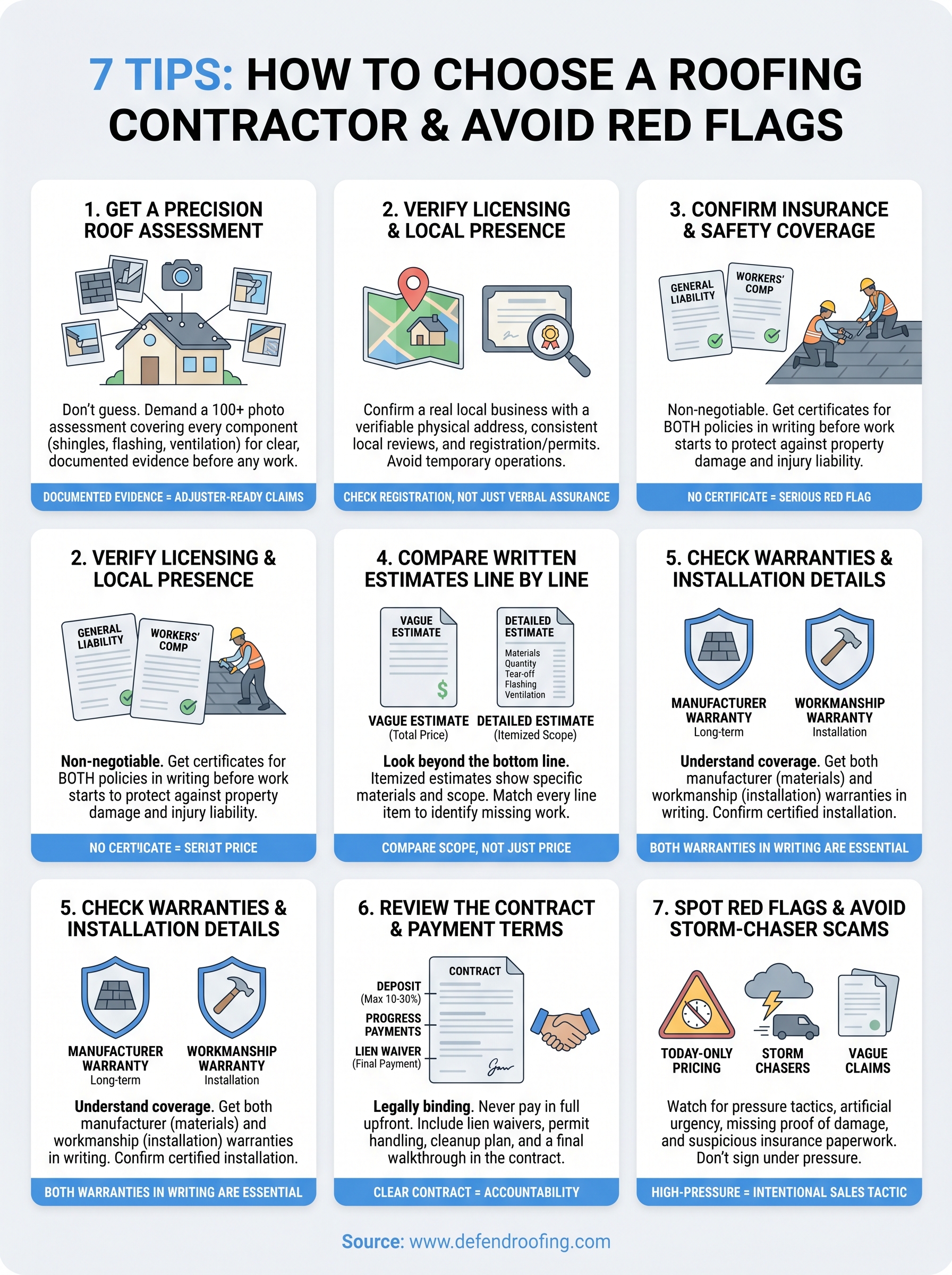
Knowing how to choose a roofing contractor is only useful if you apply it before you hire anyone. Every tip in this guide comes down to one principle: documented evidence and clear accountability protect you better than any sales pitch or handshake deal. Verify licensing, confirm insurance, read the contract, and never let urgency push you into a decision you have not fully vetted.
Your roof is too important to hand to the wrong company. At Defend Roofing, we back every project with a 100+ photo Precision Roof Assessment, a written scope of work, and a Limited Lifetime Workmanship Warranty, so you have the documentation and protection you deserve from the first conversation to the final walkthrough. We serve homeowners across Central Texas, and we are always straight with you about what your roof actually needs.
Schedule your free roof assessment today and see exactly what your roof is dealing with before you commit to anything.