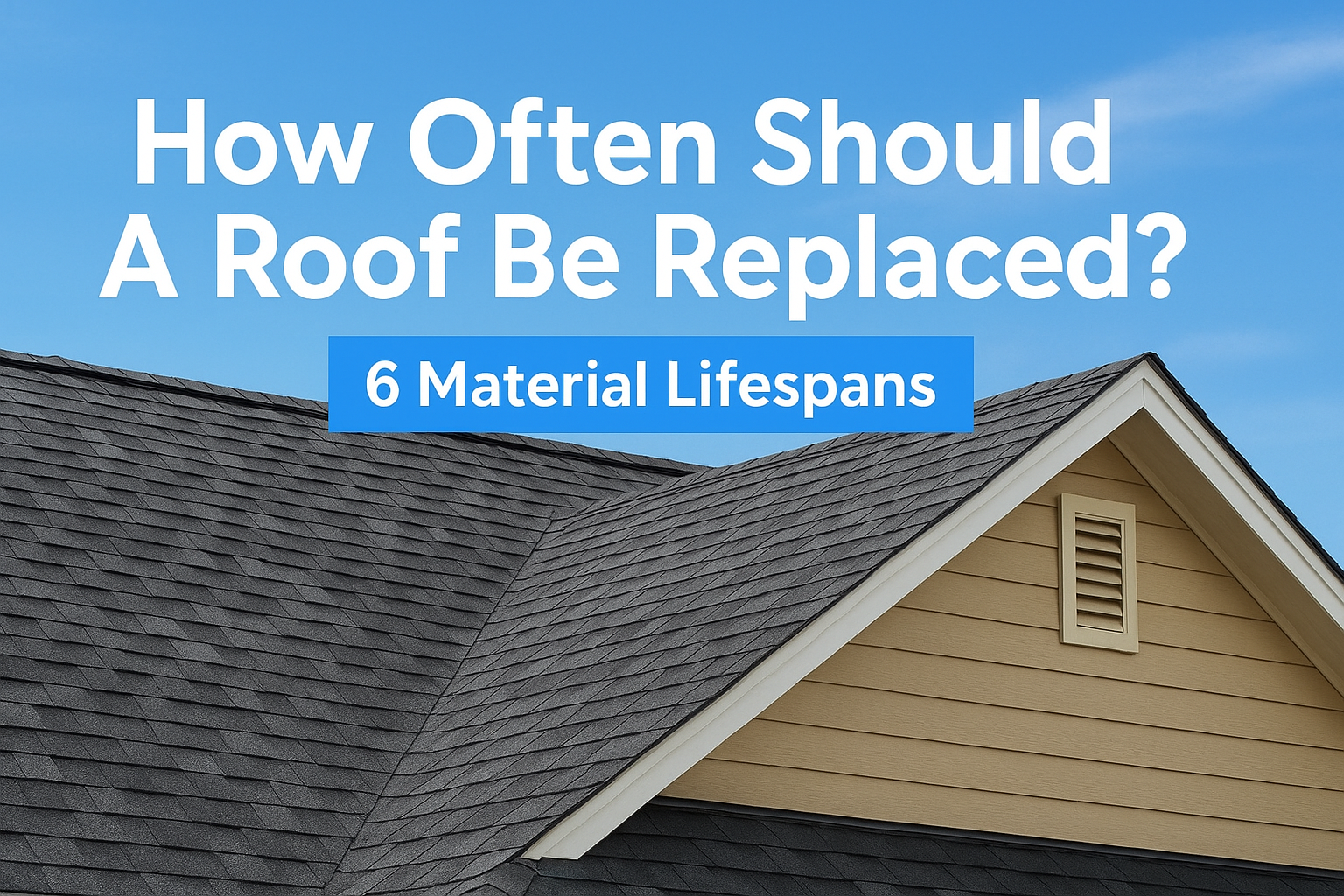
Learn how often should a roof be replaced with our guide to 6 material lifespans. Spot warning signs for asphalt, metal, and tile to protect your home.
Most homeowners don't think about their roof until something goes wrong, a leak after a storm, shingles in the yard, or a water stain spreading across the ceiling. But knowing how often should a roof be replaced before those problems show up can save you thousands of dollars and a lot of stress. The answer depends almost entirely on what's sitting on top of your house right now.
At Defend Roofing, our family has spent three generations inspecting and replacing roofs across Central Texas. We've seen 15-year-old roofs that were done, and 30-year-old roofs still holding strong. The difference comes down to material, installation quality, and how well the roof was maintained along the way.
This article breaks down the realistic lifespan of six common roofing materials, the warning signs that replacement is coming, and how to tell whether you actually need a full replacement or just a repair. No guesswork, just straightforward answers based on what we see on roofs every week.
Asphalt shingles are the most common roofing material in the US, and for good reason: they're affordable, widely available, and relatively easy to install. But they're also the material we most often see replaced ahead of schedule because of improper installation or inadequate attic ventilation.
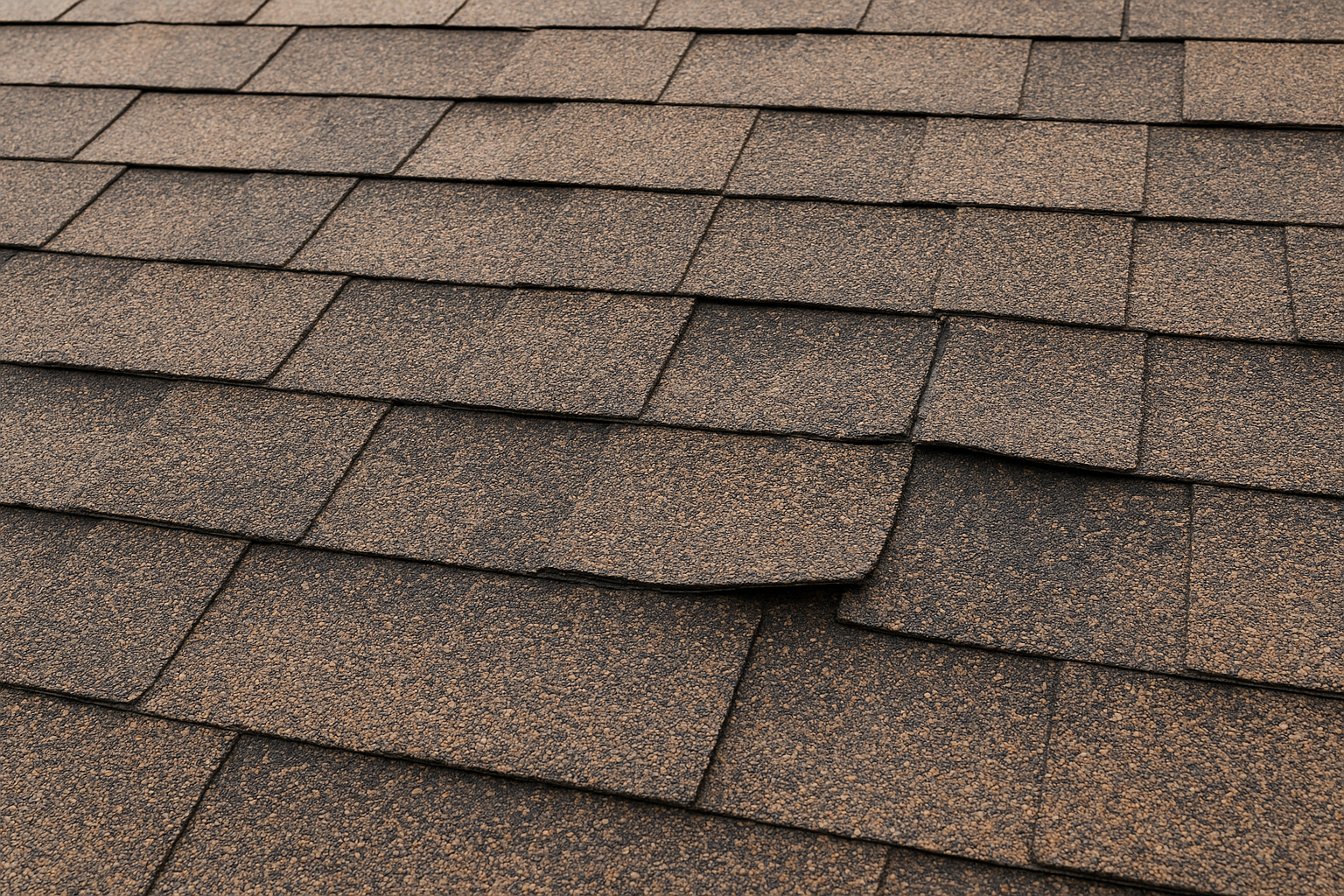
Standard three-tab asphalt shingles typically last 15 to 20 years. In Central Texas, heat and UV exposure eat into that range, so many homeowners see performance drop closer to the lower end of that window. Attic ventilation plays a major role: poor airflow traps heat, which bakes shingles from underneath and shortens their life significantly.
If your attic runs consistently hot in summer, your shingles are aging faster than the manufacturer's rating suggests.
Installation quality matters just as much as the material itself. Shingles nailed too high or without proper starter strips will fail years before their rated lifespan, regardless of brand.
The first thing you'll usually notice is granule loss, the small ceramic particles embedded in the shingle surface. Check your gutters after a rain: a thick layer of granules is a sign your shingles are breaking down faster than normal. You may also see curling or cupping at the shingle edges, which means the material has dried out and lost flexibility.
Cracking and blistering, along with bare patches where granules have worn away completely, are signs you're moving toward the end of the roof's useful life. Any of these warrant a professional inspection.
If the damage is isolated to one section, like around a chimney or from storm debris, repair usually makes sense. But if you're seeing widespread granule loss or curling across multiple roof areas, replacing individual shingles won't solve the underlying age problem.
A useful benchmark when asking how often should a roof be replaced: if more than 30% of your roof shows active wear, a full replacement is typically more cost-effective than repeated patch repairs.
Architectural shingles (also called dimensional shingles) are a step up from standard three-tab. They're thicker, heavier, and designed to mimic the look of wood shake or slate. Most new residential roofs in Central Texas use these as the default option because they hold up better in heat, wind, and hail.
Architectural shingles typically last 25 to 30 years under normal conditions. Central Texas heat and UV exposure can push performance toward the lower end, but good attic ventilation and proper installation help protect the full lifespan. Most manufacturers back these shingles with 30-year or lifetime limited warranties, though warranty coverage doesn't automatically mean the roof hits that number.
A poorly ventilated attic can cut years off even a premium shingle's life, regardless of what the warranty says.
Watch for granule loss in your gutters, visible cracking along shingle edges, and surface blistering. Because architectural shingles are thicker, early wear can be less obvious at first.
Dark streaking or moss growth signals moisture retention underneath, which accelerates deterioration and warrants a professional inspection sooner rather than later.
When thinking about how often should a roof be replaced, isolated wind or impact damage on architectural shingles is usually repairable. But widespread granule loss or cracking across multiple sections points toward full replacement, particularly if your roof is already past the 20-year mark.
Metal roofing has grown in popularity across Central Texas because it handles heat, hail, and long summers better than most alternatives. Standing seam panels and metal shingles both appear regularly on Austin-area homes, and both carry a reputation for outlasting asphalt by a significant margin.
Metal roofs typically last 40 to 70 years depending on the material. Steel panels generally land in the 40 to 50-year range, while copper and zinc can push well past 70. Thermal expansion from intense Texas heat cycles puts stress on fasteners and sealants, so proper installation with adequate expansion allowances matters more than most homeowners realize.
Screws and fasteners on exposed-fastener metal roofs tend to fail before the panels themselves, so inspecting them every few years extends your roof's life considerably.
Look for rust streaks, loose fasteners, or sealant cracking around penetrations like vents and skylights. Paint fading or chalking on coated steel panels signals UV degradation and can expose the underlying metal to moisture over time.
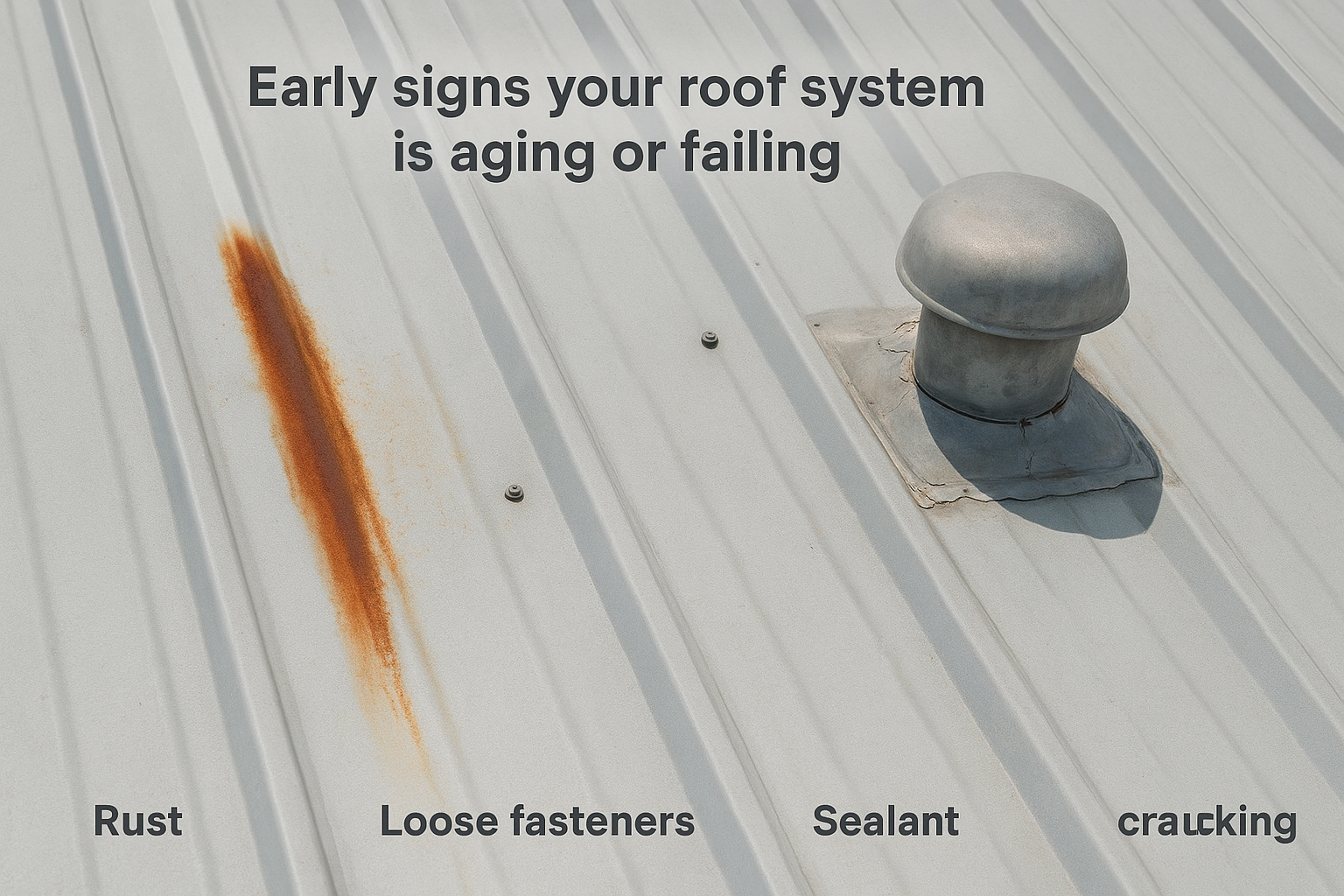
Both issues are worth addressing before water finds its way into your decking or attic structure, where hidden moisture damage becomes significantly more expensive to fix.
When thinking about how often should a roof be replaced, metal roofing rarely needs full replacement before 40 years. Isolated panel damage from hail or falling debris is almost always repairable without touching the rest of the roof.
Full replacement typically only makes sense when corrosion is widespread or the underlying structure has been compromised by long-term moisture intrusion that repairs can no longer address.
Clay and concrete tile roofing is common in Texas neighborhoods where Spanish colonial and Mediterranean architecture set the design tone. Both materials offer excellent heat resistance, which makes them well-suited to Central Texas summers, but they require a properly reinforced roof structure because of their significant weight.
Clay tile typically lasts 50 to 100 years, while concrete tile falls in the 30 to 50-year range. The tile itself often outlasts the underlayment beneath it, which usually needs replacement every 20 to 30 years regardless of how the tiles look from the ground. Poor underlayment maintenance is the most common reason tile roofs fail before the tile itself reaches the end of its life.
The tile on your roof can look perfect while the underlayment underneath is actively leaking into your structure.
Watch for cracked, slipped, or broken tiles, which can expose the underlayment to direct rain. Moisture stains inside your attic or on ceiling surfaces often mean the underlayment has failed, even when the visible tile appears intact.
When asking how often should a roof be replaced on a tile system, individual broken tiles are almost always repairable. A full replacement becomes necessary when underlayment failure is widespread or when cracked tiles appear across large sections of the roof.
Wood shakes and wood shingles bring natural character to a home, but they demand more active maintenance than most other roofing materials. Both are typically cedar or redwood, and both depend on regular treatment and good ventilation to hold up against Central Texas heat, humidity, and UV exposure.
Wood shakes and shingles typically last 20 to 30 years, though that range narrows quickly without consistent upkeep. Moisture is the primary threat: shaded sections that stay damp promote rot, moss, and fungal growth faster than any other factor.
Skipping routine resealing on a wood roof can shave years off its life faster than weather alone.
Treating your wood roofing every few years and keeping gutters free of packed debris helps you stay closer to the upper end of that range.
Watch for cracked, split, or curling shingles and dark staining or moss spreading across the surface. Both signal that moisture has penetrated the wood fiber, accelerating structural breakdown from underneath.
You may also notice shingles that feel soft during a close inspection, which usually means rot has progressed further than surface appearances suggest.
When asking how often should a roof be replaced on a wood system, isolated splits or cracks are repairable if the surrounding material is still sound. Consider full replacement when you see these conditions:
Slate is one of the oldest roofing materials still in active use, and it earns that reputation by outlasting nearly everything else on this list. You'll find it on older Central Texas homes and high-end custom builds where long-term durability justifies the upfront cost.
Slate roofs typically last 75 to 150 years, with some installations pushing well past a century when properly maintained. The primary factors that shorten that window are improper installation and neglecting the flashing, underlayment, and fasteners that hold the system together. The slate itself rarely fails first.
Your slate tiles can outlast two or three sets of flashings, so the supporting components need attention long before the stone does.
Watch for cracked, slipped, or missing tiles, which usually point to fastener failure rather than problems with the slate itself. Soft spots in your attic decking or interior moisture stains are a strong signal that flashing or underlayment has failed underneath intact-looking tiles.
When asking how often should a roof be replaced on a slate system, individual tile replacement handles most common damage scenarios. Full replacement becomes necessary when fastener failure is widespread across the entire roof, or when structural decay in the decking makes repairs impractical.
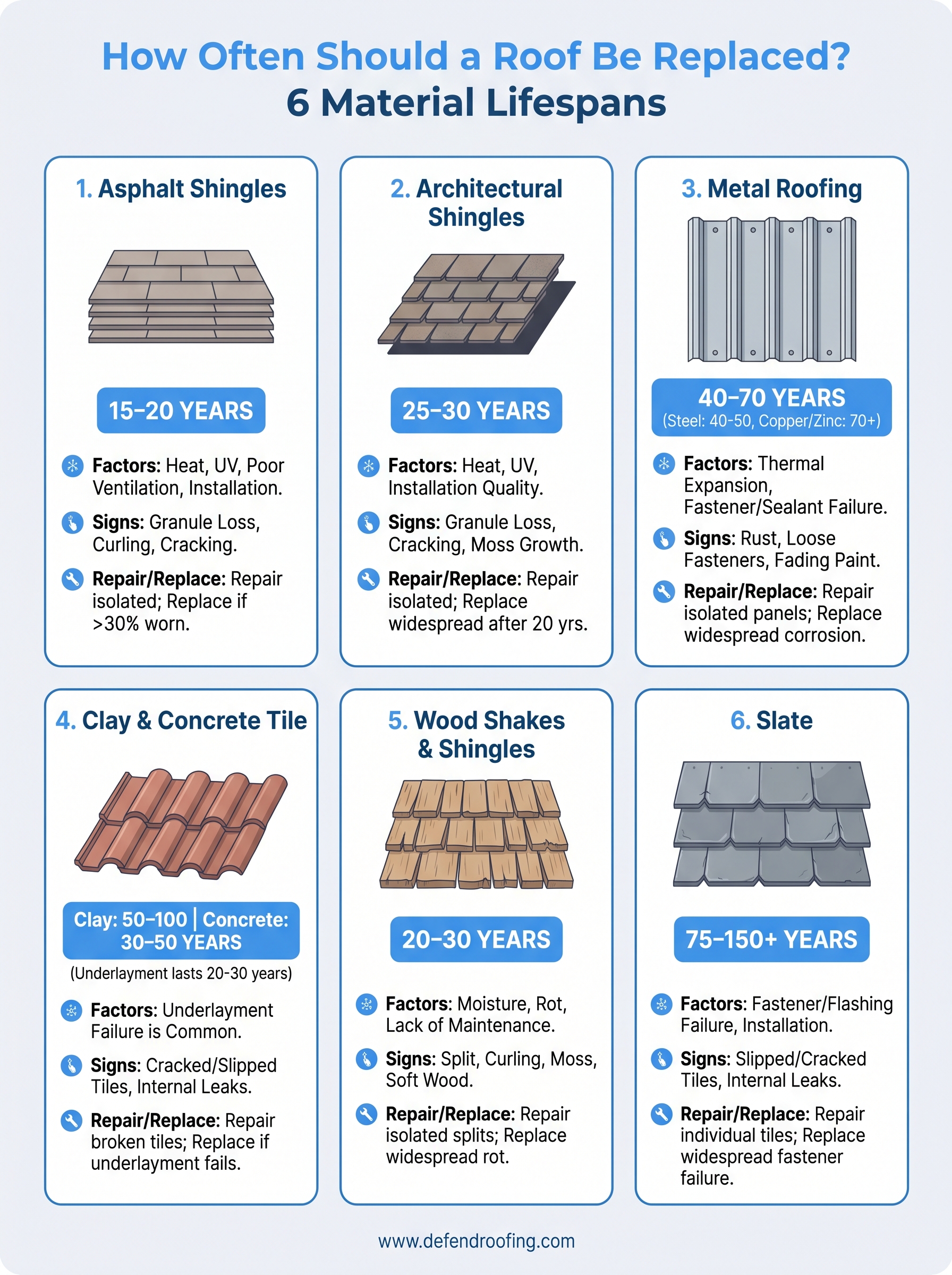
Knowing how often should a roof be replaced comes down to matching your material to its realistic lifespan and watching for the specific signs that each type shows as it ages. Asphalt and architectural shingles typically give you 15 to 30 years, while metal, tile, and slate systems can run decades longer when properly maintained.
The biggest mistake homeowners make is waiting until a leak confirms what the roof was already showing for months. Early identification lets you plan repairs on your schedule, not the storm's. Your roof's material, installation quality, and maintenance history all shape how long it lasts and when replacement actually makes sense versus a targeted repair.
If you're not sure where your roof stands, get a professional set of eyes on it before the next storm season hits. Schedule your roof assessment with Defend Roofing and get documented answers about what your roof actually needs.