Searching roof leaking repair near me? See Central Texas repair costs, the inspection process, and repair-vs-replace signs before you call a contractor.
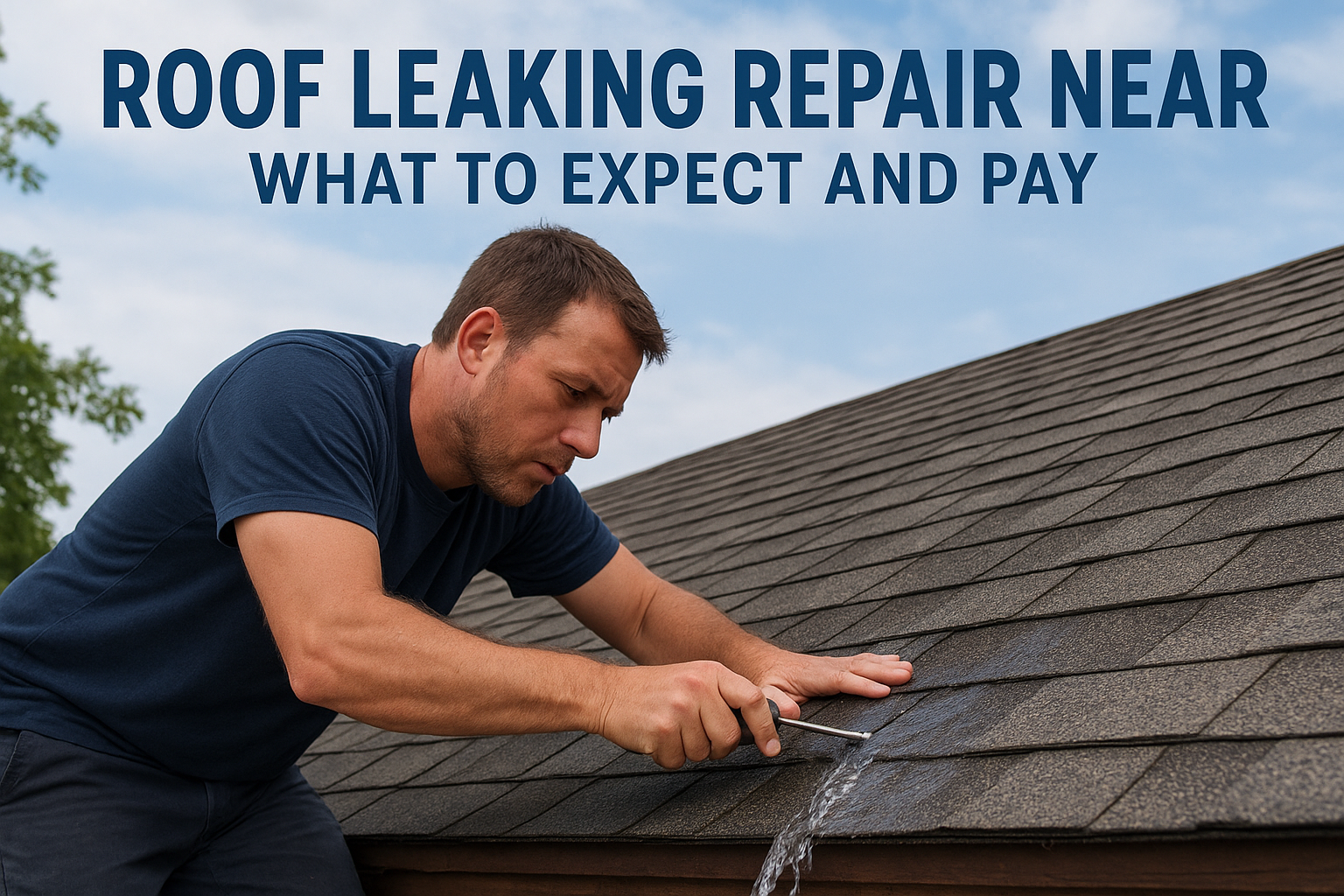
Water stains spreading across your ceiling don't wait for a convenient time to show up, and neither should your contractor. If you're typing roof leaking repair near me into your phone right now, you need a straight answer fast: who can get someone out to look at your roof today, what that visit actually costs, and whether the fix will hold through the next Central Texas storm.
This guide walks through exactly what happens when you call a local roofer about an active leak, from the initial inspection to the final invoice. You'll learn what a legitimate repair should include, how contractors like us document damage with detailed photo evidence instead of vague verbal estimates, and why repair costs swing anywhere from a couple hundred dollars to several thousand depending on the source and extent of the damage.
We'll also cover the red flags that separate honest repair work from unnecessary upselling, how to spot a roofer worth hiring, plus what questions to ask before you sign anything. Whether you're dealing with a slow drip after a storm or a sudden gush during heavy rain, you'll walk away knowing what a fair, transparent repair process looks like and how to spot a contractor who'll actually fix the problem instead of padding the bill.
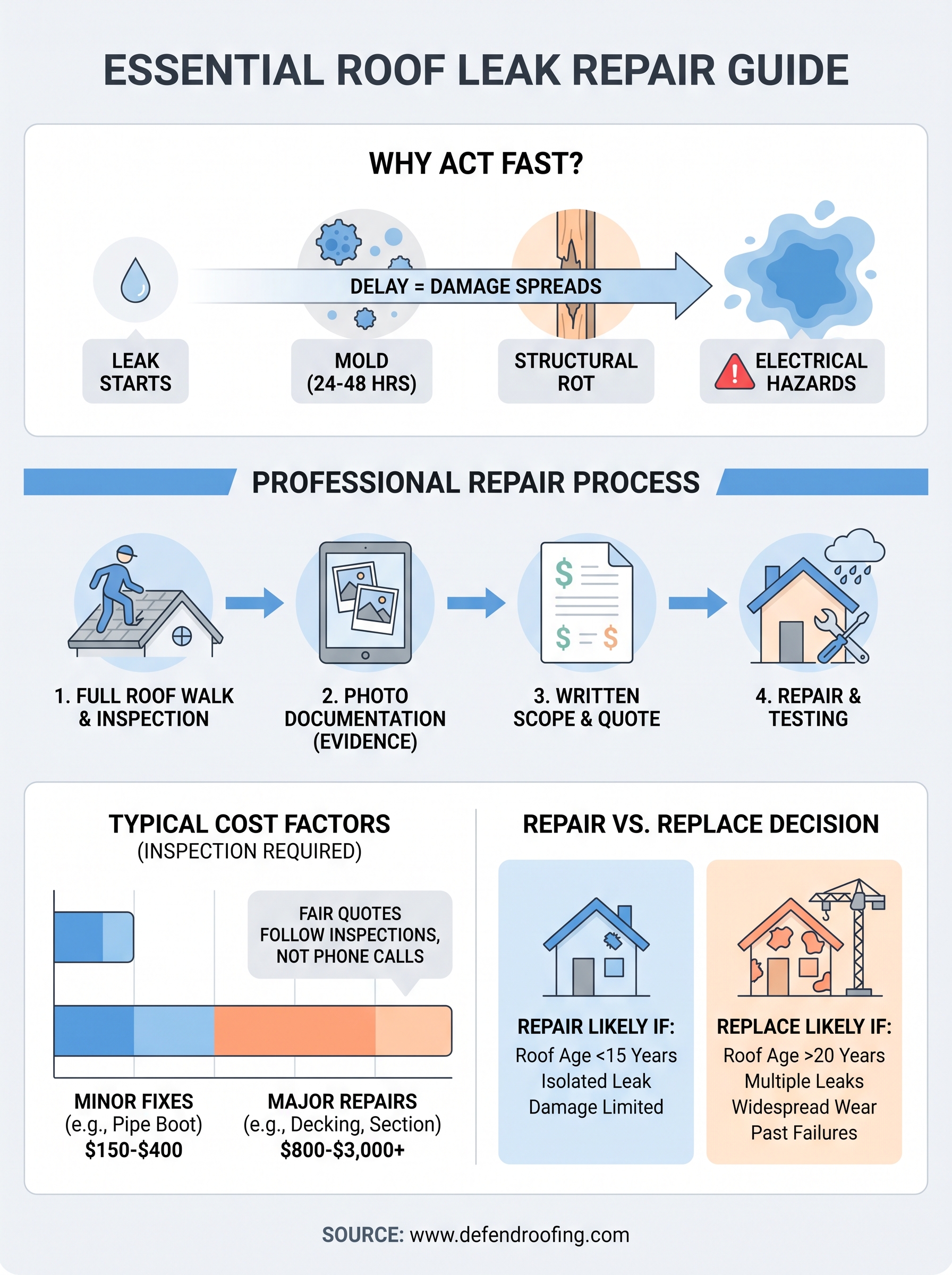
A roof leak rarely stays the size it started. Water finds the path of least resistance, and that means a small drip near a vent stack today can turn into soaked insulation, sagging drywall, and even electrical hazards within a week or two of steady rain. Central Texas storms don't help matters either. Heavy downpours followed by intense heat create a cycle of expansion and contraction that widens existing gaps in flashing and shingles, so a leak that seemed manageable in March can become a full ceiling collapse by June.
Homeowners often delay calling for roof leaking repair near me because the drip seems minor or the timing feels inconvenient. That hesitation almost always costs more in the long run. Mold can start forming in as little as 24 to 48 hours once wood framing or drywall gets wet, according to guidance from the U.S. Environmental Protection Agency (https://www.epa.gov/mold/mold-course-part-one), and mold remediation runs far higher than a straightforward roof patch.
A $300 repair today almost always beats a $10,000 remediation bill six months from now.
Here's what we commonly see when homeowners wait too long to address an active leak:
Insurance timing matters just as much as physical damage. Most carriers require documentation showing the damage happened recently and that you took reasonable steps to prevent it from worsening. If you wait three months to call anyone, an adjuster may argue the damage resulted from neglect rather than a covered storm event, which can shrink or void your claim entirely.
Jumping on the problem within a day or two also gives your roofer better information. Fresh water stains, active drips, and undried materials are the leak warning signs every Austin homeowner should know, and they tell a much clearer story than a leak that's been drying and reappearing for weeks, making the actual repair diagnosis faster and more accurate.
Once a roofer arrives at your door, the process should follow a clear sequence rather than a rushed guess. A legitimate roof leak repair near me call starts with a full roof walk, not just a peek from the ground, because leaks often show up several feet away from where the water actually enters your attic. We climb the roof, check flashing around chimneys and vents, inspect shingle lift, and look at valleys where debris collects and traps moisture.

Documentation comes next. Our Precision Roof Assessment captures 100+ photos of the damage so you see exactly what we see, not a verbal summary you have to take on faith. This step matters most when you're filing an insurance claim, since adjusters respond better to timestamped, detailed evidence than to a contractor's word alone.
Good roof leak repair starts with proof, not promises.
After the inspection, you get a written scope of work covering the specific repair, whether that's replacing a section of flashing, resealing a pipe boot, or swapping out cracked shingles. Repair itself typically takes a few hours for isolated leaks, though repair timelines run from hours to weeks depending on the job. Larger jobs involving decking replacement can stretch into a full day or two.
Testing closes the loop. A thorough crew runs water tests or checks the repaired area during the next rain to confirm the leak is actually sealed, not just patched over and hoped for.
The price of fixing a roof leak depends on what's actually broken, not just the size of the stain on your ceiling. A single cracked pipe boot might run $150 to $400, while a full section of damaged flashing around a chimney can climb toward $500 to $1,200. Repairs that involve replacing rotted decking or multiple courses of shingles push costs higher, often landing between $800 and $3,000 depending on how much material needs to come out.
Most homeowners searching for roof repair cost near them want a number before they commit to a visit, and that's fair. The honest answer is that no reputable contractor should quote a firm price over the phone without seeing the roof first. Location on the roof, pitch, material type, and accessibility all swing labor time significantly.
A fair quote always follows an inspection, never the other way around.
Here's a general breakdown based on common repair scenarios, and a fuller look at 2026 roof repair prices by type of damage:
| Repair Type | Typical Cost Range |
|---|---|
| Pipe boot or vent reseal | $150 - $400 |
| Flashing replacement | $500 - $1,200 |
| Shingle section replacement | $300 - $900 |
| Decking repair/replacement | $800 - $3,000 |
| Valley or ridge repair | $400 - $1,500 |
Financing options exist for homeowners facing larger repairs, and many contractors, including us, offer them for qualified projects. Getting a written estimate after the inspection protects you from surprise charges once work begins.
Most homeowners want to know if a repair vs replace decision is even close, or if it's obvious. The honest answer depends on age, extent of damage, and how many separate problem areas show up during inspection. A roof under 15 years old with one isolated leak almost always gets a repair. A roof past 20 years with multiple leaks, widespread granule loss, or soft spots in the decking usually points toward full replacement.
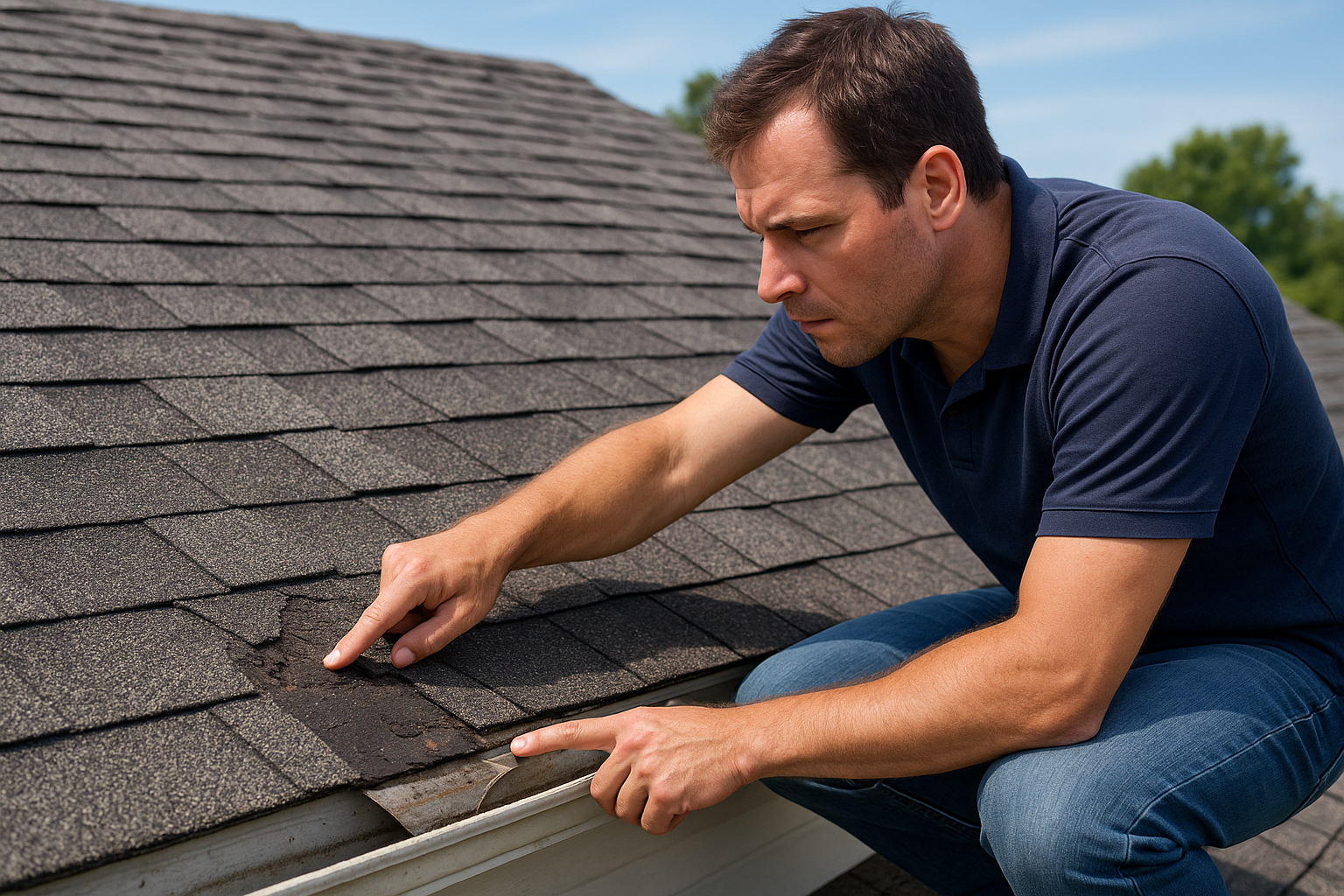
If your roof needs a third patch in two years, it's telling you it needs replacing, not another band-aid.
We walk homeowners through this decision honestly during every Precision Roof Assessment, showing you the photo evidence behind our recommendation instead of pushing a bigger job than you need. If the roof can be repaired properly, we say so. If replacement genuinely saves you money over the next five years, we explain why with documentation, not pressure. You can read more about how to make the repair-or-replacement call for your own home on our site.
A roof leak doesn't fix itself, and every day you wait gives water more room to spread. You now know what a legitimate repair process looks like: a full roof walk, documented photo evidence, an honest repair-or-replace call, and a written scope before anyone touches your roof. You also know the price ranges to expect, so nobody can hand you a number that sounds pulled from thin air.
Searching for roof leaking repair near me should end with a contractor who shows you proof instead of pressure. That's the whole point of how we operate here in Central Texas. Three generations of roofing experience taught us that a fair, documented repair builds trust that lasts longer than any single job.
If you've got a drip, a stain, or just a nagging feeling something's wrong up there, don't sit on it. Call, text, or get an instant online quote for a free, photo-documented leak inspection and get a straight answer today, not a guess.