Don't let a small drip become a disaster. Learn the 6 signs of a roof leak to look for in your Austin home, from ceiling stains to hidden attic damage.

Most roof leaks don't announce themselves with water pouring through the ceiling. They start small, a faint stain in the corner of a bedroom, a musty smell you can't quite place, or shingles that look a little off from the driveway. Knowing the signs of a roof leak early can mean the difference between a straightforward repair and a costly replacement that tears into your home's structure.
In Central Texas, our roofs take a beating. Between hailstorms, UV exposure, and wind-driven rain, Austin-area homes face conditions that accelerate wear and create entry points for water. At Defend Roofing, we've seen firsthand, across three generations of roofing experience, how quickly a small, undetected leak can turn into rotted decking, damaged insulation, and mold growth behind walls. That's why Chris and Greyson Buster built every assessment around 100+ photos and honest documentation, so homeowners can see exactly what's happening on their roof before making any decisions.
This article walks through six specific warning signs that indicate your roof may be leaking, some obvious, some easy to miss. Whether you've noticed something concerning or just want to know what to watch for, this guide will help you catch problems early and protect your home before minor damage becomes a major project.
One of the most frustrating signs of a roof leak is water that appears inside your home without an obvious entry point. You might find a wet spot on the floor, a damp patch on drywall, or dripping during a rainstorm, yet when you look up, nothing on the ceiling directly above gives it away. This happens more often than people expect, and it almost always points to a roof issue where water travels before it finally drops.
Water doesn't always fall straight down. You may notice drips or wet spots that seem to shift location between storms, or moisture appearing in a closet, hallway, or along a wall far from any window. Sometimes the visible water damage shows up one floor below the actual leak, because water has traveled along a rafter, beam, or piece of insulation before it finds somewhere to pool and drip.
Roofs have multiple layers, and water that gets through the outer surface often travels along the roof decking or underlayment before it ever reaches your living space. Flashing failures around chimneys, skylights, or vents are a common culprit because water enters at an angle and then wicks sideways. In Austin's climate, temperature swings and UV degradation accelerate the breakdown of sealants and flashing, creating small gaps that funnel water well away from the actual breach.
A leak that travels before dripping can create damage in two or three locations while the original entry point stays completely dry to the touch indoors.
Start by going into your attic during or just after a rainstorm with a flashlight. Look for wet wood, dark streaks on rafters, or shiny spots where light reflects off moisture. You can also check your attic insulation for clumping or compression, which signals repeated wetting. Stay near the attic access point and avoid walking across insulation or decking if you're unsure of its condition.
Call a roofer when you've spotted moisture in your attic or can't match a drip to a clear interior source after two or more rain events. Traveling leaks rarely resolve on their own, and the longer water moves through your home's structure, the more decking, framing, and insulation it damages along the way.
Discoloration on your ceiling or walls is one of the most visible signs of a roof leak, and it's easy to dismiss once it dries out. The real problem isn't the stain itself. It's what that stain tells you about repeated water intrusion building up inside your home's structure over time.
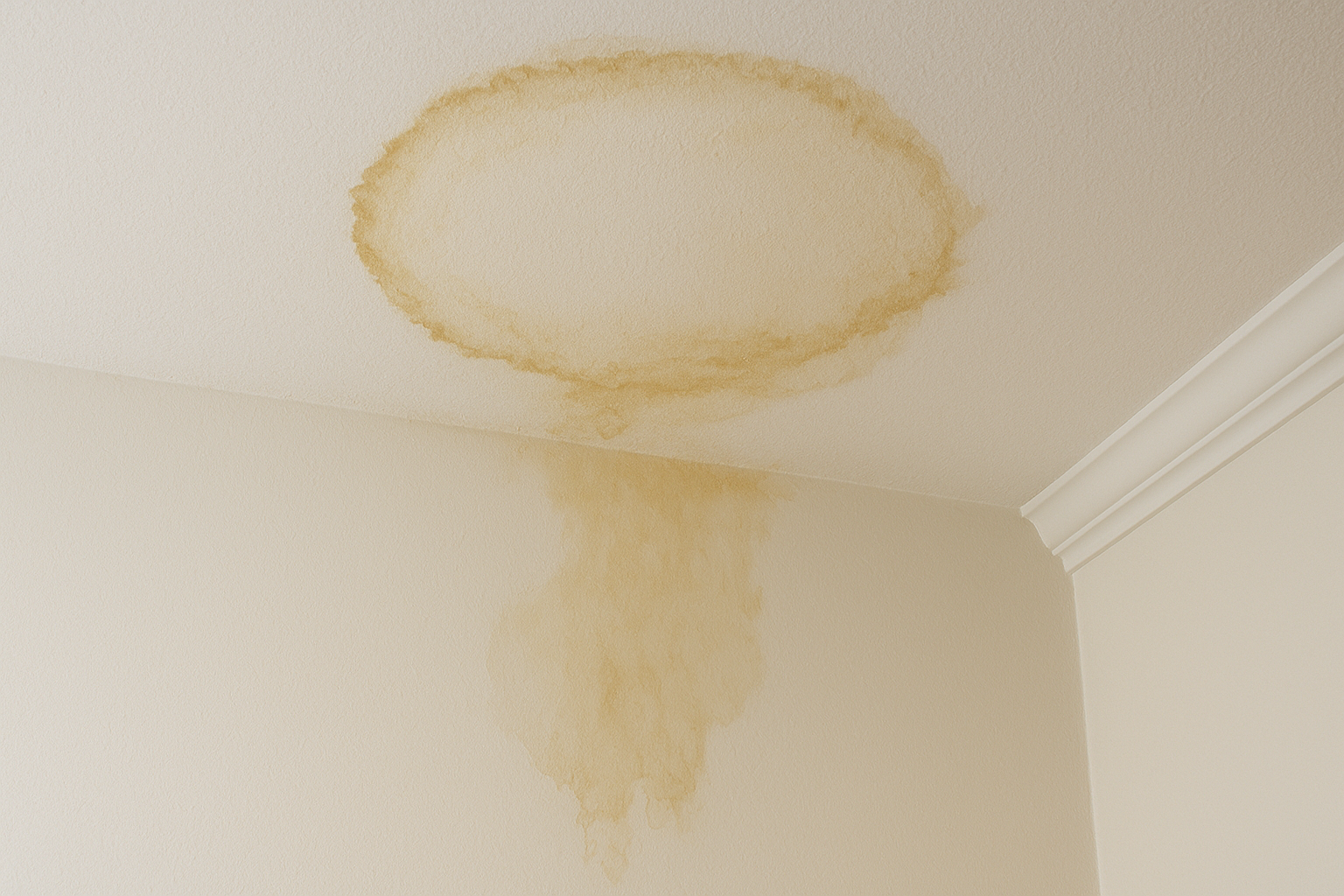
You'll typically see yellowish-brown rings or irregular patches on drywall or plaster, often with a darker outer edge where the moisture dried. These stains may look small at first, but if they grow after each rainstorm or keep reappearing after you've painted over them, your roof is likely still letting water in. Paint bubbling or peeling near the stain is another indicator that moisture is trapped behind the surface.
A stain that returns after painting is not a cosmetic problem. It means the water source is still active.
Water that enters through a damaged shingle, cracked flashing, or failed sealant saturates the roof decking and works down through insulation before it hits your ceiling material. In Central Texas, intense summer storms dump heavy rain in short bursts, which overwhelms small gaps that might otherwise stay dry in lighter weather.
Take a photo of the stain after each rain event and compare them. If the stain perimeter expands or new spots appear nearby, you're dealing with an active leak rather than an old, dried-up one.
Call a roofer if a stain reappears after two storms or continues to grow. Ongoing moisture inside your ceiling will eventually soften drywall, compromise structural framing, and create conditions for mold growth.
Your attic is where a roof leak often shows its earliest and clearest evidence, long before any stain appears on your ceiling. Wet roof decking and [compressed insulation](https://www.defendroofing.com/blog/how-to-know-when-to-replace-your-roof) are two of the most reliable signs of a roof leak that a quick attic check can reveal, and catching them early gives you a much better shot at a simple repair.

When water gets through your roof, it soaks into the wood sheathing (decking) beneath your shingles and pools on or between attic insulation batts. You'll see dark staining or soft spots on decking boards, insulation that looks matted or clumped together, and sometimes early mold growth forming on wood surfaces near the roof line.
Shingles and underlayment work together to direct water off your roof. When cracked shingles, lifted flashing, or failing underlayment allow water in, it hits the decking directly. In Austin's climate, repeated rain events combined with intense heat cycles cause wood decking to expand and contract, gradually opening small gaps that let moisture accumulate over time.
Wet decking that dries and re-wets repeatedly will eventually rot, turning a minor repair into a full decking replacement.
Grab a flashlight and check your attic after a heavy rain. Look for dark streaks on rafters, soft or discolored decking boards, and insulation that feels damp or has shifted from its original position.
Call a roofer if your decking feels soft or you find insulation that's soaked through. Saturated insulation loses its thermal value and holds moisture against wood framing, which accelerates structural damage the longer it goes unaddressed.
Smell is an underrated sign of a roof leak, and it often picks up what your eyes miss. A persistent musty odor in an upstairs room, closet, or near the ceiling line can mean mold or mildew is already growing inside your wall cavity or attic, fueled by moisture that has been sitting there long enough to develop.
Beyond the smell, you may notice dark discoloration or fuzzy patches on drywall, wood trim, or ceiling material near where the roof meets exterior walls. Damp spots that feel cool to the touch, even days after the last rain, are another indicator that water is being held inside your home's structure rather than drying out naturally.
Mold needs two things: a food source and moisture. Your roof framing, decking, and drywall provide the food source, and a slow or intermittent leak provides the moisture. In Austin's warm, humid climate, mold colonies can establish within 24 to 48 hours of repeated wetting, which means a small, ongoing leak can produce serious mold growth well before you see any ceiling stain.
Mold behind walls does not resolve when the weather dries out. It stays active and spreads as long as any residual moisture remains.
Run your hand along the interior wall surfaces near your roofline and check for cool or damp patches. If the smell intensifies near a ceiling corner or attic access point, note the location and time it against recent rain events.
Call a roofer as soon as you identify mold growth or a persistent musty odor linked to your roof area. Active mold combined with an unresolved leak will spread quickly and may require both professional remediation and structural repairs if left unaddressed.
Some of the clearest signs of a roof leak don't show up inside your home at all. Walking around the exterior of your house and looking at flashing, vents, and gutters gives you a ground-level view of some of the most common failure points on any Austin roof.
From the outside, you may spot lifted or missing flashing around your chimney, skylights, or pipe vents, along with gaps where sealant has pulled away from the metal. Your gutters can also reveal problems: granules collecting at the downspout signal shingle deterioration, and sagging or separated gutter sections allow water to back up along the fascia and work under your roof edge.
Flashing and vent seals take constant thermal stress from Austin's extreme heat cycles, causing metal to expand and contract until fasteners loosen and sealants crack. Gutters that separate from the fascia board or hold standing water after rain create persistent moisture contact at the roof edge, which accelerates rot and opens new entry points over time.
Loose flashing that looks like a minor cosmetic issue can let in enough water during a single storm to saturate your decking below.
Walk the perimeter of your home and look along the roofline from the ground. Note any lifted metal or dark staining around vent boots, or gutters that have separated from the fascia board.
Call a roofer if you spot missing flashing, cracked vent boots, or gutters pulling away from your home. These are active entry points that will worsen with every rain event.

If any of these signs of a roof leak match what you're seeing in your home, the right move is to get a professional set of eyes on your roof before the next storm hits. A small leak that looks manageable today can saturate decking, framing, and insulation within a few rain events, turning a repair into a much larger project. Waiting rarely works in your favor.
At Defend Roofing, Chris and Greyson Buster provide a 100+ photo Precision Roof Assessment that documents exactly what's happening on your roof, so you know what needs fixing and what doesn't. There's no pressure, no upselling, and no guesswork. You get honest documentation you can use for insurance claims or just to make an informed decision on your own timeline. If you're in the Austin area and want to know what your roof is actually doing, schedule your roof assessment today.