Learn what causes roof leaks, from storm damage to failing seals. Identify the 6 most common culprits to spot early signs and prevent expensive water damage.
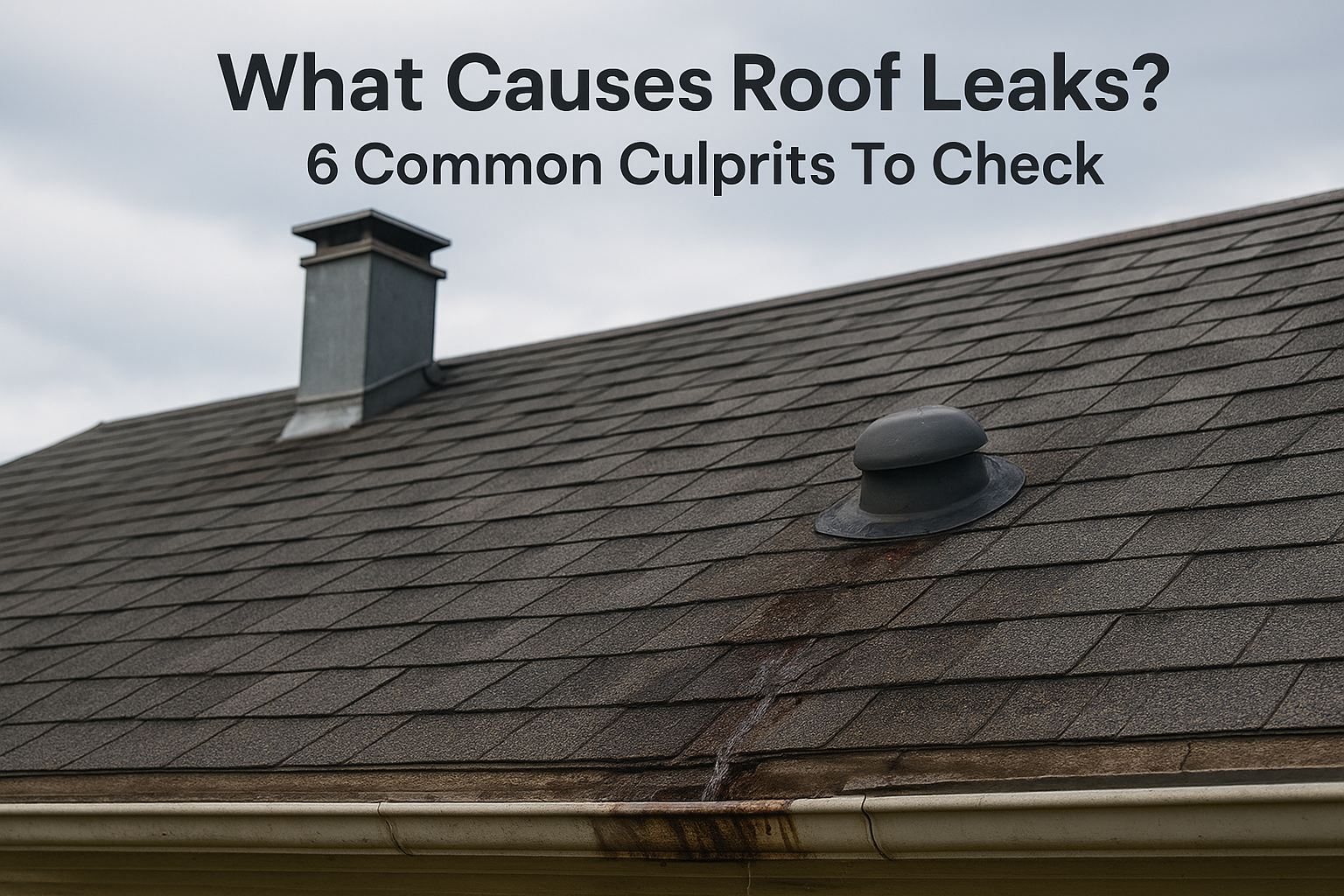
A water stain on your ceiling is one of those things you can't unsee. Once it's there, the questions start: How long has this been happening? How bad is it? And most importantly, what causes roof leaks in the first place? The answer isn't always obvious, because water can travel along rafters and decking before it ever shows up inside your home. That gap between where the leak appears and where it actually starts makes diagnosis tricky for most homeowners.
At Defend Roofing, we've seen every version of this problem across Central Texas homes. With three generations of roofing experience, our family team, Chris and Greyson Buster, has tracked down leaks caused by everything from cracked flashing to subtle installation errors that went unnoticed for years. Every one of our 100+ photo Precision Roof Assessments is built to find exactly what's going wrong and document it clearly, so you're never guessing.
Below, we'll walk through the six most common culprits behind roof leaks. Each one includes what to look for, why it happens, and what you can do about it, whether that's a straightforward repair or a conversation about replacement. If you're dealing with water where it shouldn't be, this list is a solid place to start.
Texas weather doesn't give much warning. Hail storms, high winds, and driving rain hit Central Texas hard, and your roof takes the full force every time. Storm damage is one of the most common answers to what causes roof leaks in Austin-area homes, but the tricky part is that the damage often isn't visible from the street.
High winds don't just knock shingles loose. They lift shingle edges and force water horizontally under roofing layers that were only designed to handle water falling straight down. Even a brief wind event can compromise lifted tabs, loosened nails, and stress points around edges and ridges, turning them into entry points the next time it rains heavily.
From the ground, look for missing shingles, dented ridge caps, or surface areas that look uneven or discolored. Hail often knocks granules off shingles, leaving darker bare patches you can sometimes spot with binoculars. Inside your attic, check for these warning signs:
If you spot granule buildup in your gutters after a storm, take it seriously. That's one of the clearest signals that your shingles took a hit and may no longer be protecting your home.
This catches a lot of homeowners off guard. A storm rolls through, the roof looks fine, and then two weeks later a stain appears on your ceiling. Water moves slowly through damaged decking, works through cracks gradually, and travels along rafters before it drips somewhere visible inside. A delayed leak doesn't mean the damage is recent, it means the entry point was missed right after the storm.
Don't wait for interior signs to appear if your area got hit by hail or high winds. A professional inspection with photo documentation gives you a clear picture of what the storm actually did to your roof. This matters especially when filing an insurance claim, where adjuster-ready evidence can be the difference between a covered repair and paying entirely out of pocket.
Age and heat are two of the most overlooked answers to what causes roof leaks in Texas homes. Asphalt shingles are designed to last, but Central Texas summers push them hard, with UV exposure and high temperatures accelerating wear faster than in cooler climates.
As shingles age, their protective granule layer thins and the underlying asphalt becomes brittle. Once the asphalt cracks or separates, water has a direct path through the shingle into your decking below.
Older roofs near the end of their lifespan are especially vulnerable during heavy rain. Even minor surface degradation that looks cosmetic can open up real water entry points over time.
Curling shingles indicate that the material has dried out and contracted, lifting edges and creating gaps where water enters. Cracking means the shingle has lost flexibility entirely, and granule loss strips away the last layer of UV protection.
If you're seeing bare, dark patches on your roof surface or granule buildup collecting in your gutters, your shingles are breaking down and need attention soon.
Nail pops happen when fasteners back out of the decking due to repeated temperature cycling. Once a nail head rises above the shingle surface, it creates a consistent entry point for water with every rain.
Exposed metal rusts, surrounding sealant fails, and the gap widens over time, turning a minor fastener issue into a much bigger repair.
Check your roof after extended heat waves or severe weather seasons. Replacing individual damaged shingles early can add years to your roof's overall life before a full replacement becomes necessary.
If curling, cracking, and granule loss appear across multiple areas of your roof, a thorough assessment will clarify whether targeted repairs or full replacement gives you better long-term value.
Flashing and vent boots are the metal and rubber components that seal the gaps where pipes, vents, chimneys, and skylights pass through your roof. These penetrations are among the most common answers to what causes roof leaks, because every opening in your roof is a potential entry point when the seal around it breaks down.
Metal flashing expands and contracts with temperature changes, and years of Texas heat cycles loosen those seals over time. Rubber vent boots crack and harden as UV exposure ages them out, and neoprene collars around pipe boots typically fail long before the surrounding shingles do.
Dried, cracked caulk around flashing edges is one of the clearest signs a seal has failed. Look for lifted metal edges, rust staining on the surrounding shingles, or visible gaps where the flashing meets the roofing material.

If you see rust streaks running down from a skylight or vent pipe, the flashing has likely been leaking longer than the interior stains suggest.
A gap of just a few millimeters is enough to funnel gallons of water into your attic during a hard Texas rain. Water follows the path of least resistance, and open flashing edges direct rainwater straight onto the decking below.
Isolated flashing failures rarely require a full roof replacement. Replacing a single vent boot or re-sealing lifted flashing is a straightforward fix that can add years to your roof's life when caught early. If multiple penetrations show the same deterioration, a full inspection will clarify the scope before you commit to any work.
Gutters handle runoff from your entire roof surface, and when they clog, water backs up along the roof's lower edge and finds paths it was never supposed to take. Clogged gutters are a common answer to what causes roof leaks that homeowners overlook because the problem starts at the roofline's edge, not across the top of it.
When gutters fill with debris, standing water pools against your roof's lower edge and works under shingles and starter strips. That moisture saturates the decking and underlayment before it ever shows up as a stain inside your home.
Check your fascia boards and soffits for peeling paint, soft wood, or dark staining. These are clear signs that overflow has been hitting those surfaces repeatedly. Water-damaged fascia often goes unnoticed until the wood has rotted far enough to need full replacement.
If your fascia feels soft or is pulling away from the roofline, gutter overflow has likely been causing damage longer than you realize.
A gutter that sags or sits at the wrong pitch won't drain properly even when it's clean. Blocked or undersized downspouts create backpressure that pushes water directly toward your roof's edge and surrounding flashing.
Cleaning your gutters at least twice a year, after fall leaf drop and following major spring storms, removes the debris that causes backups. Confirming your downspouts discharge well away from your foundation eliminates most repeat drainage problems before they reach your roof.
Roof valleys are where two slopes meet, and they carry more concentrated water flow than almost any other part of your roof. This constant high-volume drainage makes them one of the most common answers to what causes roof leaks when they're not properly sealed or maintained.
Every drop of rain that falls on two adjoining roof planes funnels directly through the valley between them. That means valley materials take on significantly more wear than flat field shingles, and worn metal or open lap seams in these zones allow water straight through to your decking.
Leaves and debris accumulate in valleys faster than anywhere else on your roof. Packed debris holds moisture against the metal and surrounding shingles, accelerating deterioration. Look for rusted valley metal, lifted shingle edges along the valley line, or gaps where overlapping shingle courses pull away from the valley center.
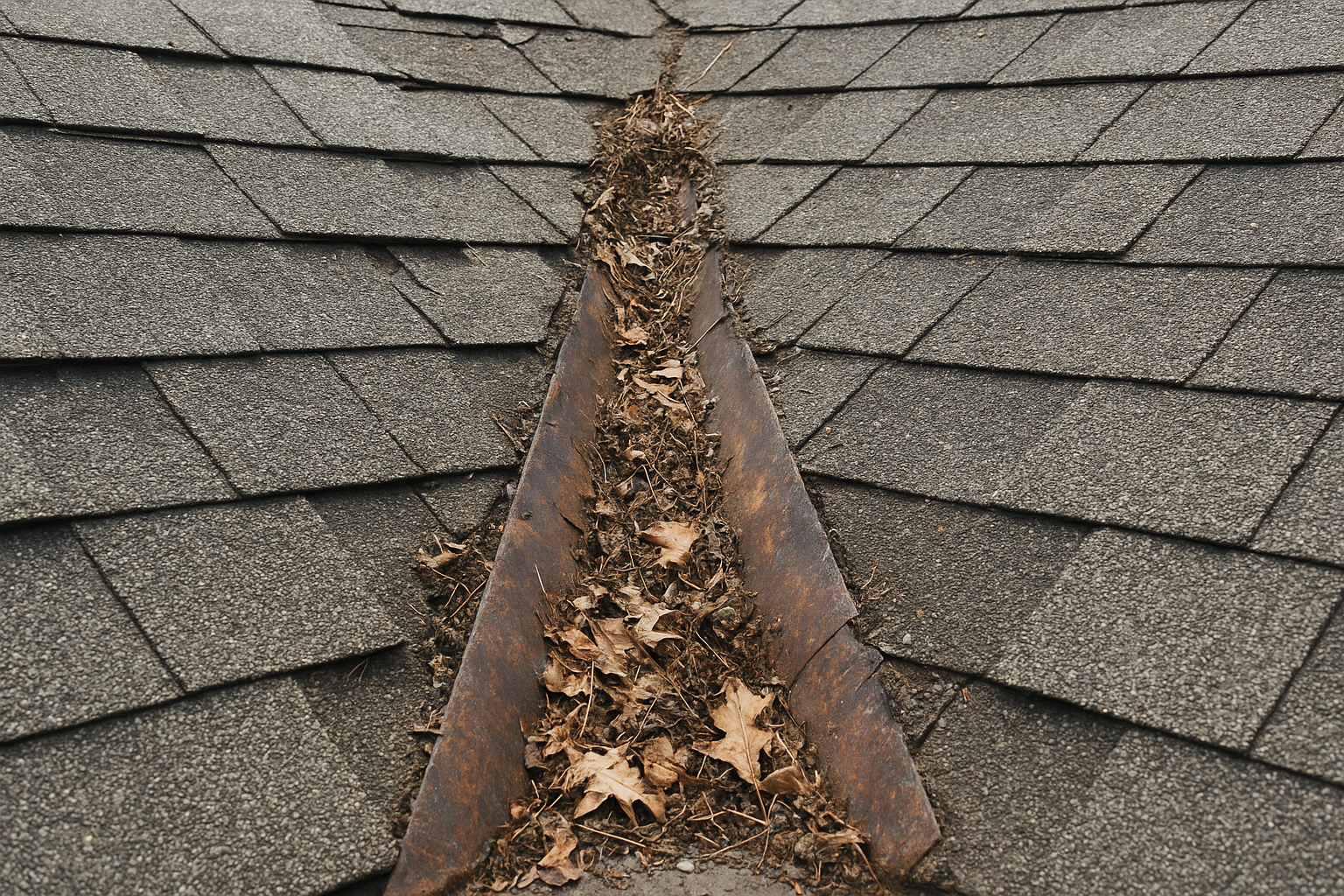
If you notice water stains tracking diagonally across your ceiling, the path often traces back to a compromised roof valley above.
Where your roof meets a vertical wall, step flashing creates a layered seal between each shingle course and the wall surface. When individual pieces lift, rust, or pull away, water runs directly down the wall framing and shows up as staining near exterior walls or at ceiling edges.
A second sign to watch for is paint bubbling or peeling on interior walls near where the roof ties into a dormer or addition. These symptoms often point to step flashing that has been failing quietly for months.
Some valley and transition leaks trace back to improper installation rather than normal wear. Nailing through valley metal, using short overlap lengths, or failing to integrate step flashing correctly with surrounding shingles are all errors that create failure points regardless of shingle age.
Not every ceiling stain comes from a hole in your roof. Attic condensation is one of the least obvious answers to what causes roof leaks, because the moisture originates inside your home rather than outside. When warm, humid air from your living space rises into a poorly ventilated attic, it hits cold decking or framing and converts to liquid water, mimicking the exact pattern of an active roof leak.
Condensation drips from the same places a roof leak would, along rafters, decking seams, and around any framing penetrations. This makes it genuinely hard to distinguish from a real intrusion point without getting into the attic and inspecting closely. The key difference is that condensation tends to be widespread and diffuse, rather than concentrated around a single penetration or damaged shingle area.
Look for dark staining across large sections of decking, not just near penetrations or valleys. Insulation that feels damp, compressed, or matted down is another clear indicator. Frost forming on the underside of your decking in winter also signals that moisture-laden air is reaching surfaces that are too cold.
Balanced attic ventilation, typically through soffit intake vents and ridge exhaust vents, keeps air moving so moisture can't accumulate. Sealing gaps around light fixtures, plumbing runs, and HVAC penetrations in your ceiling cuts off the main pathways warm interior air uses to reach the attic.
If you spot dark discoloration spreading across your decking or insulation, treat it as urgent. Mold can establish itself within days of sustained moisture exposure.
Mold remediation costs far more than correcting a ventilation problem early. If you find mold in your attic, address both the moisture source and the ventilation balance at the same time, fixing only one side rarely solves the problem for long.
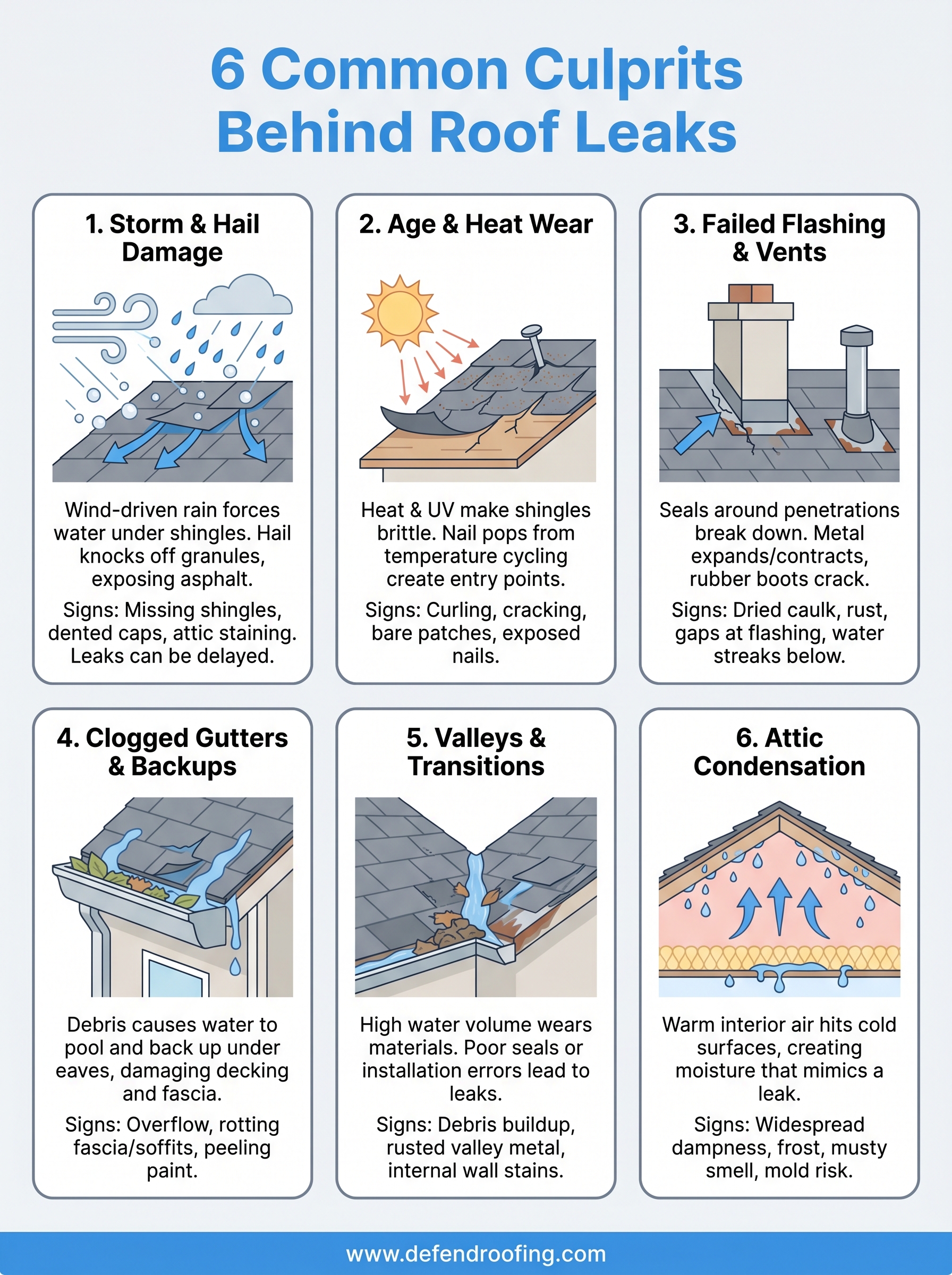
Understanding what causes roof leaks gives you a real advantage when something goes wrong. You now know where to look, what warning signs to take seriously, and why delaying an inspection often turns a manageable repair into a much larger expense. Water damage compounds quickly, and most of the six culprits covered here respond well to early action.
Your next step is simple: get eyes on your roof with thorough documentation before the problem gets worse. At Defend Roofing, Chris and Greyson Buster inspect every roof with a 100+ photo Precision Roof Assessment that shows you exactly what's happening and gives you honest guidance on repair versus replacement. There's no pressure and no guesswork. If you're in the Austin area and ready to find out what's actually going on with your roof, schedule your roof assessment today and get a clear answer fast.