Learn how often should a roof be inspected to catch damage early. Get the recommended maintenance schedule for Central Texas homes to protect your warranty.
Most homeowners don't think about their roof until something goes wrong, a leak stains the ceiling, shingles blow off during a storm, or an insurance adjuster points out damage that's been building for years. By then, a minor fix has usually turned into a major expense. Knowing how often should a roof be inspected isn't just a maintenance checkbox; it's one of the most practical ways to protect your home and your budget over time.
The honest answer is that inspection frequency depends on several factors specific to your property. Roof age, material type, tree coverage, and Central Texas weather all play a role. A five-year-old architectural shingle roof in Cedar Park has different needs than a twenty-year-old roof in Steiner Ranch that's taken direct hail hits. Generic advice doesn't cut it when your home's first line of defense is on the line, you need a schedule that actually reflects your roof's condition and exposure.
At Defend Roofing, we've seen the difference regular inspections make firsthand. As a family-owned company with three generations of roofing experience, Chris and Greyson Buster built our approach around thorough documentation, including our 100+ photo Precision Roof Assessment, so homeowners get clear, honest answers about what's happening overhead. This article breaks down a practical inspection schedule based on the factors that matter most, so you can stay ahead of problems instead of reacting to them.
Your roof takes a beating every single day. UV exposure, temperature swings, wind, and rain all degrade roofing materials over time, and most of that wear happens gradually in ways you won't notice from the ground. Regular inspections give you a clear picture of what's actually happening overhead before small problems compound into expensive repairs or a full replacement.
Small roof issues rarely stay small. A cracked shingle or a failing flashing seal can let water infiltrate the underlayment, rot the decking, and eventually damage insulation and interior framing. By the time you see a water stain on your ceiling, the damage has usually been building for months. Catching these problems at the inspection stage typically costs a fraction of what you'd pay after water damage has already worked its way into your home's structure.
A minor flashing repair caught early can cost a few hundred dollars; the same problem left alone for a year can turn into thousands in structural repairs.
Homeowners insurance and manufacturer warranties both carry conditions that directly affect your coverage. Many insurance policies require evidence that you've maintained your roof and addressed known damage within a reasonable timeframe. Similarly, manufacturer warranties on shingles can be voided if documented damage was left unaddressed. An inspection record gives you proof of proper maintenance, which matters far more than most homeowners expect when a claim is filed.
Inspections also establish a reliable baseline for your home. When a storm moves through Central Texas and you file a claim, before-and-after documentation from your inspector can make the difference between a smooth approval and a prolonged dispute with your adjuster. Knowing how often should a roof be inspected, and actually following through, keeps your coverage intact and your records current.
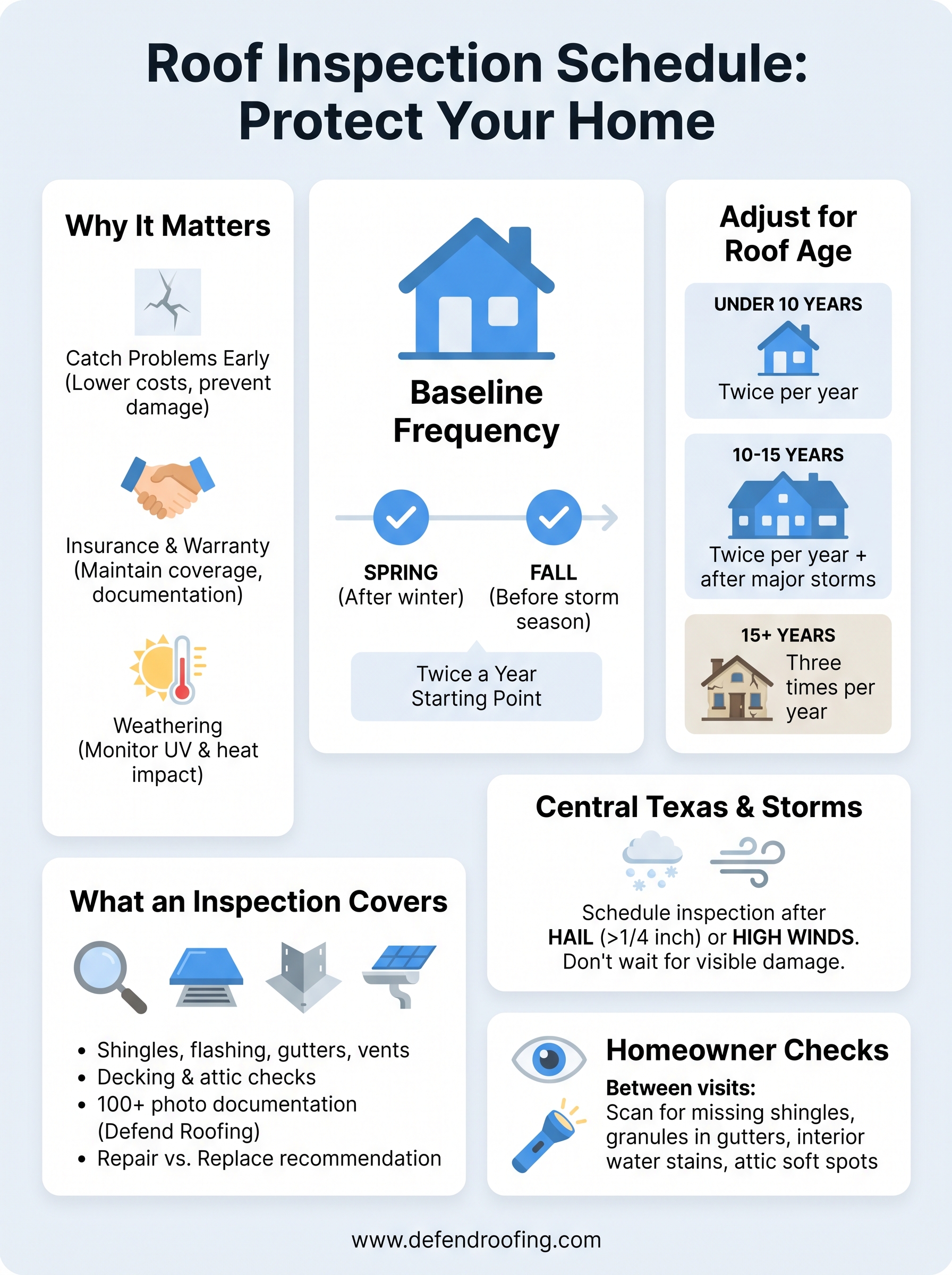
For most homes, twice a year is the right starting point when thinking about how often should a roof be inspected. Schedule one inspection in spring after winter weather clears out, and another in fall before storm season ramps up again. This rhythm catches seasonal damage early and keeps your maintenance records current.
Your roof's age shifts the baseline frequency. Newer roofs under ten years old generally hold up well with two inspections per year, assuming no major weather events occur in between. Once your roof crosses the fifteen-year mark, move to three inspections annually. Older roofs develop subtle wear patterns that accelerate quickly, and catching those early saves you real money.

The closer your roof gets to the end of its expected lifespan, the more valuable each inspection becomes.
| Roof Age | Recommended Frequency |
|---|---|
| Under 10 years | Twice per year |
| 10-15 years | Twice per year + after major storms |
| 15+ years | Three times per year |
After any significant hail event or high-wind storm, add an inspection regardless of where you fall on the schedule above. Storm damage doesn't wait for your calendar.
Central Texas pushes roofs harder than most regions. Hail storms, high winds, and intense summer heat create conditions that wear roofing materials faster than a standard twice-a-year schedule can track. If you live in the Austin area, Cedar Park, Leander, or Jonestown, your roof faces a specific set of stressors that make regional awareness critical to knowing how often should a roof be inspected on your property.
This part of Texas sits in a hail-prone corridor that sees significant storm activity between March and June. After any storm that drops hail larger than a quarter inch, schedule an inspection within a few days. Hail bruises shingles and breaks granule bonds in ways that aren't visible from the ground, but leave your roof vulnerable to accelerated aging and leaks.
Don't wait for visible damage after a storm. Hidden hail impact shortens shingle lifespan by years if left unchecked.
Texas summers are brutal. Prolonged UV exposure and heat cycling cause shingles to dry out, curl, and crack over time. An inspection at the end of each summer gives you an accurate read on how much seasonal stress your roof absorbed.
Year-round, high humidity and temperature swings between seasons add to the cumulative wear. Scheduling a fall inspection keeps you ahead of any heat-related deterioration before cooler weather sets in.
A professional inspection covers far more than a quick look at shingles from the ground. Trained inspectors examine every component of your roof system, including flashing, ridge caps, valleys, gutters, and penetrations like vents and chimneys. At Defend Roofing, our Precision Roof Assessment documents 100+ photos, so you walk away with verifiable evidence of your roof's condition, not just a verbal summary.
A documented inspection gives you proof that holds up with your insurance carrier and your contractor alike.
The inspector walks the full roof surface, checks attic ventilation and accessible decking, and identifies any wear, damage, or installation failures. Most residential inspections run one to two hours based on roof size and complexity. You receive a written report and a clear repair-versus-replace recommendation backed by photographic evidence, not guesswork.
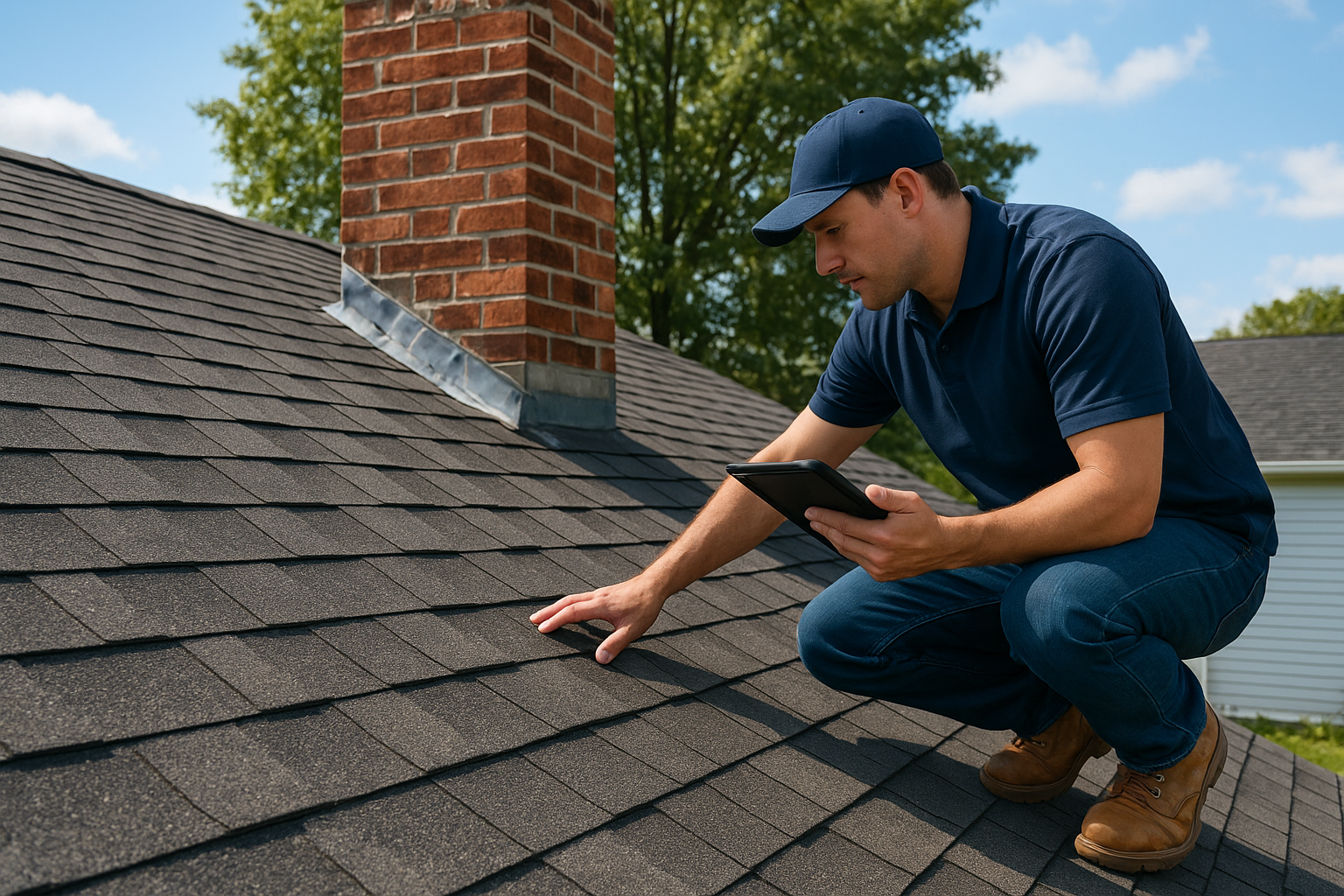
Common items a thorough inspection covers include:
Professional inspections generally run $150 to $400 for a standard residential roof. Some contractors, including Defend Roofing, offer free assessments as part of their service model. When you factor in how often should a roof be inspected and what a single missed problem costs in structural repairs, paying for an inspection is straightforward prevention, not an optional line item.
Professional inspections set the standard, but your own observations between visits add real value to your maintenance routine. A few simple habits help you catch obvious warning signs early and give your inspector useful context when they arrive.
After any significant weather event, walk your property and scan the roof from the ground. Missing or lifted shingles, visible granule buildup in gutters, and displaced flashing are all signs worth noting before your next scheduled inspection. Pay close attention to gutters and downspout exits since heavy granule accumulation signals that your roof shed material during the storm.
What you notice from the ground helps your inspector prioritize during their next visit.
Common things to scan for after a storm:
Inside your home, water stains on ceilings or walls and soft spots in attic flooring point to active moisture intrusion. Check your attic a few times a year with a flashlight, especially after heavy rain.
Knowing how often should a roof be inspected matters less if you ignore clear signals inside your home between visits. Catching these signs early keeps small problems from turning into expensive structural repairs.
You now have a clear answer to how often should a roof be inspected and a practical framework for following through on it. The schedule isn't complicated: twice a year as a baseline, more frequently as your roof ages or after Central Texas storms roll through. The inspections protect your investment, keep your insurance coverage intact, and give you documented evidence of your roof's condition when you need it most.
What matters now is acting on it. A written inspection schedule sitting in a drawer does nothing for your roof. Booking your first professional assessment puts you ahead of the majority of homeowners who wait until damage forces the issue. At Defend Roofing, our Precision Roof Assessment gives you 100+ photos and an honest condition report backed by three generations of family roofing experience. When you're ready to get a clear picture of what's happening overhead, schedule your roof assessment and we'll handle the rest.