Get a better roof inspection near me. Learn 9 tips to vet contractors, spot red flags, and use photo evidence to avoid paying for unnecessary repairs.

Searching for a roof inspection near me brings up dozens of options, and almost no way to tell which ones are worth your time. Some companies offer free inspections that are really just sales pitches. Others charge a premium but skip the documentation that actually matters. Picking the wrong inspector can cost you thousands, either through missed damage or unnecessary repairs you didn't need.
At Defend Roofing, we've seen what happens when Central Texas homeowners hire the wrong company. Our father-and-son team, Chris and Greyson Buster, has three generations of roofing experience, and every assessment we perform includes 100+ photos with honest findings, not a pressure pitch. That perspective shaped this guide, because we believe informed homeowners make better decisions, whether they hire us or not.
Below, you'll find nine practical tips covering what a roof inspection should cost, the right questions to ask before booking, and the red flags that signal a company to avoid. Use this list to evaluate any inspector in your area and protect your home from both roof problems and bad contractors.
If you're searching for a roof inspection near me in the Austin area, the Defend Roofing Precision Roof Assessment gives you the most documented, transparent starting point available locally. Chris and Greyson Buster built this process specifically to remove guesswork for homeowners and provide clear, photo-backed evidence of exactly what your roof looks like at the time of inspection, without any sales pressure attached to the findings.
Book a Precision Roof Assessment before you talk to any other contractor. You fill out a simple request on the Defend Roofing website, and the team schedules a time that works for you. Greyson or Chris personally performs every inspection, walking your entire roof rather than glancing from the ground or sending an inexperienced crew member up alone. You stay involved throughout the process and receive a full briefing on findings before the team leaves your property.
Bring any documentation you already have, such as recent insurance correspondence or prior inspection reports, so the team can compare current conditions against what was previously recorded. This helps identify whether any damage is new or long-standing, which matters significantly if you plan to file an insurance claim.
The report you receive includes 100 or more photos organized by location and issue type, with clear notes explaining what each photo shows and why it matters. Look for documentation that covers the full field of the roof, flashing points, ridge caps, gutters, vents, and all penetrations. A report that skips any of these areas is incomplete and leaves you with blind spots.
A legitimate inspection documents what is actually present on your roof, not just what supports a particular repair or replacement recommendation.
Pay close attention to whether the findings come with a straightforward repair-or-replace recommendation and the specific reasoning behind it. Defend Roofing's process includes an honest assessment even when the conclusion is that no work is needed right now, which saves you money and builds a reliable record of your roof's condition over time.
Defend Roofing offers the Precision Roof Assessment at no charge to homeowners across the Central Texas service area, including Cedar Park, Leander, Jonestown, Steiner Ranch, and Avery Ranch. The inspection takes between 45 minutes and two hours depending on roof size and complexity, and you receive your photo report the same day or within 24 hours.
You do not need a storm or visible leak to justify booking. Scheduling during dry weather gives the inspector the best conditions to identify early-stage damage that you would otherwise miss until it turns into a much costlier problem.
Before you book any roof inspection near me, verify that the company is properly licensed to operate in Texas, carries active general liability insurance, and has a real local address. This single step eliminates a large number of fly-by-night contractors who show up after storms, collect money, and disappear before any meaningful work is done.

Ask every contractor you consider for their Texas Department of Insurance roofing contractor license number and their certificate of insurance before they set foot on your property. A legitimate company hands this over without hesitation. You can verify a Texas roofing contractor's registration directly through the state's public records portal. Also confirm they carry workers' compensation coverage, because if a crew member gets injured on your roof without it, your homeowner's policy could be on the hook.
Look for a physical local address, not just a phone number or a P.O. box. Companies that operate locally have a reputation to protect and a reason to stand behind their work. Check that the address matches the service area they claim, and cross-reference it against their Google Business Profile reviews to confirm other Central Texas homeowners have actually used them.
A contractor who hesitates to share licensing or insurance details before an inspection is not one you want on your roof.
Verifying credentials costs you nothing but a few minutes, and you should do it before scheduling rather than after. If a company claims to be licensed but cannot produce documentation within 24 hours of your request, move on. This verification step takes less time than any other due-diligence task in this guide and carries the highest return on protecting your investment.
When you search for a roof inspection near me, two types of professionals show up: roofing contractors and independent home inspectors. Each serves a different purpose, and choosing the right one depends on what you actually need the inspection to accomplish.
Start by identifying your goal. If you suspect storm damage and plan to file an insurance claim, a licensed roofing contractor with documented photo reporting is the better fit. They understand material-specific damage, know how insurance adjusters evaluate findings, and can provide adjuster-ready documentation. If you are buying a home and need a broad structural overview that covers plumbing, electrical, and the roof together, a certified general home inspector covers more ground in a single visit.
A roofing contractor brings deep material knowledge that a general inspector often lacks. They can identify granule loss patterns, flashing failures, and improper installation details that a non-specialist might mark as acceptable. On the other hand, a general inspector works independently, which means they have no financial stake in selling you a repair or replacement.
The most important thing is that whoever inspects your roof produces written, photo-backed documentation you can act on, regardless of their title.
Look for clear evidence that the person actually walked the roof rather than assessing it from the ground or from a drone feed alone. Physical access and hands-on evaluation remain the standard for a thorough inspection.
Independent home inspectors typically charge $300 to $500 for a full home inspection that includes the roof as one component. Roofing contractors often inspect at no charge, particularly when storm damage is involved. Schedule either type before signing a contract or filing a claim, since timing directly affects how useful the findings are.
Not every roof inspection near me result leads to the same scope of work. Some companies walk only the visible slope of your roof and call it done. Others assess every component from ridge to gutters. You need to know exactly what a company covers before you book, because gaps in the inspection process create gaps in what you actually know about your roof.
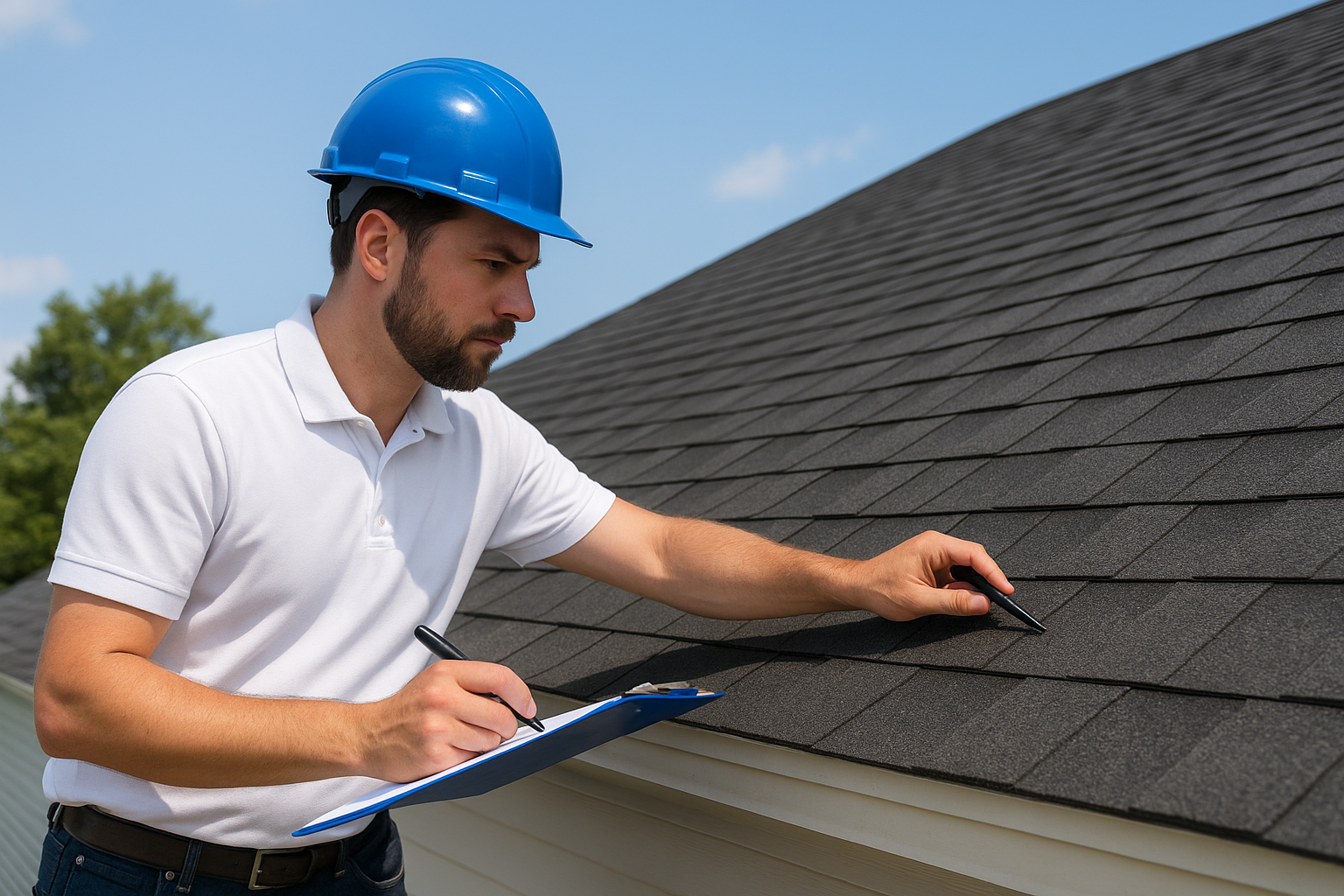
Call or email any company you are considering and ask them to describe every area they physically examine during an inspection. Write down the answer. A complete inspection covers the field of the roof, all flashings, ridge and hip caps, valley material, pipe boots, vents, skylights if present, gutters, soffits, and fascia. If a company gives you a vague answer or says they check "the main areas," that tells you their process lacks structure, which means their report will too.
Look for confirmation that the inspector physically accesses the roof surface rather than relying solely on ground-level viewing or drone footage. Drone imagery can supplement an inspection but should not replace hands-on evaluation of material condition, seam integrity, and fastener placement. Also confirm that the company provides a written report with photos, not just a verbal summary you are expected to remember after they leave.
An inspection without documentation is just an opinion, and opinions do not hold up with insurance adjusters or future buyers.
A thorough inspection that covers all roof components takes between 45 minutes and two hours depending on the size and pitch of your roof. Any company that promises to complete a full assessment in 15 minutes is cutting corners somewhere. Clarifying the scope before scheduling saves you from wasting time on an incomplete inspection that leaves your biggest questions unanswered.
Roof inspection pricing varies more than most homeowners expect, and knowing the typical range before you search for a roof inspection near me keeps you from overpaying or dismissing a legitimate company based on price alone. Cost differences reflect inspector type, scope, and documentation quality, not necessarily skill level, so you need context to evaluate any quote accurately.
Research what inspectors in Central Texas charge before you call anyone. Ask each company upfront whether their inspection fee is standalone or applied toward any repair work you book afterward. Some roofing contractors credit the inspection cost against the project total, while others charge a flat fee regardless of what follows. Get that answer in writing so there are no surprises after the work is done.
Compare what you receive for the price, not just the price itself. A $0 inspection from a roofing contractor that includes 100+ photos and a written report delivers more value than a $200 inspection that produces only a verbal summary. Watch for companies that charge a premium but provide no written documentation, since that combination signals you are paying for their time without gaining anything useful to act on.
The cheapest inspection is not the best deal if the report leaves you with no clear picture of your roof's condition.
In the Austin area, roofing contractor inspections typically range from free to $150, while independent home inspectors charge $300 to $500 as part of a full home inspection. Schedule your inspection before any pending storm season or before listing or buying a home, since demand spikes after major weather events and booking windows shrink fast.
Having a prepared list of questions before you call any company from your roof inspection near me search puts you in control of the conversation. Most contractors can talk confidently about their services, but the specific answers they give to direct questions reveal far more about their process and professionalism than any marketing language on their website.
Before booking, ask every inspector these five questions and listen closely to how they respond, not just what they say:
Write down the answers so you can compare responses across multiple companies without relying on memory.
A company that answers all five questions directly and without hesitation is operating with confidence in their process. Watch for inspectors who deflect specific questions with vague reassurances or who pivot immediately to pricing before you have finished asking. Evasive answers on process details almost always predict a shallow inspection and a report that leaves you with more questions than you started with.
The quality of a company's answers before the inspection is a reliable preview of the quality of work you will receive.
Running through this question list takes less than ten minutes per company and costs nothing. Do it before you schedule, not after, so you filter out weak options before anyone steps onto your roof.
Knowing what a good inspection looks like only helps if you can also recognize when something is off. Certain behaviors and patterns from a contractor signal problems before any work begins, and catching them early during your roof inspection near me search saves you from a bad outcome.

Pay attention to how a company behaves from the first contact through the end of the inspection. Take notes on anything that feels pressured, rushed, or vague, because those impressions usually prove accurate once you see the report. If a contractor shows up uninvited after a storm and pushes you to sign anything on the spot, do not sign. Texas law gives you the right to cancel a roofing contract within three business days, but it is better to avoid those situations entirely.
Watch for these specific warning signs before and during any inspection:
A legitimate inspector shows you the evidence and lets the findings drive the recommendation, not the other way around.
Spotting red flags costs you nothing but attention, and the time you spend vetting a company upfront is far less than the time you lose dealing with a contractor dispute or a denied insurance claim. Do your vetting before anyone gets on your roof, not after the work is already scheduled.
Timing matters more than most homeowners realize when searching for a roof inspection near me. Scheduling at the right moment gives you the most actionable information and the best chance of catching damage before it turns into something far more expensive to fix.
Schedule an inspection after any significant weather event in Central Texas, including hailstorms, high winds, or sustained heavy rain. You should also book one if your roof is 10 years or older and has never been formally assessed, or if you are preparing to sell or purchase a home. These moments give the inspection findings immediate practical value rather than sitting in a file you never reference.
Booking in late winter or early spring before storm season peaks keeps you ahead of the demand curve and gives you better inspector availability throughout the year.
Look for visible signs that should prompt an immediate inspection rather than a wait-and-see approach: missing or lifted shingles, water stains on interior ceilings, granules collecting in gutters after rain, or daylight visible through attic boards. Any one of these signs warrants same-week scheduling rather than adding it to a future to-do list.
Waiting until a leak develops before booking an inspection almost always turns a manageable repair into a full replacement.
Inspections scheduled outside of peak storm season typically come with faster turnaround and more flexible scheduling windows. In Central Texas, peak demand runs from April through September, so booking in February or March gives you a documented baseline before summer storms arrive.
There is no minimum damage threshold required before scheduling. You do not need visible damage to justify the call, and the cost of finding nothing wrong is far lower than missing something that was quietly developing the whole time.
The final step in evaluating any roof inspection near me result is confirming that you walk away with something tangible and usable. A verbal summary fades quickly, and a one-page estimate without supporting documentation gives you nothing to act on, share with an insurance adjuster, or compare against a future inspection.
Before the inspector leaves your property, confirm the written report delivery timeline and what format it arrives in. Ask whether the photos are organized by roof zone or dumped into a single unstructured file, because organized documentation is far easier to reference when you need to pull a specific finding later.
You should also ask for explicit next steps in the report itself, not just a list of observations with no recommended action attached. Findings without direction leave you in the same uncertain position you were in before the inspection started.
A strong report includes 100 or more labeled photos tied to written findings, a clear repair-versus-replace recommendation with supporting reasoning, and a prioritized breakdown of items that need attention now versus items to monitor over time. Watch for reports that consist only of an estimate with a few photos attached as an afterthought, since that structure serves the contractor's sales goal rather than your decision-making process.
A report that shows you the evidence and explains what it means gives you real control over what happens to your roof next.
Receiving a complete, organized report should not cost you extra beyond the standard inspection fee. Same-day or next-business-day delivery is a reasonable expectation from any professional operation. If a company tells you the report takes more than three days, that signals a backlog or a disorganized process, neither of which helps when time-sensitive insurance filing deadlines are in play.

Every tip in this guide points toward the same outcome: knowing exactly what condition your roof is in before a small problem becomes an expensive one. Whether you use this list to evaluate one contractor or five, the standard stays the same. You deserve documented findings, honest recommendations, and a clear path forward, not a rushed estimate from someone who glanced at your shingles from the driveway.
If your next roof inspection near me search brings you to Central Texas, Defend Roofing is ready to put the Precision Roof Assessment to work for you. Chris and Greyson Buster personally perform every inspection, deliver 100+ organized photos, and give you a straight answer on what your roof actually needs. There are no sales tactics and no pressure, just a thorough assessment you can act on. Schedule your free roof inspection today and get a documented picture of your roof's condition within 24 hours.