Use this free roof inspection checklist to check shingles, flashing, gutters, the attic and deck, then document findings and know when to call a pro.

A good roof inspection checklist covers six areas in a fixed order: the roof surface, flashing and penetrations, gutters and edges, the attic and ceilings, the deck and structure, and finally your documentation. Homeowners can run most of it from the ground, a ladder at the eave, and the attic. Contractors and property managers can use the same list on site with a photo for every line. Copy the items into a notes app or print this page, and you have a free roof inspection checklist with no signup.
The reason you need a list is that roofs hide their damage. From the driveway you cannot see a lifted shingle, a dried-out flashing seam, or a wet patch of attic insulation. Small leaks rot decking, and a missed hail hit can weaken an insurance claim. This article walks through each area, what to look for, what counts as a fail, and what to do next.
Defend Roofing is a family-owned roofer serving the Austin area, and we offer free roof inspections. Check your roof twice a year, in spring and fall, and again after any hail or high-wind storm. Central Texas weather makes that routine worth the hour.
Start with the surface, because shingles take the hail, sun, and wind and show the most visible damage. Do this part from the ground or from a ladder at the eave. Stay off steep or wet roofs, and use binoculars to read the slopes you cannot reach.
Walk the full perimeter and study every slope, since storms often hit one side harder. Check for:
On a flat or low-slope commercial roof, swap in membrane blisters, open seams, punctures, and water that is still standing well after the rain stops.
A few damaged shingles in one spot point to a repair. Curling, cracking, or granule loss across a whole slope means the roof is aging out, and a replacement conversation is fair. Roof repairs at Defend Roofing start at $395+, so catching a small problem early keeps the bill small.
A few bad shingles mean a repair; the same damage across a whole slope means the roof is aging out.
Flashing and penetrations are where most leaks start, not the open field of shingles. Every chimney, skylight, vent pipe, and wall-to-roof joint is a spot where water can slip under the surface unless metal and sealant stay tight.
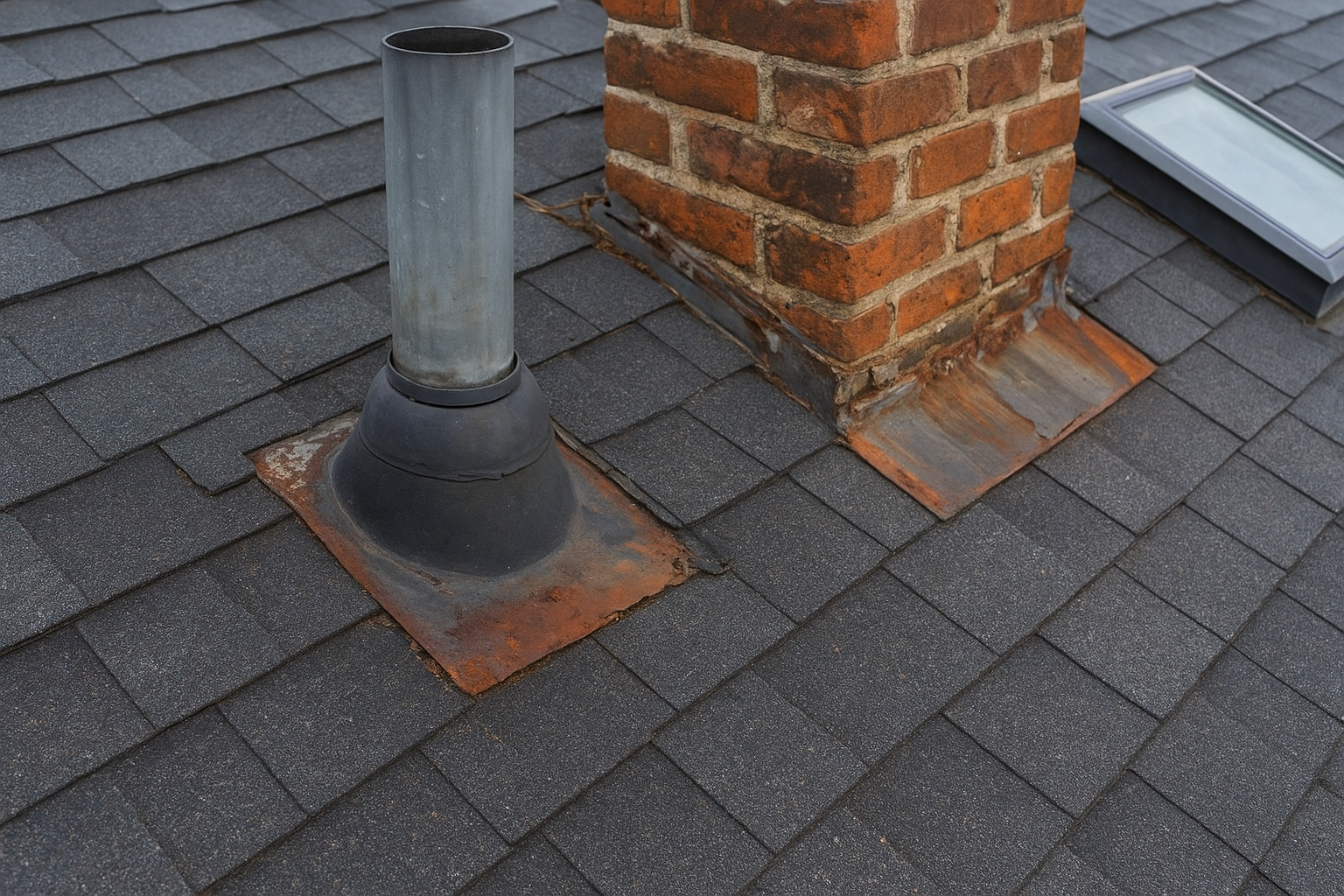
Inspect each opening and joint on the roof. A short list:
Pipe boots often wear out before the shingles around them, so check them even on a fairly young roof.
Any gap, lift, or split in this zone counts as a fail, because water follows it straight to the decking. If you suspect a leak, run a hose test. Have a helper watch the ceiling or attic inside. Soak one small section at a time, starting low on the roof and working upward, so you can tie any drip to its source.
Test one section at a time with a hose, or you will never know which spot leaked.
Gutters, downspouts, and the roof edge carry water off the house, and they fail quietly. If water cannot leave the roof cleanly, it backs up under the first row of shingles and soaks the fascia, so this item belongs on every roof inspection checklist, residential or commercial.
Look at the full run of gutter from a ladder, and watch the downspouts during rain if you can. Check for:
Press a screwdriver tip gently into the fascia. If it sinks in, the wood is rotting and needs replacing before the gutters can be fixed properly. Heavy Texas downpours test hangers, so replacing weak ones early beats rehanging sagging gutters later. Gutter and exterior work at Defend Roofing starts at $1500+.
Water that cannot leave the roof will rot the wood under the first row of shingles.
The attic shows you what the roof is doing from underneath, and a dry attic is the best proof of a sound roof. Go up with a flashlight, ideally after a rain, and look at the underside of the roof deck rather than at the shingles.
Scan the rafters, the deck, and the insulation, then check the rooms below:
Active moisture, daylight, or mold is a fail. Poor ventilation is a slower failure, since a hot, humid attic bakes shingles from below and shortens their life. When you find a stain, circle it in pencil and write the date beside it. If the ring grows after the next rain, the leak is active and you can show a roofer exactly where to look.
Circle every stain with a pencil and a date, and you will know if a leak is still active.
The deck and framing hold everything else up, so problems here are the most serious and the most expensive. You can spot warning signs from the attic and from the ground, but this is the part of the roof inspection where a professional earns their fee.
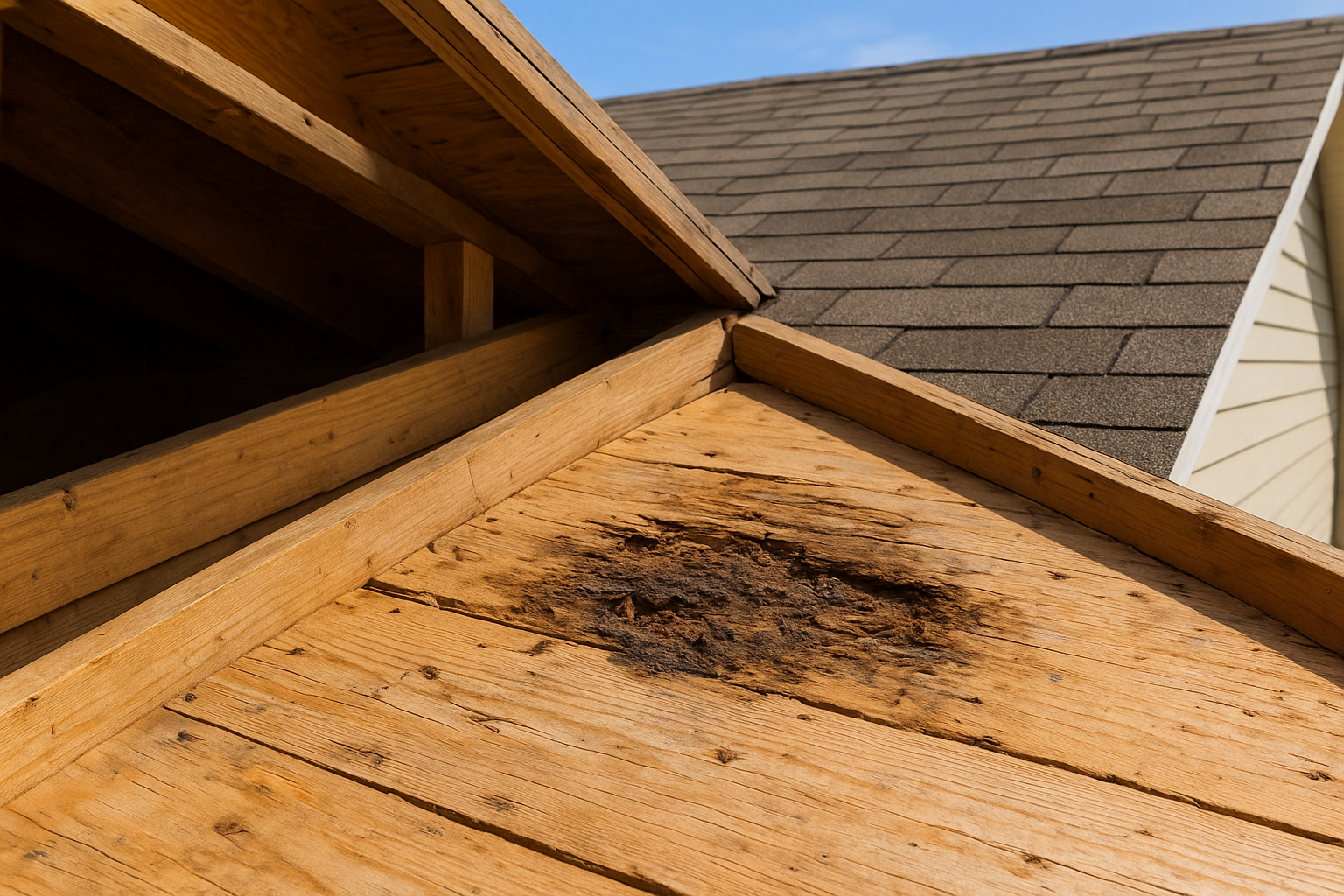
From inside, look along the rafters or trusses for bowing, cracks, or rot, and check for sagging decking between them. From outside, sight along the ridge and eaves for dips. A deck that feels soft underfoot means damage below the surface, but that is a reason to call a pro, not to walk the roof yourself.
| Finding | Likely meaning | Typical action |
|---|---|---|
| Soft or spongy spot | Rotted decking from long-term moisture | Replace the affected sheathing |
| Dark stains on sheathing | Past or active leak | Find the source, then dry and monitor |
| Sagging ridge or plane | Structural or load problem | Call a roofer or engineer promptly |
| Cracked or bowed rafter | Framing stress | Professional structural review |
Hidden rot is why a proper replacement strips the old roof down to the deck. Defend Roofing's installations include a full tear-off for that reason.
Soft decking tells you the leak has been running for a long time, so treat it as urgent.
Documentation is the item most checklists skip, and it is the one that protects you. Photos and notes turn "I think the roof is fine" into evidence you can hand to a contractor, a buyer, or an insurance adjuster.
Whoever inspects, your record should include:
If a report is a signature and a verdict with no photos, ask for more.
Homeowners can complete items 1 through 4 on their own, but a pro should cover the deck and any steep roof. Defend Roofing's roof inspections are free and end with an Integrity Report that includes 100+ photos and an honest repair-vs-replace recommendation. After a storm, we also document hail and wind damage and meet adjusters on site. If you pay for an inspection elsewhere, ask what the report contains before you book.
A roof inspection without dated photos is an opinion, not a record.
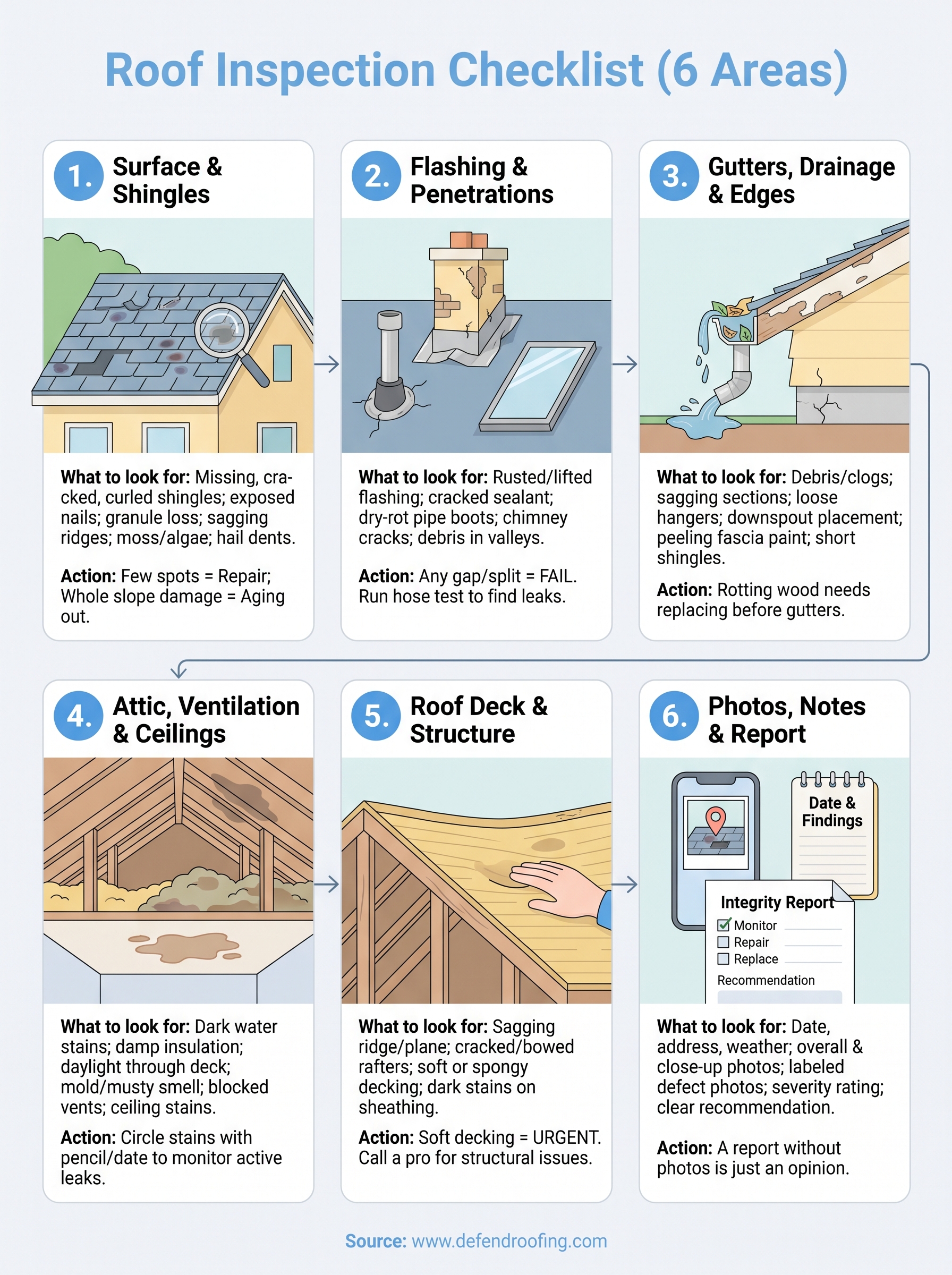
Work down the six areas in order: surface, flashing, gutters, attic, structure, then documentation. Fix small items early, treat soft decking and active leaks as urgent, and repeat the check every spring and fall and after each storm. Save your photos every time, because a year-over-year record shows how fast your roof is aging.
If you would rather have a professional run the list, call or text Defend Roofing for a free roof inspection. We will document your roof with photos, explain what we found in plain language, and tell you whether it needs a repair, a replacement, or nothing at all.