Compare four kinds of roof repair company near me, from local roofers to handymen, and use a checklist to vet reviews, insurance and free estimates.

Finding a roof repair company near me that is worth hiring comes down to three things: the roofer finds the real source of the leak, documents it with photos, and gives you a free written estimate without pressure. For most homeowners, that points to one of four options. Defend Roofing suits you if you want photo-documented repairs and help with storm claims. An independent local roofer suits a simple leak. A large regional company suits a big or complex job. A handyman suits only a few loose shingles.
The problem is that a search shows you directories, ads and star ratings that all look alike. A leak will not wait while you sort through them, and a rushed choice often ends in a repair that fails or a sales pitch for a full replacement you did not need.
We run Defend Roofing in the Austin area, so we list ourselves first and say plainly where we are not the right fit. Each option below covers what you get, who it suits and what to watch for. The last section gives you a checklist to vet any roofer, including us, before you sign anything.
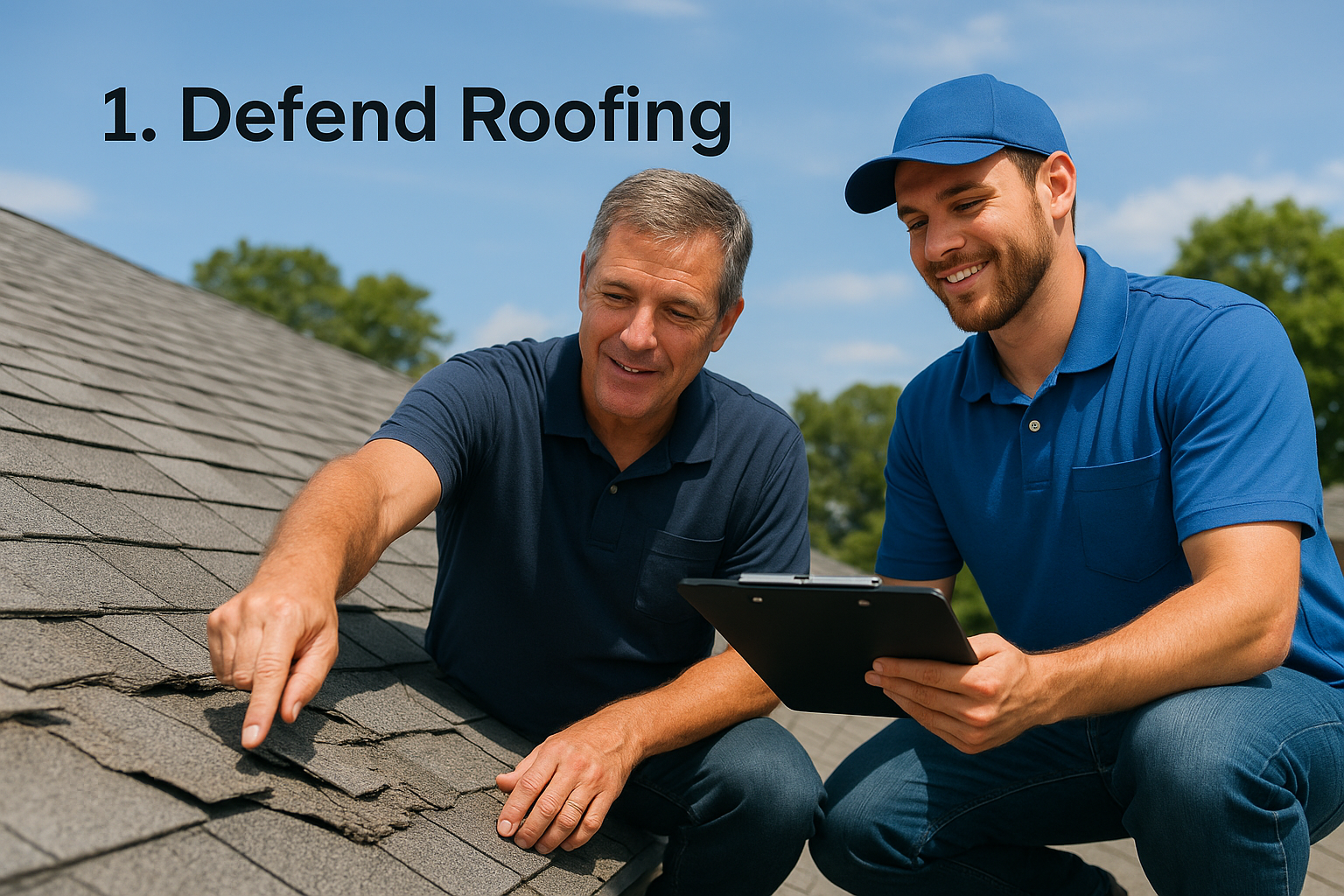
Defend Roofing is a family-owned roofer serving the Austin area, run by father and son Chris and Greyson Buster. The approach is evidence before a quote. Every repair starts by finding and documenting the source of the damage, and repairs start at $395+ depending on scope.
A repair quote means little until someone shows you photos of what is actually wrong.
This option suits homeowners in Cedar Park, Avery Ranch, Steiner Ranch, Jonestown, Leander and nearby areas who have storm damage or an insurance claim to handle. It also suits anyone tired of contractors who push a replacement. You get the evidence first and decide afterward.
Two cautions apply. The $395+ figure is a starting rate, so your final price follows the scope of the repair. The limited lifetime workmanship warranty covers installations, so ask for the written terms that apply to a repair.
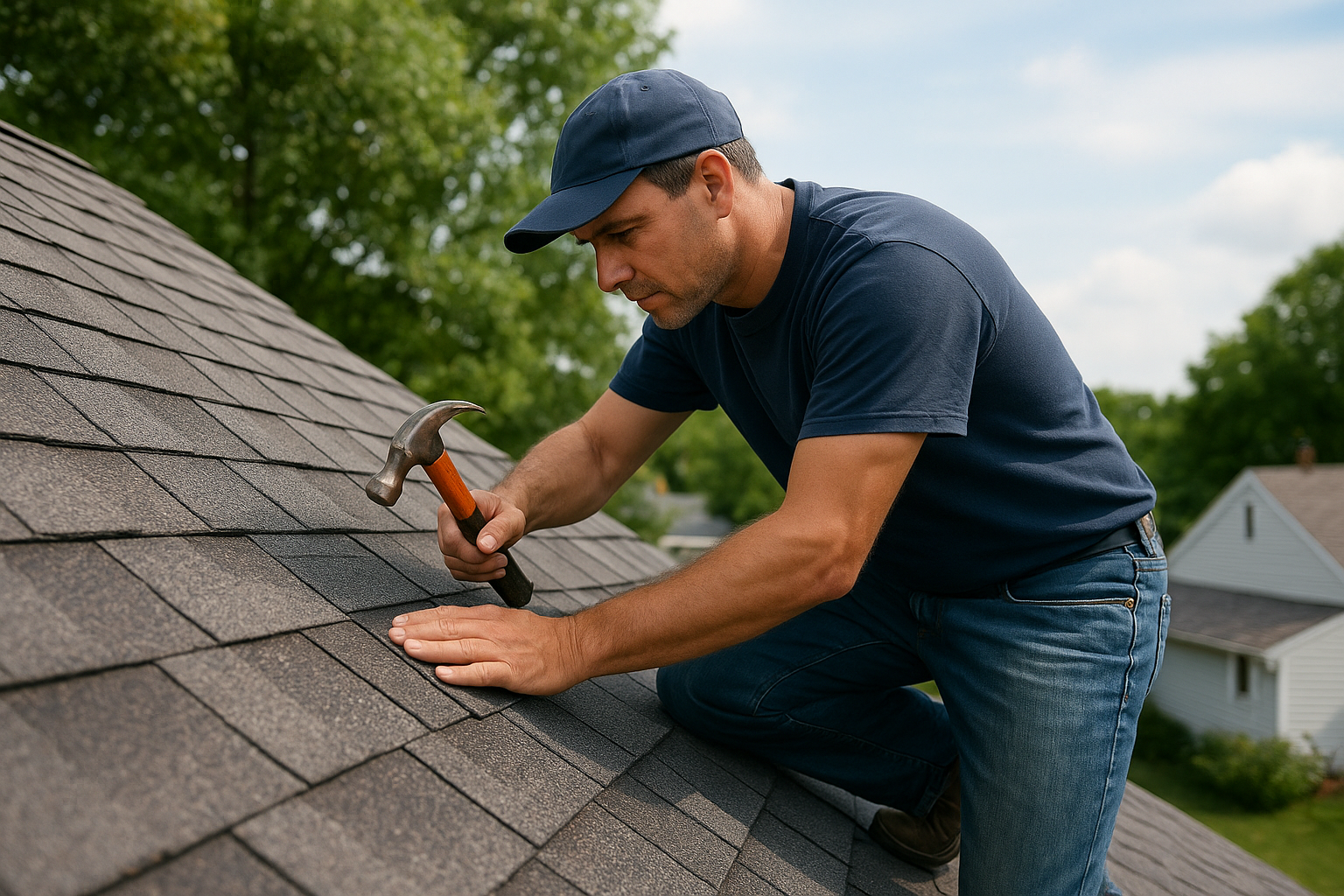
An independent roofer is usually a small crew where the owner quotes the job and often works on the roof. You get a direct line to the person who decides how the repair is done. Scheduling is flexible for small jobs.
Small crews work best when the problem is small and the owner will put the diagnosis in writing.
This option suits a single leak or a small patch of damaged shingles where you want a fair price and a quick visit. Ask neighbors who they used, then check that roofer's reviews and references yourself.
Watch for capacity. After a hail storm, small crews book out for weeks, and some cannot support an insurance claim with documentation. Ask for photos of the damage and of the finished work, and ask for proof of insurance before anyone climbs a ladder.
A large company runs several crews, an office staff and project managers. You get fast scheduling and a standard process, which helps when many homes on your street were hit at once.
Size buys capacity and paperwork, but you still have to confirm who will be on your roof.
This option suits a large, complex or commercial-scale job, or a homeowner who values speed and a polished process over a personal relationship. It also helps when a storm has damaged the whole roof and you expect a full replacement.
Small repairs can get lost here. Sales reps are often paid on contract size, so a repair call may turn into a replacement pitch. Ask whether employees or subcontractors will do the work, and get the repair scope priced separately from any replacement.
A general contractor or handyman can handle minor, accessible fixes such as resealing a vent boot, replacing a few shingles or caulking a small gap. You pay for a short visit rather than a roofing project, and you may already know the person from other home work.
A handyman can seal a small gap, but diagnosing a hidden leak is a roofer's job.
This option suits a few loose or missing shingles on a low, easy-to-reach roof, where the cause is obvious. If you are unsure where the water enters, start with a roofer's inspection instead.
Roofs are dangerous to work on, and a poor patch can hide a leak for months while the decking rots. Ask whether the person carries liability insurance and follows the shingle maker's installation instructions. A handyman rarely provides the photo documentation an insurer wants, so skip this option for storm damage.
Texas does not issue a state roofing license, so verification falls on you. Use the same checks on every company, whichever option you choose, and compare free estimates side by side.
Read reviews for patterns rather than the star average. Look for recent reviews that mention repairs, not just replacements, and see how the owner replies to complaints. Then ask for a certificate of insurance. Most private employers in Texas can opt out of workers' compensation, so ask directly whether the crew is covered.
| What to check | What a good answer looks like |
|---|---|
| Reviews | Recent and specific, with owner replies to complaints |
| Insurance | Certificate sent by the insurer, not a verbal "we're covered" |
| Estimate | Written and itemized, naming the cause of the leak |
| Photos | Damage photos before work and the fix afterward |
| Warranty | Written terms that say what is covered and for how long |
| Roof type | Real experience with your material, such as shingle or metal |
If a roofer cannot show you insurance and photos in writing, keep looking.
Get two or three estimates and compare scope, not just price. A bid far below the others often skips flashing, underlayment or cleanup. Check that the roofer names the cause of the leak, lists the materials and explains how new shingles will match your roof. If you have a metal or tile roof, confirm the company repairs that material regularly.
Be wary of large upfront deposits and of anyone who pressures you to sign the same day. A real repair estimate should be free and should leave you time to decide.
Ask the roofer to document hail or wind damage before you call your insurer. Texas law bars contractors from waiving or absorbing your deductible, so be suspicious of anyone who offers to.
Run the numbers first. Many Texas policies set a wind and hail deductible as a percentage of the insured value, such as 1%. On a home insured for $350,000, that is $3,500. A $900 repair falls well under that figure, so you would pay it yourself and skip the claim. A repair above the deductible is worth filing.

The right choice depends on the job. A handyman fits a few loose shingles. An independent roofer fits a simple leak. A large company fits a big job. Defend Roofing fits repairs where you want photo proof and help with a storm claim. Whichever you choose, verify insurance, read recent reviews, and compare written estimates before you sign.
If you live in the Austin area and want a second opinion on your roof, get an instant online quote or contact Defend Roofing. You can also call or text (512) 777-1751 to schedule a free inspection.