Learn to spot true roof emergencies, contain leaks, tarp safely, and get emergency roof repair from Defend Roofing before storm damage worsens.
Water dripping through your ceiling in the middle of an Austin thunderstorm doesn't wait for business hours. Every minute you spend searching for answers, that leak spreads further into your drywall, insulation, and framing, turning a repair job into a much bigger rebuild. If you're dealing with emergency roof repair right now, you need steps that work in the next ten minutes, not a lecture on roofing materials.
This guide gives you the exact actions to take when water starts coming in: where to look, what to grab from your garage, and how to protect your home until a roof repair emergency crew can get on the ladder. We'll also cover when a roof repair emergency leak is serious enough to call a professional immediately versus when a tarp and a bucket will hold until morning.
We've pulled these steps from real calls we've handled across Cedar Park, Steiner Ranch, and the greater Austin area, so you're getting field-tested advice, not guesswork. By the end, you'll know how to buy time, document the damage for your insurance adjuster, and get the right help fast without falling for pressure tactics from a stranger at your door.
Not every roof problem needs a 2 a.m. phone call. Active water intrusion is the clearest sign you're in true emergency territory: water dripping from a light fixture, a ceiling stain that's spreading in real time, or water pooling on your floor. Missing shingles after a storm, a tree limb through your decking, or a section of roof that's visibly sagging also qualify. These situations get worse by the hour, and every hour of delay means more damage to drywall, insulation, and the framing underneath.
Other situations feel urgent but can usually wait until morning. A few missing shingles with no visible leak, a small area of granule loss in your gutters, or a soft spot you noticed while cleaning gutters are worth scheduling a repair for soon, but they're not going to flood your living room tonight. Knowing the difference saves you from paying emergency rates for something that could've waited, and it keeps you from ignoring something that genuinely needs attention right now.
If water is actively entering your home, treat it as an emergency. If it's just missing materials with no leak, it can usually wait for daylight.
Use this quick checklist to sort your situation:
Storms are the most common trigger for true emergencies in Central Texas. High winds strip shingles, hail cracks flashing, and heavy rain finds every gap within hours. The National Weather Service tracks severe weather alerts for the Austin area, and it's worth checking their warnings before a storm hits so you're not caught off guard.
Stop before you climb anything. Safety comes first during any emergency roof repair, because a wet roof deck and a metal ladder are a bad combination in the middle of a storm. Grab a flashlight and check your attic before you touch the exterior at all. Look for wet insulation, water trails along the rafters, or daylight coming through the decking. This tells you roughly where the leak originates without putting you on a slippery roof in the dark.
Never go on your roof during active rain, high wind, or darkness. A flooded ceiling is easier to fix than a fall.
Remember these safety basics before you assess anything outside:
Those photos matter later. They give your insurance adjuster and your roofer a clear starting point once daylight and dry conditions make a real inspection possible.
Once you know roughly where water is coming from, focus on containing it before you worry about the roof itself. Place a bucket under the drip and set a tarp or old towels around it to catch splashes. If you see a bulge forming in your ceiling drywall, puncture it with a screwdriver at the lowest point. That sounds counterintuitive, but a controlled hole lets trapped water drain into your bucket instead of collapsing the whole ceiling section onto your floor.

A small, controlled hole in a sagging ceiling beats a full collapse every time.
Move furniture, electronics, and anything irreplaceable out of the drip zone right away. Water travels sideways along joists before it drops, so the wet spot on your ceiling isn't always directly under the source. Check nearby areas too.
Grab these items before the water spreads further:
This interior work buys you time. It won't fix the roof repair emergency leak itself, but it stops secondary damage while you plan your next move outside.
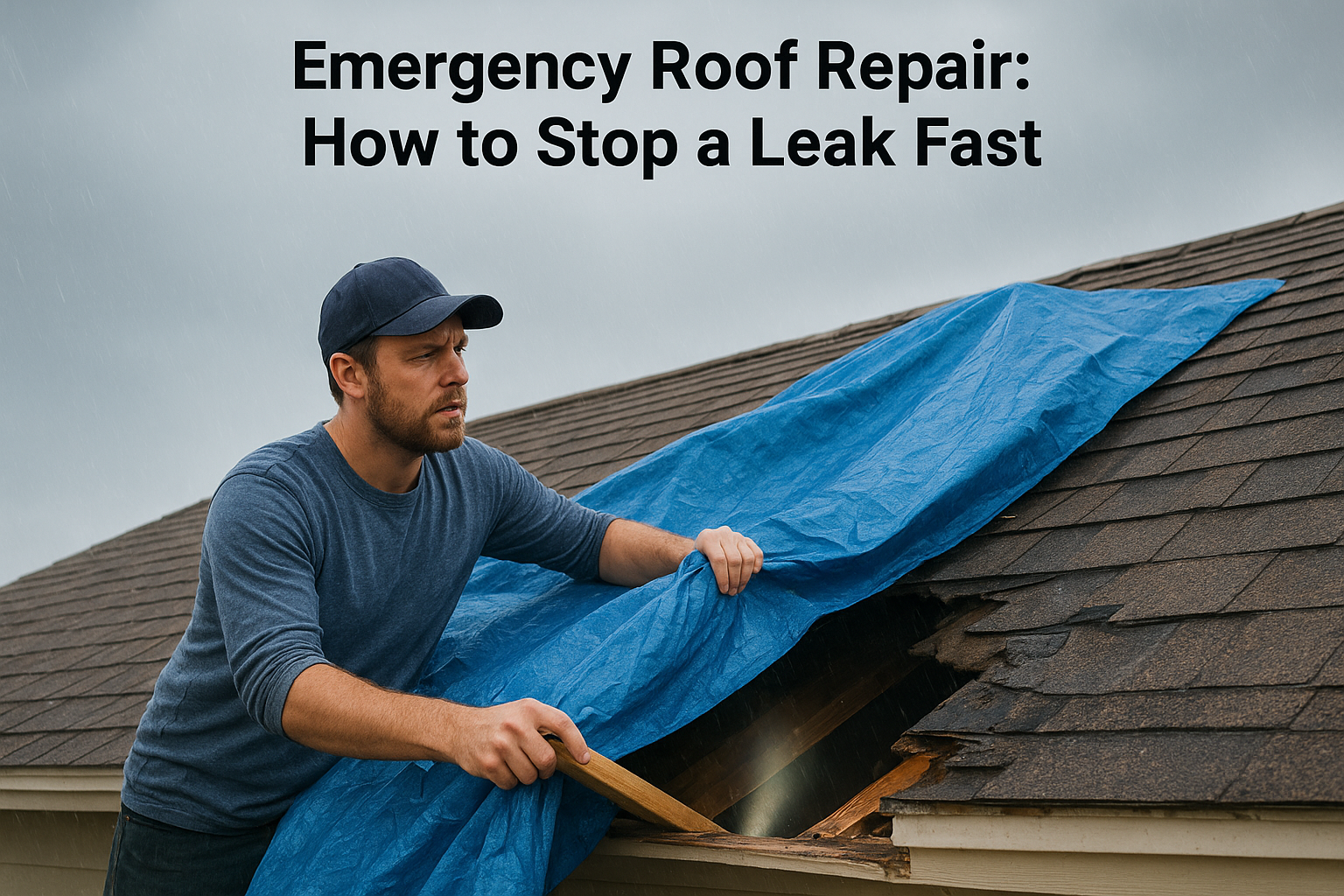
Once the rain lets up and daylight returns, it's time to stop water at the source. Only climb onto the roof if conditions are safe: dry surface, no wind gusts, and someone else home to spot you. Locate the damaged area you identified from the attic, then cover it with a heavy-duty tarp, extending at least four feet past the damaged section in every direction. Wrap the top edge over the ridge or attach it to sound roofing material with roofing nails or screws driven through wood strips, called "anchor boards," laid along the tarp's edges. This spreads the load and keeps wind from ripping the tarp loose overnight.

A properly anchored tarp can hold for days, but a loose one becomes a hazard the next time wind picks up.
Skip this step entirely if your roof pitch is steep or the damage covers a large section. That's a job for a crew, not a solo attempt.
A tarp buys you time, but it's not a fix. Temporary patches fail under sustained rain, and every day you wait invites mold, rotted decking, and a bigger insurance claim. Once you've stabilized the leak, call a roofer who handles storm damage regularly and can get someone out within 24 hours, not next week.
A tarp stops the water today, but only a trained crew stops it for good.
When you call, be ready to describe what you found and share the photos from your attic and ground-level walk. A crew that asks detailed questions before showing up is one that respects your time and your roof.
At Defend Roofing, our Precision Roof Assessment covers every one of those steps with over 100 photos, so you and your adjuster see exactly what we saw. That documentation speeds up claims and keeps the whole process honest.
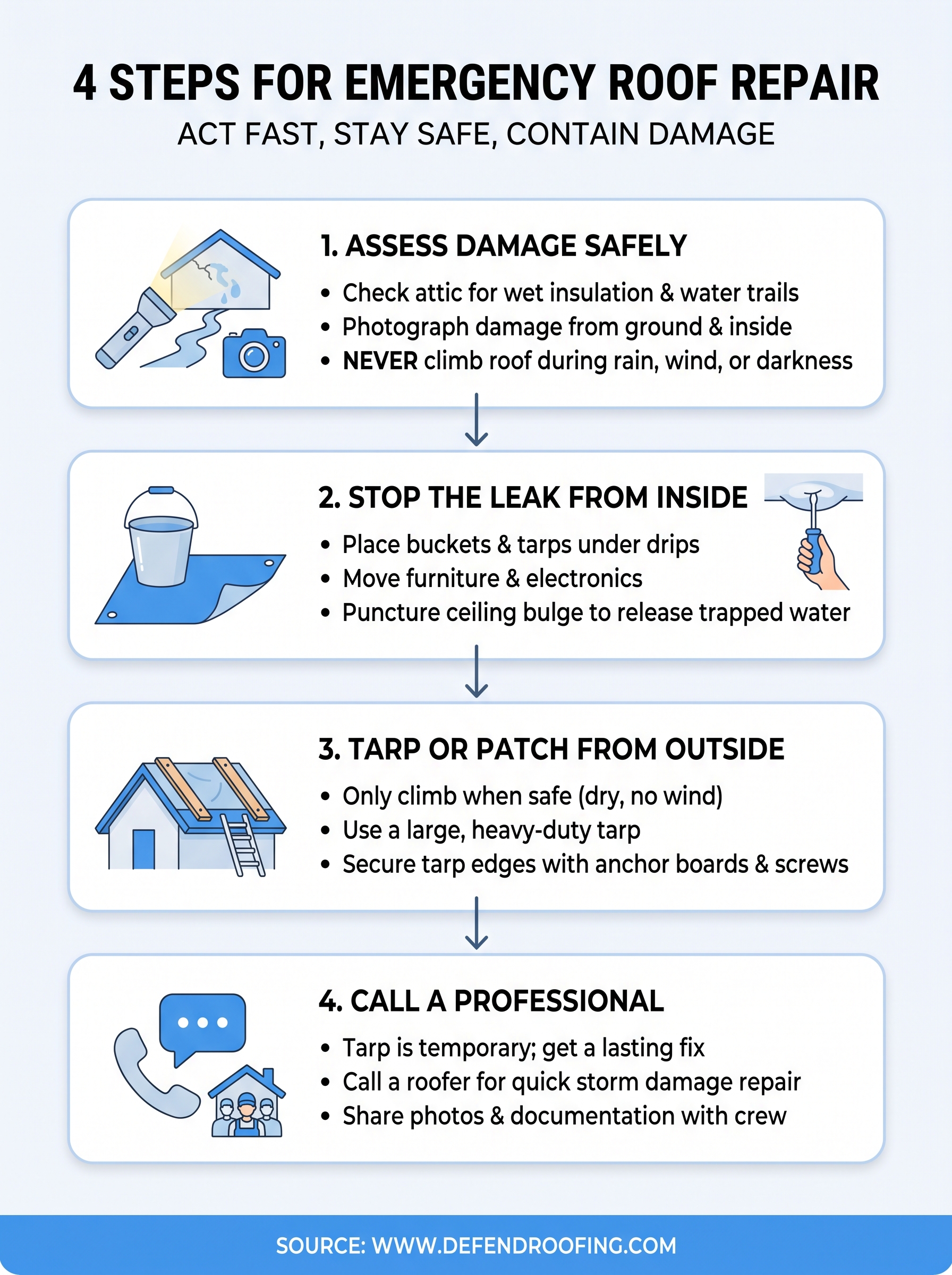
A leaking roof feels like a crisis in the moment, but the fix is simple once you break it into steps. Contain the water inside, tarp the damage outside once it's safe, and get a professional crew out before temporary fixes fail. Every hour you wait on that last step raises the odds of mold, rotted decking, or a denied insurance claim.
Storms in Central Texas don't give much warning, and neither does a failing roof. Treat that first drip as your signal to act, not to wait and see. Fast action now saves you thousands later, whether that means a full roof replacement or a targeted repair.
If water is already coming through your ceiling, don't wait for regular business hours. Reach out to Defend Roofing now for a fast quote and a crew that documents everything before we touch a single shingle.