See roof flashing replacement cost by flashing type and material, plus a checklist to tell if your roofer's quote is fair.

Roof flashing replacement cost usually falls between $300 and $1,500, and most homeowners pay roughly $400 to $1,100. Flashing is the thin metal strip, usually aluminum or galvanized steel, that seals the joints where your roof meets a chimney, wall, skylight, vent, or valley. The material is cheap and the labor is not, which is why two quotes for the same-looking job can differ by hundreds of dollars.
This article explains why the price matters, what moves it up or down, and how to read a quote line by line. You will find price ranges by job type and flashing location, a material comparison, a worked quote example, and a guide to choosing between resealing, repairing, and replacing.
We are Defend Roofing, a family-owned roofer serving Central Texas. The figures below are national ranges from published cost guides, so treat them as a benchmark, not a bid. Your roof decides the real number.
Flashing is the cheapest part of your roof's water defense and one of the first to fail. A small repair bill today often prevents a large water damage bill later. When flashing cracks, rusts, or lifts, water slips under the shingles and soaks the decking, insulation, and drywall.
Across national cost guides, most flashing jobs land between $300 and $1,100. The full range runs from about $200 to $1,500, and complex jobs can reach roughly $2,600. The spread reflects the scope of the work more than the price of the metal.
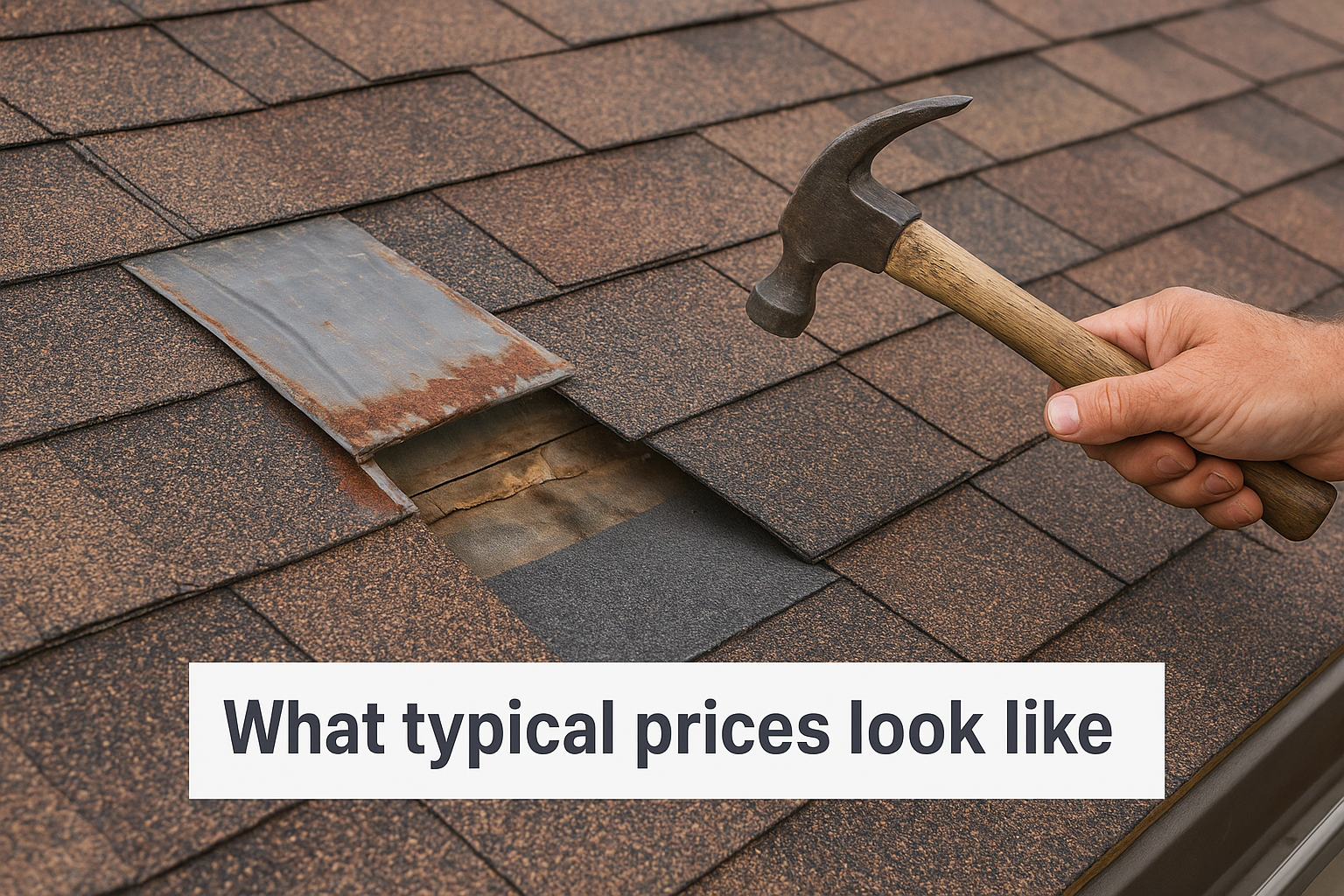
| Job | Typical cost |
|---|---|
| Refasten or reseal loose flashing | $150 to $300 |
| Replace a cracked or corroded section | $250 to $500 |
| Fix flashing that caused a leak, including underlayment | $300 to $800+ |
| Replace flashing on a typical roof | $412 to $1,107 |
| Large or complex replacement | up to about $2,600 |
Heat and hail, both common in Central Texas, are hard on sealant and exposed metal. Labor rates also differ by city, so use these national figures as a yardstick and confirm them against your local quote.
Labor drives most of the cost. Guides put labor at 40% to 60% of a flashing repair, because the roofer has to lift shingles, pull the old metal, fit new pieces, and seal and reinstall everything. Crew rates of $50 to $100 per hour are cited, depending on how complex the job is.
Hidden damage is the other multiplier. Once water reaches the decking or underlayment, the job grows from a flashing swap into a partial roof repair, and the price rises with it.
A flashing quote is mostly a labor quote, so judge the scope of work before you judge the total.
Four things set the price: where the flashing sits, what it is made of, how much damage surrounds it, and how hard the roof is to work on. Know these and you can see why a quote is high or low.
Chimneys, skylights, and valleys cost more than simple vent or edge work because they take more cutting, fitting, and sealing. Valleys carry heavy runoff, so a failure there is more serious.
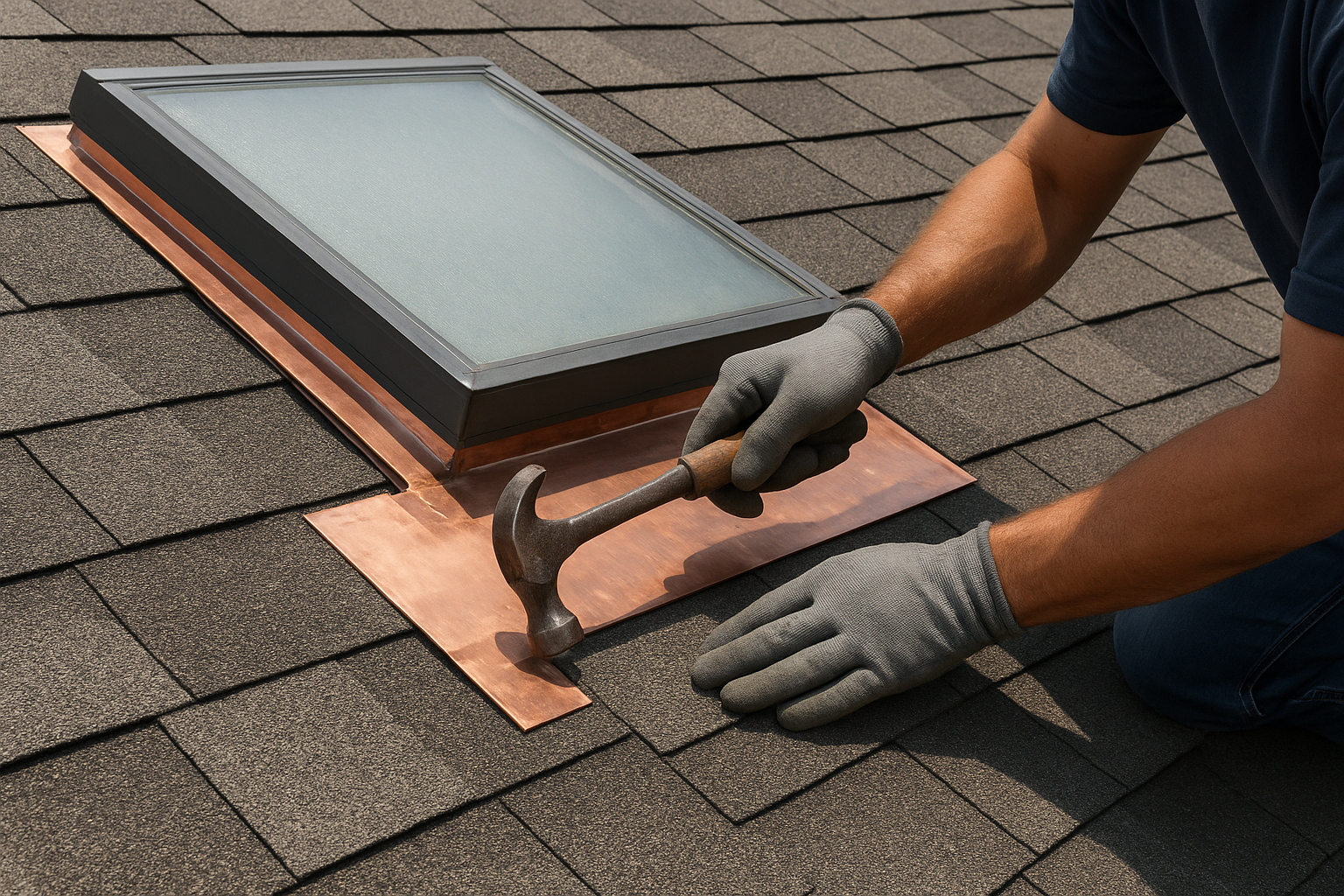
| Flashing location | Typical cost |
|---|---|
| Skylight | $300 to $700 |
| Chimney (step and counter flashing) | $300 to $800 |
| Valley | $400 to $1,000+ |
| Continuous flashing | $800 to $1,000 |
| Drip edge | $5.25 to $14.50 per piece |
Flashing is not priced by roof square footage. Roofers price it by location, linear feet, and complexity. An online calculator that asks only for your roof size can give a rough guess at best.
Aluminum and galvanized steel are the budget-friendly standards and suit most homes. Copper and lead cost more in material and need skilled installers.
| Material | Cost level | Notes |
|---|---|---|
| Aluminum | Lower | Lightweight, rust-resistant, common choice |
| Galvanized steel | Lower | Strong, often used with metal roofs |
| Copper | Higher | Very durable, resists corrosion |
| Lead | Higher | Premium, needs experienced labor |
Metal roofs and older roofs may need custom-fabricated flashing to match the panels or profile, which adds both material and labor.
Beyond the base price, expect add-ons when the roof is hard to reach or the job cannot wait.
The metal is the smallest line on the bill; access, damage, and timing decide the rest.
A fair quote names the exact location, the amount of flashing, the material, and what happens to the shingles around it. A quote that says only "replace flashing" gives you nothing to compare.
Ask for these items in writing:
Say you get a $700 quote to replace step and counter flashing around one chimney. That sits inside the $300 to $800 range for chimneys, near the top. At 40% to 60% labor, about $280 to $420 is labor and the other $280 to $420 is materials and sealant. If the quote has no breakdown, ask for one.
A $1,800 quote for the same chimney with no deck damage would deserve hard questions. Ask what else is included and request a photo of the damage.
Watch for caulk smeared over rusted metal, pressure to replace the whole roof for a flashing problem, and no photos of the failure. To keep the price fair, get three quotes on the same scope, fix problems early, and bundle small repairs into one visit. Off-season scheduling can also help.
Compare quotes line by line on the same scope, because a lower total often just means less work.
Reseal or repair when the metal is sound and only the sealant or fasteners have failed. Replace when the metal is cracked, rusted through, bent, or installed wrong, because new sealant will not hold on bad metal.
Yes, and roofers fix flashing routinely. Most jobs involve lifting the shingles around the flashing, installing new metal, and reinstalling the shingles. Properly installed flashing can last 10 to 20 years or more. A full roof replacement makes sense only if the shingles and decking around it are failing too. Check flashing once a year and after major storms.
DIY materials run about $20 to $200, but a bad seal can cause more damage than the original problem, and roofs are dangerous. Leave chimneys, skylights, and dormers to a pro. Insurance may pay for flashing damaged by a storm or other sudden event. It does not cover wear and tear, so document the damage with photos before you file.
Our free roof inspection ends with 100+ photos and an honest repair-vs-replace recommendation, so you can see what is wrong before you decide. Our roof repairs start at $395.
Reseal what is sound and replace what is failing, and let photos, not pressure, settle which is which.
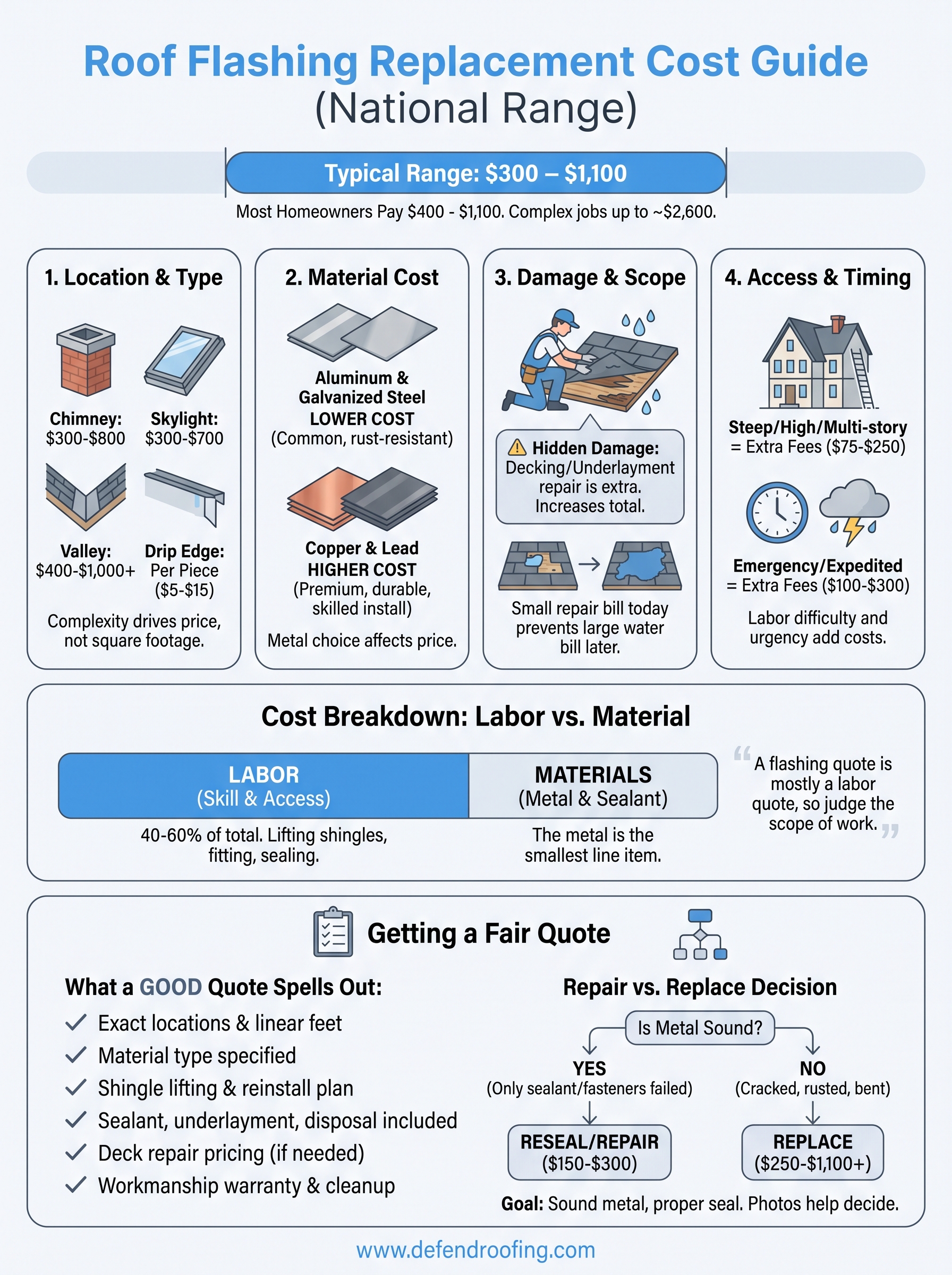
Roof flashing replacement cost comes down to scope. Most jobs cost $300 to $1,100, location and material move the price, and labor is about half of it. A quote that names the location, the linear feet, the material, and the shingle work is one you can judge.
If you want a documented answer for your own roof, we will inspect it and give you a clear price. You can call or text us, or get an instant online quote to start.