Compare 8 services for roof repair in Austin, from leak fixes to hail damage, with what each costs and how to vet a roofer before you hire.

The best services for roof repair are the ones that match the problem you actually have. Start with an inspection if you do not know the cause. Choose leak repair if water is getting in, storm damage repair after hail or wind, and decking or gutter work when the damage runs deeper. Hire the contractor who documents what they find with photos, writes down a clear scope, and tells you when a repair is enough.
Most Austin-area homeowners searching for this are in one of two spots. You have a stain, a drip, or missing shingles and need it fixed soon. Or a storm just passed and several roofers are knocking on doors with free inspection offers. Either way, you have to compare providers, judge their reviews, and guess whether a quote is fair.
This guide walks through eight repair services in plain terms: what each one includes, how to tell you need it, and what drives the cost in Central Texas. After that, you get a way to vet a roofer and read an estimate. We are Defend Roofing, a family-owned Central Texas roofer, so this comes from the job site, not the sales desk.
An inspection is the first of the services for roof repair you should book, because every other repair depends on what it finds. The roofer checks shingles, flashing, vents, gutters, and the attic side of the roof, then reports what failed and why. A useful report separates urgent leaks from wear that can wait a season.

At Defend Roofing, every project starts with a Precision Roof Assessment of 100+ photos. You see each cracked boot, lifted shingle, and damaged flashing line on your own screen, with notes attached. That record also works as adjuster-ready documentation when a storm caused the damage.
A good inspection hands you evidence, not just an opinion.
Book an inspection when you notice any of these:
Texas sun and hail age roofs faster than many owners expect, so a yearly look is cheap protection. Stay off the roof yourself. Binoculars from the ground show a surprising amount, and a fall costs far more than any repair.
Many inspections are free or low cost, and some contractors credit the fee toward repair work. Ask before you book. Also ask how long the visit takes and whether you get the photo report in writing.
Pay attention to the recommendation at the end. A roofer who gives you an honest repair versus replace answer, with photos to back it, is worth keeping. A report that always ends in a full replacement deserves a second opinion.
Leak repair finds where water enters the roof and fixes the part that failed. That sounds simple, but water travels along rafters and decking, so the stain on your ceiling often sits several feet from the real opening. Of all the services for roof repair, this is the one where tracing skill matters most.
Fixing the stain is not the job. Fixing where the water got in is.
The fix may be a cracked pipe boot, a gap in flashing, a popped nail, or a handful of damaged shingles. If rain is falling and water is coming in, a roofer can install a temporary tarp to hold things until dry weather allows the permanent repair.
Put a bucket under active drips, move belongings out of the way, and take dated photos of the damage. If you end up filing an insurance claim, those dated photos help.
A simple leak from one failed part often costs a few hundred dollars. The price climbs when water has soaked the decking or when several entry points are involved. Many roofers also charge a minimum service fee, so ask about it up front.
Ask the roofer to photograph the source before and after, so you know the leak was found and not just sealed over. Many leak repairs finish in a day once the weather cooperates.
Shingle repair replaces individual damaged, cracked, curled, or missing shingles, reseals lifted tabs, and swaps out worn ridge caps. It is the most common of the services for roof repair on asphalt roofs, which cover most homes around Austin. The goal is to restore the water barrier without touching healthy sections.
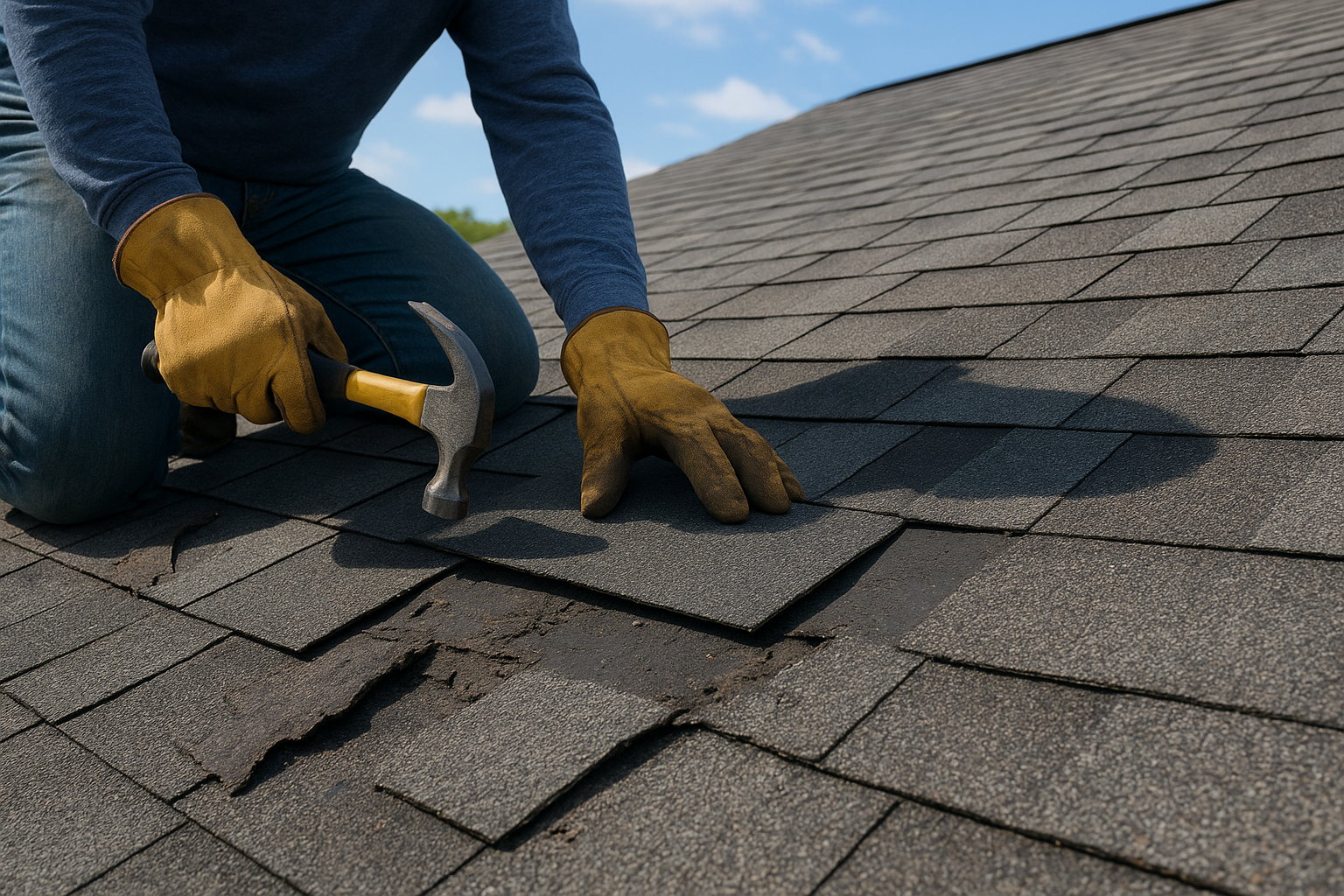
Matching is the catch. Older shingles fade in the sun, and manufacturers discontinue colors, so a patch can show. A careful roofer picks the closest match and tells you honestly when a repair will be visible.
A repair makes sense when damage is confined and the surrounding shingles are still flexible.
Price follows the number of shingles, the pitch, and how hard the area is to reach. Small repairs commonly land in the low to mid hundreds, and a larger damaged section costs more.
Know where repair stops making sense. When shingles are so brittle that new nails crack the ones around the patch, you are paying to patch a roof that is finished. Your roofer should show you that condition in photos instead of simply saying it.
Flashing is the thin metal that seals the joints where a roof meets a chimney, wall, skylight, or valley. Flashing repair reseals, replaces, or rebuilds those pieces, and it is a core part of any serious set of services for roof repair. Joints are where roofs leak most, because water concentrates there.
Be wary of the quick fix. A bead of caulk or roofing tar over a gap lasts a season or two in Texas heat. A proper repair replaces the failed metal and layers it correctly under and over the shingles.
Caulk is a bandage. Flashing is the actual repair.
Flashing costs more than a simple patch because it takes more labor. A short stretch of step flashing along a wall can run a few hundred dollars. A full chimney rebuild, with cap and counterflashing, can climb toward a thousand or more.
Ask whether the quote replaces or reseals the metal. Both are legitimate in the right case, but they are not the same job, and the price should reflect which one you are getting.
This service seals the openings that cut through the roof: plumbing vent boots, exhaust vents, ridge vents, and skylights. Among the services for roof repair, it is the most common cause of small leaks, and it is often the cheapest to fix. The rubber collar on a plumbing boot cracks in the sun, often years before the shingles around it wear out.
A thorough roofer checks every penetration, not only the one near your stain. If one boot has split, the others installed the same day are close behind.
If one boot has failed, the rest are probably close to it.
Replacing a boot or resealing a vent usually costs low hundreds of dollars, and a roofer can often finish several in one visit. Skylights vary more, since resealing a frame is cheap but replacing a failed unit is not.
When you compare quotes, ask whether the price covers all penetrations or just one. Handling them together saves you a second service charge later.
Storm repair deals with hail bruising, wind-creased or lifted shingles, and impact damage from fallen limbs. Hail and high wind are the main storm threats here, so this belongs near the top of any list of services for roof repair in Central Texas. The work has two halves: documenting the damage and then repairing it.

We handle both. Defend Roofing assesses storm damage, photographs it, coordinates with your adjuster, and explains what we found. A roofer can show the damage and be present at the adjuster's inspection. The claim itself still runs between you and your insurer.
Hail bruises are hard to see from the ground, since the mat fractures beneath the surface. Photograph dents on gutters and vents, then get the roof inspected before you decide anything.
After a storm, document first and repair second.
The cost depends on the claim. Many Texas policies carry a separate wind and hail deductible, often a percentage of your home's insured value, so read yours before you call anyone. Most policies also set a deadline for filing, often a year, so do not wait.
Be skeptical of anyone who claims they will cover your deductible. Texas law prohibits contractors from waiving or paying it. Small storm repairs may cost less than your deductible, in which case paying out of pocket can be the smarter move.
Decking repair replaces the rotted or damaged wood panels under your shingles, plus the underlayment layer that backs them up. It is the least visible of the services for roof repair, because the damage hides until the old shingles come off. Long-term leaks are the usual cause, which makes this the repair that follows neglect.
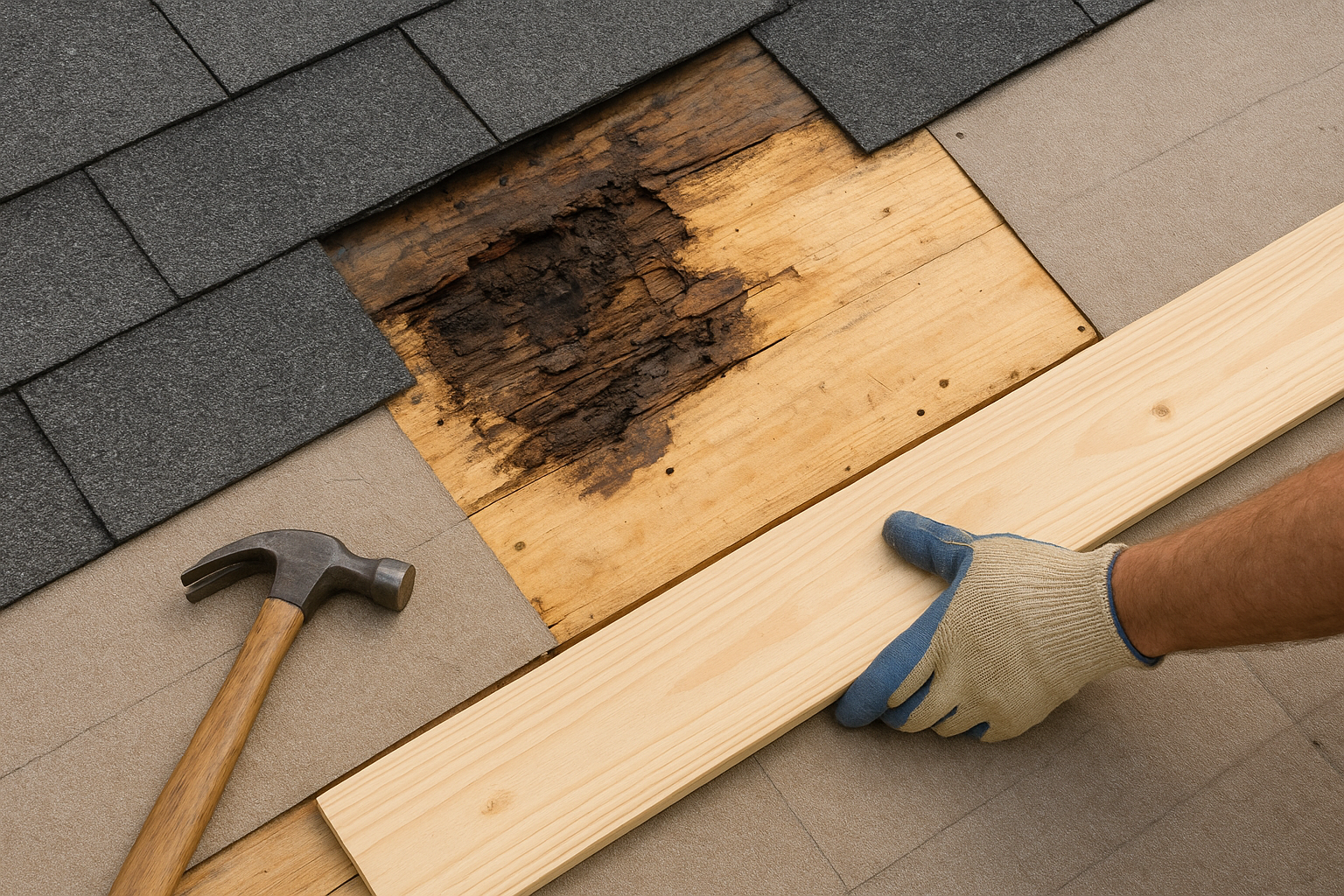
Shingles can only be as sound as the wood beneath them.
Skipping bad decking is a mistake. New shingles nailed over soft wood hold poorly, and the leak that rotted it will return.
Decking is usually priced per sheet, plus labor, and nobody knows how many sheets until the area is opened up. That uncertainty is the main reason repair bills grow mid-job.
Protect yourself with a written rule before work starts. Ask the roofer to state the per-sheet price for extra decking in the estimate, and to photograph any rot they find before replacing it. That keeps the final bill predictable and honest.
This service repairs the gutters, downspouts, fascia boards, and drip edge metal that carry water off the roof and away from your home. It rounds out the services for roof repair because a perfect roof still fails if water backs up at the edge. Defend Roofing handles gutter and exterior component repair alongside the roof itself.
The edge matters more than it looks. Water that spills behind a gutter rots fascia and can work its way under the first row of shingles.
Roof water has to leave the house, not just leave the roof.
Gutter work is often among the lowest-cost repairs, commonly in the low to mid hundreds for reattaching, resealing, or replacing short sections. Fascia rot adds carpentry, and a long run of replacement gutters costs more.
Because the crew is already on your roof, ask whether edge repairs can be done in the same visit. Bundling the work often saves a separate trip charge.
Texas does not issue a state roofing license, so vetting falls to you. Ask for proof of general liability and workers' compensation insurance, and have the insurer send the certificate directly. Confirm a physical local address and how long the business has operated under its current name.
Ask who will actually do the work. Employees and long-term crews tend to be accountable. A contractor who sells the job and hands it to unknown subcontractors may not be. Before signing, run through this list:
Treat reviews as evidence about how problems are handled. Look for ones that describe a specific repair, mention follow-up visits, and show the owner replying calmly to criticism. A perfect score with no detail tells you little.
Check Google and the Better Business Bureau, and be wary of batches of near-identical praise posted within days. Search the company name with the word "complaints" too. One angry review matters less than a repeated pattern, such as missed appointments or surprise charges.
A free inspection is a fair way to earn your business, and many reputable roofers offer one. The trouble comes with door-to-door storm chasers who arrive after hail, push you to sign on the spot, and may leave town before warranty questions come up.
Red flags include pressure to sign an agreement before you see a written scope, promises of a "free roof," and any offer to absorb your deductible. If they will not leave you a photo report to think over, walk away.
Get at least two or three estimates and compare them line by line, not by the bottom number. A useful estimate states the exact scope, the materials, the price for extra decking, cleanup, the timeline, and the warranty. Ask what warranty covers repairs specifically, since workmanship coverage on installations is not the same thing.
A low quote that leaves out flashing, cleanup, or decking is not low. It is incomplete. This is why we put every finding, with photos, in front of you before we price a job.
Roof repair prices move with a handful of factors: how much roof is damaged, the pitch and height, how hard the area is to reach, the shingle type and how well it can be matched, and any hidden decking damage. A minimum service charge applies to many small jobs, and demand spikes after hailstorms can lengthen scheduling.
Fair pricing is scope-based, meaning you pay for the work documented in the photos and estimate, not for a sales target. If a price cannot be tied to a specific line in the scope, ask what it covers.
These are rough bands to help you sanity-check quotes. They are not quotes, and your roof may fall outside them.
| Service | Typical scale of cost | What moves the price |
|---|---|---|
| Inspection | Free to low | Roof size, access, report detail |
| Leak repair | Low hundreds to low thousands | Time to trace, number of entry points |
| Shingle repair | Low to mid hundreds | Number of shingles, pitch, matching |
| Flashing repair | Low hundreds to about a thousand | Chimney or wall length, reseal vs rebuild |
| Vent and boot repair | Low hundreds | Number of penetrations, skylight type |
| Storm damage | Varies widely | Extent of damage, claim outcome |
| Decking repair | Per sheet, plus labor | Rot found once shingles are off |
| Gutter and fascia | Low to mid hundreds | Length, rot behind the gutter |
The only price that counts is the one written into your estimate.
Check your policy first, since insurance may cover sudden storm damage but usually not wear and age. For repairs you pay for yourself, ask about financing. Defend Roofing offers options for qualified homeowners.
Do not let cost push you into waiting. A few hundred dollars spent on a cracked boot today can turn into a decking and insulation job after a few more rains.

Start by matching your symptom to the right service. A stain means leak repair, a storm means documentation, and an unknown cause means inspection. Then hire the roofer who shows you the damage in photos, quotes a written scope, and gives you an honest repair-or-replace answer without pressure.
We built Defend Roofing around exactly that approach. Chris and Greyson Buster bring three generations of roofing experience to homes in Cedar Park, Leander, Jonestown, Avery Ranch, Steiner Ranch, and across the Austin area. If you want to know what is wrong with your roof and what it should cost, call or text us and get an instant online quote.