Hail damage repair roof guide: compare repair vs. replace, see Central Texas costs from $300 to $25,000, and document damage before filing a claim.
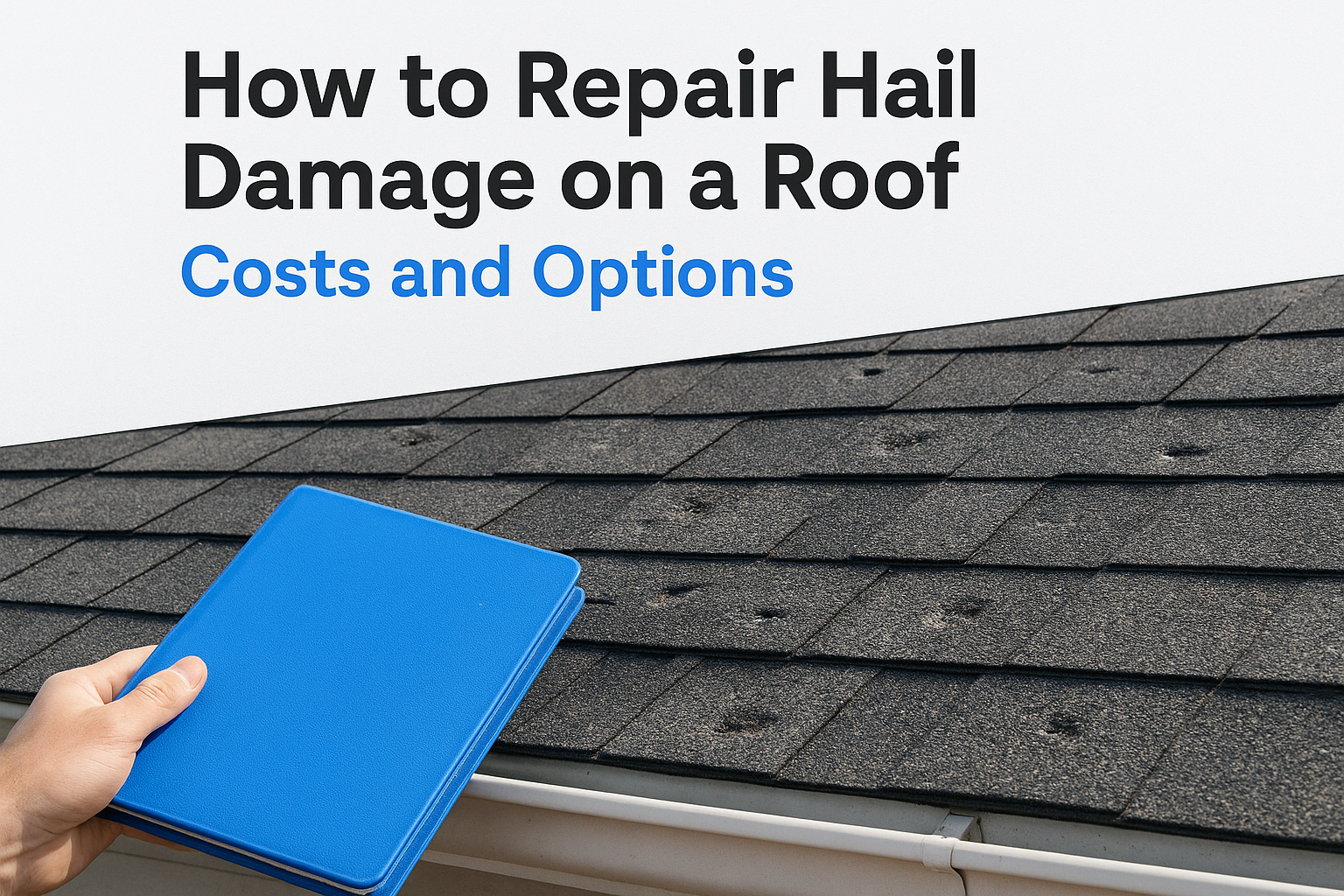
Hail leaves marks you can't always see from the driveway. Bruised shingles, cracked granules, and dented flashing can sit quietly for months, then show up as a leak after the next heavy Texas rain. If you're searching for hail damage repair roof options, you probably want to know three things: can it be fixed, what will it cost, and who can you trust to tell you the truth.
Here is the short answer. Minor, isolated damage can often be repaired for a few hundred to a couple thousand dollars. But when hail has bruised shingles across multiple slopes, replacement is usually the smarter and safer call, and insurance often covers much of it. The deciding factor is documented evidence, not a contractor's sales pitch.
In this guide, we walk you through how to spot hail damage, what repairs involve, typical costs in Central Texas, and how to decide between repair and replacement. At Defend Roofing, we document every roof with 100+ photos, so we also explain how that evidence supports your insurance claim.
Yes, but only when the damage is limited and the roof underneath is still sound. Isolated damage can be repaired. Widespread damage calls for replacement. What matters is how many shingles took hits and how old the roof was before the storm. A hail damage repair roof job on a 7-year-old roof with a dozen bruised shingles is a very different project from the same storm hitting a 20-year-old roof.
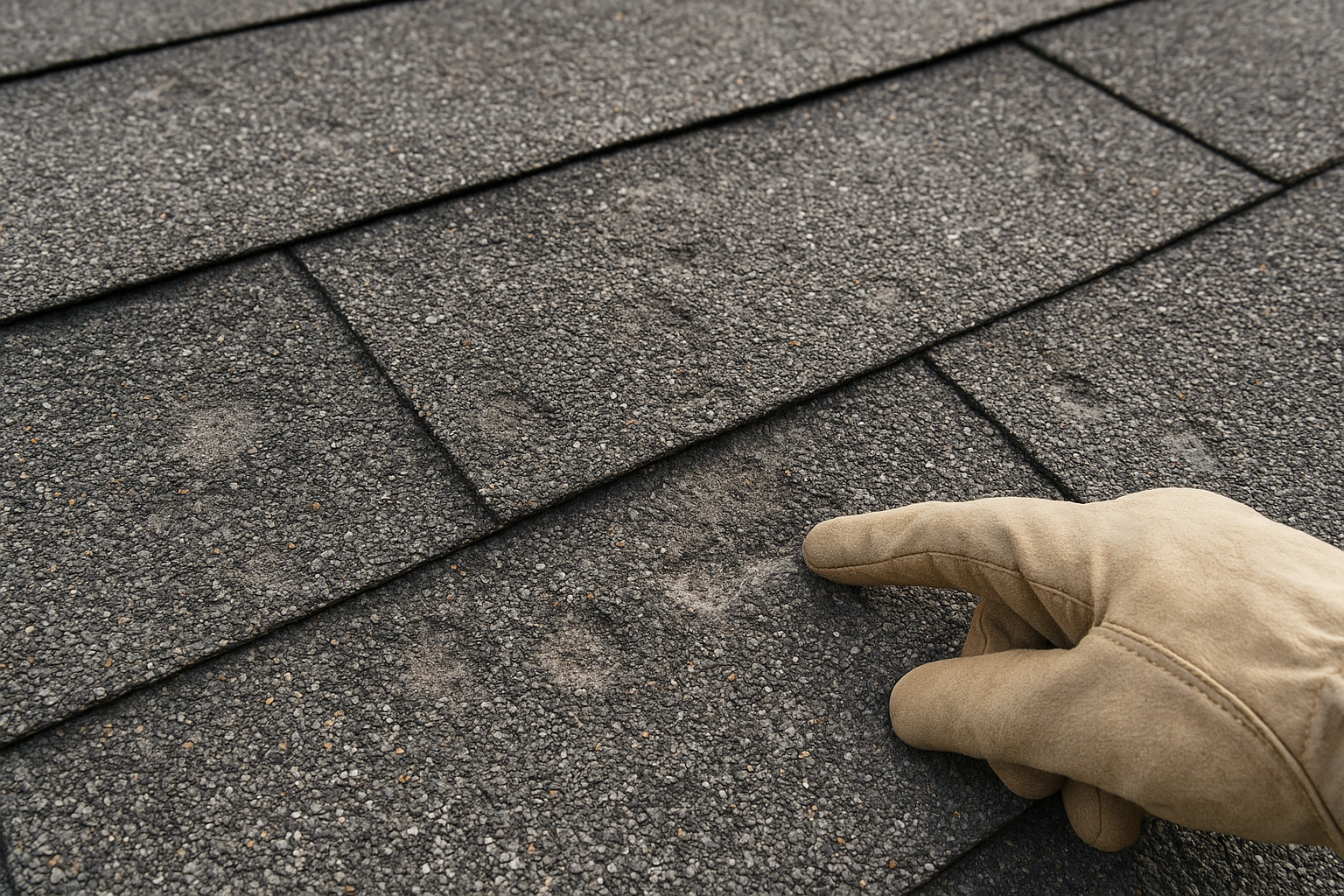
Hail does more than dent things. On asphalt shingles, a strike can fracture the fiberglass mat under the granules, leaving a soft bruise you can feel with a gloved finger. It also knocks granules loose, which exposes the asphalt to sun and shortens the shingle's life. Stones around 1 inch and larger mark the hail size where damage commonly begins. Soft metals like vents, flashing, and gutters dent first, so dents there are a good clue to check the shingles too.
| Situation | Usual outcome |
|---|---|
| A few damaged shingles on one slope, roof under about 10 years old | Spot repair |
| Dented vents, flashing, or gutters only | Replace those parts |
| Bruising across multiple slopes | Full replacement |
| Roof 15+ years old with brittle shingles | Replacement, since patches often fail |
| Shingle style discontinued, so repairs won't match | Slope or full replacement |
Use this table as a starting point, not a verdict. The inspection decides which row your roof fits, and Step 2 shows you how to make that call.
Patching sounds cheaper, and sometimes it is. Older shingles, though, get brittle. Lifting them to nail in a replacement can crack the neighbors, so you trade one problem for three. Repair costs add up fast if you end up patching the same roof every season.
Insurers also look at the pattern, not just the count. Many adjusters use a test square, a 10 by 10 foot area, and count hits inside it. If several slopes meet their threshold, the claim usually points toward replacement.
A repair only makes sense when hail damage is limited and the rest of the roof can still be trusted.
Keep that rule in mind as you work through the next steps. Start by confirming what the storm actually did.
Start on the ground. Never climb a wet or steep roof after a storm, because loose granules roll underfoot like ball bearings. Any hail damage repair roof plan begins with what you can see safely, and a professional handles the rest.
Walk the perimeter within a few days of the storm to inspect your roof for hail damage. Soft metals show hail first, so look at these spots:
Binoculars help you scan the shingles. Dark, round spots where granules are missing are a red flag. Dents on three or four of these items mean the shingles deserve a closer look.
Photograph everything before any cleanup or temporary fix. Take a wide shot of each slope, then close-ups with a coin beside each hit for scale. Note the date of the storm and save a local hail report if you can find one, because both support your claim later.
Photos taken before repairs are the strongest proof of what the storm actually did.
Use this quick checklist so nothing gets missed:
Then book a professional inspection. A trained roofer can walk the roof, test for bruising by touch, and count hits per slope. Our Precision Roof Assessment captures 100+ photos, so you get adjuster-ready evidence and an honest read on the roof.
Once you have photos and a hit count, the question becomes whether the roof is worth saving. A hail damage repair roof job only makes sense when the numbers favor it. Use the checks below to decide with evidence, not pressure.
Ask your roofer to walk each check with you, using the photos as proof. A single failed check can tip the answer toward replacement.
Compare the repair quote with the full replacement quote. A common rule of thumb says to replace once repairs reach about a third of replacement cost, because you'd be paying good money for a roof with little life left.
If repairs cost a third of a new roof, you are usually buying time, not value.
Deductibles matter too. Many Texas policies carry a separate wind and hail deductible, often 1% to 2% of the home's insured value. If a repair costs less than that, you pay it yourself, so read your policy before you decide. We tell you plainly when a repair is enough, and we won't sell you work the photos don't support.
Repairs differ by material, so match the fix to your roof. Any hail damage repair roof job should also follow the manufacturer's installation specs, because sloppy work can void your shingle warranty.
Most Central Texas homes have asphalt shingles, and spot repair is simple when damage is limited. The roofer replaces only the bruised shingles and reseals the new ones so they hold in high wind. The steps look like this:
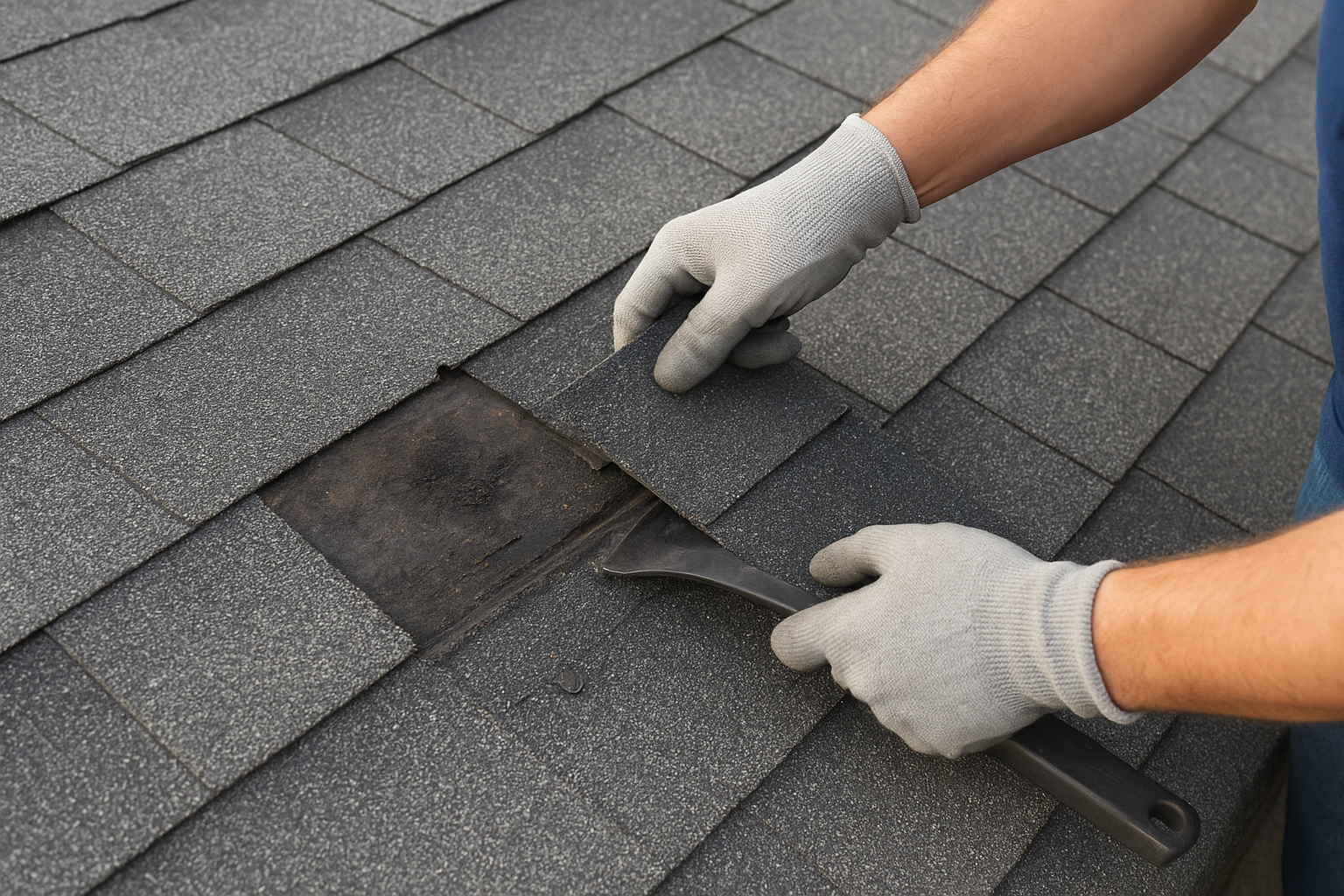
A patch is only as good as its nailing and sealing, so ask how your roofer secures every new shingle.
Other materials follow different rules. Here is what each repair usually involves:
| Material | Typical repair | What to watch |
|---|---|---|
| Metal panels | Replace punctured or badly dented panels | Some policies exclude cosmetic dents |
| Concrete or clay tile | Swap cracked tiles one by one | Walking on tile breaks more of it |
| Flashing and vents | Replace dented pieces and reseal | Caulk over a dent is not a repair |
| Wood shake | Replace split shakes | Old, dry shake often needs full replacement |
Whatever your material, ask for photos of the finished work. A good roofer shows you the repaired area up close, so you can compare it to your original documentation before you pay.
Costs depend on roof size, pitch, and material, so treat these as ballpark Central Texas ranges and ask for a written, scope-based quote. A hail damage repair roof job costs far less than replacement, but only when the damage is limited.
| Work | Typical range |
|---|---|
| Spot repair of a few shingles | $300 to $1,500 |
| Gutter, vent, or flashing replacement | $200 to $1,200 |
| Full asphalt shingle replacement | $12,000 to $25,000 |
Use this order to file your roof claim so nothing weakens it:
Report the claim first, repair second, and keep every photo.
Timing matters because many policies set a filing deadline, often one year after the storm. Be careful with any contractor who offers to waive your deductible. That practice is against Texas law, and it is a red flag. We coordinate with your adjuster using our 100+ photo assessment, so disagreements get settled with evidence instead of opinions.
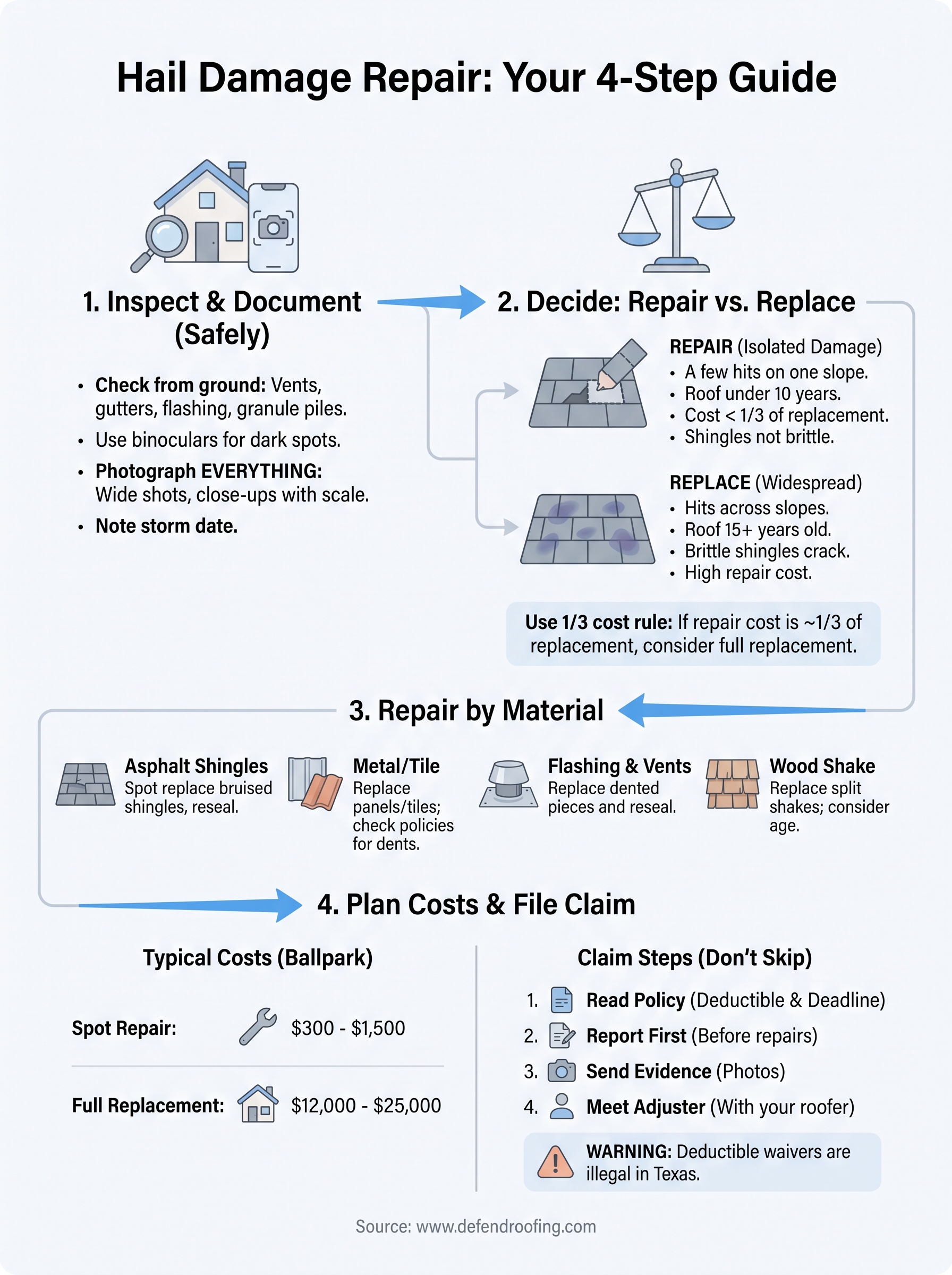
Hail damage is easy to miss and expensive to ignore. The path is simple: inspect and document first, then decide between repair and replacement using hits per slope, roof age, brittleness, and matching. After that, fix it by material and file your claim before work starts. A hail damage repair roof job works when the damage is limited. When it isn't, replacement protects your home better than patching.
Evidence makes every one of those decisions easier. Photos taken before repairs, a clear hit count, and a written, scope-based quote keep you in control with contractors and insurers alike. Don't let anyone rush you, and don't pay for work the documentation doesn't support.
If a recent storm hit your Austin-area home, get an instant quote or schedule a Precision Roof Assessment with Defend Roofing. We'll show you what the storm did, in photos, and give you an honest answer about repair or replacement.