Learn what size hail damages a roof, how to spot impact marks, and how to navigate Austin insurance claims. Get expert tips on roof repair vs. replacement.
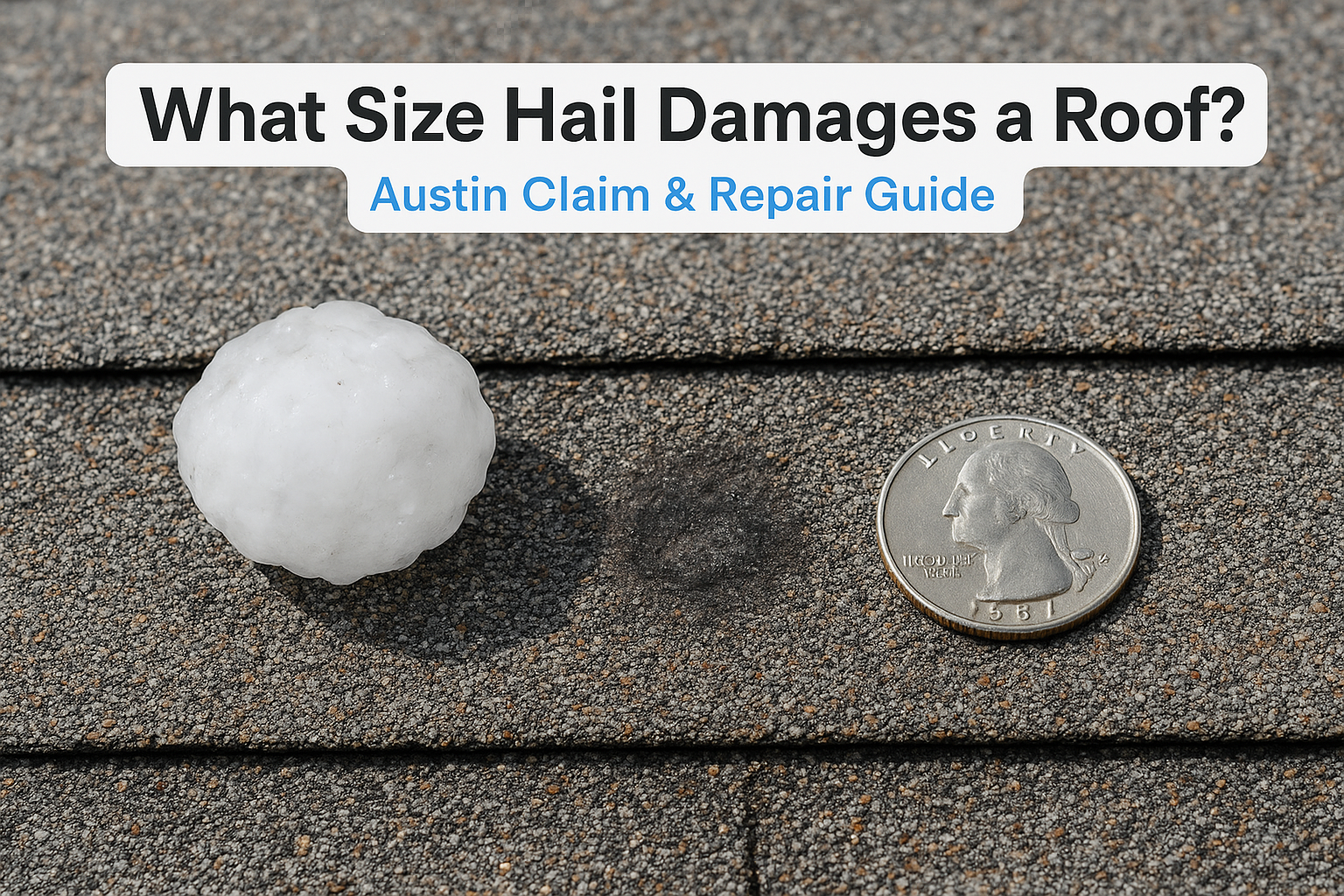
Central Texas gets hit with hail regularly, and after every storm, homeowners ask the same question: what size hail damages a roof? The short answer is that hail around 1 inch in diameter (about the size of a quarter) can start causing real damage to most asphalt shingle roofs, but the full picture depends on wind speed, shingle age, and the angle of impact.
At Defend Roofing, we've inspected thousands of roofs across the Austin area after hail events. As a family-owned company with three generations of roofing experience, we've documented everything from cosmetic bruising caused by dime-sized hail to full structural failures from baseball-sized stones. Our 100+ photo Precision Roof Assessments give homeowners clear, honest evidence of what the storm actually did, no guesswork, no pressure.
This guide breaks down the specific hail size thresholds that cause damage, how to spot that damage on your roof, and when it makes sense to file an insurance claim. Whether last night's storm rattled your windows or you're just now noticing granules in your gutters, you'll walk away knowing exactly where you stand and what to do next.
When people ask what size hail damages a roof, the industry standard answer starts at 1 inch in diameter, roughly the size of a quarter. At that size, hail carries enough mass and velocity to knock granules off asphalt shingles, crack the mat underneath, and leave visible impact marks. Below 1 inch, damage is possible but harder to confirm and less likely to meet an insurance claim threshold.
Hail at or above 1 inch in diameter is the benchmark most insurance adjusters use when evaluating storm damage claims on asphalt shingle roofs.
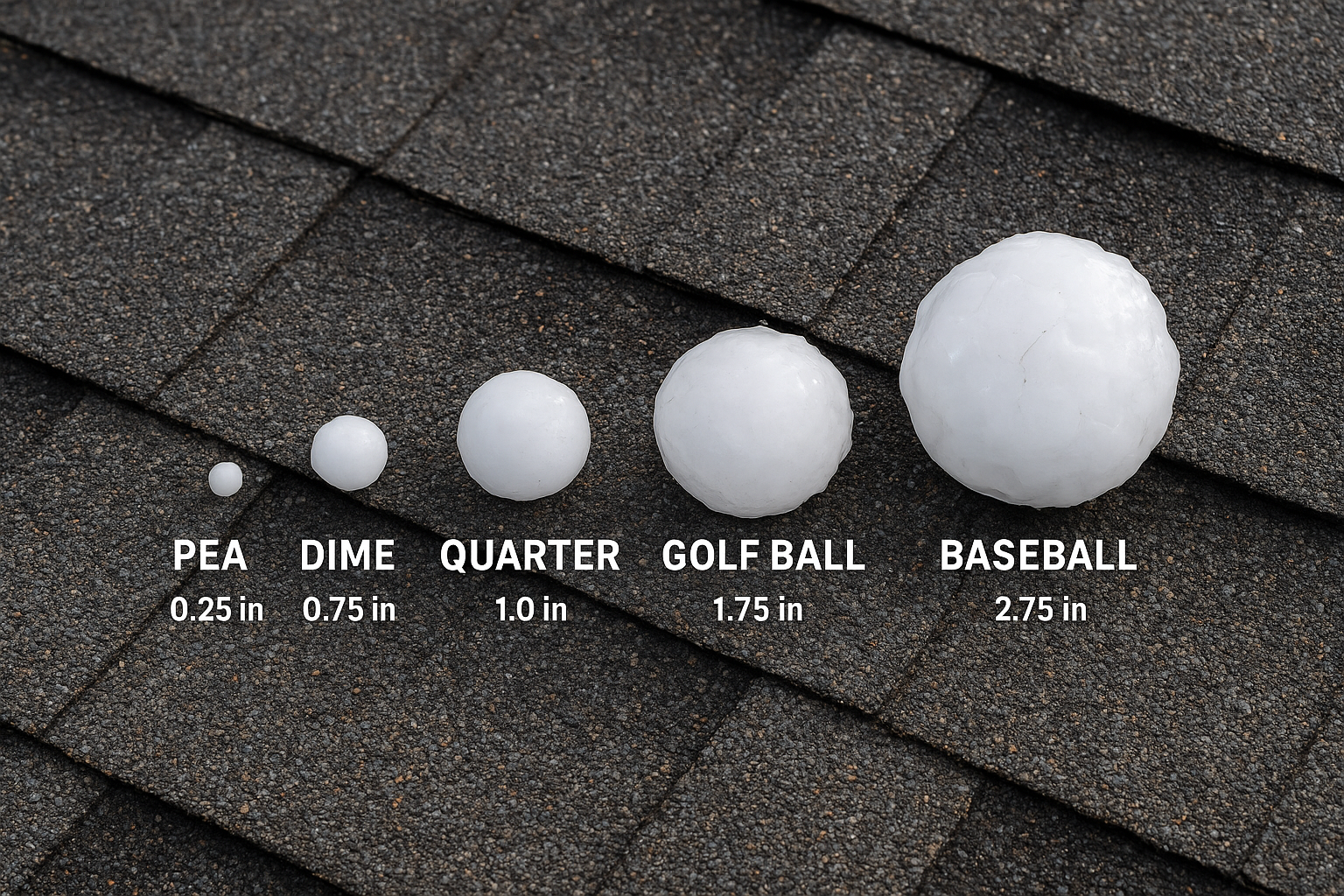
Roofing professionals and insurance adjusters use a consistent size scale to assess risk after a storm. Here's how each tier typically behaves on a standard asphalt shingle roof:
| Hail Size | Approximate Diameter | Typical Result |
|---|---|---|
| Pea | 0.25 in | Minimal; rarely causes functional damage |
| Dime | 0.75 in | Cosmetic granule loss on older or worn shingles |
| Quarter | 1.0 in | Functional damage begins; common insurance threshold |
| Golf ball | 1.75 in | Significant mat cracking and deep impact marks |
| Baseball | 2.75 in | Severe structural damage; full replacement likely needed |
Functional damage means the shingle's ability to shed water and protect your roof deck is compromised. Cosmetic damage affects appearance but leaves the shingle's protective function mostly intact. Insurance policies in Texas handle these two categories differently, so knowing which one applies to your roof matters before you file a claim.
Hail doesn't fall straight down. Wind-driven hail strikes your roof at an angle and at higher velocity, which increases impact force well beyond what size alone would suggest. A 0.75-inch hailstone caught in a 60 mph wind event can cause more damage than a 1-inch stone falling in calm air. That's why storm reports from the National Weather Service include both hail size and wind speed data, and why a professional inspection matters after any severe storm, not just the ones with large hail.
The 1-inch threshold answers what size hail damages a roof under average conditions, but your specific roof may be more vulnerable than that benchmark suggests. Shingle age and prior granule loss are the two biggest variables that lower the damage threshold, and both are invisible from the street.
Asphalt shingles lose granules gradually over years of heat cycles, UV exposure, and heavy rain. By the time a shingle is 10 to 15 years old, its surface is noticeably thinner and more brittle. A hailstone that bounces off a new roof can crack the mat on an aged one. That's why two neighboring homes can experience the same storm very differently.
If your roof is over 10 years old, even a moderate hail event deserves a professional inspection before you dismiss it.
Poor attic ventilation causes shingles to bake from below, which speeds up granule loss and makes the mat brittle well before its rated lifespan. Roofs with improper installation, such as nails driven too deep or insufficient shingle overlap, also develop weak spots that smaller hail exploits. These issues rarely show up from the ground but are easy to document with a close-up photo inspection.
Knowing what size hail damages a roof helps, but you also need to recognize the patterns it leaves behind. Hail damage on asphalt shingles follows a predictable look, and identifying it correctly determines whether you have a legitimate insurance claim or just normal wear.
Impact marks appear as dark, circular spots where granules were knocked loose, exposing the black mat underneath. Press your thumb gently into one of those spots. A real hail impact feels soft and spongy, like a bruised apple, while normal scuff marks from debris stay firm under pressure.
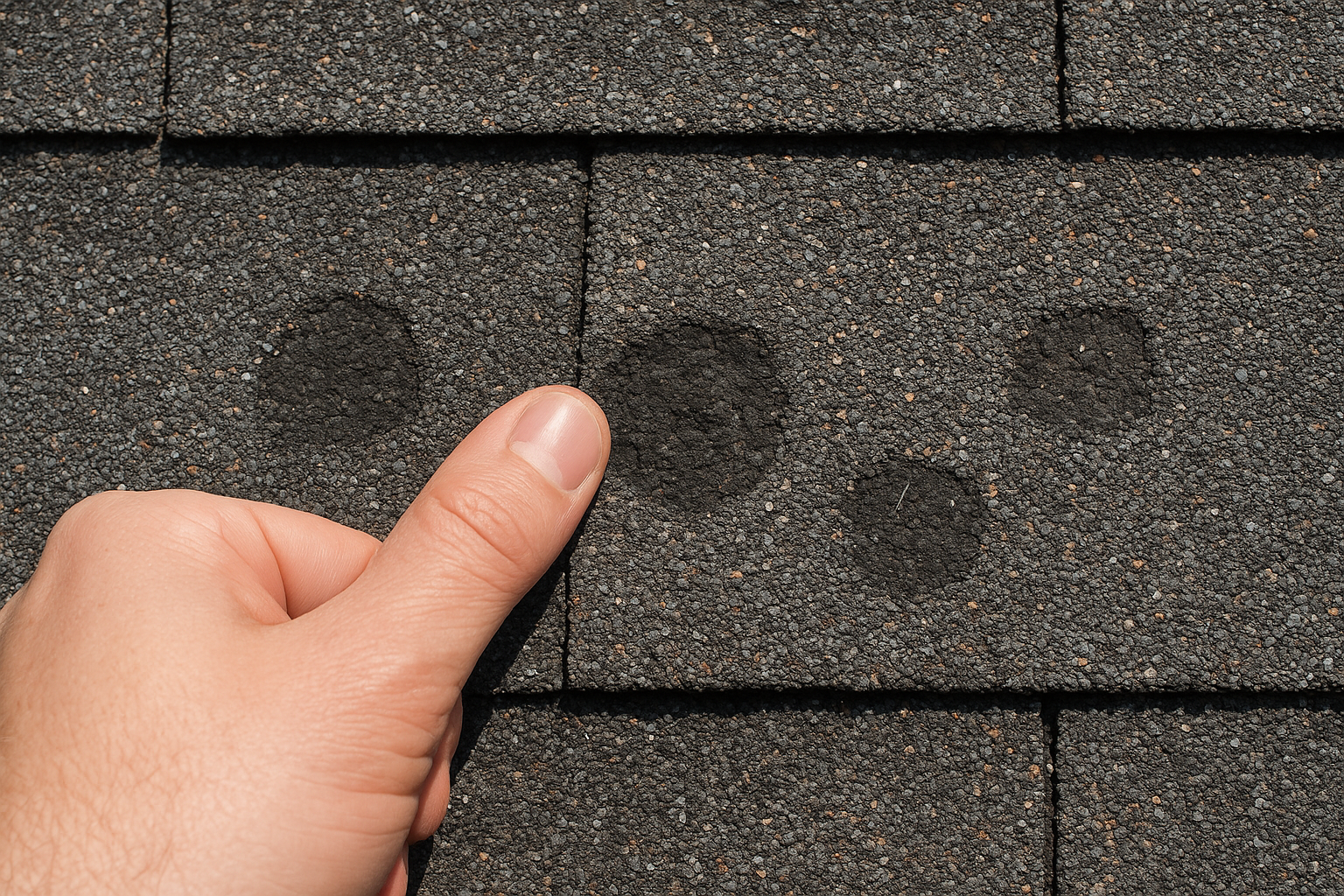
If every mark you find feels firm under your thumb, you likely have something other than hail damage.
Cracked or split shingles indicate that the hailstone broke through the mat entirely, not just removed surface granules. Look for exposed fiberglass reinforcement as well, which appears as thin white fibers visible at the center of a crack.
Both of these findings mean your shingle can no longer reliably shed water. At that point, the damage is functional, not just cosmetic, and warrants a professional inspection before your next rain event.
Once you've spotted signs of hail damage, documentation is what turns a visible problem into a payable claim. Insurance adjusters need [clear, timestamped evidence](https://www.defendroofing.com/blog/how-to-get-insurance-to-pay-for-roof-replacement) that connects the storm event to specific damage on your roof. Without it, your claim can be delayed, reduced, or denied entirely.
Take photos immediately after the storm, before any cleanup or temporary repairs. Capture wide shots of the full roof slope, then close-up shots of each impact mark. Include a quarter or ruler in the frame for scale, so the adjuster can see exactly how large each damaged area is.
Cross-referencing your inspection photos with official storm reports from the National Weather Service strengthens your claim significantly. These reports log verified hail size and location data for each storm event, which ties your damage directly to a specific date. That date connection is critical for meeting your policy's claim filing deadline. Understanding what size hail damages a roof in your area also helps you match the NWS hail size data to what you see on your shingles.
Paired with a professional photo inspection, official storm records give your adjuster everything needed to process your claim efficiently.
Once you know what size hail damages a roof and have confirmed the evidence through photos, the next decision is whether you need targeted repairs or a full replacement. In Central Texas, heat and UV exposure already stress shingles harder than in cooler climates, which means hail damage compounds existing wear faster than most homeowners expect.
A roof that handles isolated damage well still needs a complete inspection to confirm no hidden impact marks were missed elsewhere.
Localized damage on a relatively new roof, typically under 10 years old, is often the right candidate for targeted repair. If fewer than two or three squares of shingles show functional damage and the surrounding shingles are in solid condition, a repair keeps costs reasonable without sacrificing protection.
Conditions that typically support repair over replacement:
Older roofs with widespread granule loss, or any roof where hail impacts spread across multiple slopes, usually need full replacement. If your shingles are 15 years or older and took a direct hit from golf ball-sized hail or larger, patching isolated spots rarely addresses the broader vulnerability across the rest of the surface.

After a storm rolls through Central Texas, your first move is to check your gutters for granule buildup and scan the ground for obvious shingle debris. That granule loss is one of the clearest early signals that the hail was significant. Understanding what size hail damages a roof gives you a baseline, but a close-up inspection confirms what actually happened on your specific roof.
Don't wait weeks before acting. Texas insurance policies carry strict filing deadlines, and delaying your inspection weakens your claim. Defend Roofing provides a 100+ photo Precision Roof Assessment for every job, which gives you timestamped, adjuster-ready documentation from day one.
Your roof deserves an honest evaluation, not a sales pitch. If you experienced a hailstorm in the Austin area and want clear answers about your roof's condition, schedule your free roof inspection with Defend Roofing and get documented proof of exactly what the storm left behind.