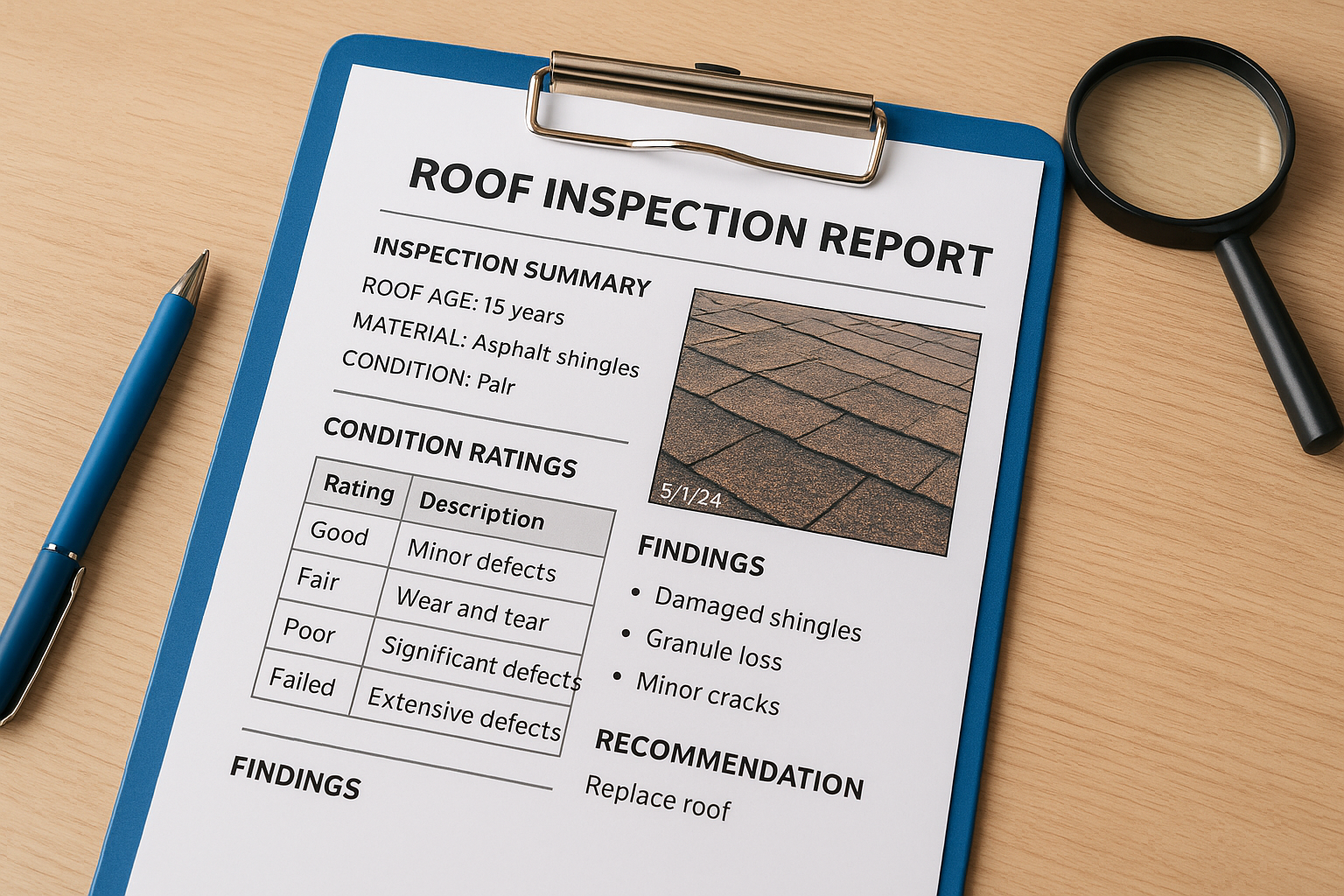
Compare 7 DIY picks for roof leak repair sealant, from Henry 208R to Flex Seal. Match each to your roof type and leak spot, and know when to call a roofer.

A drip in the ceiling after a Central Texas storm is stressful, and you want it stopped before the next one rolls in. The right roof leak repair sealant can buy you time, or fix a small problem for good, if you match the product to the leak. The wrong one peels off in a few weeks and traps water under it.
Here is the short answer. For flashing, vents, and small cracks, a polyurethane or rubberized sealant is usually your best bet. For metal roofs and heavy sun, silicone holds up well. Asphalt-based cement works on shingle repairs and flashing, but it dries out faster in our heat. Every product below is rated for DIY use.
In this list, you'll find seven sealants, what each one does best, where it fails, and how to apply it. We also flag the signs a sealant won't be enough. At Defend Roofing, we document roofs with 100+ photos, and we've seen how often a quick patch hides a bigger problem.
Henry 208R is what you grab when the leak is active and the roof is still wet. Most sealants need a dry surface, and Texas storms rarely give you one. That makes this a practical first stop for a fast patch.
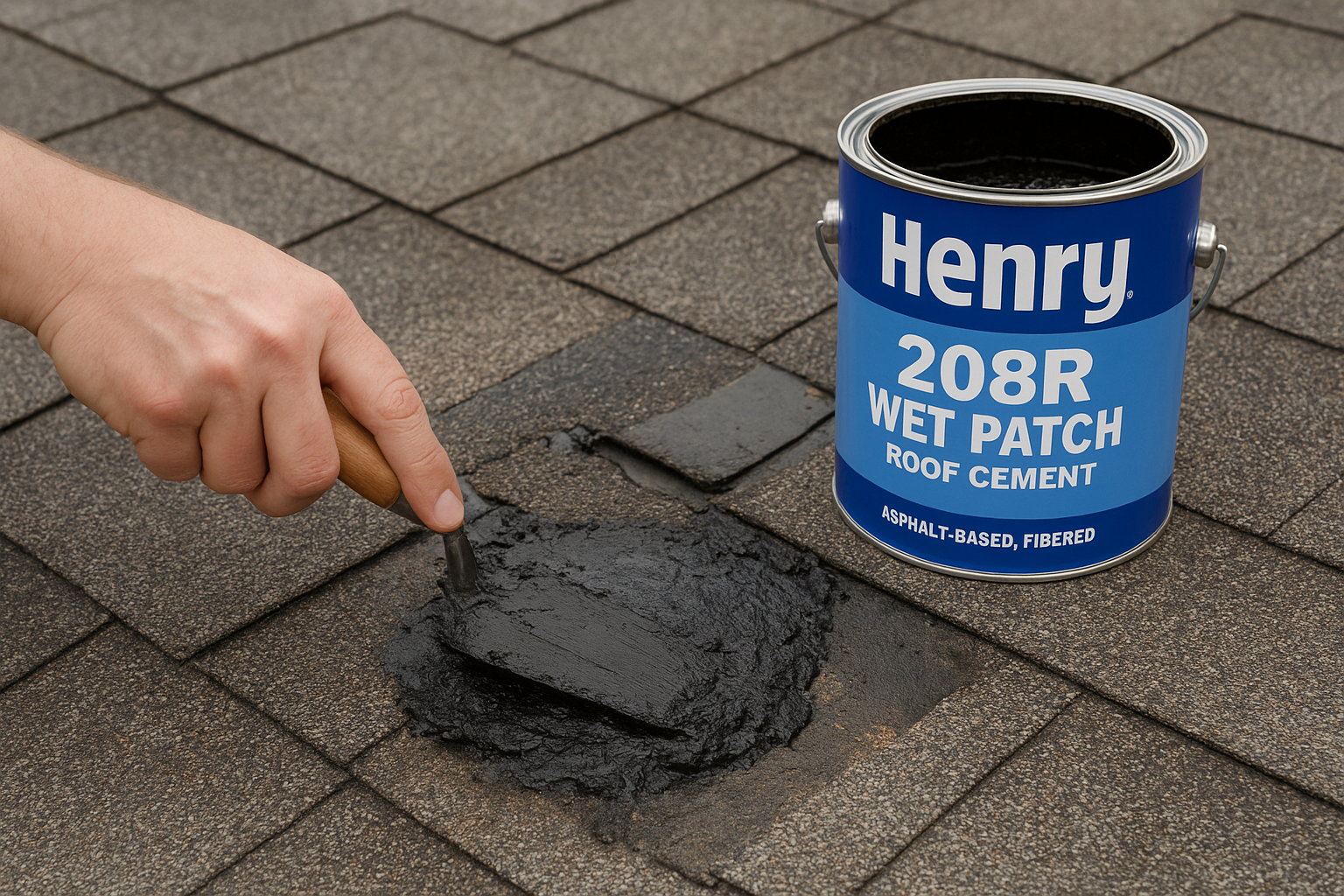
This is an asphalt-based, fibered roof cement, not a caulk-style rubber sealant. It bonds to wet or dry shingles, metal flashing, and masonry, and it fills gaps with a thick, trowelable body. Keep it off EPDM rubber roofs, because asphalt can break down that membrane. It works best on:
Prep is simple. Brush off loose grit, then work the cement in with a trowel or caulk gun.
The cement skins over in a few hours, but a thick application can take days to cure fully, depending on heat and humidity. Expect roughly one to three years from a small patch. Austin summers dry asphalt out and cause cracking, so look at your repair after every hail season.
Asphalt cement is a patch you inspect, not a repair you forget.
Home Depot, Lowe's, Ace, and Amazon all stock it. Prices shift by store, so treat these as ballpark figures.
| Size | Typical price |
|---|---|
| 10.1 oz caulk tube | $8 to $12 |
| 1 gallon can | $25 to $40 |
Pick this if you have a shingle roof with one small, known leak and need a cheap fix in wet weather. It also suits quick storm-night patches until a dry day arrives. Skip it for large areas, sagging decking, or shingles that are curling across the whole roof. Those problems call for a professional look, not more cement.
Loctite PL S30 is the caulk-gun fix for flashing leaks you can finish in one afternoon. It's a flexible polyurethane built for moving joints where stiff cement cracks.
This is a polyurethane sealant that stays flexible after curing and grips shingles, metal, and masonry. As a roof leak repair sealant, it suits vent pipes and chimney flashing, where the seam shifts with the heat.
Start with a clean, dry joint, then cut the nozzle at 45 degrees and keep a steady bead.
A sealant belongs in the joint, not smeared on top of it.
Expect a skin in a few hours and a full cure in a day or two, depending on bead size and weather. Exposed polyurethane can chalk under UV, so plan on a few years of service in Texas sun and recheck it each spring.
Home improvement stores and Amazon carry it. A 10 oz cartridge runs about $8 to $12, though prices vary.
Buy one tube per job, because an opened cartridge hardens fast once air gets in.
Choose it for flashing, vent boots, and short seams on a shingle or metal roof. It's a good match if you want a neat, flexible bead instead of messy cement.
Plan on a dry day for the work. Skip it for wide cracks or widespread shingle damage, which need more than a bead of sealant.
Geocel 4500 is the tidy choice for visible seams. It goes on as a smooth bead, so it suits spots you can see from the yard.
This is a rubberized, elastomeric sealant that stays flexible once cured. It works well as a roof leak repair sealant on:
Check the label against your roofing material before you buy.
Clean metal and a dry joint matter more than the brand. Wire-brush the seam, wipe it down, and cut the nozzle small.
A sealant only holds when it grips clean, dry material.
It skins over within hours and fully cures in a day or two. Cold or humid weather slows that down.
Expect several years in Texas sun. Recheck the bead each spring and after hail.
Hardware stores and Amazon stock it. Prices vary by store and color.
| Size | Typical price |
|---|---|
| 10.1 oz cartridge | $9 to $14 |
Pick it if you're sealing flashing, vents, or metal seams and want a neat, flexible finish.
Skip it for widespread shingle wear or a leak you can't trace. Sealing the wrong spot just hides the real entry point.
Liquid Rubber is the pick when your problem is a wide area, not a single crack. You brush it on like paint and end up with a seamless, flexible membrane.
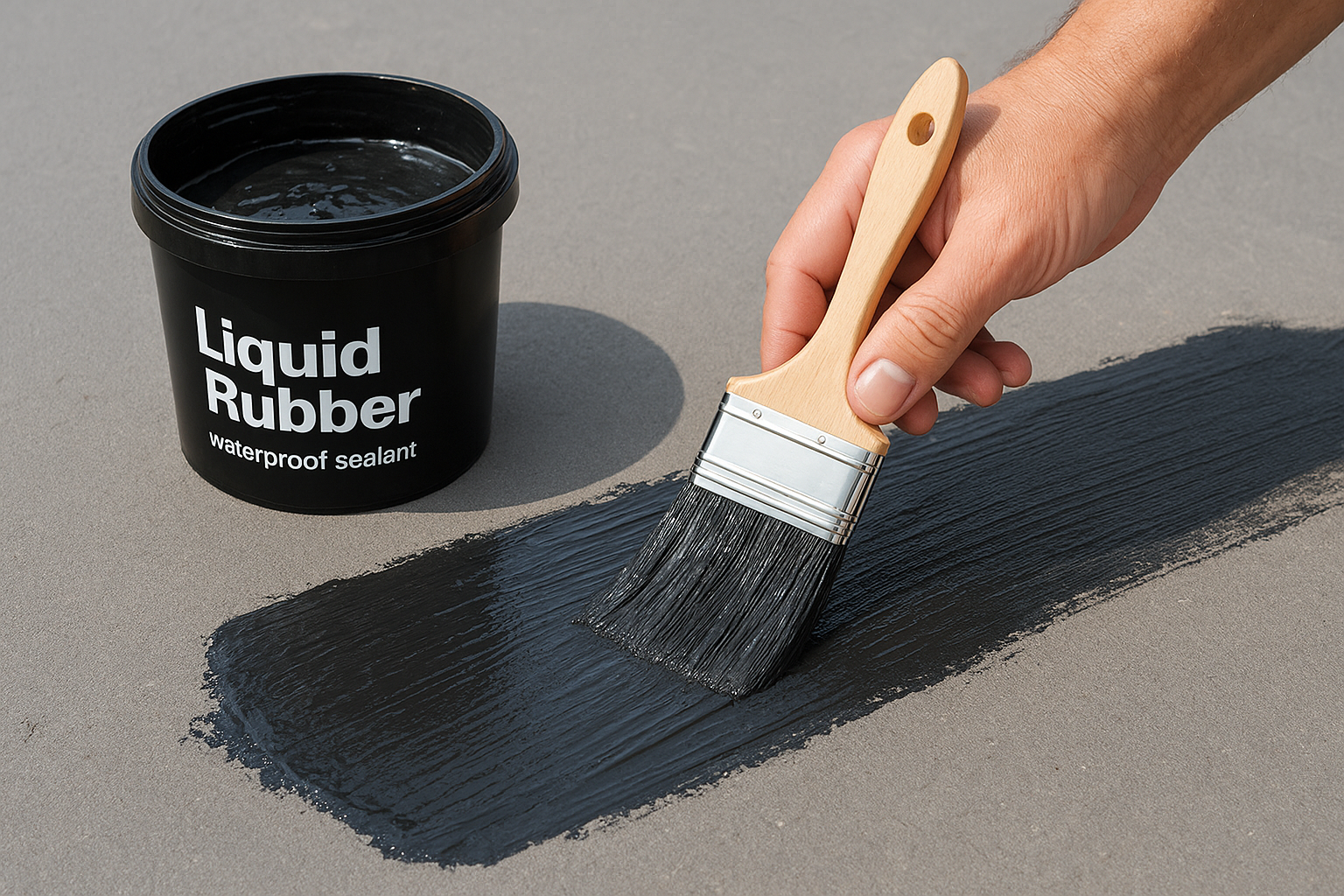
This is a water-based, rubberized coating that cures into a continuous film. It bonds to metal, EPDM, concrete, and wood, so it suits flat roofs, rusty metal panels, and seams too long to caulk. As a roof leak repair sealant for small flashing gaps, though, a caulk bead is easier to control.
Sweep the area, wash off chalky dirt, and let it dry. Then work in thin coats:
Two thin coats outperform one thick coat.
Expect it to dry to the touch in about a day, with a full cure taking longer in humid weather. Skip the job if rain is in the forecast. Plan on several years of service, and recoat worn spots after hail season.
Home improvement stores and Amazon carry it. These are ballpark figures.
| Size | Typical price |
|---|---|
| 1 gallon | $50 to $70 |
| 5 gallon pail | $170 to $240 |
Choose it for flat or low-slope roofs, metal panels, and long seams where you need full coverage. Pass on it for a pinpoint leak at a vent boot, where a cartridge sealant is faster and cheaper.
Gaco Western is the professional-grade silicone on this list. If your roof bakes in the sun or holds standing water, this is the product that keeps its grip where cheaper sealants fail.
This is a 100% silicone sealant that shrugs off UV and ponding water. As a roof leak repair sealant, it shines on metal panels, low-slope roofs, and seams around penetrations. Keep it off asphalt shingles, because later repairs won't bond to cured silicone.
Silicone is the one sealant you can't undo, so be sure it belongs on your roof.
Start with a clean, dry surface, free of dust and oil.
It cures from moisture in the air, skinning over within hours and setting up in about a day. Durability is its strength. Expect many years of service under Texas sun, though you should still check it after hail.
Roofing supply stores and online retailers carry it, and big box availability is spottier. These are ballpark figures.
| Size | Typical price |
|---|---|
| 10 oz cartridge | $12 to $20 |
| 5 gallon coating | $150 to $250 |
Choose it for metal roofs, flat sections, and ponding areas where water sits. Pass on it for shingle roofs. A roofer will struggle to repair over it later, and that adds cost.
Gorilla's patch tape is the no-mess option when you can't mix, brush, or caulk. It's a stopgap, and it works best when you treat it like one.
This is a self-adhesive, rubberized tape with a flexible backing, not a liquid. As a roof leak repair sealant, it covers small problems in minutes:
Surface prep decides whether the tape sticks. Wipe off dust, let the area dry, then work in this order:
Tape only holds on a clean, dry surface, so a wet roof means waiting.
There is no cure time, since the adhesive bonds on contact. Durability is the weak spot. Expect months, not years, because Texas heat softens the adhesive and the edges lift over time.
Home Depot, Lowe's, Walmart, and Amazon carry it. These are ballpark figures.
| Size | Typical price |
|---|---|
| 4 in x 10 ft roll | $10 to $15 |
Pick it if you need a quick cover before a roofer arrives, or a fix for a metal gutter. Skip it on gritty asphalt shingles, where the adhesive can't grip, and on any leak that keeps returning.
Flex Seal is the most recognized name on this list, and it earns its spot as a short-term patch. Use it that way and it does the job.
This is a solvent-based, rubberized liquid that you brush or roll on. It dries into a flexible film. As a roof leak repair sealant, it suits small, low-stress spots:
Keep it away from ponding water, because a thin film isn't built to sit submerged.
Clean the area, let it dry fully, and work in thin coats:
Expect it to dry to the touch within hours, with a full cure taking longer in humid weather. Durability is modest. Plan on months to a couple of years, since Texas sun chalks and cracks thin coats.
Flex Seal buys you time, but it doesn't replace a proper repair.
Home Depot, Lowe's, Walmart, and Amazon all carry it. These are ballpark figures.
| Size | Typical price |
|---|---|
| 16 oz can | $12 to $18 |
| 1 gallon can | $40 to $60 |
Pick it if you need a cheap, quick fix on a gutter or metal flashing and plan to recheck it often. Skip it for shingle roofs with widespread wear, and for any leak that keeps coming back.
Start with your roof material, then find where the water gets in. Roof material tells you what is safe to use, and leak location tells you whether you need a bead, a coating, or tape. Any good roof leak repair sealant fails if it goes on the wrong surface.
| Your situation | Best pick |
|---|---|
| Wet shingles, active leak | Henry 208R |
| Flashing, vents, chimney | Loctite PL S30 or Geocel 4500 |
| Flat roof, long seams | Liquid Rubber |
| Metal roof, ponding water | Gaco Western |
| Gutter or quick cover | Gorilla tape or Flex Seal |
Some leaks are symptoms of a bigger problem. Call a roofer if you see any of these:
If a patch fails twice, the leak is not where you think it is.
Storm damage adds another reason to wait. Hail and wind claims depend on clear evidence, and a rushed patch can hide that evidence from an adjuster. We photograph every roof with 100+ images and give you an honest repair-or-replace answer, so you know whether a tube of sealant is enough.

The best roof leak repair sealant is the one that matches your roof material and your leak location. Polyurethane and rubberized sealants handle flashing and vents, silicone suits metal and ponding water, and asphalt cement covers wet shingle patches. Tape and liquid rubber are short-term fixes, so recheck them often.
Sealant works for small, traced leaks. When stains spread, decking feels soft, or a patch fails twice, you are past what a tube can fix. Stop patching and get the roof looked at before water damage grows or a storm claim gets harder to prove.
If you can't tell whether your roof needs a sealant or a professional, call or text Defend Roofing for an instant online quote. You'll get an honest repair-or-replace answer backed by photos, with no pressure.