Facing a roof repair emergency? Learn safety steps, leak control, insurance photo tips, and how Defend Roofing offers 24/7 help in Cedar Park & Austin.
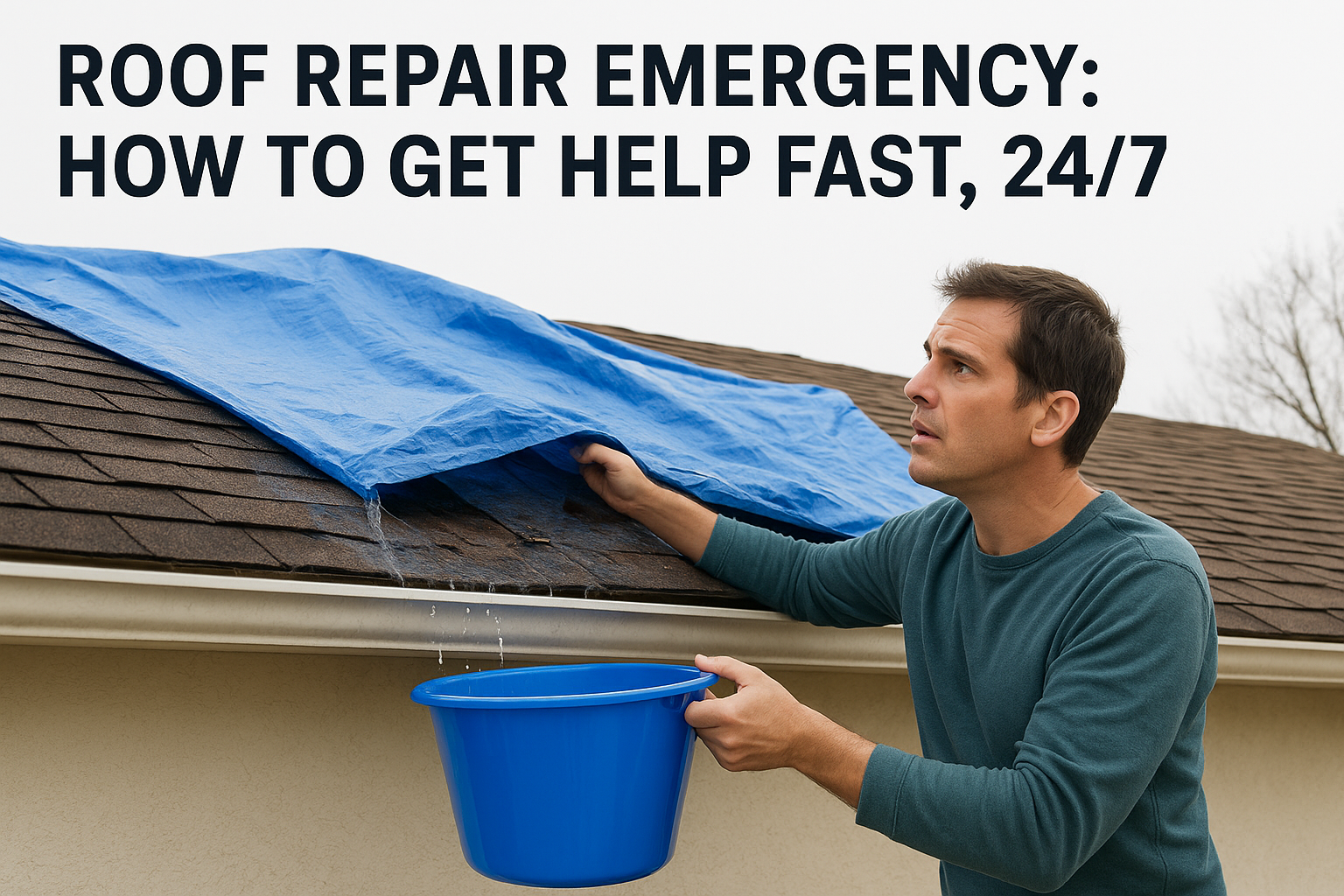
Water dripping through your ceiling at 2 a.m. doesn't wait for business hours, and neither should help. Whether a storm ripped off shingles overnight or a branch punched through your decking, a roof repair emergency turns into a bigger, costlier problem the longer it sits untreated. If you're searching for answers right now, you need a plan, not a lecture.
Here's the short version: shut off water where you can, stop the leak fast, document the damage with photos, and call a 24-hour emergency roof repair contractor who can tarp or stabilize the roof the same day. That last part matters most. A same day roof repair response stops water intrusion, mold growth, and structural rot before they turn a $500 fix into a $15,000 claim.
This guide walks you through exactly what to do in the first hour, how to protect your home until help arrives, and what a legitimate emergency roofer in Central Texas should offer once they're on-site, including honest damage documentation and insurance claim support.
Not every roof problem needs a call at midnight. A few missing shingles on a dry, calm day can usually wait until morning. But active water intrusion, structural sagging, or storm damage that's actively worsening qualifies as a genuine roofing emergency, and treating it as one protects both your home and your wallet.
Grab your phone and check for these signs before you decide whether to search for 24 hour emergency roof repair near me tonight or schedule a next-day inspection:
If you're checking off any of these, you're dealing with active water entry or a compromised structure, and that's the line between "annoying" and "emergency."
If water is actively entering your home or you can see daylight through your roof, stop reading and start acting: that's a true emergency.
Gray areas exist too. A slow drip that only shows up during heavy rain, or a handful of cracked shingles from last year's hailstorm, is one of those warning signs of roof damage that deserves a same day roof repair near me search rather than a 2 a.m. panic call. Timing still matters here because unaddressed minor damage compounds fast in Central Texas heat and humidity, but you don't need to climb a ladder in the dark to confirm it. When in doubt, treat active leaks and visible structural damage as urgent, and everything else as "first thing tomorrow."
Before you touch a bucket or a camera, get everyone clear of the danger zone. Structural safety comes before property protection, always. If ceilings are sagging, bowing, or dripping steadily, move family members and pets out of that room and shut the door behind you. Water-soaked drywall can collapse without warning, and a falling ceiling is far more dangerous than a wet carpet.
Walk through this quick safety check before you do anything else:
No photo or repair is worth risking an electrical shock or a ceiling collapse: clear the space first.
Once the immediate home safety risks are handled, you're in a position to actually address the leak instead of reacting to it in a panic.
Once everyone's safe, turn your attention to the water itself. Grab buckets, towels, and a tarp if you have one, then move fast with a few temporary fixes that hold until help arrives to limit how much damage spreads through your ceiling and walls. Containing water early is the difference between a repair and a full remodel.
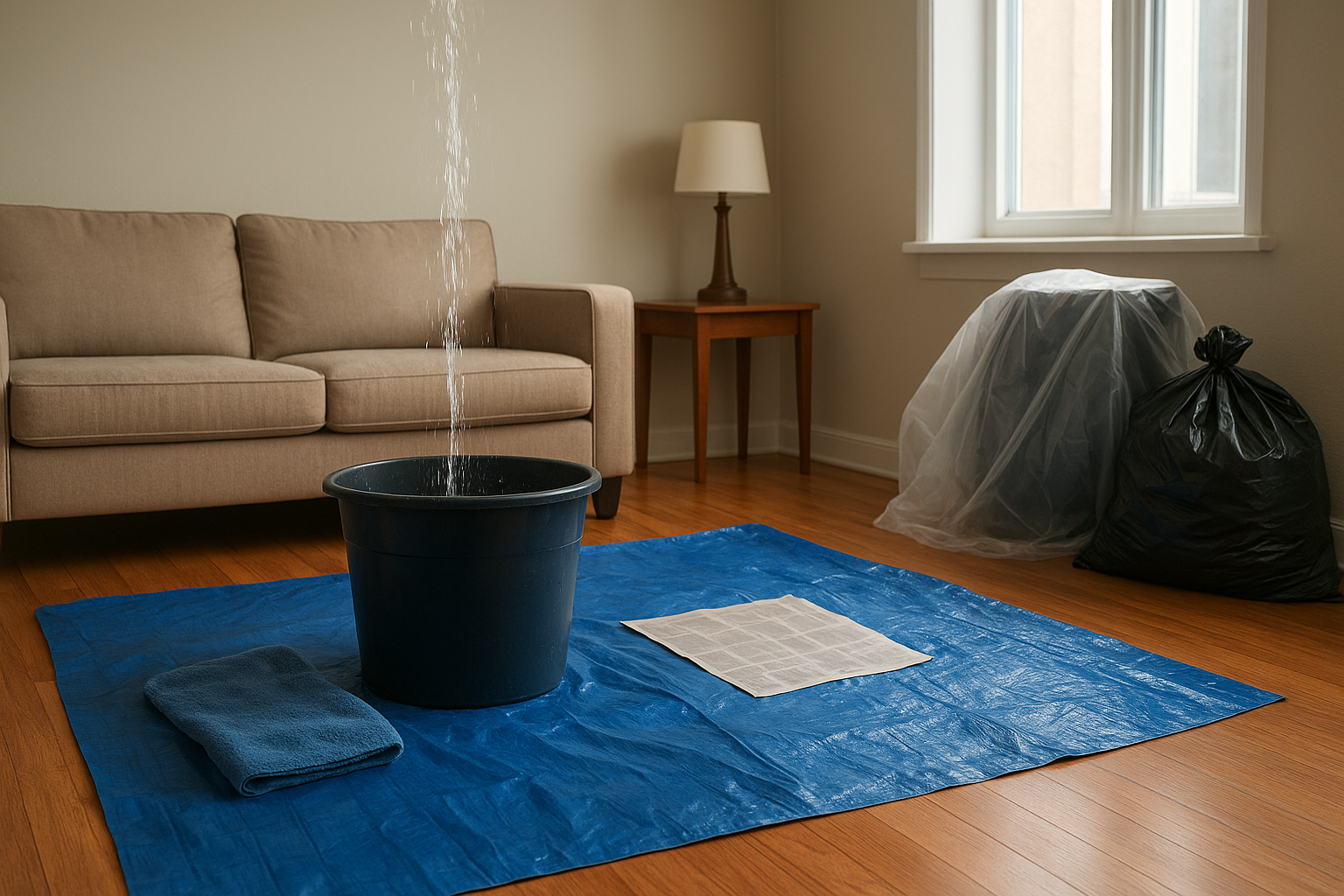
Place a bucket or trash can directly under the drip, and lay towels around the perimeter to soak up overflow. If the ceiling is bulging with trapped water, poke a small hole in the lowest point with a screwdriver, held over a bucket, to release the pressure in a controlled spot instead of letting it burst on its own.
A five-dollar tarp and a bucket can save you thousands in drywall, flooring, and mold remediation.
Skip climbing onto a wet, sloped roof yourself. Emergency tarping from the outside is a job for a professional with the right harness and footing, not a homeowner in the rain.
Grab your phone before you grab a mop. Documenting damage thoroughly now gives your insurance adjuster and your roofer everything they need to move fast through the step-by-step claim checklist, and it protects you if a claim gets questioned later. Photos taken mid-emergency, with water still visible and debris still in place, carry more weight than anything shot after you've dried the carpet and hauled out the branch.
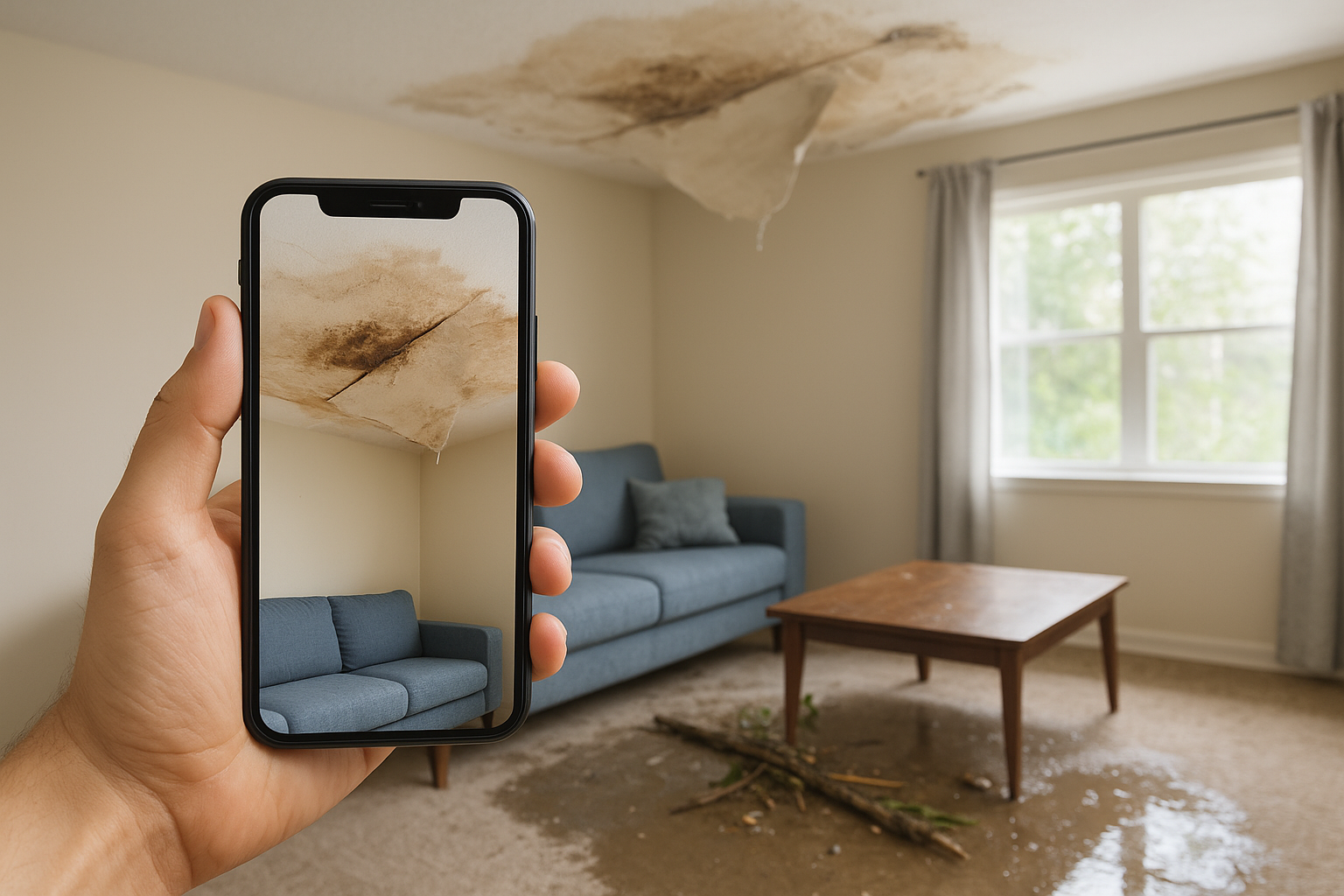
Walk the affected rooms and the exterior, snapping wide shots and close-ups of everything relevant:
Photograph everything before you touch anything: an adjuster can't verify damage that's already been cleaned up.
Timestamp your photos if your phone supports it, and jot down the date and approximate time the damage started while it's still fresh in your memory.
Now that your family's safe and the damage is documented, get a real roofer on the phone. Searching "24-hour emergency roof repair near me" at 3 a.m. only helps if the company that answers actually shows up with a tarping crew, not just a voicemail promising a callback next week, so it's worth knowing your same-day help options nearby in advance. A legitimate emergency roofer should pick up live, ask specific questions about your damage, and give you a same-day arrival window.
Before you hire anyone over the phone, ask these questions (and keep these 10 questions for a roofing contractor handy for the full repair later):
A roofer who can't answer "when can you get here" in one sentence isn't built for emergencies.
Defend Roofing answers these calls directly, day or night, across Cedar Park, Avery Ranch, Steiner Ranch, Jonestown, and Leander. Our team shows up with tarps, cameras, and three generations of roofing experience, ready to stabilize your roof repair emergency before it gets worse overnight.
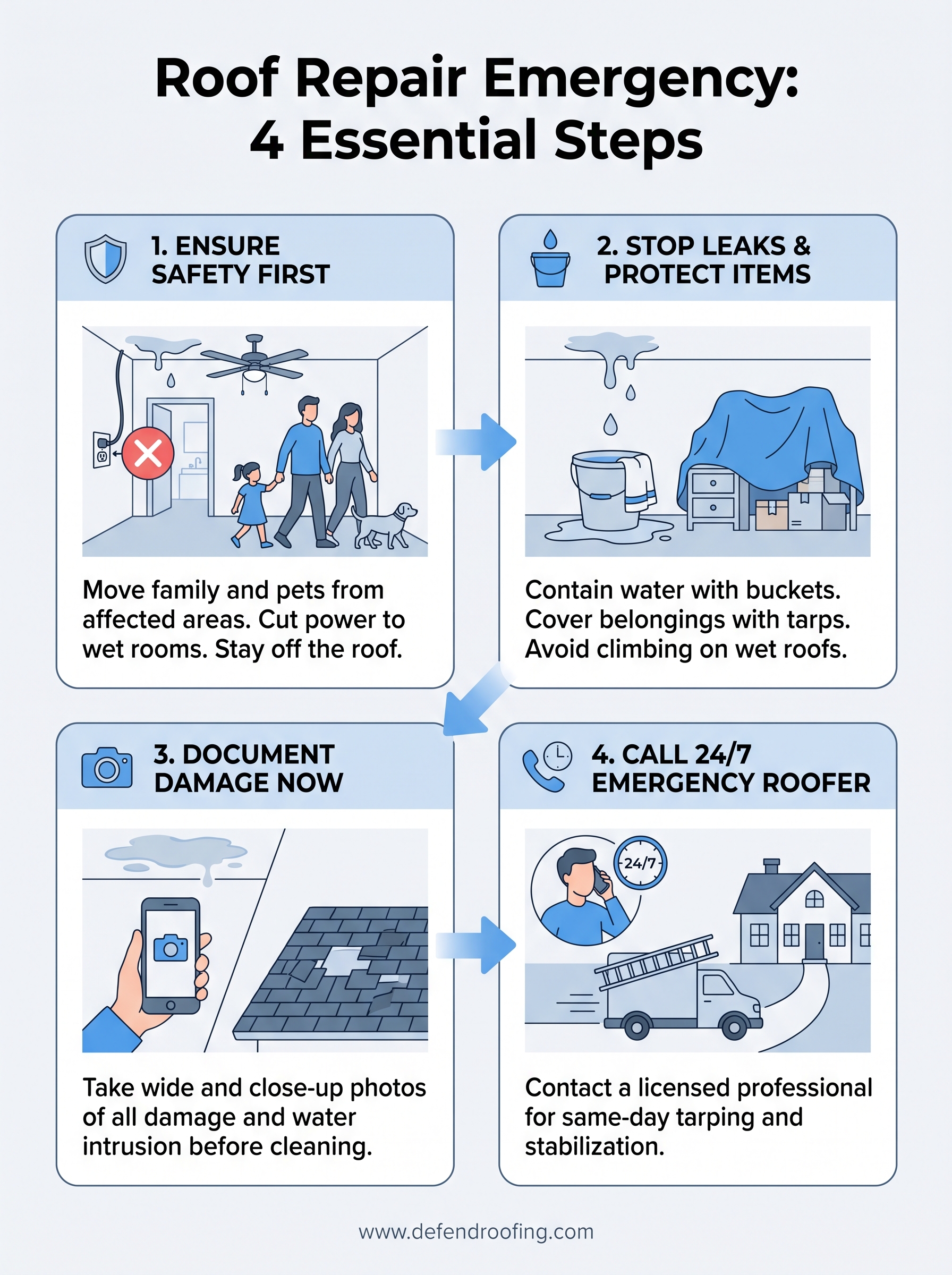
A roof repair emergency feels chaotic in the moment, but the steps stay simple: get your family clear, stop the water, document everything, and get a real crew on-site fast. Follow that order and you'll turn a midnight panic into a manageable repair instead of a gutted ceiling and a denied claim.
Once the tarp is up and the immediate danger has passed, the real work starts: a full inspection, honest repair-versus-replace guidance, and someone who'll sit with you through the insurance process instead of disappearing after the emergency visit. That's where long-term roof recovery matters as much as the first-night fix.
Defend Roofing handles both ends of that timeline, from the 2 a.m. tarp to the final shingle. If water's coming through your ceiling right now or you just need eyes on storm damage before it gets worse, reach out to our team for same-day help and get a real person on the phone today.