Compare standing seam vs corrugated metal roof costs and maintenance. Learn how hidden fasteners prevent leaks and which system offers the best value.
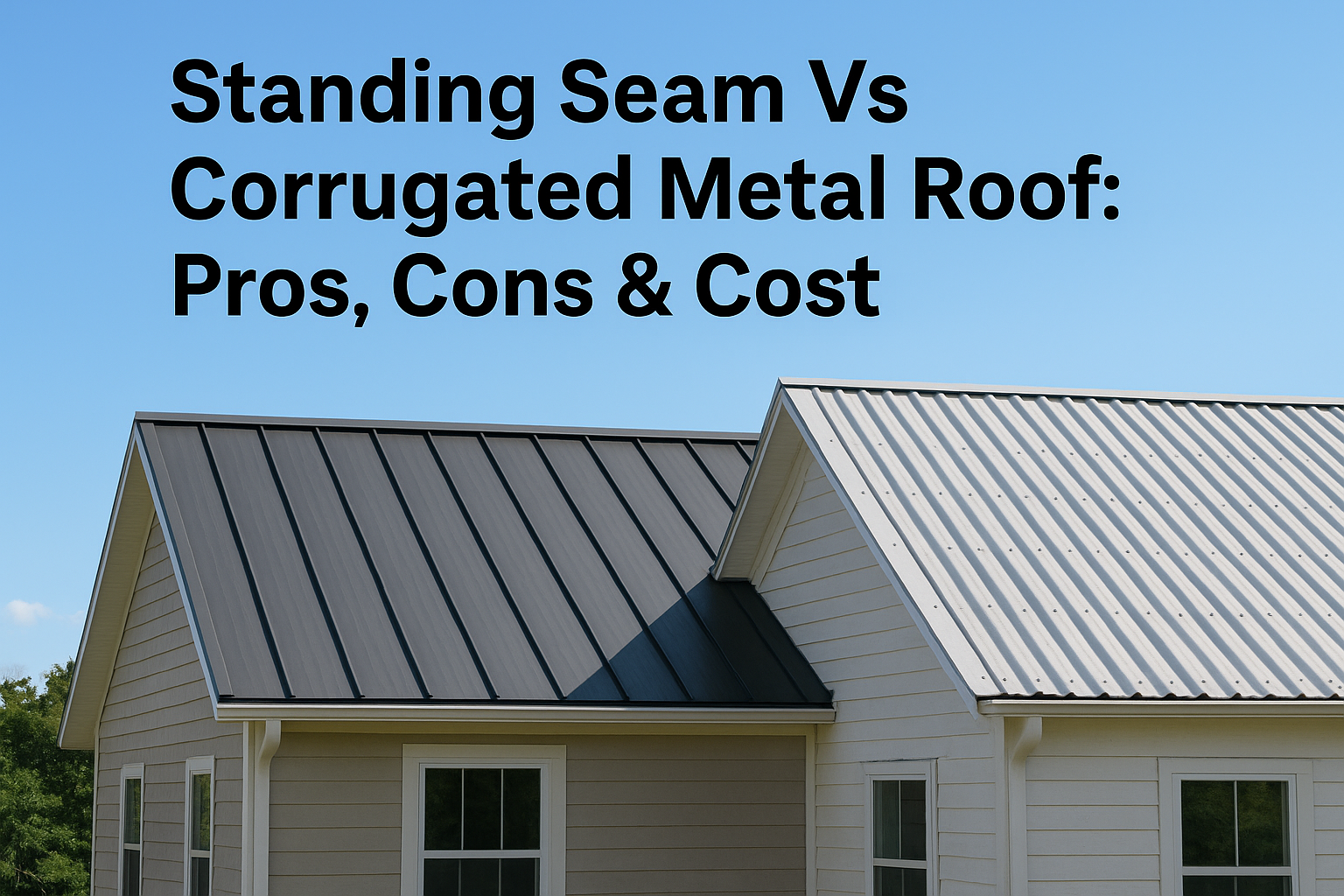
If you're considering a metal roof for your Central Texas home, the decision usually comes down to two options: standing seam vs corrugated metal roof. Both are built to handle the heat, hail, and storms we deal with in the Austin area, but they differ significantly in cost, appearance, installation, and long-term performance.
At Defend Roofing, we've installed both types across Cedar Park, Leander, Steiner Ranch, and surrounding communities. As a father-and-son team with three generations of roofing experience, we walk homeowners through these choices every week, and the right answer depends on your budget, your home's architecture, and what matters most to you. No pressure, just honest recommendations backed by documentation.
This guide breaks down the real pros, cons, and costs of each option so you can make a confident decision. We'll cover durability, pricing, curb appeal, and installation, everything you need to know before committing to either system for your next roof replacement.
The choice between standing seam vs corrugated metal roof isn't just about looks. The structural design of each system affects how water drains, how heat moves through your attic, how well the roof holds up under hail, and what kind of maintenance you'll face 10 or 20 years from now. In Central Texas, where summer heat regularly tops 100°F and severe hailstorms roll through each spring, these differences have real consequences for your home and your wallet.
The most important functional difference between these two systems is how each one attaches to your roof deck. Standing seam panels connect through hidden clips, which means no exposed fasteners pierce the metal surface. That matters because exposed fasteners are the primary failure point in most metal roofs. Texas heat causes metal to expand and contract through every season, and exposed screws work loose or develop leak points as that movement repeats year after year.
A hidden-clip fastening system eliminates the most common cause of metal roof leaks before they ever start.
Corrugated metal uses exposed screws with rubber washers to pin the panels to the roof deck. Those washers degrade over time, especially under prolonged UV exposure and temperature swings common in the Austin area. When the washers fail, you get leaks at each fastener location, sometimes dozens of them across a single roof surface.
Your roof's pitch, shape, and visible profile all influence which system fits your home. Standing seam performs best on roofs with clean, simple lines and moderate-to-steep pitches, where the vertical seams create a sleek, modern look without visual clutter. Corrugated panels also handle steep pitches well, but their ribbed texture and visible hardware give them a more utilitarian appearance that suits certain architectural styles better than others.
Homes with contemporary designs or future solar panel plans are better matched to standing seam. Corrugated metal suits farmhouse-style homes, agricultural buildings, and projects where keeping initial costs low is the priority over long-term aesthetics or minimal maintenance requirements.
Both systems use metal panels installed over your roof deck, but the way those panels connect and seal against weather is where they diverge. Understanding the mechanics of each helps you see why the standing seam vs corrugated metal roof comparison matters beyond just price tags.
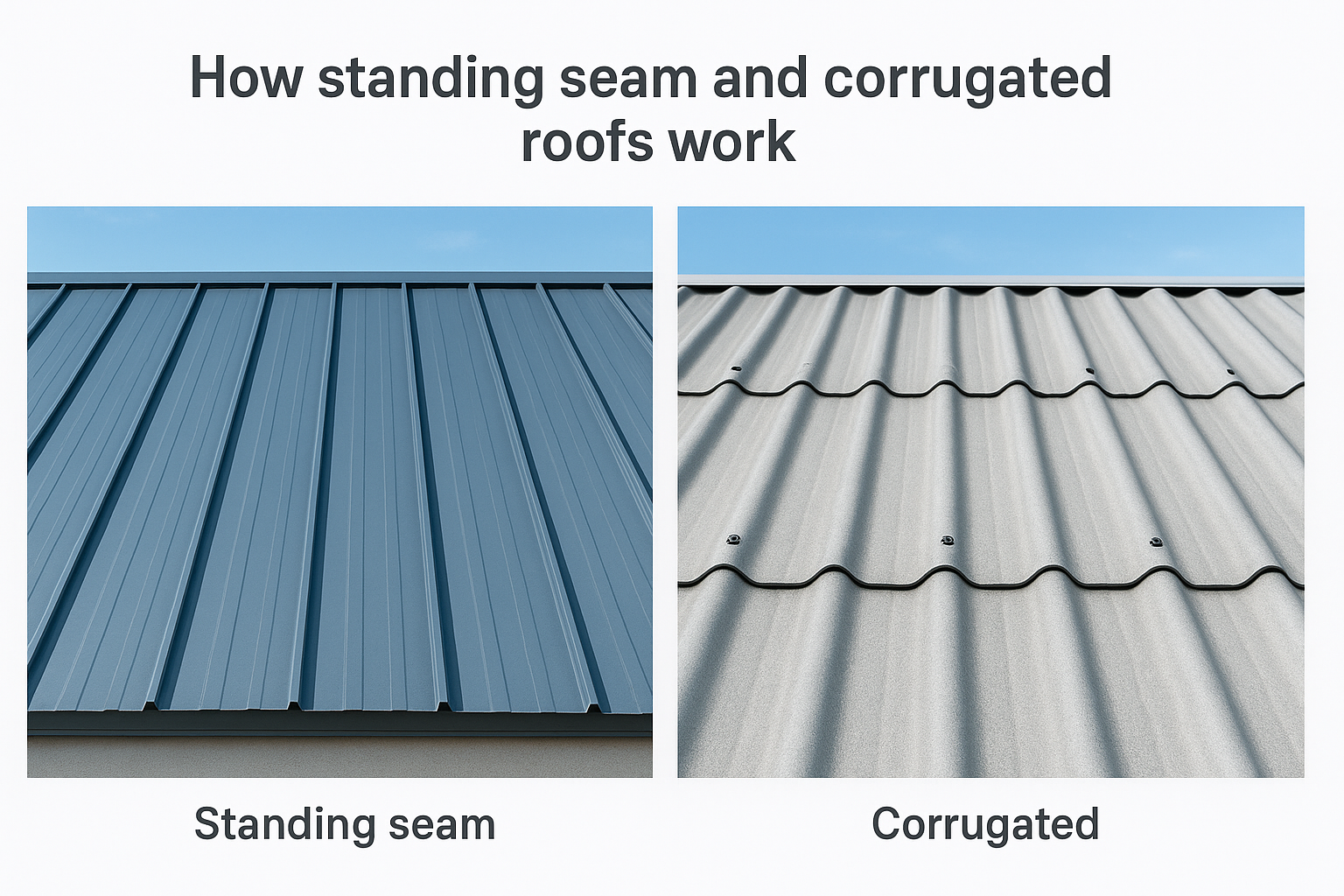
Standing seam roofs use long, vertical metal panels that lock together along raised seams running from the ridge down to the eave. Each panel connects to the roof deck through hidden clips fastened underneath the seam, keeping every attachment point out of contact with rain and UV exposure. The seams themselves interlock mechanically or through snap-lock profiles, creating a continuous barrier with no penetrations across the panel face.
This design lets the metal expand and contract freely with temperature changes without stressing the fasteners or the panel surface.
Corrugated panels get their strength from a repeating wave or rib pattern pressed into the sheet metal. That profile adds structural rigidity without increasing material thickness, which keeps the cost lower. Panels overlap at the edges and fasten directly through the face of the metal into purlins or a solid roof deck using screws with rubber or neoprene washers. The washers create a watertight seal at each fastener point when new, but they require periodic inspection and replacement as they age under Central Texas sun and heat.
When you compare standing seam vs corrugated metal roof options, the performance differences show up most clearly over time. Both systems outperform asphalt shingles in longevity and weather resistance, but their maintenance demands and upfront trade-offs pull in different directions depending on your priorities.
Standing seam delivers the strongest long-term performance of the two systems. Hidden fasteners eliminate the most common leak source, and the floating clip design lets panels move freely with temperature changes without cracking seals or loosening hardware. You also get a cleaner panel surface that sheds debris easily, supports solar panel mounting, and holds up well under Central Texas hail impacts.
The main trade-off is cost: standing seam installations run significantly higher upfront than corrugated systems, and not every contractor has the experience to install them correctly.
Corrugated metal gives you solid weather resistance and proven structural rigidity at a lower entry price. It installs faster than standing seam, which can reduce labor costs and project timelines. For agricultural buildings, budget-focused projects, or farmhouse-style homes, corrugated panels deliver strong value without sacrificing durability entirely.
Ongoing maintenance is the real downside. Exposed fasteners and rubber washers require periodic inspection, especially after hail seasons in the Austin area. Skipping that upkeep leads to slow leaks at fastener points, which can cause wood deck damage long before you notice water inside your home.
When you compare standing seam vs corrugated metal roof costs in Central Texas, the upfront gap is real, but the full picture includes maintenance demands and replacement timing. Both systems outlast asphalt shingles by decades, but how you account for repair cycles and long-term wear determines which option actually delivers better value for your specific budget and timeline.
Standing seam installations in the Austin area typically run $14 to $22 per square foot installed, depending on panel gauge, profile, and roof complexity. Corrugated metal comes in lower at $7 to $12 per square foot installed, making it a practical starting point for homeowners with tighter initial budgets. Labor accounts for a larger share of standing seam costs because installation requires more precision and specialized tooling.
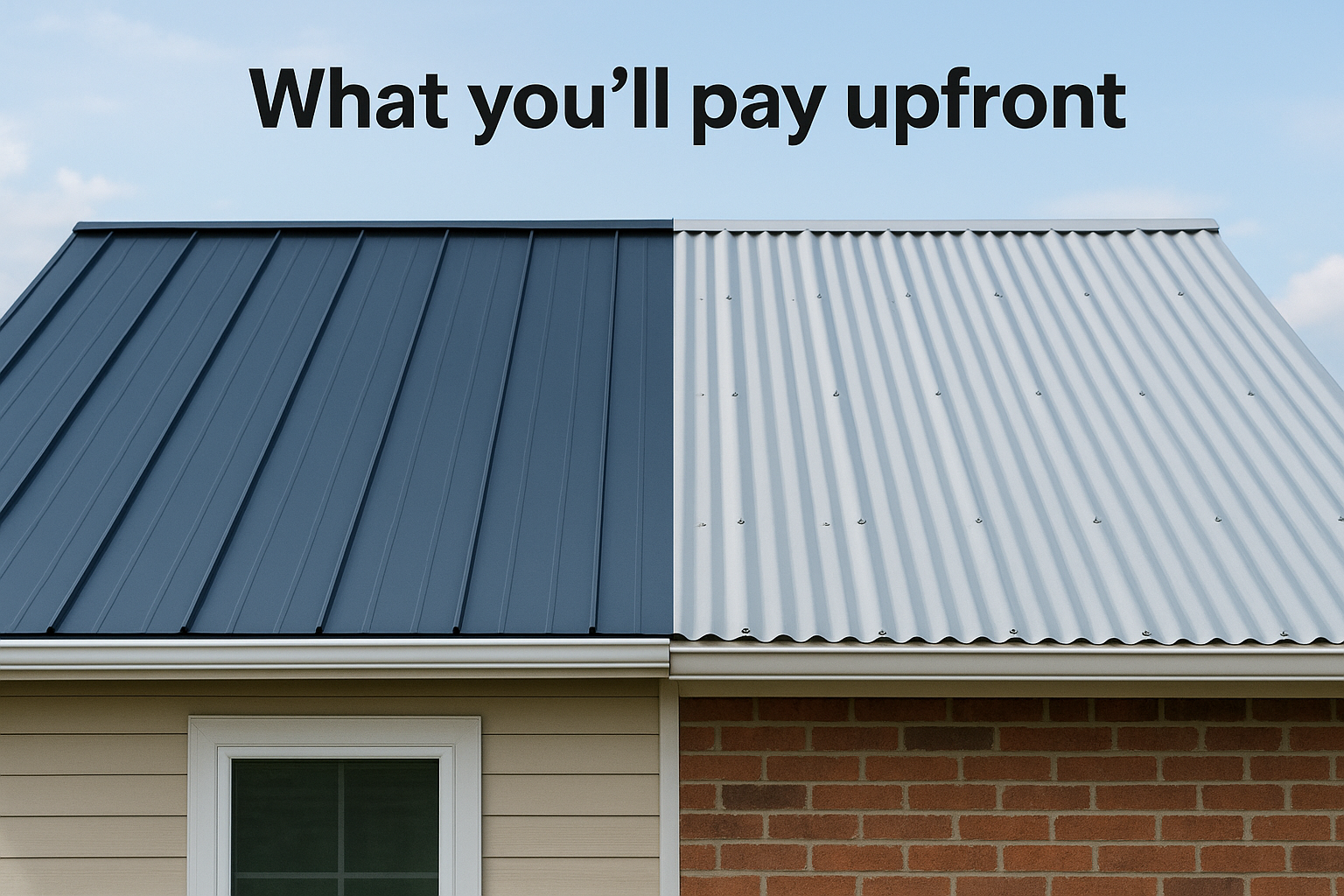
For most Austin-area homes, the total installed price difference between the two systems ranges from $8,000 to $20,000 depending on roof size and complexity.
| System | Installed Cost (per sq ft) | Typical Lifespan |
|---|---|---|
| Standing seam | $14-$22 | 40-70 years |
| Corrugated metal | $7-$12 | 25-40 years |
Standing seam roofs typically last 40 to 70 years with minimal maintenance when installed correctly, which significantly reduces the lifetime cost per year despite the higher starting price. That extended lifespan also means fewer disruptions to your home and no replacement cycle overlap with a mortgage or major renovation.
Corrugated metal averages 25 to 40 years, but Central Texas UV exposure and hail seasons accelerate washer wear at every fastener point. Skipping periodic inspections every five to seven years lets small seal failures grow into deck damage that costs far more to fix than the original price difference between the two systems.
Choosing between standing seam vs corrugated metal roof comes down to three practical filters: your budget, your home's architectural style, and how much ongoing maintenance you're willing to manage. Getting clear on those three points before you talk to a contractor keeps the conversation focused and prevents you from being pushed toward a system that doesn't match your actual situation.
If your priority is minimizing upfront cost, corrugated metal gets you a durable, weather-resistant roof at a lower entry price. If you plan to stay in your home for 20 or more years and want the lowest lifetime maintenance burden, standing seam pays back its higher starting cost through fewer repairs and a longer replacement cycle. Think about how long you'll own the home before you weigh the price difference.
Your ten-year plan matters more than the sticker price when comparing these two systems.
Your roof's pitch, shape, and architectural style narrow the decision further. Standing seam suits contemporary and modern homes with clean lines, and it's the better platform if you plan to add solar panels later. Corrugated panels fit farmhouse designs and rural properties where the textured look complements the surroundings. Either way, ask your contractor to show you completed projects in your area so you can see how each system looks on homes similar to yours before committing.

Now that you understand the standing seam vs corrugated metal roof comparison, the next step is getting a clear picture of your specific roof before committing to either system. Roof pitch, existing deck condition, and your home's architecture all affect which option fits your situation and what a realistic installation will cost. Reading about these systems is useful, but a direct assessment of your roof gives you the actual numbers you need to make a confident decision.
At Defend Roofing, we serve homeowners across Cedar Park, Leander, Steiner Ranch, and the greater Austin area with honest recommendations and 100+ photo documentation on every assessment. We'll tell you exactly what your roof needs, explain the trade-offs between metal options without pressure, and walk you through pricing in plain terms. If you're ready to move forward, schedule your roof assessment with Defend Roofing and get a documented recommendation you can trust.