Compare 8 options in this residential roofing materials comparison. See which materials best handle Central Texas heat, hail, and high winds.
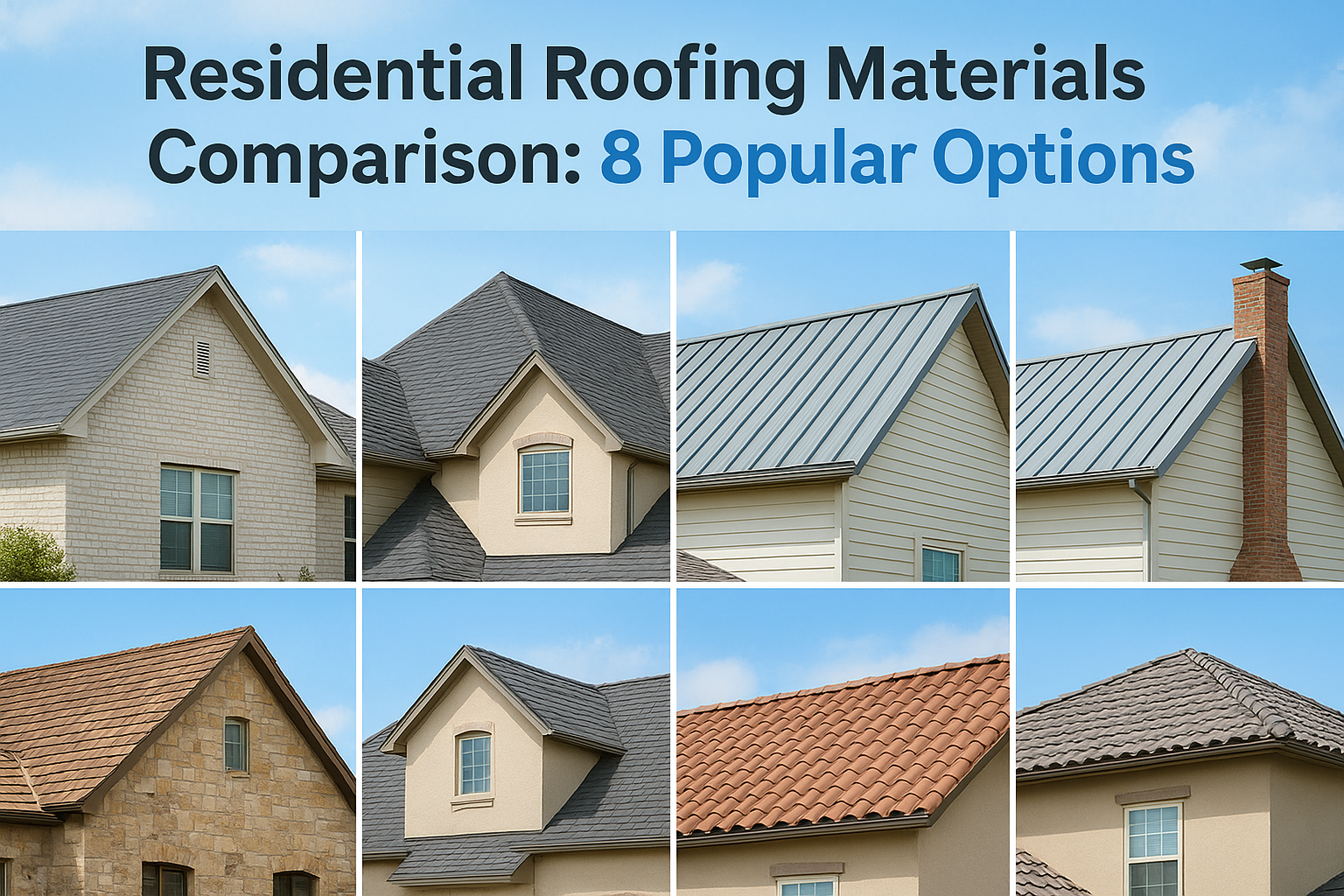
Choosing the right roofing material affects everything from your home's curb appeal to how much you'll spend on energy bills and future repairs. A solid residential roofing materials comparison starts with understanding how each option performs where you actually live, and in Central Texas, that means factoring in intense UV exposure, hailstorms, and triple-digit heat.
Not every material that looks great on a showroom display holds up the same way on a roof in Austin, Cedar Park, or Leander. Some options last decades with minimal maintenance. Others cost less upfront but need replacing sooner than you'd expect. The differences in cost, lifespan, and durability matter more than most homeowners realize, and the wrong choice can mean thousands in avoidable expenses down the road. At Defend Roofing, we've seen the results of these decisions across three generations of roofing work, the materials that deliver and the ones that don't.
This guide breaks down eight of the most popular residential roofing materials side by side. We'll cover what each one costs, how long it lasts, and how it handles the specific conditions Central Texas throws at it. Whether you're planning a full roof replacement or weighing options for new construction, this comparison will help you make a confident, informed decision before a single shingle gets nailed down.
Asphalt shingles are the most widely installed roofing material in the United States, and they serve as the benchmark in any residential roofing materials comparison. They combine affordable pricing, broad contractor availability, and enough style variety to work on most home types across Central Texas.
Standard 3-tab asphalt shingles consist of a fiberglass mat base coated with asphalt and topped with ceramic granules. The granules protect against UV rays and give shingles their color. At roughly 2 to 2.5 pounds per square foot, they're light enough for most existing roof structures without added reinforcement.
Central Texas is demanding on standard 3-tab asphalt. Roof surface temperatures in Austin regularly exceed 160°F in summer, which accelerates granule loss and shingle brittleness. Hail adds another layer of risk: most 3-tab products carry a Class 3 impact rating at best, meaning a strong hailstorm can cause enough damage to justify an insurance claim.
In hail-prone areas like Cedar Park and Leander, you want to know the exact impact rating of any shingle before it goes on your roof.
Most 3-tab products carry a 20 to 25-year manufacturer warranty, but Central Texas heat shortens real-world performance. Poor attic ventilation traps heat and speeds up breakdown from underneath, pushing actual lifespan closer to 15 to 18 years in many cases.
Standard 3-tab asphalt typically runs $4.50 to $6.50 per square foot installed in the Austin area. For a 2,000-square-foot home, expect total project costs between $9,000 and $13,000 depending on pitch, tear-off layers, and complexity.
The core advantage is low upfront cost paired with easy sourcing. The trade-offs are real: 3-tab shingles have limited wind resistance, typically rated to 60 mph, and a shorter lifespan than metal or tile options at a similar price point over time.
Asphalt shingles are straightforward to repair individually, which keeps ongoing maintenance affordable. Watch for these warning signs:
Architectural shingles, also called dimensional shingles, sit a clear step above 3-tab in any residential roofing materials comparison. They cost more upfront but deliver noticeably better protection for Central Texas conditions, which makes them the most commonly installed shingle type in the Austin area today.
These shingles bond two asphalt layers together to create a thicker, textured profile that mimics wood shake. That added mass brings them to 3 to 4 pounds per square foot, giving them a meaningful advantage over 3-tab in both wind and impact resistance.
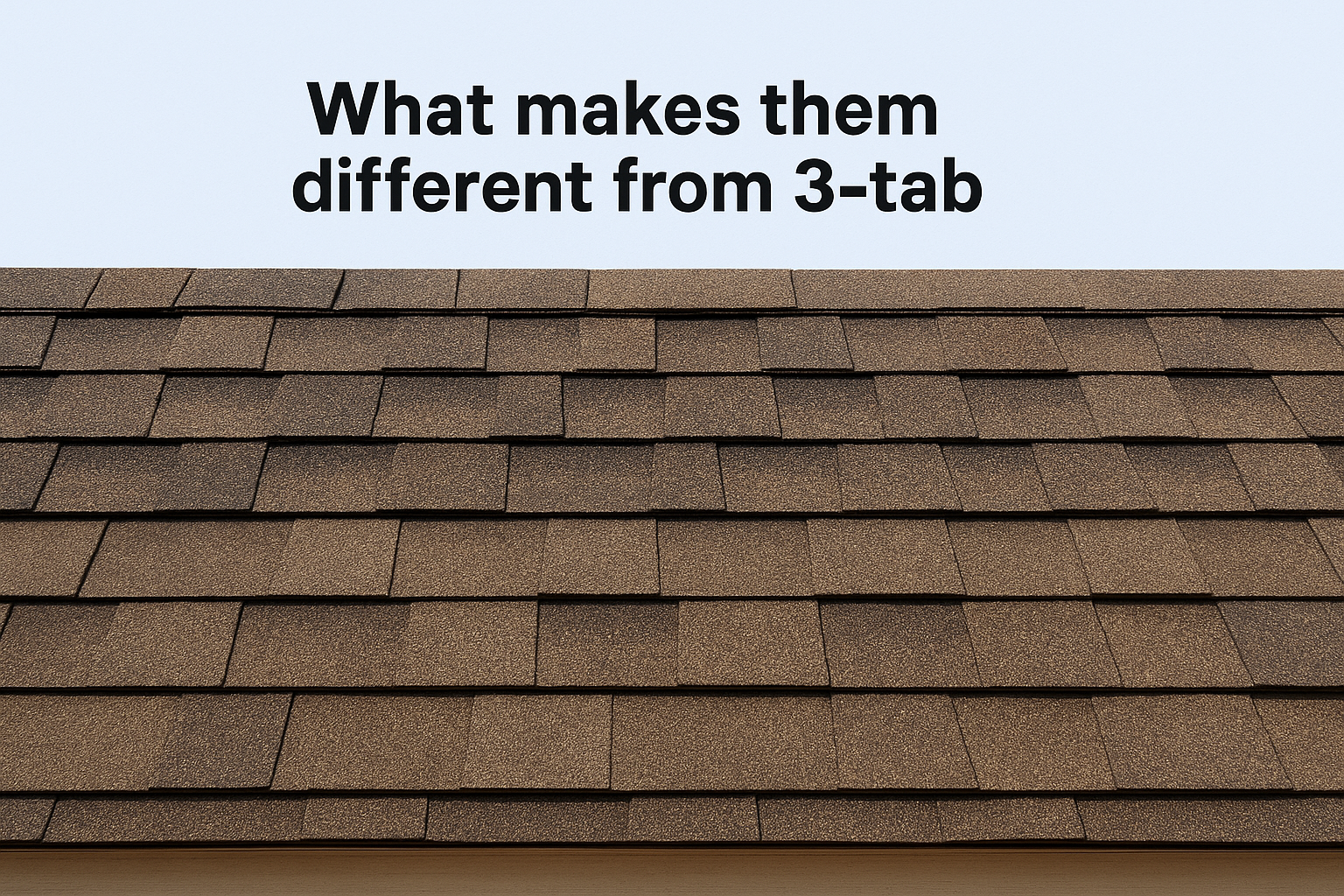
Most architectural products carry a Class 4 impact rating and wind resistance up to 130 mph, compared to 60 mph for standard 3-tab. Class 4 is the highest impact rating available and can qualify your home for insurance premium discounts in Texas. Always request the product data sheet rather than relying on a contractor's verbal description.
Getting Class 4 shingles installed could reduce your insurance premium by 20 to 30 percent depending on your carrier.
Manufacturer warranties run 30 to 50 years, but expect 22 to 30 years realistically in Central Texas heat. The most common failure points are sealant strip breakdown along the lower edge and granule loss concentrated on south-facing slopes from UV exposure.
Installed costs in the Austin area run $6.50 to $9.00 per square foot, putting a 2,000-square-foot roof between $13,000 and $18,000 depending on pitch and complexity.
These shingles make the most sense when your budget rules out metal or tile but you still want meaningful hail protection. They work well across most Austin-area neighborhoods without HOA material restrictions.
Individual shingles are easy to match and replace, which keeps repair costs manageable over time. Check for lifted tab edges after wind events, as this signals sealant failure before it becomes a leak.
Standing seam metal roofing sits at the premium end of any residential roofing materials comparison, and for good reason. It delivers exceptional longevity and weather resistance that most asphalt products simply cannot match in Central Texas conditions.
Standing seam consists of vertical metal panels running from ridge to eave, with raised seams that lock together along their edges. This hidden fastener system means no exposed screws that can back out or corrode over time, which is one of the main reasons standing seam outlasts screw-down metal alternatives by decades.
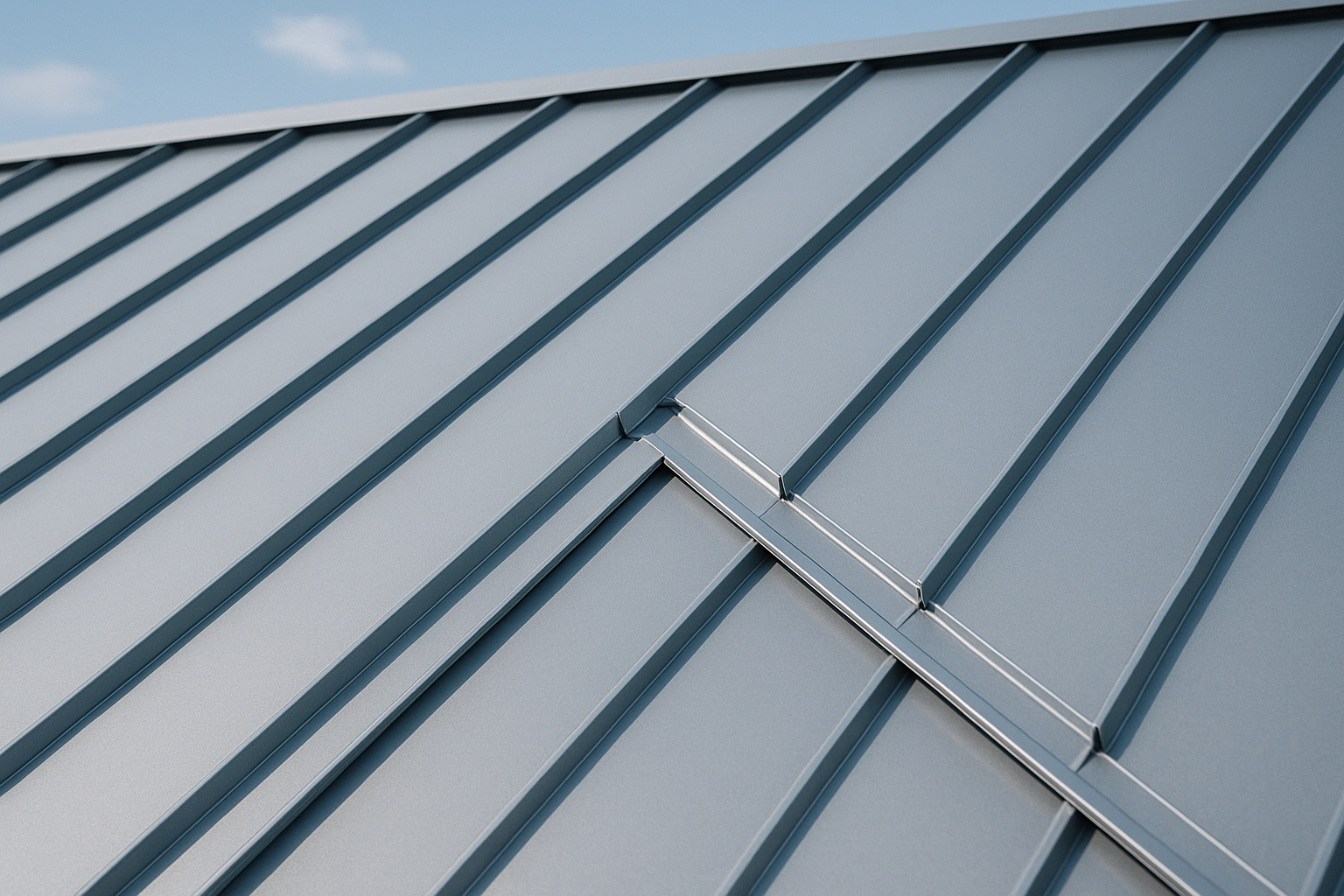
Standing seam handles Central Texas weather well. Metal reflects radiant heat rather than absorbing it, which can reduce cooling loads compared to dark asphalt. Most panels carry wind ratings up to 140 mph, and the hidden fastener design reduces uplift risk in storms. Hail impact can leave cosmetic dents, though the roof typically stays watertight.
A hail-dented standing seam roof often still passes a functional inspection, while damaged asphalt shingles may require full replacement.
Metal expands and contracts with temperature swings, so proper floating clip installation allows panels to move without buckling or popping. With adequate attic insulation, rain noise is minimal for most homeowners.
Expect 40 to 70 years from a properly installed standing seam roof in Central Texas. That lifespan means most homeowners replace it once, not twice.
Installed costs run $14 to $22 per square foot, putting a 2,000-square-foot roof between $28,000 and $44,000 depending on gauge and complexity.
Metal shingles bring the durability of metal roofing into a format that looks far closer to traditional roofing materials. They sit in a useful middle ground in any residential roofing materials comparison, offering better longevity than asphalt while costing significantly less than standing seam.
Metal shingles are stamped steel or aluminum panels shaped to replicate the look of wood shake, slate, or standard asphalt shingles. Each panel locks into adjacent pieces, creating a water-shedding profile that handles rain and wind without exposed fasteners at the face of the shingle.
Most metal shingle products carry a Class 4 impact rating, which is the highest available and qualifies many Texas homeowners for insurance discounts. Wind ratings typically reach 130 mph or higher, making them a strong choice in storm-prone areas like Cedar Park and Leander.
Confirm the Class 4 rating with the product data sheet before installation, not just the contractor's verbal assurance.
Expect 40 to 50 years from quality metal shingles. The protective coating matters more than most homeowners realize: Kynar-based coatings resist fading and chalking in Central Texas UV far better than standard polyester finishes.
Installed costs run $10 to $16 per square foot in the Austin area, putting a 2,000-square-foot roof between $20,000 and $32,000.
Metal shingles work well on traditional-style homes where standing seam looks too industrial. Many HOAs that restrict standing seam panels will approve metal shingles because they closely resemble conventional roofing materials.
Metal shingles need minimal ongoing maintenance, but inspect the coating every five to seven years for signs of fading or surface rust at cut edges. Individual panels are replaceable without disturbing the surrounding roof.
Composite and synthetic shingles occupy a growing niche in any residential roofing materials comparison. These products use engineered materials like recycled rubber, plastic, or polymer blends to replicate the look of wood shake, slate, or traditional asphalt at a fraction of the weight.
The terms overlap, but generally composite shingles blend multiple materials, often fiberglass, recycled content, and asphalt, while synthetic shingles rely on a fully engineered polymer base with no traditional asphalt layer. Both aim to outperform standard asphalt on durability.
Most quality synthetics carry a Class 4 impact rating, which is a strong advantage in hail-prone areas. UV resistance varies widely by manufacturer: cheaper polymer formulations fade noticeably within five to ten years under Central Texas sun, so request UV test data before you commit.
Request the manufacturer's UV fade test results for any synthetic shingle product you're considering.
Synthetic products typically weigh under 1.5 pounds per square foot, so existing roof structures rarely need reinforcement. Still, confirm attic ventilation meets local code before installation, since synthetics trap heat differently than asphalt.
Manufacturers advertise 40 to 50-year lifespans, but read the warranty carefully. Many policies require manufacturer-approved installers and documented periodic inspections to keep coverage valid.
Installed costs run $9 to $14 per square foot in the Austin area, putting a 2,000-square-foot roof between $18,000 and $28,000 depending on product and complexity.
These shingles work well for homeowners who want slate or shake aesthetics without heavy structural demands. Skip them if your HOA hasn't formally approved synthetic materials, since some associations require specific product reviews before installation.
Cedar brings a natural, textured aesthetic that few other materials can match, but it sits at a challenging position in any residential roofing materials comparison given Central Texas conditions.
Cedar shingles are sawn smooth on both faces and cut to a uniform taper, while cedar shakes are split on at least one face, producing a rougher, thicker profile. Shakes shed water more aggressively due to their texture.
Most cedar products carry a Class C fire rating unless treated with a fire retardant to achieve Class A or B. Many Texas insurers charge significantly higher premiums for cedar roofs or exclude them from coverage entirely, so confirm your policy before committing.
Call your homeowner's insurance carrier before signing any cedar roofing contract to avoid coverage surprises.
Cedar handles dry heat reasonably well, but Central Texas humidity introduces mold, mildew, and rot risk faster than drier climates. UV exposure also grays and dries out cedar over time without regular maintenance.
Expect 20 to 30 years with consistent upkeep. Cedar requires cleaning, retreatment, and occasional moss treatment every three to five years, which adds ongoing costs beyond what most other roofing materials demand.
Installed costs run $10 to $18 per square foot, putting a 2,000-square-foot roof between $20,000 and $36,000.
Cedar suits craftsman, cottage, and ranch-style homes well. Some HOAs require it for historic aesthetic compliance, but others prohibit it due to fire risk, so verify your community's rules before moving forward.
Clay tile is one of the oldest roofing materials in the world and holds a well-earned position in any residential roofing materials comparison. It suits Central Texas architecture particularly well, given the Mediterranean and Spanish Colonial styles common across the Austin area.
Clay tile starts as natural earthen clay fired at high temperatures, producing a dense product that resists moisture absorption and UV degradation. The firing process is why properly maintained clay tile regularly outlasts 100 years with minimal surface breakdown.
Clay tile is heavy, running 9 to 12 pounds per square foot. Before installation, confirm your roof framing can support the added load, since retrofitting clay onto a structure built for asphalt often requires reinforcement.
Clay tile handles Central Texas heat well because the profile naturally vents air between tile and deck, reducing heat transfer into your attic. Most products carry wind ratings of 130 mph or higher, though hail above 1.5 inches can crack individual tiles.
Cracked tiles don't always cause immediate leaks, but replace them promptly before water works under adjacent pieces.
Your underlayment typically lasts 20 to 30 years while the tiles themselves can last a century. That gap means you'll likely need to replace the underlayment at least once without disturbing the tile.
Clay tile runs $18 to $30 per square foot installed, putting a 2,000-square-foot roof between $36,000 and $60,000.
Finding matching replacement tiles for older installations can be difficult, especially for discontinued profiles. Work with a roofer who sources from multiple clay tile suppliers to improve your odds of a close color and profile match.
Concrete tile rounds out this residential roofing materials comparison as a durable alternative that delivers many of the same performance benefits as clay at a meaningfully lower price point. It works well across Central Texas and fits many of the Spanish and Mediterranean-style homes common in the Austin area.
Concrete tile uses Portland cement, sand, and water pressed into molds that mimic clay profiles. It costs less per tile, but it absorbs more moisture than clay, which can affect long-term performance in wet climates. In Central Texas, that absorption difference matters less than in wetter regions.
Concrete tile runs 9 to 11 pounds per square foot, close to clay. Your roof framing needs a structural assessment before installation to confirm it handles the load. Proper fastening is critical because loose tiles become projectiles in high winds.
Require a structural load confirmation in writing before any tile roofing contract is signed.
Concrete tile manages heat well in Central Texas, with its raised profile allowing airflow under each tile. The main drawback is color fade: unlike clay, concrete's pigment sits in the surface coating rather than throughout the material, so fading becomes visible within 15 to 20 years.
Expect 40 to 50 years from concrete tile. Walking on the roof is the most common cause of cracked tiles, so limit foot traffic and use a qualified roofer for any maintenance work.
Installed costs run $14 to $22 per square foot, putting a 2,000-square-foot roof between $28,000 and $44,000 depending on profile and complexity.
Concrete tile makes sense when you want tile aesthetics and longevity but clay tile's price exceeds your budget. It also works well when your structure supports the load but your contractor's clay tile sourcing options are limited locally.
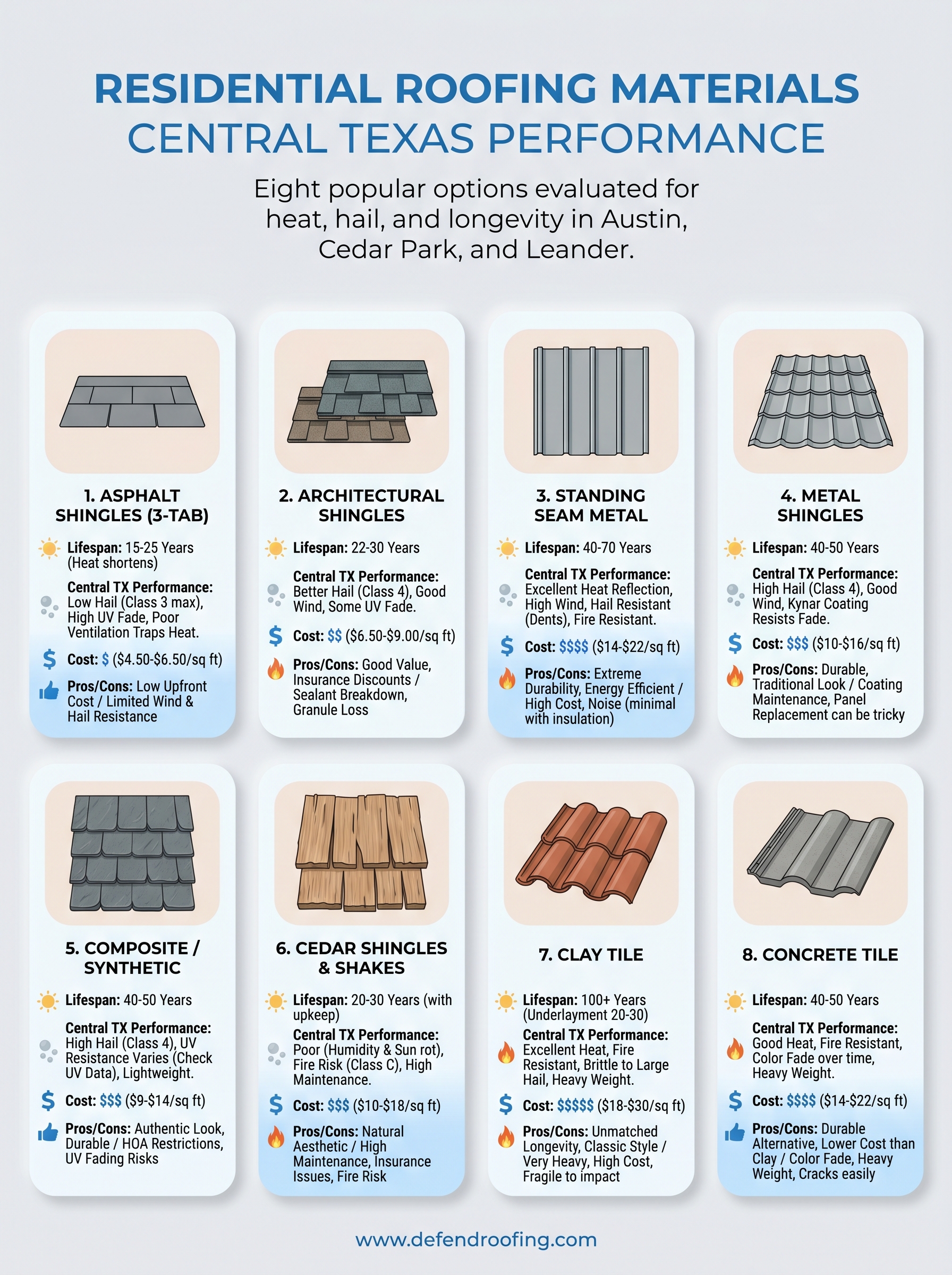
This residential roofing materials comparison covers eight options, but the right choice depends on your specific home, budget, and risk tolerance. Asphalt and architectural shingles work for most Central Texas homeowners on a budget. Metal and tile products cost more upfront but reduce long-term replacement cycles significantly. Cedar and synthetic options fill specific aesthetic needs, though both require careful attention to warranties and local codes before you commit.
Knowing your options is only part of the process. The next step is getting an honest assessment of your current roof so you know whether repair or full replacement actually makes sense for your situation. At Defend Roofing, every project starts with a 100+ photo Precision Roof Assessment that documents exactly what your roof needs, nothing more. Chris and Greyson give you a straight answer based on evidence, not upselling. Request your roof assessment today and get a clear picture of where your roof stands.