Learn what does hail damage look like on a roof with 10 visual clues. Spot shingle bruising, granule loss, and gutter dents to catch storm damage early.
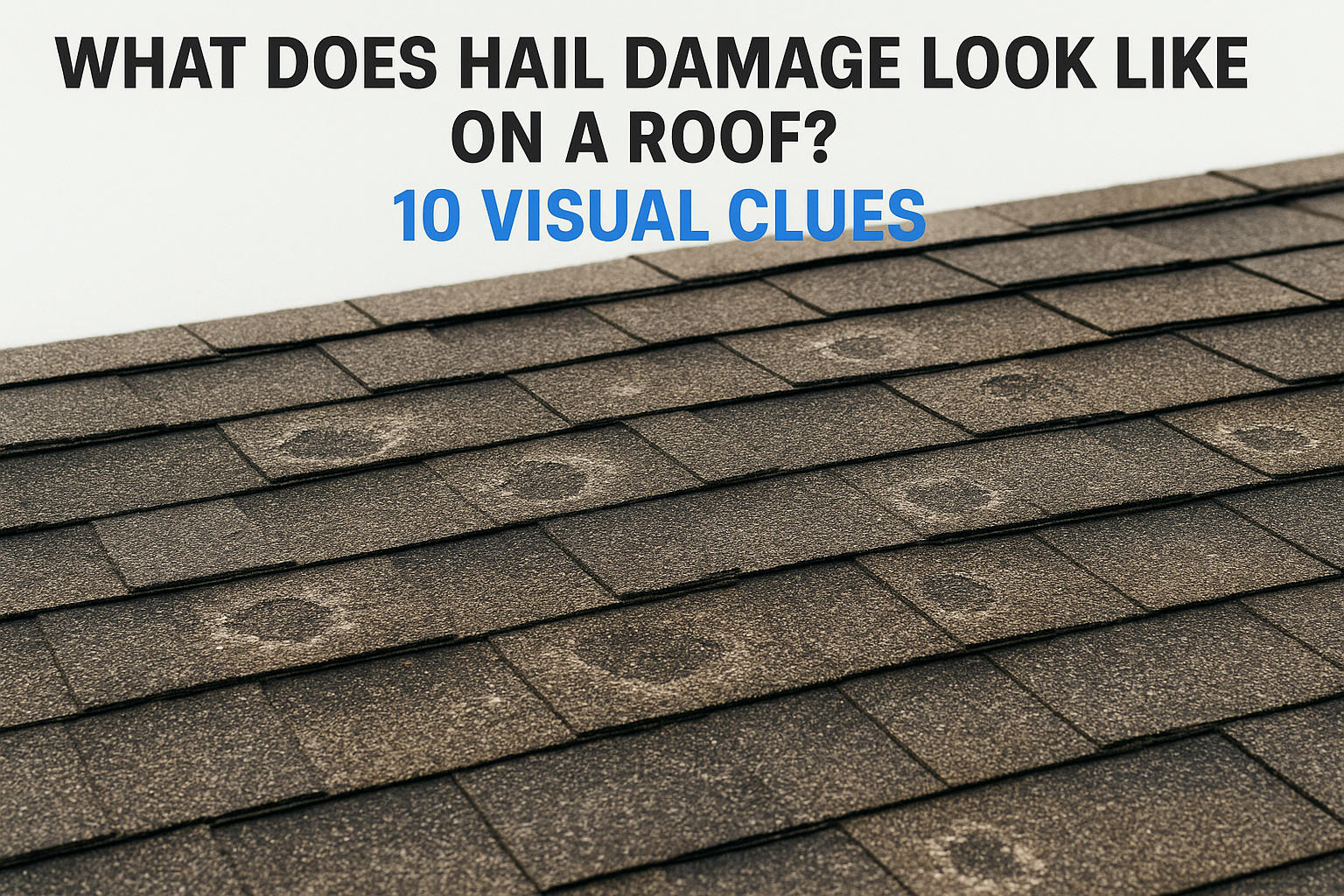
A hailstorm rolls through Central Texas, and thirty minutes later you're standing in your yard staring up at your roof wondering if anything's wrong. From ground level, everything might look fine. But hail doesn't always leave obvious, dramatic destruction, and that's exactly what makes it dangerous. If you're asking what does hail damage look like on a roof, you're already doing the right thing, because catching the signs early can mean the difference between a simple insurance claim and a costly repair down the road.
At Defend Roofing, our father-and-son team has inspected thousands of roofs across the Austin area after hailstorms. We document every finding with 100+ photos per assessment, giving homeowners clear, honest evidence of what's actually happening on their roof. We've seen damage that homeowners never would have spotted, and we've also told plenty of people their roof was perfectly fine when it was. That honesty is the foundation of how we operate.
This guide breaks down 10 specific visual clues that indicate hail damage on different roofing materials. You'll learn what to look for on shingles, gutters, vents, and other components, so you can make an informed decision about whether to call in a professional or file a claim with your insurance company.
Hail damage doesn't always look like a war zone on your roof. In many cases, a storm can leave behind subtle, scattered impact marks that blend into the texture of your shingles, making them easy to miss from the ground. The challenge is that roofing materials age, fade, and wear at different rates, so separating fresh storm damage from pre-existing wear requires trained eyes and close-up inspection at the surface level.
Not every hailstone causes the same destruction. A storm dropping quarter-sized hail (about one inch in diameter) at high speed hits with enough force to crack shingles or dent metal panels. Smaller hail, say marble-sized, can strip the protective granule layer from asphalt shingles without cracking them at all. That granule loss is serious because it exposes the asphalt mat underneath to UV rays and moisture, shortening your roof's lifespan by years.
Even hail smaller than an inch can knock off enough granules to void your manufacturer's warranty and set the stage for premature shingle failure.
The frustrating part is that granule loss doesn't look dramatic to an untrained eye. You might notice dark or discolored patches on shingles, or find a buildup of small, sand-like granules collecting in your gutters after a storm. Both are early warning signs that the storm caused more damage than a quick look from the yard revealed.
Understanding what does hail damage look like on a roof depends heavily on what your roof is made of. Asphalt shingles develop soft spots and circular bruising. Wood shakes split along the grain. Metal panels dent. Clay or concrete tiles crack from direct hits. Each of these signs looks different, and misidentifying normal wear as something else can cost you a valid insurance claim if you wait too long to act.
Timing adds another layer of difficulty. Insurance companies typically require you to file a hail claim within one to two years of the event. By the time water stains show up on your ceiling, the damage has often been sitting for months. Hail strikes on granules or flashing rarely cause immediate leaks, so the problem stays hidden until it becomes expensive.
Before you climb anything, know this: most of what you need to see is accessible from the ground or from a ladder positioned safely at the eaves. Roof falls cause serious injuries every year, so the smartest approach is to gather as much information as possible without stepping onto the surface itself. If you spot enough clues from below, you can call a professional and let them handle the close-up inspection.
Start on the ground and walk the full perimeter of your home after any significant storm. Look up at the roof line from multiple angles, paying attention to visible dents, missing shingles, or dark patches that weren't there before. Binoculars help you spot granule loss, cracked ridge caps, or lifted flashing without putting yourself at risk. Take photos of anything suspicious so you have a timestamped record for your insurance company.
A thorough ground-level walkthrough takes ten minutes and can tell you whether what does hail damage look like on a roof actually applies to your situation before you make any calls.
Your gutters, downspouts, and AC condenser unit are some of the best first indicators of hail intensity. If you find dents on metal gutters or dings on the AC condenser fins, there's a strong chance the same hailstones hit your roof hard enough to leave marks. Window screens with small punctures and chipped paint on wood trim are also reliable secondary clues worth documenting before a professional comes out.
Knowing what hail damage looks like on a roof starts with understanding that different materials fail in different ways. The clues below cover the four most common roofing types, so you can match what you see to your specific situation and know whether it warrants a professional inspection.
Asphalt shingles show damage most commonly as circular impact marks where the granule surface has been knocked away, leaving a darker, exposed asphalt spot underneath. These bruises may feel soft when pressed, almost like a bruise on fruit, because the hail impact has broken the mat structure beneath the surface.
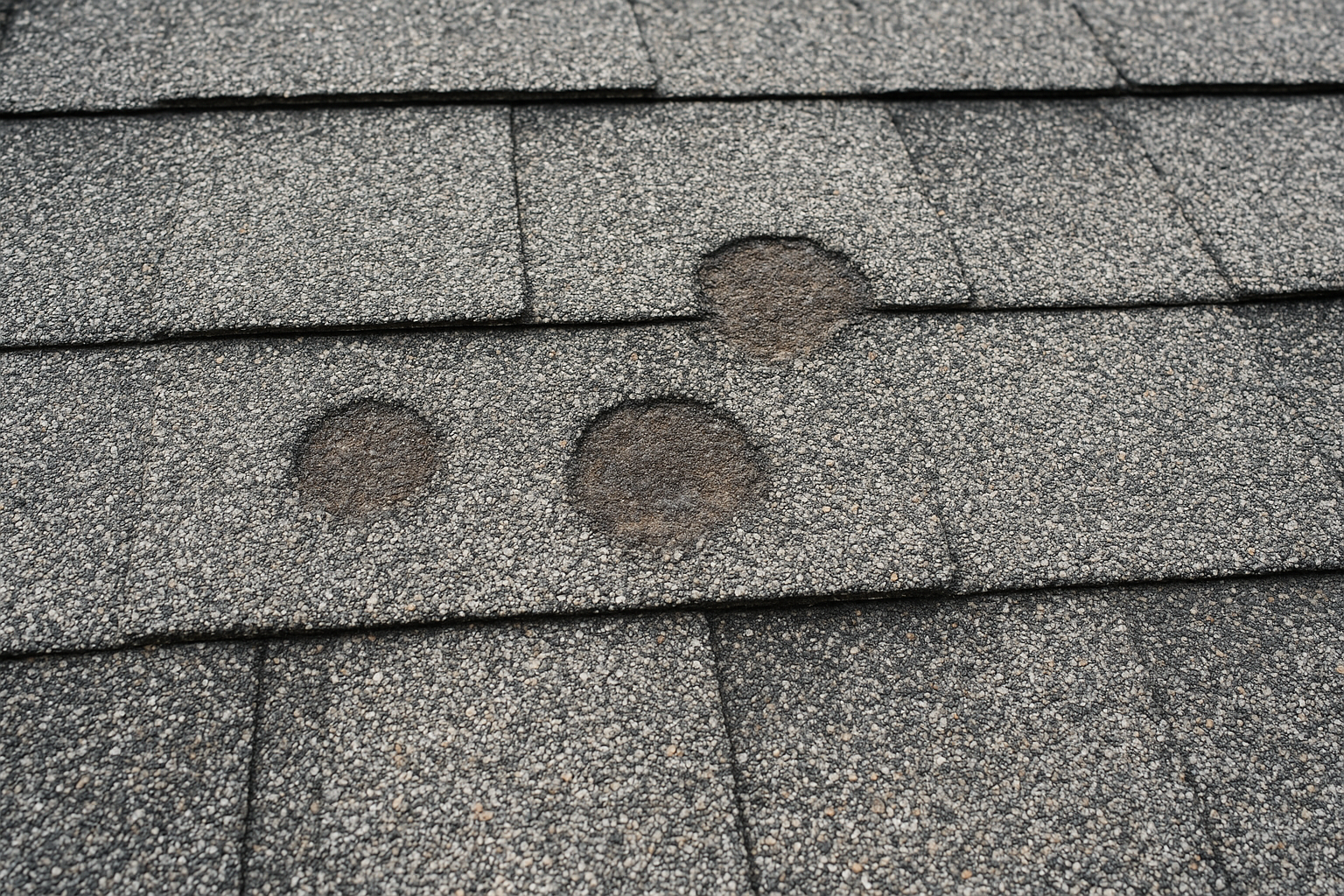
Granule loss is the second major sign, and it often appears as inconsistent coloring across the shingle surface. You may also notice cracked or fractured shingles, lifted edges where the adhesive seal broke on impact, and missing tab sections along the lower courses. Check shaded areas too, since north-facing slopes often hold the clearest impact marks because they receive less sun exposure and UV fading.
A single hailstone striking at the right angle can strip a shingle's granule layer without cracking it, leaving damage that's invisible until your roof starts aging prematurely.
Metal roofing and flashing show hail damage as shallow round dents, often in a scattered pattern that mirrors the storm's direction. Clay and concrete tiles crack or chip at the edges from direct strikes. Wood shakes split along the grain and show fresh, lighter-colored wood at the break point, a reliable indicator the split happened recently rather than years ago.
| Material | Primary hail damage sign |
|---|---|
| Asphalt shingles | Circular bruising, granule loss |
| Metal panels | Round dents in scattered pattern |
| Clay/concrete tile | Edge chips, surface cracks |
| Wood shakes | Grain splits with fresh wood exposed |
Your roof isn't the only place hail leaves evidence. Secondary surfaces around your home act as a reliable diagnostic layer that tells you how hard the storm hit before you ever look up at your shingles. If these components show clear impact damage, you have strong supporting evidence for what does hail damage look like on a roof and a solid foundation for your insurance claim.
Metal gutters and downspouts dent visibly when struck by hail large enough to damage asphalt shingles. Look for round, shallow dings along the top horizontal edge of gutters and along the face of downspouts. You'll also find granule buildup pooled at the bottom of downspouts after a storm, which confirms that shingles above lost surface material during the event.
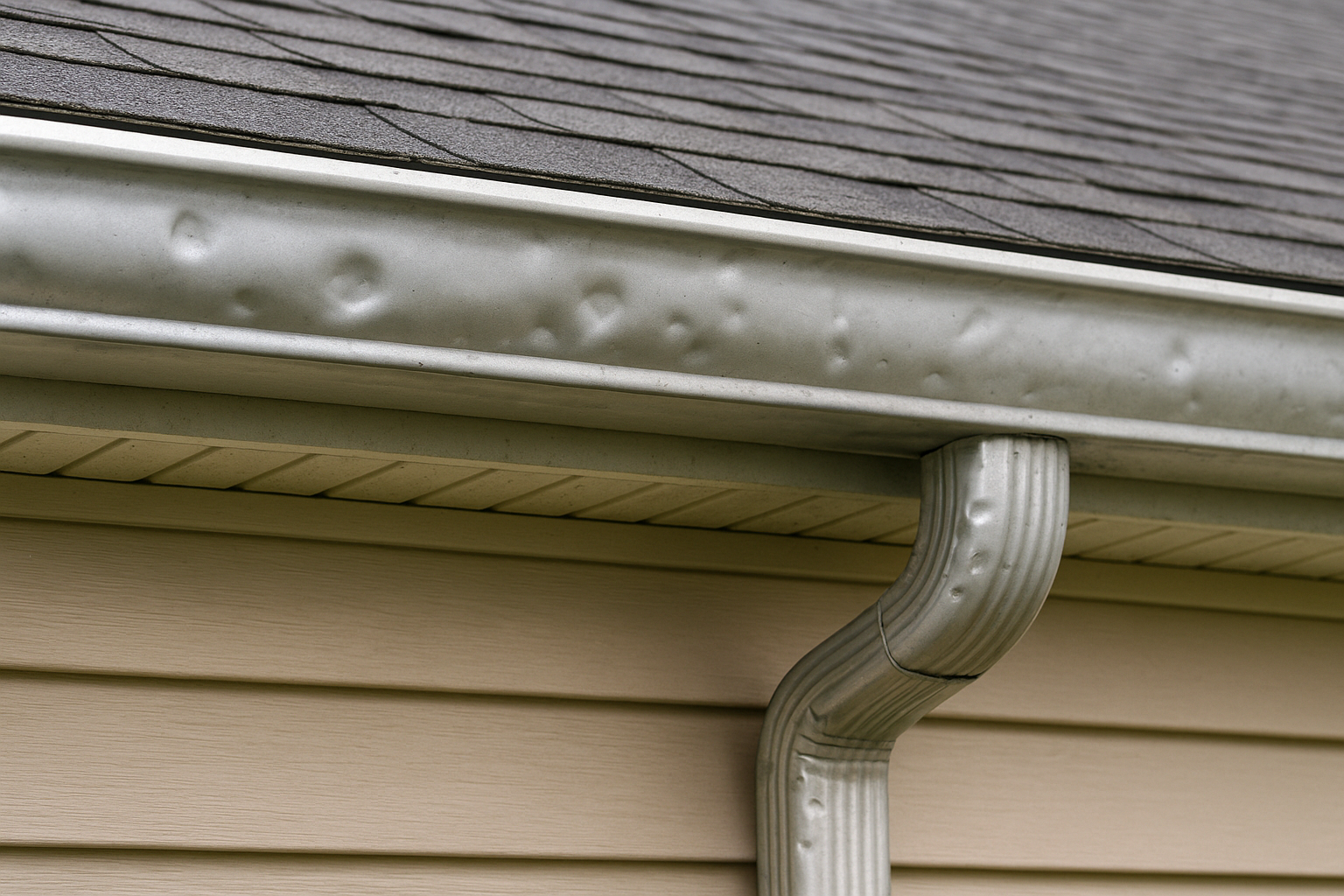
If your gutters show multiple dents in a scattered pattern, the hailstones that caused them were almost certainly large enough to damage your roofing material above.
Roof vents and pipe boots made from aluminum or painted metal show hail strikes as small, irregular dents and chipped paint. Your AC condenser unit is one of the most reliable indicators because its thin aluminum fins dent easily and document impact direction and intensity clearly. Vinyl or aluminum siding on the sides of your home will show similar round impact marks or cracking.
Check window screens and wood trim for punctures and chips. These details strengthen your documentation and give your insurance adjuster clear, time-stamped evidence across multiple surfaces.
Not every mark on your shingles means hail struck your roof. Roofing materials wear naturally over time, and some aging patterns look surprisingly similar to storm damage. Knowing the difference matters because filing a claim for pre-existing wear can create problems with your insurer and delay legitimate repairs.
Asphalt shingles develop blisters and surface cracks as they age, especially under the relentless Texas heat. Blisters appear as raised, circular bumps rather than the indented, soft bruising that characterizes hail strikes. Thermal cracking follows straight lines along the shingle and looks uniform across the surface, whereas hail fractures are irregular and tied directly to the storm's impact angle.
If you're unsure whether what does hail damage look like on a roof actually applies to your situation, a professional can distinguish fresh storm impact from long-term weathering by examining the color and texture of the exposed asphalt mat beneath the granule surface.
Scuff marks and chipped granules from foot traffic or falling branches are another frequent lookalike. These appear in concentrated patches along a straight path where someone walked or where debris landed. Hail damage, by contrast, spreads in a scattered, random pattern across the entire roof surface, often aligned with the storm's direction of travel.
Granule loss from routine foot traffic clusters near access points like skylights or HVAC units rather than spreading broadly. Manufacturer defects, such as inconsistent granule coverage applied at the factory, can also visually resemble hail impact, but a trained inspector identifies these through close-up pattern analysis and documentation.

If your walkthrough turned up any of the signs described above, don't wait to act. Texas insurers typically set a one-to-two-year window from the date of the storm to file a hail claim, and that deadline passes faster than most homeowners expect. Document everything you found with your phone camera, note the storm date if you know it, and keep those records somewhere easy to access.
The next step is a professional inspection by someone who knows what does hail damage look like on a roof across every material and every surface. At Defend Roofing, Chris and Greyson Buster provide a 100+ photo Precision Roof Assessment that gives you honest, documented evidence of exactly what the storm left behind, with no pressure and no upselling. If the roof is fine, we'll tell you that too. Schedule your free roof assessment and get a clear answer before your claim window closes.