See the cost for flat roof replacement: $5–$14 per sq ft by material, plus add-ons, hidden damage and how to compare three bids line by line.
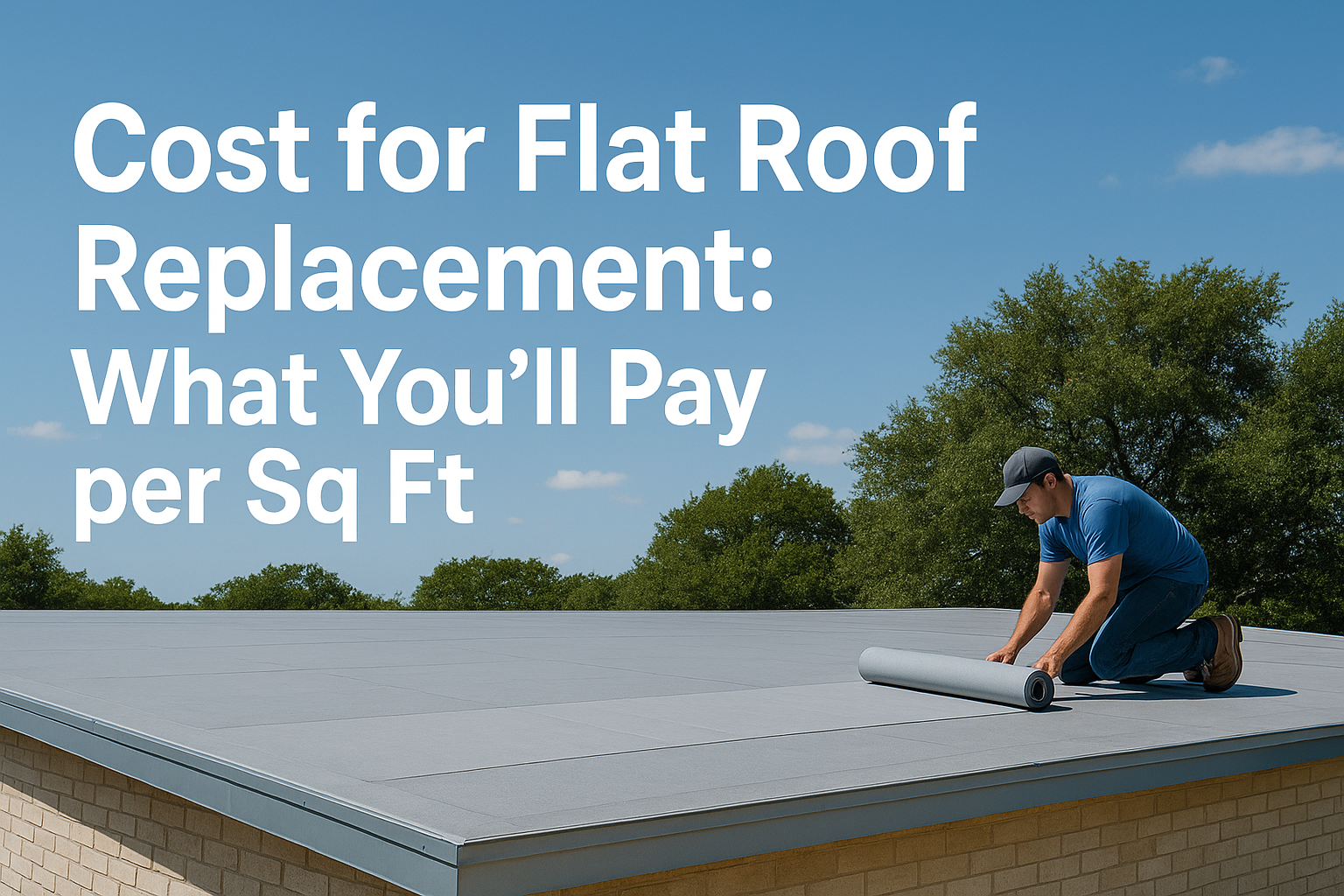
You found a flat spot on your roof, a leak, or a quote that made you blink, and now you need real numbers. Most homeowners get vague ranges and sales talk instead. The cost for flat roof replacement swings widely, so you need to know what is normal before anyone hands you a bid.
Here is the short answer. Most flat roof replacements in Central Texas run roughly $5 to $14 per square foot installed, depending on material. That puts a 1,000 square foot roof anywhere from about $5,000 to $14,000. Treat these as ballpark figures. Your final price depends on material, roof condition, and the decking underneath, not just size.
At Defend Roofing, we document every roof with a 100+ photo assessment, so we see what drives a price before we quote it. This article breaks down the cost of flat roof replacement per square foot by material, shows totals by roof size, and explains the factors that move your price. You will also learn how to read a quote and spot padded scope.
Two flat roofs of the same size can differ by $5,000 or more in price. The gap rarely comes from one thing. It comes from four or five factors stacking up. The cost for flat roof replacement is really the sum of material, labor, and whatever the crew finds under the old roof. Once you know each piece, a high or low bid starts to make sense.
Material sets the baseline. Modified bitumen and built-up systems sit at the lower end, while TPO and PVC single-ply membranes cost more per square foot. EPDM falls in between, depending on thickness. Thicker membranes and fully adhered installs cost more than thin, mechanically fastened ones, and material choice alone can move your price by several dollars per square foot.
Attachment method matters too. A ballasted system uses river stone to hold the membrane down. It costs less to install, but the added weight can call for a structural check. Reflective membranes such as white TPO cost a bit more, yet they cut cooling load, which counts during an Austin summer.
Then comes everything beneath the membrane. Most flat roofs have been layered or patched over the years. If the crew has to tear off two or three layers, labor and disposal costs climb. Once the old roof is open, wet insulation and rotted decking are common finds after years of slow leaks.
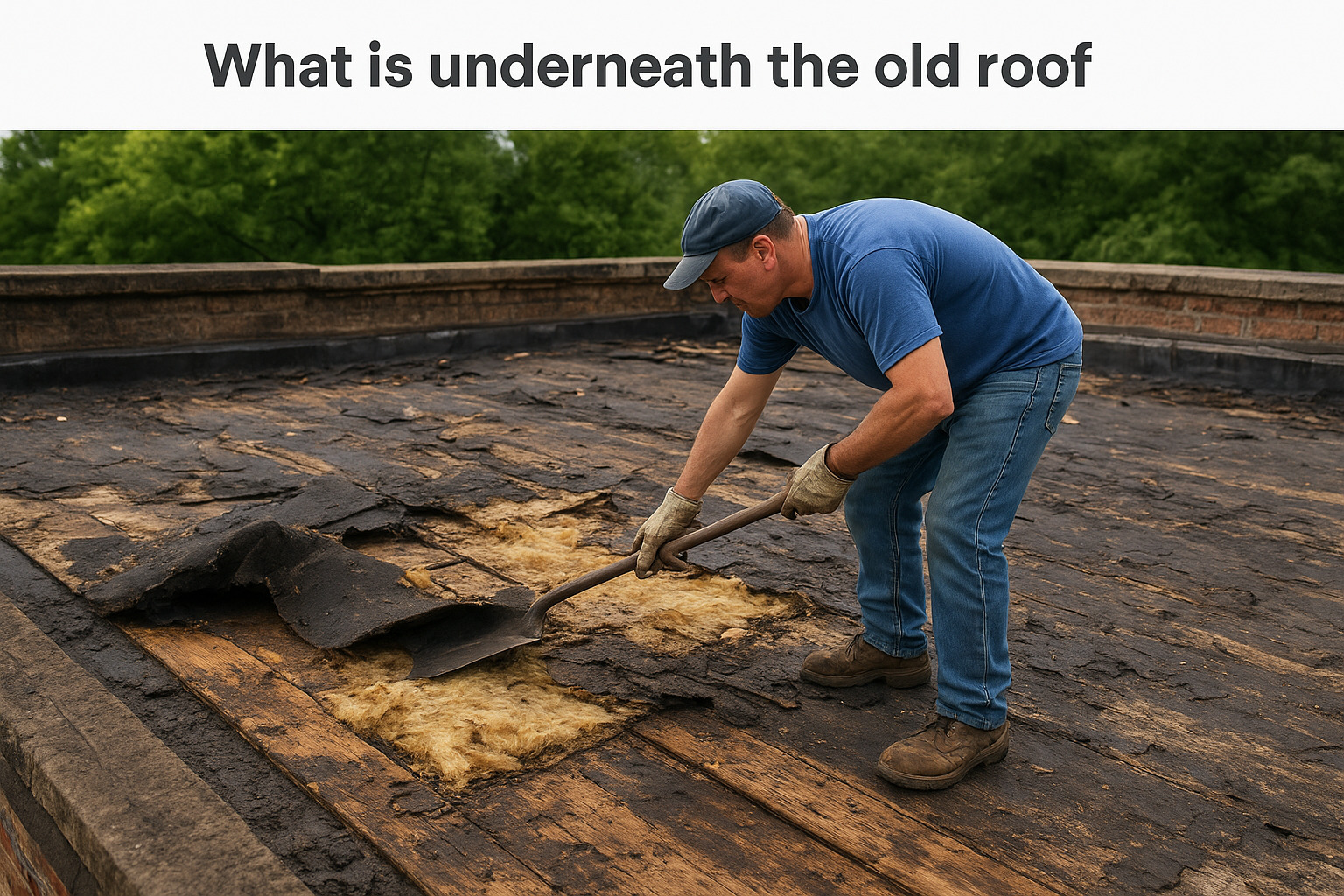
This is where quotes drift apart. Replacing damaged plywood is priced per sheet, so a 1,000 square foot roof with 10% bad decking adds a few hundred dollars. Saturated insulation can add a few dollars per square foot. A contractor who never looked closely will not price either one, and you pay for it later as a change order.
The membrane is rarely the expensive surprise. The wet insulation and rotted decking under it are.
Size matters, but not in a straight line. Small roofs cost more per square foot because fixed costs like the dumpster, permit, and crew mobilization spread over fewer square feet. A 600 square foot roof can price higher per foot than a 2,000 square foot one. Shape and detail work then add on top.
| Factor | Why it raises the price |
|---|---|
| Penetrations (vents, HVAC curbs, skylights) | Each one needs custom flashing |
| Parapet walls and edges | More wall flashing and metal edging |
| Drainage (scuppers, drains, low slope) | Tapered insulation or ponding fixes |
| Access (second story, tight lots) | Slower material hauling and staging |
| Permits and code | Local fees and insulation requirements |
Stack two or three of these and a simple-looking roof becomes a detail-heavy job. That is why the same square footage can produce very different bids, and why a photo-documented inspection beats a number given from the curb.
A rough number takes about ten minutes and a tape measure. It will not replace a real inspection, but it tells you whether a bid is in the right range before you call anyone. The process has three steps: measure, multiply, and add a cushion.
Roofers price by the square, which equals 100 square feet. Flat roofs make the math easy because the roof area is close to the footprint of the space below it.
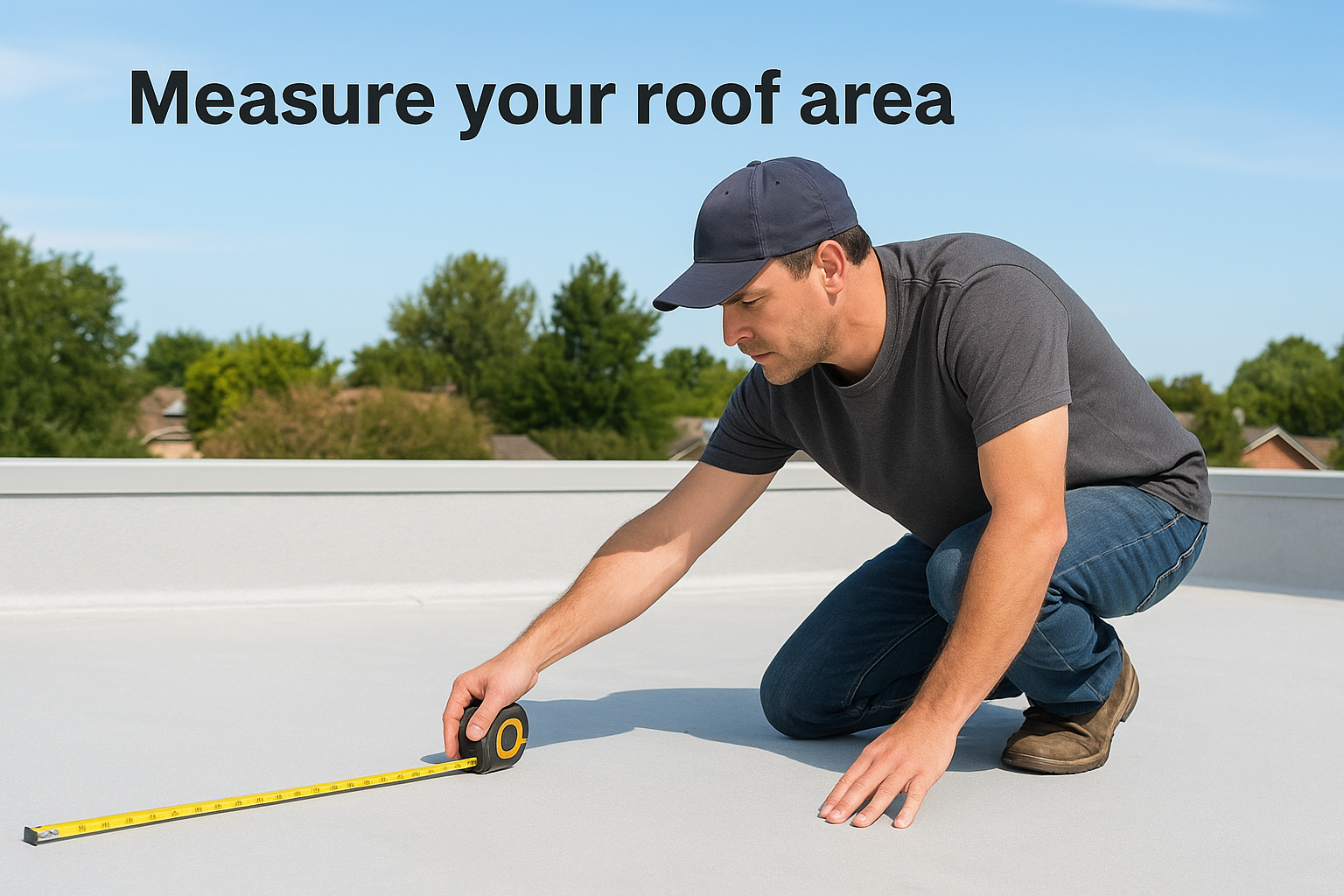
Take your adjusted area and multiply it by the range for your material. Using the full $5 to $14 range, here is what common sizes look like.
| Roof size | Low estimate | High estimate |
|---|---|---|
| 600 sq ft | $3,000 | $8,400 |
| 1,000 sq ft | $5,000 | $14,000 |
| 1,500 sq ft | $7,500 | $21,000 |
| 2,000 sq ft | $10,000 | $28,000 |
Smaller roofs belong near the top of their range. The cost of flat roof replacement per square foot drops as the roof grows, because the dumpster, permit, and crew setup are spread over more area. Lean high, too, if your roof has several penetrations, a tight parapet, or poor access.
Finally, add 10 to 15% as a contingency. You cannot see wet insulation or soft decking from the surface, and both are common on roofs that have leaked for a few years. Here is a worked example. A 1,000 square foot roof in mid-priced TPO at $8 per square foot comes to $8,000. Add a 15% cushion and your working budget is $9,200.
Budget for the roof you can see, then add a cushion for the roof you cannot.
If the cushion goes unused, you keep the money. If the crew finds rot, you are covered instead of scrambling. Either way, this number gives you a baseline to compare against real bids, which we cover in the sections ahead.
Material is the biggest lever you control, so it helps to see the numbers side by side. The figures below assume one layer of tear-off, sound decking, and an average-size roof. Treat them as installed ballpark ranges, not quotes.
Here is how the five common systems compare. The cost of flat roof replacement per square foot includes materials, labor, and disposal of a single old layer.
| Material | Installed cost per sq ft | Typical lifespan |
|---|---|---|
| Modified bitumen | $5 to $9 | 15 to 20 years |
| Built-up roofing (BUR) | $6 to $10 | 15 to 25 years |
| EPDM | $6 to $11 | 20 to 25 years |
| TPO | $7 to $12 | 15 to 25 years |
| PVC | $9 to $14 | 20 to 30 years |
Small roofs, heavy detail work, and fully adhered installs push you toward the top of each range. Large, simple roofs with mechanically fastened membranes land near the bottom.
Lifespan changes the math. A $5 modified bitumen roof that lasts 15 years costs about 33 cents per square foot per year. A $9 PVC roof that lasts 30 years costs about 30 cents. The cheaper roof can be the more expensive one over time, so ask how long each system should last before you compare bids.
The lowest price per square foot rarely gives you the lowest cost per year of roof life.
For Central Texas homes, TPO is usually the best balance of price and performance. Its white surface reflects heat, which helps with Austin summers. EPDM is a solid, proven choice, but standard black membranes absorb heat unless you pay extra for a white version. Choose PVC when the roof sees heavy foot traffic, grease, or chemical exposure, because it resists all three better than the others. Modified bitumen and BUR work well on small, simple roofs where upfront cost matters most.
Beyond the base price, a handful of line items decide whether your quote holds. The cost for flat roof replacement often grows after signing because these items were left out of the bid, not because they were unnecessary. Know them before you compare numbers.
Most add-ons come from drainage, code, or edge details. Use these ballpark ranges to check whether a bid includes them or leaves them for later.
| Add-on | Typical added cost |
|---|---|
| Tapered insulation for drainage | $1 to $3 per sq ft |
| Code-required insulation upgrade | $1 to $2.50 per sq ft |
| Metal edge or coping | $8 to $25 per linear ft |
| Drain or scupper replacement | $150 to $600 each |
| HVAC curb or skylight flashing rebuild | $300 to $1,000 each |
| Extended manufacturer warranty | Varies by manufacturer and system |
| Permit and inspection fees | Varies by city |
Compare bids line by line, not total by total. A contractor who skips tapered insulation or new edge metal can show a lower price per square foot, then add those items back as change orders. Ask what is excluded from the scope and get the answer in writing.
A low bid is often just a bid with the add-ons left out.
Storm damage changes the picture too. If hail or wind caused the damage, your homeowners insurance may cover part of the replacement, and clear photo evidence drives that claim. We build our 100+ photo assessment so it works as adjuster-ready documentation, which helps you avoid paying out of pocket for damage your policy should cover.
Finally, ask about the workmanship warranty and the manufacturer warranty separately. They protect you in different ways. A system warranty covers the material, while the workmanship warranty covers the crew's installation, which is where most flat roof leaks begin.
A quote only helps if you can compare it. Use the budget you built earlier as a yardstick. If a bid lands well below your low estimate or above your high one, ask why before you sign. A fair contractor can explain every line of the price without getting defensive.
Every bid for the cost for flat roof replacement should cover the same basics, so you can set them side by side. If a bid skips one of these items, ask for it in writing. A missing line usually becomes a change order after the work starts.
Some warning signs show up before you ever compare numbers. None of them proves a contractor is dishonest, but together they suggest thin scope or a sales-first approach. Watch for these:
Get at least three written bids, then make them equal. Match the material, layers removed, insulation, and warranty first. Then divide each total by your measured square footage and check the result against the ranges in the material table. A bid 20% under the others usually leaves something out, so find out what.
A quote you cannot compare line by line is a quote you cannot trust.
Also ask whether you need a full replacement at all. If the membrane is sound and the leak comes from one failed seam or flashing, a targeted repair can cost a fraction of a new roof. That is why we pair every recommendation with photos of the actual damage. When the evidence points to repair, we say so, and you keep the replacement money.
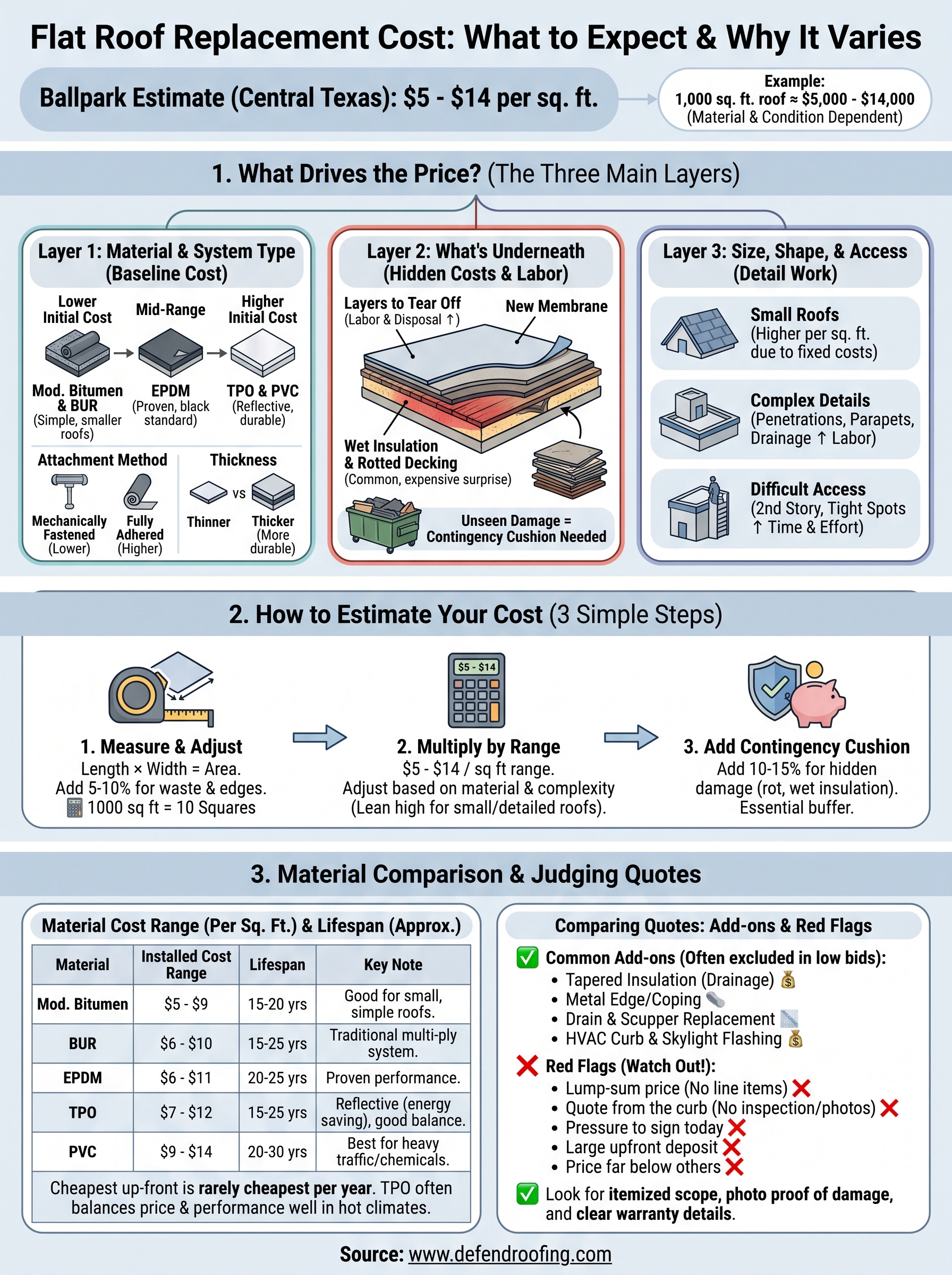
The cost for flat roof replacement comes down to a few things you can control. Choose a material that fits your roof, measure your area, and multiply by the per-square-foot range. Then add a 10 to 15% cushion for the wet insulation or soft decking nobody can see yet.
Once bids arrive, compare them line by line. Match the material, layers removed, insulation, and warranty, and ask what each quote leaves out. A fair price is one your contractor can explain with photos of your actual roof, not a number from the curb.
If you want figures for your own roof, get an instant quote from Defend Roofing. Call or text us, and we will give you an honest repair-or-replace recommendation with the documentation to back it up, so you know exactly what you are paying for.