Compare 7 energy efficient roofing materials by cost, lifespan, and cooling power to find the best fit for your Central Texas home.
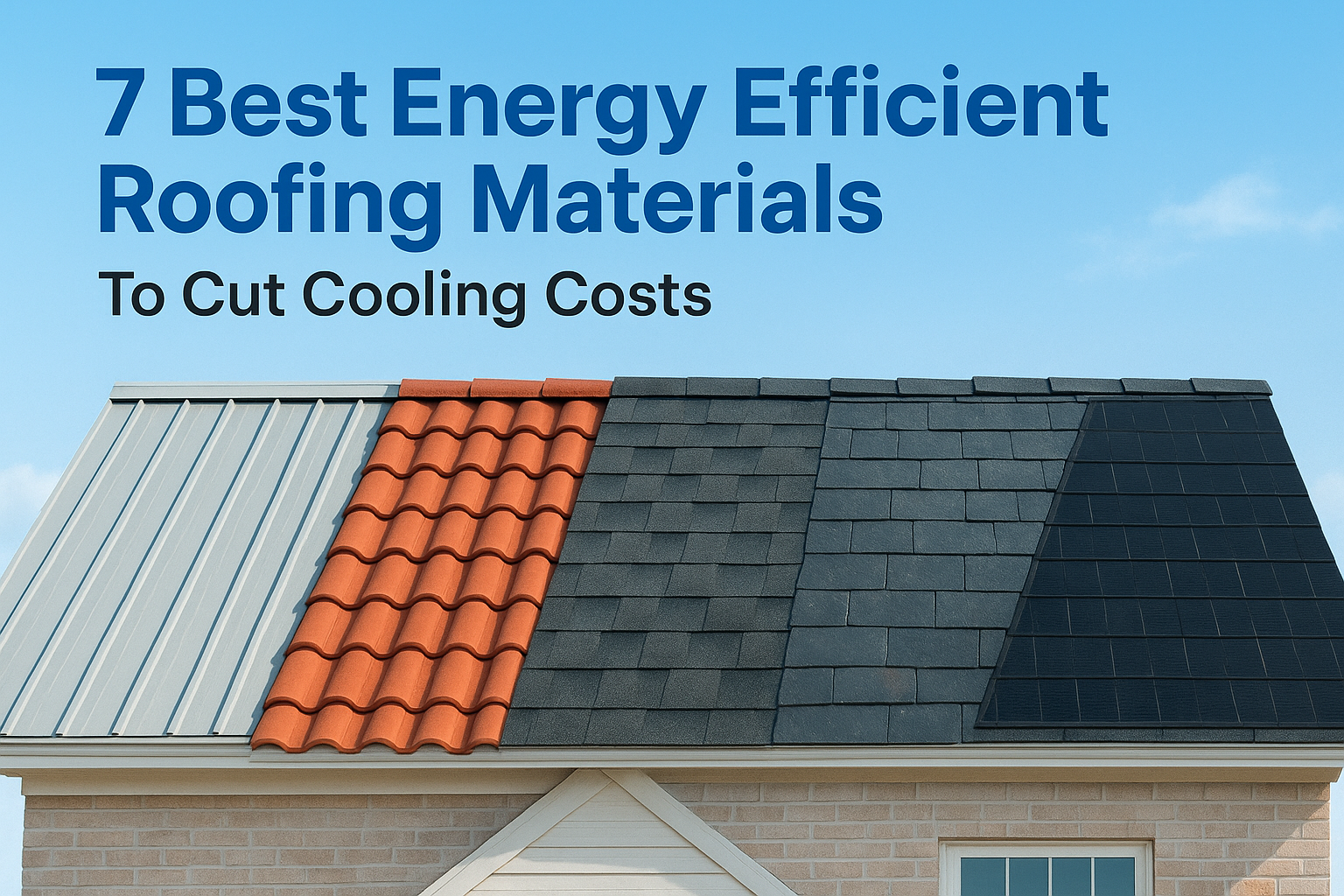
Central Texas summers push attic temperatures past 140 degrees, and your roof decides how much of that heat ends up inside your living room. If your AC runs nonstop from May through September, energy efficient roofing materials are one of the few upgrades that actually move your electric bill. Standard asphalt shingles absorb heat and radiate it straight into your attic, while the right material reflects solar energy before it becomes your problem.
So which options really cut cooling costs, and which ones are marketing hype? We've assessed hundreds of Austin-area roofs and seen firsthand how cool roof coatings, standing seam metal, and clay tile perform differently under the same brutal sun. The materials that matter combine high solar reflectance with proper attic ventilation, not just a fancy color or coating.
Below, we break down the 7 best energy efficient roofing materials for Central Texas homes, ranked by real cooling performance, upfront cost, and how they hold up against hail and heat over 20-plus years. You'll walk away knowing exactly which option fits your budget and your roof.
Metal roofing tops this list because it does the one thing that matters most in Austin heat: it stops solar energy from soaking into your attic in the first place. Standing seam panels, corrugated metal, and stone-coated steel all outperform asphalt on reflectivity, and most come with factory finishes engineered specifically for solar reflectance.
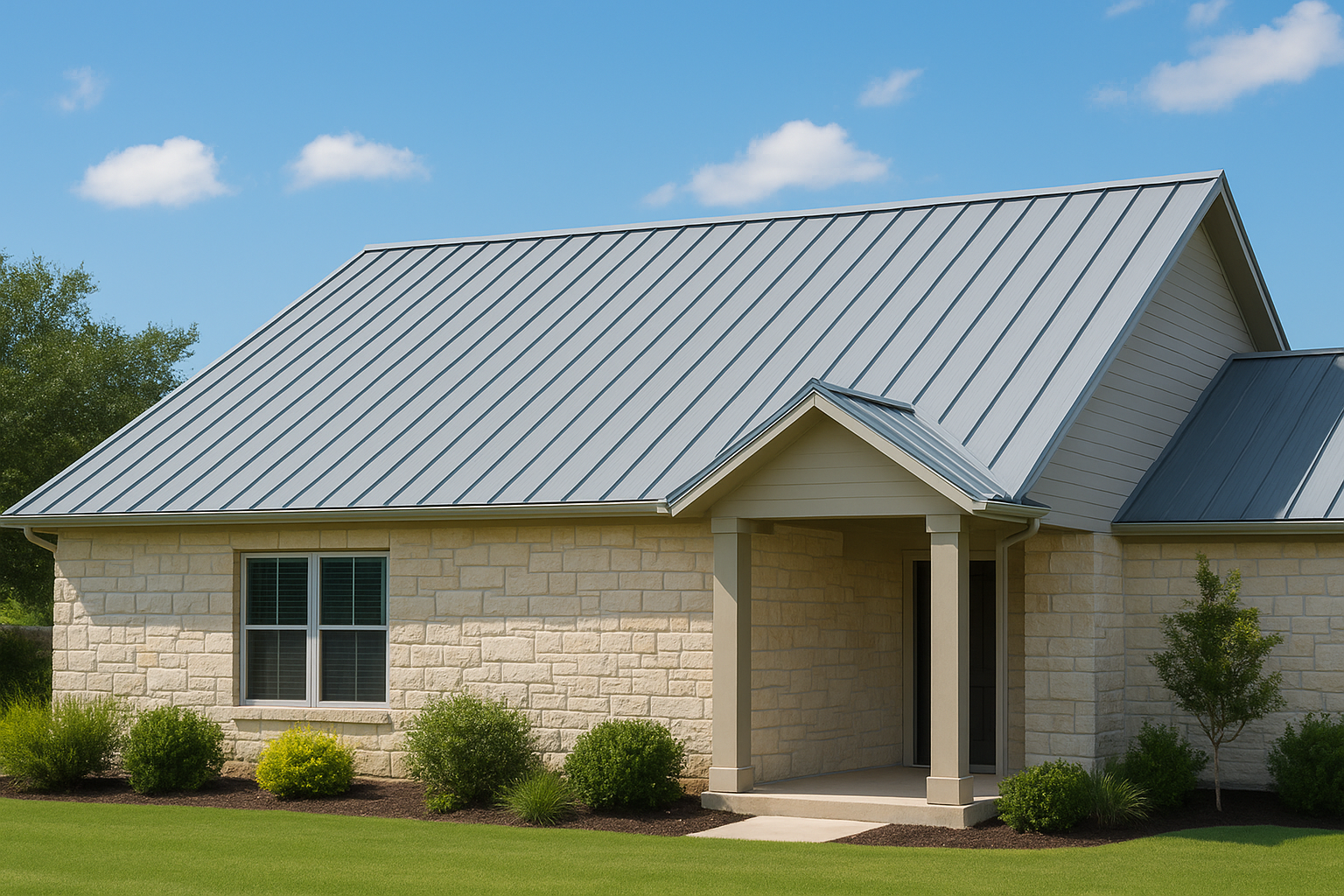
Metal reflects a large share of incoming sunlight instead of absorbing it, and it sheds heat fast once the sun goes down. A standing seam metal roof with a reflective coating can run 50 to 60 degrees cooler on its surface than dark asphalt shingles during peak July afternoons. Add an air gap between the metal panels and the roof deck, which most quality installs include, and you cut radiant heat transfer into the attic even further. The Department of Energy notes that cool roofing materials like reflective metal can reduce peak cooling demand significantly in hot climates, which is exactly the situation Central Texas homeowners face every summer.
Metal roofing's real advantage isn't just reflectivity, it's how quickly it releases the heat it does absorb once the sun drops.
Expect to pay $9 to $16 per square foot installed, roughly double a standard asphalt job, but you're buying a roof that lasts 40 to 70 years instead of 20. Here's how the numbers typically break down:
| Factor | Metal Roofing | Asphalt Shingles |
|---|---|---|
| Installed cost per sq ft | $9-$16 | $4-$7 |
| Expected lifespan | 40-70 years | 15-25 years |
| Surface temp reduction | Up to 60°F cooler | Baseline |
That upfront gap shrinks fast when you factor in replacement cycles and lower monthly cooling costs.
Metal makes the most sense if you're planning to stay in your home long-term and want to stop budgeting for roof replacements every 15 to 20 years. It also holds up well against the hail that regularly hits Cedar Park, Leander, and Jonestown, though dents can happen with larger hailstones. If your attic ventilation is already solid, metal roofing delivers the biggest cooling-cost drop of any material we install.
Tile roofing has cooled homes across hot, dry climates for centuries, and it still holds up as one of the best energy efficient roofing materials for Texas heat. The barrel shape of clay tile and the mass of concrete tile both create a natural buffer between the sun and your attic, which is why you see tile roofs all over Spanish-style neighborhoods in South Austin and Westlake.
Tile works differently than metal. Instead of just reflecting sunlight, it uses thermal mass and an airspace under each tile to slow heat transfer into the roof deck. That airflow channel lets hot air escape before it builds up, and light-colored or coated tiles push solar reflectance even higher.
Tile beats the heat by giving it somewhere to go, not just by bouncing it away.
Installed cost runs $10 to $20 per square foot depending on whether you choose clay or concrete, and tile can last 50 years or more with basic maintenance. The tradeoff is weight. Most homes need structural reinforcement before installation, which adds to your upfront bill.
Tile suits homeowners with Spanish or Mediterranean-style homes who want a roof that matches the architecture and lasts decades. It's less forgiving under hail impact than metal, so it fits better in areas with lower hail frequency than Cedar Park or Leander.
Most Austin homeowners already have asphalt shingles, so the real question is whether cool-rated asphalt shingles can close the efficiency gap without a full material switch. These shingles use reflective granules baked into the surface, and they carry an ENERGY STAR or CRRC rating that tells you exactly how much solar energy they bounce away compared to standard shingles.
Cool shingles work through granule technology, tiny reflective particles mixed into the shingle surface that reflect infrared light instead of absorbing it. This drops shingle surface temperature by 20 to 40 degrees compared to dark, standard asphalt on the same roof deck. It won't match metal's performance, but it's a meaningful upgrade if you're not ready to switch materials entirely.
Cool shingles won't out-cool metal, but they cut real heat gain without changing your roof's look or budget.
Expect $4.50 to $8 per square foot installed, only slightly more than standard asphalt, with a lifespan of 20 to 25 years. That makes cool shingles the lowest-cost entry point on this list for anyone wanting measurable cooling savings.
Cool-rated shingles fit homeowners replacing an existing asphalt roof who want lower attic temperatures without a bigger investment or a style change. They also perform well against Central Texas hail when paired with an impact-resistant rating, making them a practical middle-ground choice.
Natural slate has been used on high-end homes for centuries, and it earns its spot here because it combines dense stone mass with a naturally low absorption rate. You won't see it as often in Central Texas as metal or tile, but it's worth knowing about if you want the longest-lasting roof on this list and don't mind paying for it.
Slate's thermal mass works similarly to concrete tile. The stone absorbs heat slowly and releases it gradually, which smooths out the temperature swings your attic feels compared to thin asphalt shingles that heat up and cool down fast. Natural stone density also means slate reflects more solar energy at the surface than dark asphalt, though it still trails behind reflective metal roofing on raw solar reflectance numbers.
Slate doesn't block heat so much as slow it down, which keeps your attic from swinging to extremes.
Installed slate runs $15 to $30 per square foot, making it the most expensive material on this list, but it can last 75 to 100 years with proper installation. That century-long lifespan means most homeowners who install slate never replace it again.
Slate fits homeowners with historic or high-value properties who want a premium look and don't mind the investment. It's heavy, so it needs the same structural check as tile, and its brittleness under hail impact makes it a tougher sell in hail-prone areas like Cedar Park and Leander.
Synthetic and composite shingles are engineered products made from polymers, rubber, or recycled materials designed to mimic the look of slate, wood shake, or tile while weighing a fraction as much. They've become a popular pick among energy efficient roofing materials for homeowners who want better heat performance than standard asphalt without the structural upgrades that tile or slate demand.
Manufacturers build reflective polymer blends directly into these shingles, and many carry ENERGY STAR or CRRC ratings similar to cool asphalt. Some composite products also include a raised profile that creates a small airspace under each shingle, letting hot air vent out before it soaks into the deck. Surface temperatures typically run 15 to 30 degrees cooler than standard asphalt.
Composite shingles borrow tile's airflow trick and asphalt's easy installation, landing them right in the middle on cooling performance.
Installed cost falls between $7 and $14 per square foot, and most composite shingles carry a 40 to 50 year lifespan with strong impact resistance built in.
Composite shingles suit homeowners who want the look of slate or shake without the weight, cost, or structural work. They also hold up well against Cedar Park and Leander hail, making them a smart middle-tier choice.
Solar shingles, sometimes called solar roof tiles, work as both your roofing material and your power source. Instead of bolting traditional panels onto an existing roof, these shingles integrate directly into the roof deck and generate electricity while still shedding water and wind like standard shingles. They're one of the more unusual energy efficient roofing materials on this list, but the cooling benefit comes as a side effect of the technology, not the main selling point.
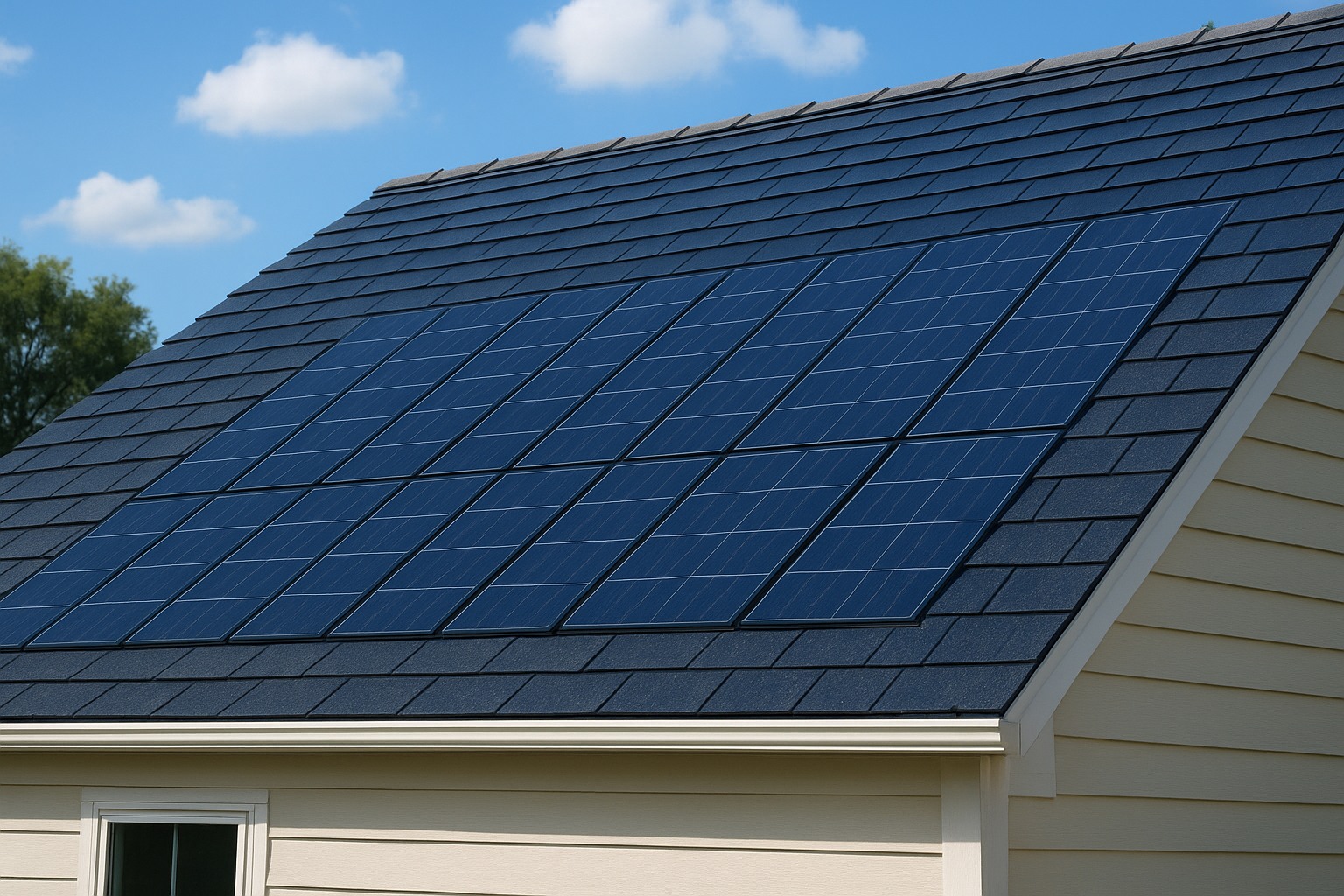
Photovoltaic shingles create a small air gap between the panel surface and the roof deck, similar to what you get with metal roofing's ventilation channel. That gap lets solar cells convert sunlight into electricity while blocking a portion of that same energy from ever reaching your attic. The cooling effect is real but secondary. You're paying primarily for power generation, and the reduced heat transfer is a bonus, not the headline benefit.
Solar shingles cut your cooling load a little, but they cut your electric bill a lot more.
Installed cost runs $21 to $25 per square foot, by far the highest on this list, with a lifespan of 25 to 30 years matching standard solar panel warranties.
These shingles fit homeowners already planning solar installation who want a cleaner look than rack-mounted panels. If cooling costs are your only concern, metal or tile delivers better value per dollar.
Reflective roof coatings aren't a standalone material, they're a liquid-applied layer you add over an existing roof surface, most often on low-slope or flat roofs but increasingly on standard shingles and metal too. If your roof still has years left in it and a full replacement isn't in the budget, elastomeric coatings give you a fast way to boost solar reflectance without tearing anything off.
These coatings work by adding a bright, reflective top layer, usually white or light-colored acrylic or silicone, that bounces solar energy away before it heats the roof deck underneath. A properly applied coating can raise a roof's solar reflectance index dramatically, sometimes cutting surface temperatures by 30 to 50 degrees compared to an uncoated dark roof.
A coating won't outperform a new metal roof, but it's the cheapest way to fight heat gain without replacing anything.
Expect $2 to $5 per square foot for application, with a recoat cycle every 10 to 15 years depending on the product and climate exposure. That makes coatings the lowest upfront cost on this entire list.
Coatings suit homeowners with a roof that's still structurally sound but running hot, especially on flat porch roofs, garages, or additions common around Austin. They're a smart stopgap, not a long-term replacement strategy, so pair them with a real assessment before committing.
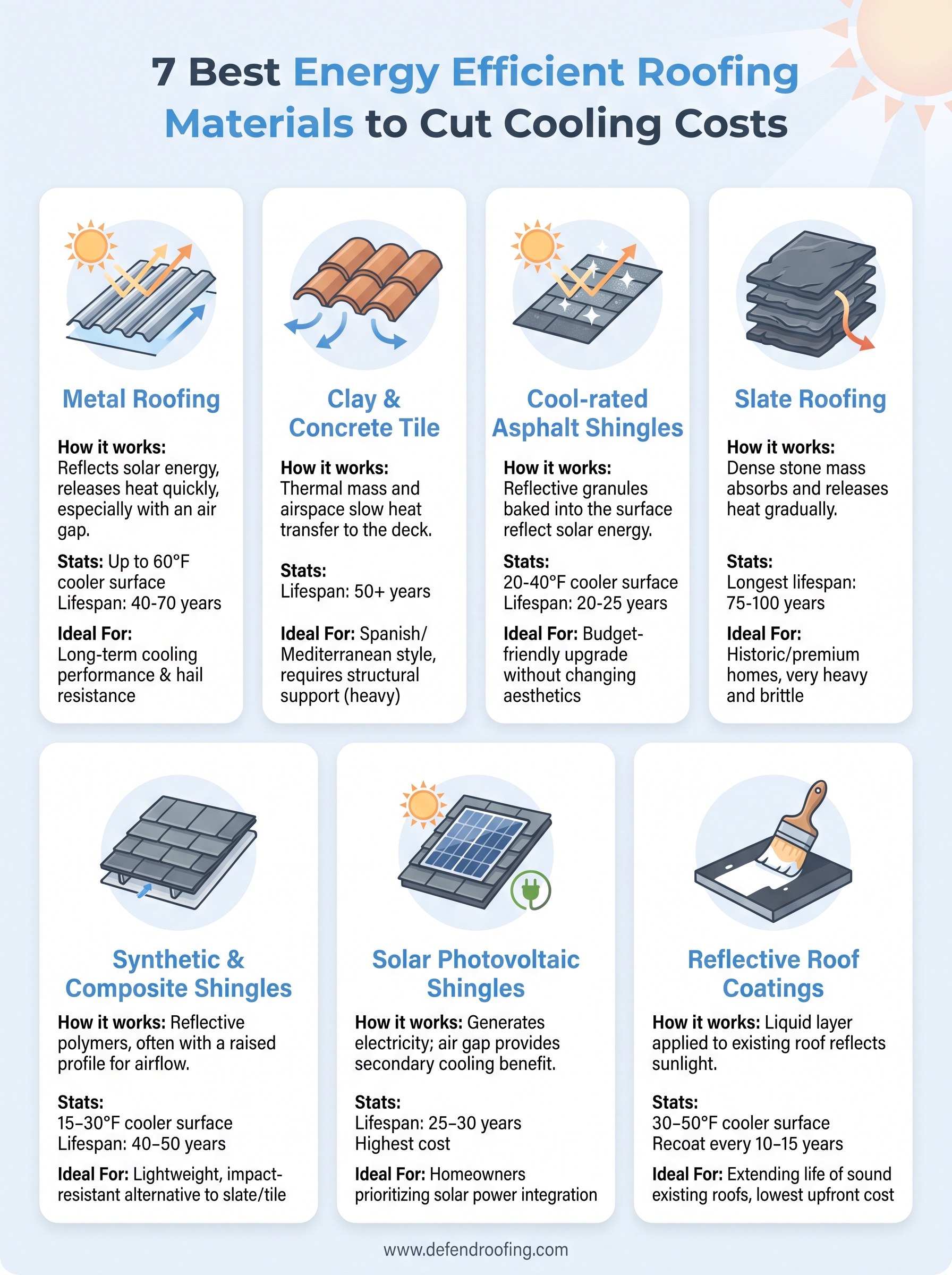
Every material on this list beats standard dark asphalt at keeping heat out of your attic, but the right choice depends on your budget, your home's structure, and how long you plan to stay put. Metal roofing wins on raw cooling performance and lifespan, tile and slate bring thermal mass and curb appeal, and coatings or cool shingles give you a budget-friendly upgrade without a full tear-off. None of these numbers mean much until someone actually looks at your roof, your attic ventilation, and your current material's condition.
That's where a real roof assessment matters more than a spec sheet. We photograph every inch of your roof, check your ventilation, and give you an honest read on what will actually cut your cooling bill versus what just sounds good in a brochure. Get in touch with Defend Roofing for a straight answer on the best energy efficient roofing material for your home.