Weigh metal roofing pros and cons for your Austin home. Learn about lifespan, energy efficiency, and weather protection to decide if metal is right for you.
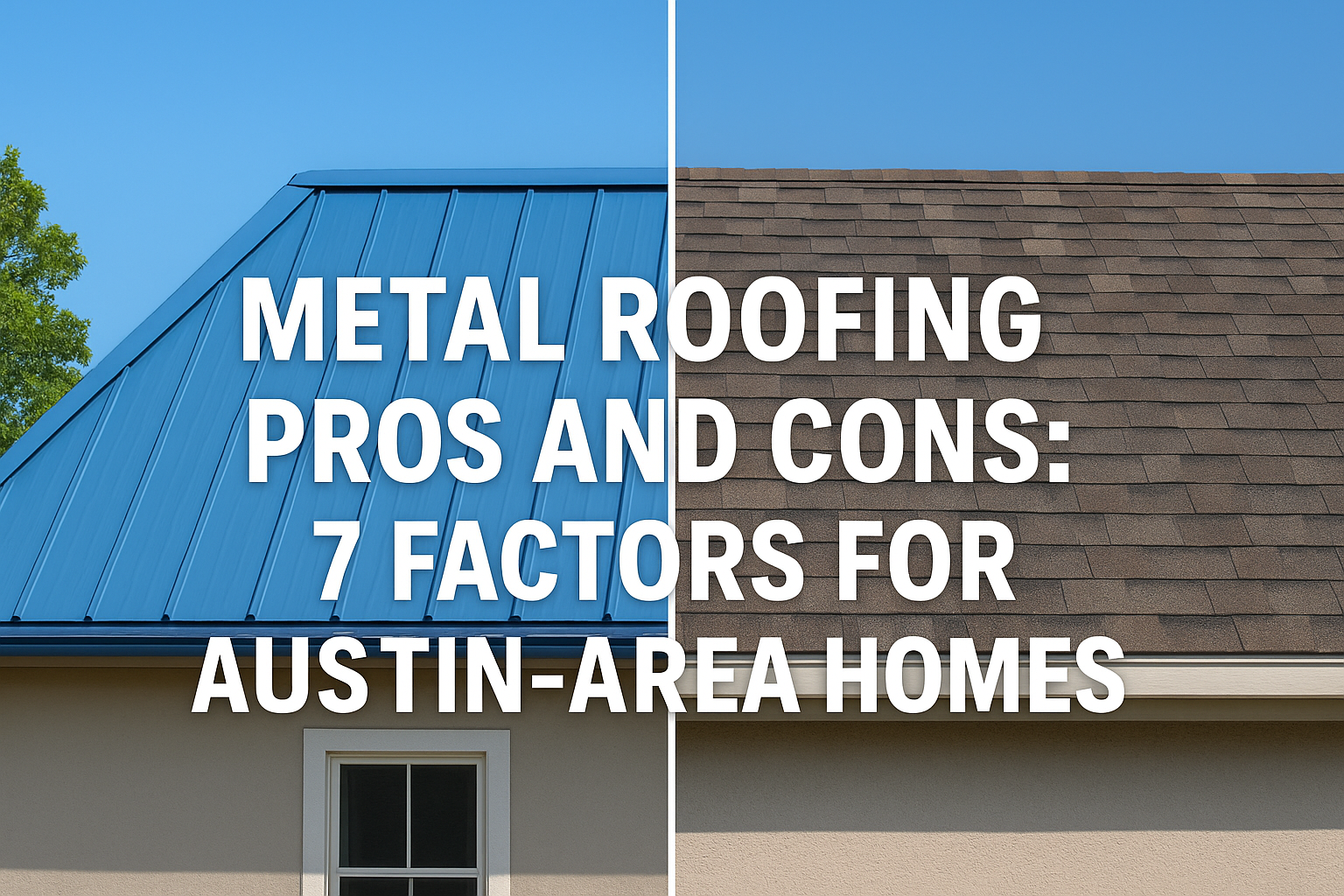
Metal roofs are everywhere in Central Texas right now. Drive through Cedar Park, Leander, or Steiner Ranch, and you'll spot standing seam panels on homes that had asphalt shingles just a few years ago. But popularity doesn't mean it's automatically the right choice for your home. Understanding the metal roofing pros and cons specific to Austin-area conditions, the hail, the UV exposure, the triple-digit summers, matters more than following a trend. A roof that performs well in Michigan won't necessarily perform the same way here.
At Defend Roofing, we're a father-and-son team (Chris and Greyson Buster) with three generations of roofing experience across Central Texas. We've installed metal roofs, repaired metal roofs, and, just as often, talked homeowners out of metal when shingles made more sense for their situation. We don't push one material over another. We give you the evidence through our 100+ photo Precision Roof Assessment and let the condition of your roof guide the recommendation.
This article breaks down seven factors that actually matter when you're comparing metal to traditional shingles for an Austin-area home. We'll cover durability, cost, energy performance, noise, aesthetics, resale value, and installation complexity, with honest takes on each one. By the end, you'll have a clear picture of whether metal roofing makes sense for your specific property and budget.
Before you weigh any metal roofing pros and cons, you need a clear picture of what you're actually working with. Most homeowners start comparing materials before they know the current condition of their decking, the age of their underlayment, or whether they have existing damage that changes the whole project scope. Skipping this step means you're making a major financial decision based on incomplete information.
A proper assessment tells you the condition of your existing roof deck, the extent of any damage, and whether your attic ventilation can support a new metal system. You also need accurate measurements of every plane, penetration, and valley so your quote reflects the actual scope of work and not a rough estimate that balloons later. At Defend Roofing, our 100+ photo Precision Roof Assessment documents all of this before anyone talks materials or pricing.
Starting with a documented assessment gives you leverage and clarity throughout the entire process. You know exactly what needs to happen, which makes it easier to compare contractor quotes on an apples-to-apples basis. Clear photos and measurements also protect you during insurance claims because you have adjuster-ready evidence of damage that happened before work began.
A thorough assessment is the single best way to avoid surprise costs after the contract is signed.
When you choose a roofing material before assessing your current roof, you risk underestimating the total project cost significantly. Hidden deck rot, improper slope sections, or old layers of shingles can all affect whether metal is even a practical option on your specific structure. Contractors who skip the inspection phase are setting you up for change orders and disputes down the line.
In Central Texas, hail and UV degradation often cause damage that looks minor from the ground but points clearly to full replacement once a roofer gets on the roof with a camera. If your roof is under 15 years old and the damage is localized, targeted repair may be the right call regardless of how appealing metal looks. A documented assessment removes the guesswork and tells you exactly which path makes financial sense for your home.
Not all metal roofs are the same material, and understanding the full metal roofing pros and cons picture requires knowing which panel style and material you're actually comparing. The option you choose affects how your roof performs over decades, and picking the wrong one for Austin's specific conditions costs you more in repairs and replacements than the initial savings are worth.
The three most common materials are steel, aluminum, and Galvalume. Steel is the most widely installed option, Galvalume adds a zinc-aluminum coating for better corrosion resistance, and aluminum handles humidity well but dents more easily than steel under impact.
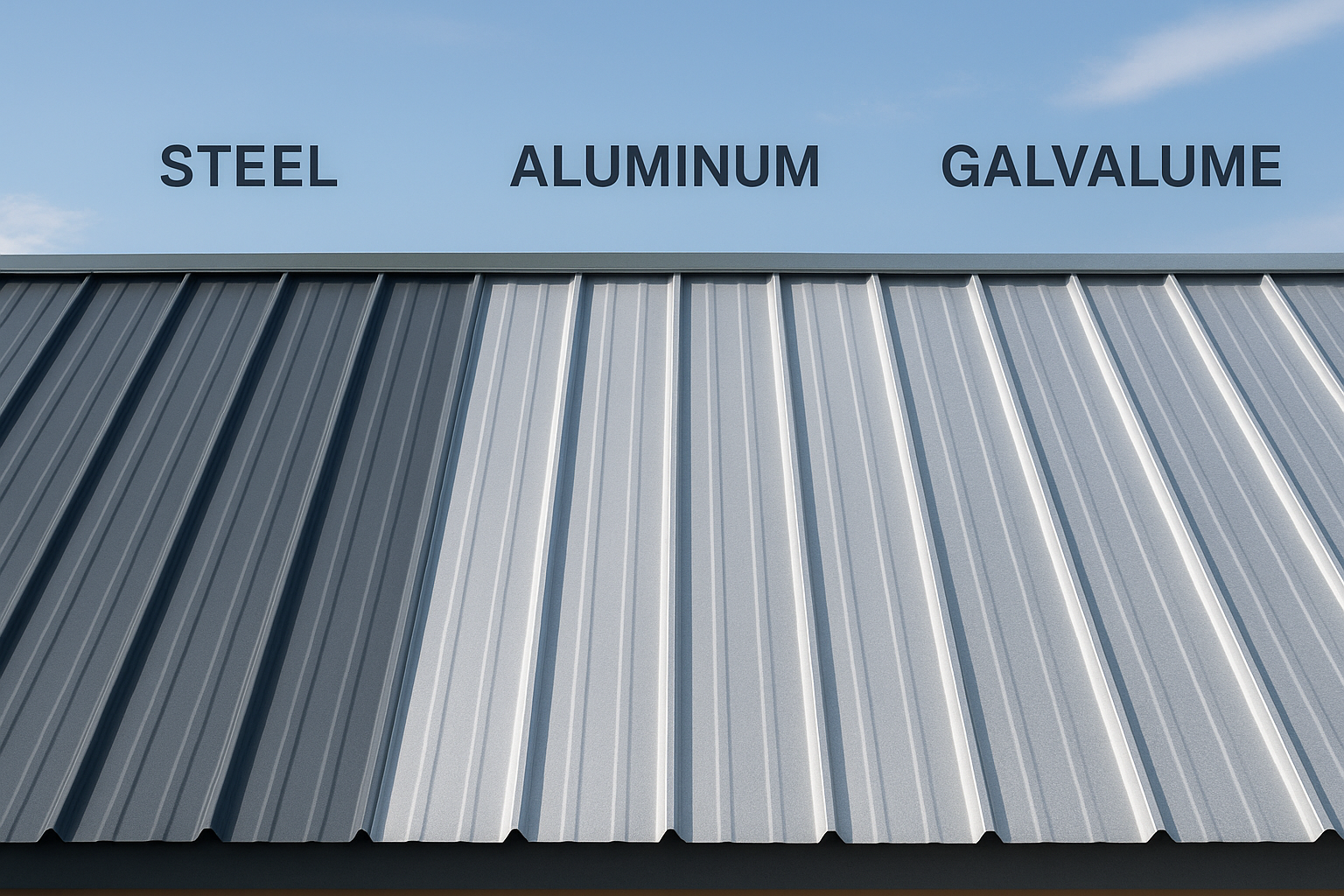
Galvalume steel is the strongest fit for most Central Texas homes because it balances corrosion resistance, impact ratings, and installed cost. Standing seam panels, which hide all fasteners beneath the surface, give you a cleaner profile and eliminate one of the most common leak sources on metal roofs.
A well-installed standing seam system on Galvalume steel can last 40 to 70 years with minimal maintenance in Central Texas conditions.
Aluminum costs more than steel and dents under large hail, which is a real concern in this part of Texas. Exposed fastener panels are cheaper to install but create hundreds of potential leak points as rubber grommets degrade under prolonged UV exposure.
For most Central Texas homeowners, standing seam is worth the premium over exposed fastener systems. Your long-term maintenance costs and leak risk both drop significantly, and the panel holds up better through repeated hail seasons without needing fastener replacements.
Cost is where most homeowners hit pause on metal roofing pros and cons. Metal costs more upfront than asphalt shingles, but the full financial picture depends on what you're comparing and over what time period.
Material choice, panel profile, and roof complexity all move the number significantly. A standing seam Galvalume system on a straightforward gable roof runs differently than an exposed fastener install on a cut-up hip roof with multiple penetrations. Labor costs in the Austin market have risen steadily, so get itemized quotes that separate material, labor, and any deck repair work.
A quality metal roof lasts 40 to 70 years, compared to 15 to 25 years for most asphalt shingle systems in Central Texas heat. That lifespan means you likely replace it once versus two or three shingle roofs over the same period.
When you factor in replacement cycles, a metal roof often costs less per year of service than asphalt shingles.
Hidden deck damage and poor attic ventilation are the two most common budget surprises on metal installs. If your deck has rot or your attic lacks proper airflow, those corrections add cost before a single panel goes on.
Central Texas buyers increasingly recognize metal roofs as a value-add, which helps resale. Defend Roofing also offers financing options for qualified homeowners, so the upfront cost doesn't have to be a barrier to the longer-lasting system.
Central Texas sits in one of the most weather-stressed roofing markets in the country. Any honest look at metal roofing pros and cons has to account for the hail that comes through every spring, the wind events that follow severe storms, and the wildfire exposure that affects homes in areas like Jonestown and Steiner Ranch.
Metal outperforms asphalt in nearly every severe weather category that matters in Central Texas. The panels don't absorb moisture, they won't blow apart in high-wind events the way aging shingles do, and Class A fire-rated metal systems stop ember intrusion that can ignite a roof during a brush fire.
A Class 4 impact-rated metal roof can qualify you for a discount on your homeowner's insurance premium in Texas, which helps offset the upfront cost over time.
Standing seam panels with Class 4 impact ratings take large hailstones without cracking or granule loss, which is the failure mode that shortens asphalt roofs after major storms. Wind uplift ratings on properly installed metal systems also exceed what most shingle systems achieve, making them significantly more reliable during high-wind events.
Aluminum panels and thinner-gauge steel can show visible dents after large hail, even when they maintain full waterproofing integrity. Coating failures from UV degradation over time can accelerate surface rust if the underlying metal loses its protective layer.
If your home sits under heavy oak or cedar canopy, falling limbs create a denting risk that compounds the hail exposure. Factor your lot's tree coverage into the gauge and coating spec you choose before signing a contract.
One of the most misunderstood areas of metal roofing pros and cons is how the material interacts with your attic and living space. Metal behaves very differently from asphalt once the Texas sun hits it, and that difference cuts both ways depending on how well your roof system is built.
Metal panels reflect solar radiation rather than absorbing it the way dark asphalt shingles do. That reflectivity reduces the heat load transferred into your attic, which directly lowers cooling demand during Austin's long summers. The catch is that reflectivity alone doesn't fix a poorly ventilated attic. Your ridge vents, soffit vents, and overall airflow still need to move heat out efficiently or the benefit shrinks.

A properly installed metal roof with a reflective coating qualifies as a "cool roof" under Energy Star standards, which can lower your cooling costs meaningfully in Central Texas. Lighter panel colors amplify the effect, and paired with good attic insulation, the system reduces the heat your HVAC has to fight through the hottest months.
Some Austin-area homeowners report measurable drops in summer cooling bills after switching from dark asphalt shingles to a light-colored standing seam system.
Metal over open framing is noticeably loud during rain and hail. Solid decking and a quality underlayment absorb most of that sound, so the noise issue is largely a construction detail rather than an inherent flaw of the material itself.
In Central Texas, two-inch foam insulation board under the panels combined with ridge-and-soffit ventilation gives you the best thermal and acoustic performance. Skipping the underlayment to cut costs eliminates two benefits at once, so treat it as a non-negotiable line item in your quote.
Installation quality determines how a metal roof performs over its full lifespan. Even the best material choice becomes a liability when workmanship shortcuts create leak points, corrosion pathways, or structural movement issues that compound with every thermal cycle.
Flashing details at penetrations, valleys, and wall transitions are where most metal roof leaks originate. When installers skip proper flashing integration or use incompatible sealants, water finds its way in through the exact points the system is supposed to redirect it away from.
Corrosion risk adds another layer of failure potential. Dissimilar metals in contact, such as aluminum panels against steel fasteners, create galvanic corrosion that eats through protective coatings from the inside out and shortens the system's effective lifespan.
A properly detailed metal system with sealed penetrations, continuous edge metal, and compatible fasteners holds up through decades of thermal expansion without opening gaps. Your warranty coverage also stays intact because every potential failure point is addressed before a single panel goes on.
Workmanship quality matters more on a metal roof than on almost any other roofing material because small installation errors compound with each temperature swing.
Overdriven fasteners on exposed fastener systems strip the grommet seal and create direct water entry paths within a few years. Oil canning, the visible waviness in flat metal panels, is primarily a cosmetic flaw but signals that panels were not handled or installed carefully.
Central Texas humidity combined with airborne particulates from limestone-heavy soils accelerates coating wear on lower-grade steel. Verify that your contractor's warranty covers both materials and workmanship separately, and confirm your insurance carrier recognizes the specific impact rating of the panel you're installing before you sign anything.
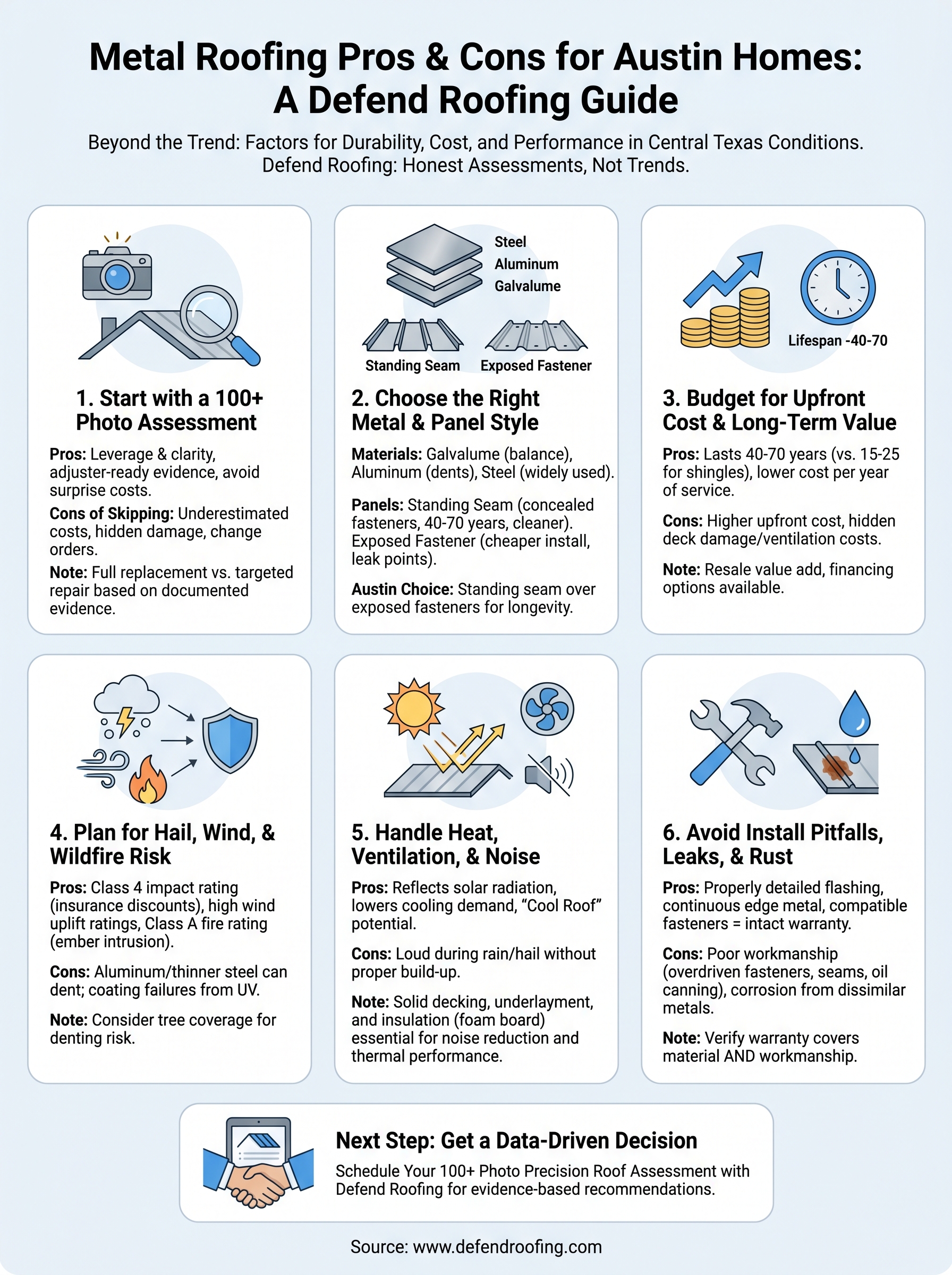
Working through the metal roofing pros and cons for your specific home comes down to one thing: knowing what you're actually starting with. Without a clear picture of your current roof's condition, deck integrity, and ventilation, any material comparison is just guesswork. The right decision starts with real data, not a sales pitch built on assumptions.
If your roof is showing signs of damage, aging, or you're simply trying to figure out whether metal makes financial sense for your property, the next step is straightforward. Defend Roofing's 100+ photo Precision Roof Assessment gives you documented evidence of your roof's actual condition before anyone recommends a material or quotes a project. Chris and Greyson will walk you through exactly what they find and what it means for your options.
Schedule your roof assessment today and get the information you need to make a confident, well-documented decision for your Central Texas home.