Compare 3-tab vs. architectural shingles to see how long do asphalt shingles last. Spot early signs of wear and learn how to extend your roof's lifespan.
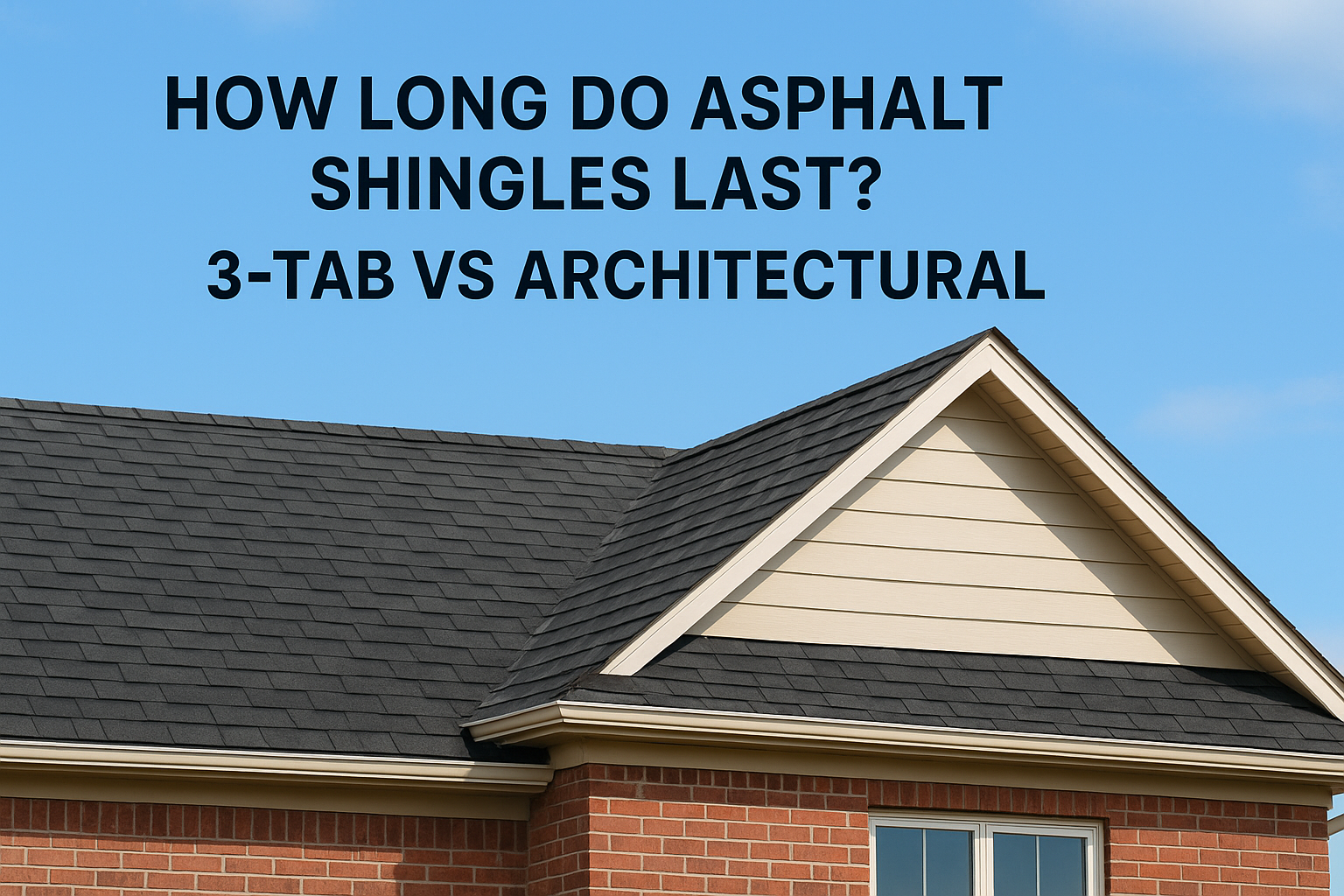
Most homeowners don't think much about their roof until something goes wrong, a leak after a storm, granules filling the gutters, or a neighbor's full replacement that sparks the question: how long do asphalt shingles last, and how much life does mine have left? It's a fair question, and the answer depends on more than just what the manufacturer prints on the packaging.
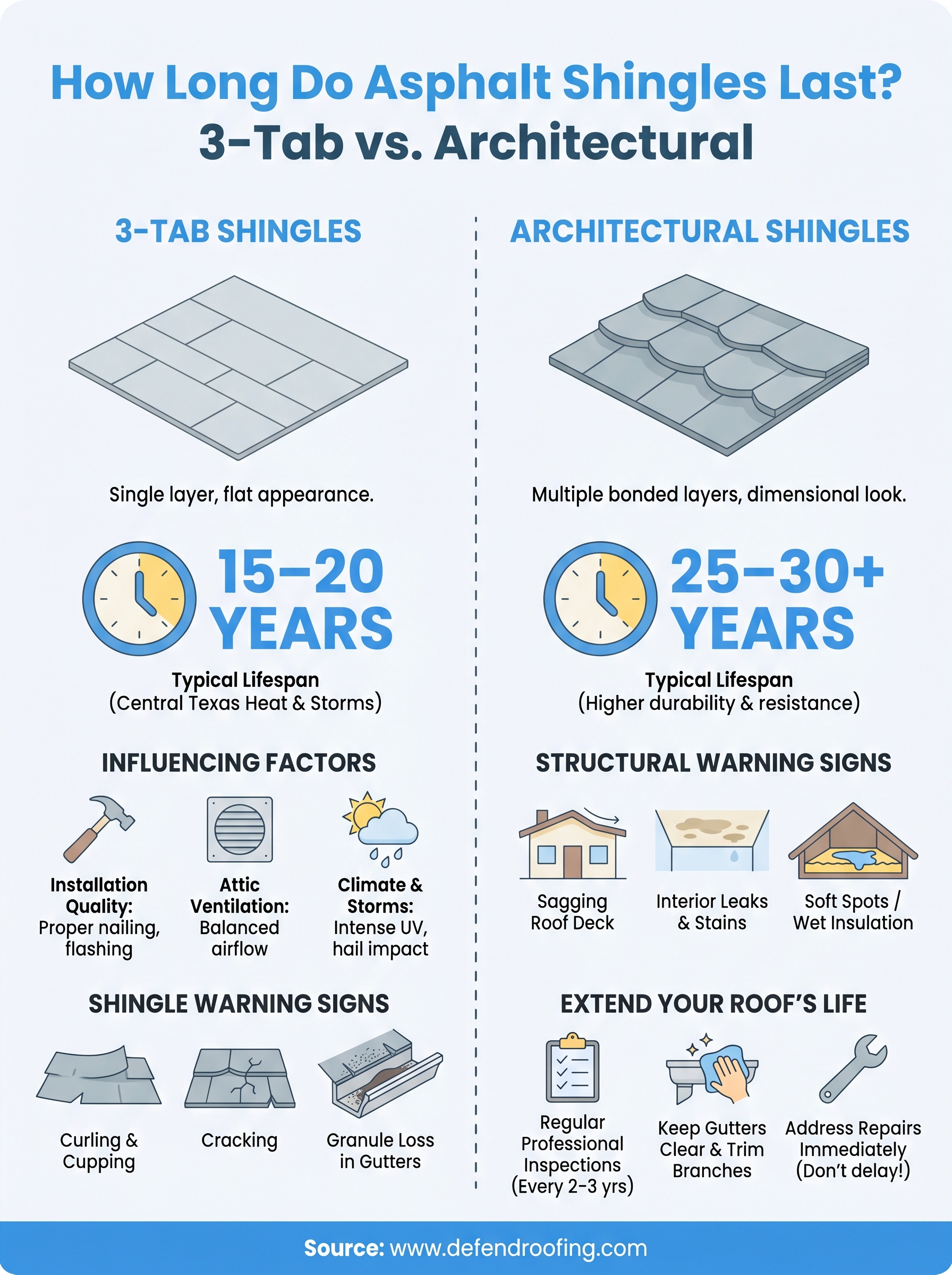
The short version: 3-tab shingles typically last 15–20 years, while architectural shingles can hold up for 25–30 years or more. But shingle type is only part of the equation. Installation quality, attic ventilation, Central Texas heat, and storm exposure all play a role in how quickly your roof ages. We see this firsthand at Defend Roofing, during our 100+ photo Precision Roof Assessments across Austin, Cedar Park, and surrounding communities, we document exactly where a roof stands in its lifecycle and whether it needs repair or full replacement.
This article breaks down the real-world lifespan of both shingle types, the factors that shorten or extend that timeline, and the physical warning signs that tell you it's time to act. Whether your roof is five years old or pushing twenty, you'll walk away knowing exactly what to look for and when to call in a professional.
Knowing how long do asphalt shingles last isn't just trivia for roofing enthusiasts. Your roof is one of the largest single components of your home, and its condition directly affects your insurance premiums, your home's resale value, and your ability to finance or recover from damage when something goes wrong. Homeowners who understand where their roof stands in its lifecycle can plan ahead and make informed decisions instead of scrambling after a sudden failure.
A failing roof creates a chain reaction that touches nearly every part of your home. Water intrusion from worn shingles can damage your attic insulation, wooden roof decking, interior ceilings, and walls before you ever notice a drip inside the house. By the time a leak becomes visible from the inside, the underlying damage is often already extensive, meaning a problem that could have cost a few hundred dollars to address now costs several thousand once you factor in decking replacement, mold remediation, and drywall repair.
The roof deck and attic insulation are the first casualties of shingle failure, and by the time interior damage appears, the repair bill has already grown far beyond what early action would have cost.
Beyond the structural concern, poor roof condition directly affects your homeowner's insurance options. Insurance carriers in Texas increasingly require roof inspections before issuing or renewing policies, and some carriers refuse to cover roofs beyond a certain age or in deteriorating condition. A roof nearing the end of its useful life can limit your coverage choices or significantly raise your annual premiums, costs that add up faster than most homeowners expect.
Roof replacement is one of the larger home improvement expenses you'll face as a homeowner. The average full replacement in Central Texas typically runs between $8,000 and $18,000 depending on roof size, pitch, shingle type, and any underlying damage uncovered during tearoff. That number surprises many homeowners who assumed they had several more years before they needed to budget for it.
Understanding where your shingles stand in their lifespan lets you budget and plan on your own schedule rather than reacting to an emergency. A replacement after a major interior leak almost always costs more and creates more disruption than a planned replacement would have, because water damage to decking, insulation, and ceilings layers on top of the base roofing cost. Mortgage lenders and buyers during home sales also scrutinize roof age closely, so if you plan to sell within the next few years, an aging roof will likely surface in the inspection report and influence negotiations.
Your roof's age and shingle type also determine the size of any storm damage insurance claim you can file. Texas insurers apply depreciation schedules based on a roof's age and material, meaning an older 3-tab roof hit by hail may receive a substantially smaller payout than a newer architectural shingle roof with the same physical damage. Knowing exactly what type of shingles you have and how old they are puts you in a stronger position long before a storm rolls through Central Texas.
When homeowners ask how long do asphalt shingles last, the answer splits into two categories based on shingle type. 3-tab shingles and architectural shingles are both made from asphalt, but they differ significantly in thickness, construction, and how long they hold up under real-world conditions. Understanding the gap between the two helps you set realistic expectations for your roof and know what to ask when it's time for a replacement.

3-tab shingles are the thinner, lighter option. Their flat, uniform appearance comes from a single layer of asphalt material, which keeps manufacturing costs low but also limits their durability. Under normal conditions in Central Texas, most 3-tab roofs reach the end of their useful life somewhere between 15 and 20 years, and exposure to intense summer heat and hailstorms can push that timeline closer to the lower end.
If your home still has 3-tab shingles and the roof is approaching 15 years old, treat that milestone as a warning sign rather than a hard deadline.
By the time a 3-tab roof hits the 15-year mark, you'll often notice accelerated granule loss, curling at the shingle edges, and reduced wind resistance. Insurance carriers in Texas apply stricter depreciation schedules to 3-tab roofs because of their shorter lifespan, which means the payout on a storm damage claim shrinks considerably compared to what you'd receive with a newer architectural roof.
Architectural shingles, also called dimensional or laminated shingles, use multiple bonded layers of asphalt that create a thicker, heavier product with a contoured appearance. That added mass translates directly into longer service life. Most architectural shingle roofs in Central Texas perform well for 25 to 30 years when installed correctly and maintained over time.
Premium architectural lines rated for 30 years or more are now the standard for most new residential installations across the Austin area. Their heavier construction gives them better resistance to high winds and hail impact, two factors that carry real weight in a region that sees regular storm activity throughout the year.
Shingle type sets the ceiling on how long asphalt shingles last, but several other variables determine whether your roof actually reaches that ceiling or falls short of it. Installation quality, attic ventilation, and local climate all pull in different directions on your roof's lifespan, and getting any one of them wrong can cut years off what the manufacturer projects.
The single biggest factor outside your control after the job is done is how well your contractor installed the roof in the first place. Improper nail placement, incorrect underlayment, and poor flashing around chimneys and vents all create failure points that surface long before the shingles themselves wear out. A misplaced nail can loosen an entire shingle row under wind stress, turning a 25-year architectural roof into one that starts failing at year 12.
Choosing a contractor who documents their work with photos and backs it up with a workmanship warranty is the most direct investment you can make in your roof's lifespan.
Look for contractors who provide written warranties on labor, not just the shingle manufacturer's materials coverage. Those two warranties cover completely different failure modes, and you need both.
Poor attic ventilation is one of the most overlooked causes of premature shingle failure in Central Texas homes. When heat builds up in an under-ventilated attic, it cooks the shingles from below while the sun beats down from above. That trapped heat accelerates the breakdown of the asphalt binder, causing shingles to crack, cup, and lose granules years ahead of schedule.
A properly balanced intake and exhaust ventilation system keeps attic temperatures lower and protects your shingles from both sides. Your roofing contractor should assess ventilation during any inspection, not just look at shingle condition.
Living in the Austin area means your roof faces intense UV exposure from long, hot summers and periodic hail events that can range from minor surface scuffing to complete shingle destruction in a single storm. Hail impacts accelerate granule loss and weaken the shingle mat underneath, while prolonged heat cycles cause the asphalt to expand and contract repeatedly.
Both forces push Central Texas roofs toward the lower end of published manufacturer lifespan estimates rather than the upper end, which is worth factoring in when you set replacement budget timelines.
Understanding how long do asphalt shingles last gives you a general timeline, but your roof will also show physical signals that tell you it's reached a turning point. Catching these signs early separates a manageable repair from a full replacement job that grew larger than it needed to be. Walk your property after every significant storm and do a visual check from the ground at least once a year.
The shingles themselves are your first line of evidence. Curling edges, cupping, and cracking across the surface all point to shingles that have lost their flexibility and can no longer shed water the way they were designed to. Granule loss is another clear signal: if your gutters are collecting a thick layer of gray or brown granules after rain, your shingles are shedding the protective layer that blocks UV damage and slows surface wear.
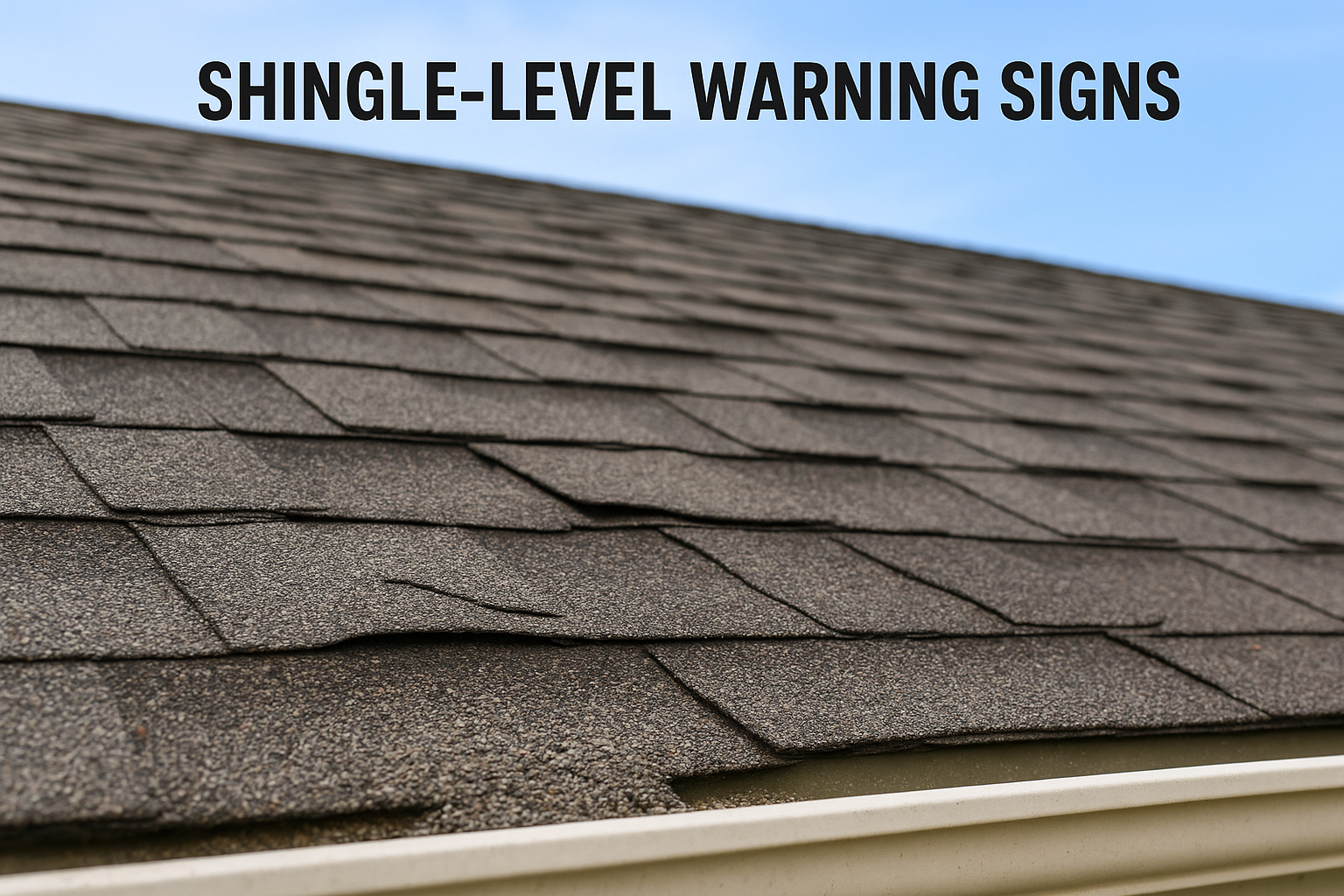
Missing shingles after a storm don't automatically mean you need a full replacement, but they do mean you need a professional inspection before the next rain.
Dark streaking or patches of green growth on the roof surface also signal moisture retention, which accelerates shingle breakdown faster than sun exposure alone. Both conditions point to shingles that are no longer shedding water cleanly, and both warrant a closer look from a qualified contractor.
Some of the most serious signs show up away from the shingles entirely. Soft spots or visible sagging in the roof deck tell you that water has already penetrated and compromised the wood underneath, and no shingle repair will fix structural rot. Check your attic after heavy rain for any daylight coming through, wet insulation, or water stains on the rafters.
Inside the house, water stains on your ceilings or upper walls often trace back to failed flashing around chimneys, vents, or valleys rather than shingle failure itself. Both conditions need immediate attention. If your roof is already near the end of its expected lifespan and you find multiple issues at once, repair costs can stack up quickly to the point where a full replacement makes more financial sense than patching problem after problem on an aging surface.
You can't stop Central Texas heat or hail, but several maintenance habits directly influence how long asphalt shingles last on your specific roof. Taking a proactive approach means spending a modest amount of time and money now instead of absorbing a large, unexpected repair bill later.
A professional inspection catches small issues before they grow into structural problems. Cracked caulk around flashing, minor lifted shingles, and small punctures are all fixable at low cost when identified early, but they allow water entry that rots decking and insulation if left alone for even one or two rainy seasons.
Plan to get a professional inspection after any significant hail event, not just on a calendar schedule.
Aim for at least one professional assessment every two to three years on a newer architectural roof, and annually once your roof passes the 15-year mark. A contractor who documents findings with photos gives you a clear record of your roof's condition over time, which also supports insurance claims if a storm causes damage.
Clogged gutters force water to back up along the roof edge, which keeps moisture in contact with the fascia and the bottom course of shingles far longer than those materials were designed to handle. Clean your gutters at least twice a year, in late spring and late fall, to prevent that buildup.
Overhanging tree branches create two separate problems. They deposit debris that traps moisture on your shingle surface, and during storms, direct branch contact physically scrapes granules away and can puncture the shingle mat entirely. Trim any branch that hangs within six feet of your roof surface.
Small repairs done immediately cost far less than the same repair handled six months later after water has worked its way into the decking. A single missing shingle or failed flashing seal can admit enough moisture over one wet season to require a full decking section replacement on top of the shingle work. When you spot a problem, act on it within days, not weeks.
Knowing how long do asphalt shingles last gives you a useful framework, but your specific roof's condition is what actually determines whether you need to act now or plan ahead for the next two to three years. Age, shingle type, and visible wear signs all feed into that answer, and the only way to get an accurate picture is a professional inspection that documents what's actually up there with real evidence, not just a quick glance from the driveway.
At Defend Roofing, our 100+ photo Precision Roof Assessment gives you clear documentation of your roof's current condition, an honest repair-vs-replace recommendation, and photo evidence you can use to support an insurance claim if one becomes necessary. We serve Austin, Cedar Park, Leander, and surrounding Central Texas communities with no pressure and no upselling. If you're ready to stop guessing and get a straight answer, schedule your roof assessment today.