Hail damage roof repair near me: compare 4 types of Austin pros, what each offers, and how to handle the insurance claim and deductible.

The best option for hail damage roof repair near me is a local roofer who inspects first, documents every hit with photos, and meets your adjuster on the roof. In the Austin area, four kinds of pro fit that job. Defend Roofing suits homeowners who want a free photo-documented inspection and claim support from one family crew. An established independent roofer suits people who like to compare bids. A large regional company suits big or urgent jobs. An independent roof inspector suits anyone whose claim was lowballed or denied.
Hail rarely announces itself. Damage can hide as bruised shingles and lost granules, a filing deadline starts running with your insurer, and door knockers show up within days. You need to know who to call, in what order, and what to ask.
We are Defend Roofing, a family-owned roofer in Central Texas, so we list ourselves first and say plainly where we are not the right fit. Below, each option is broken down the same way, followed by a comparison table, a worked deductible example, and the questions to ask before you sign.
Defend Roofing is a family-owned roofer serving the Austin area that starts every hail job with a free inspection and a photo report, so you know what is damaged before anyone talks about replacement.
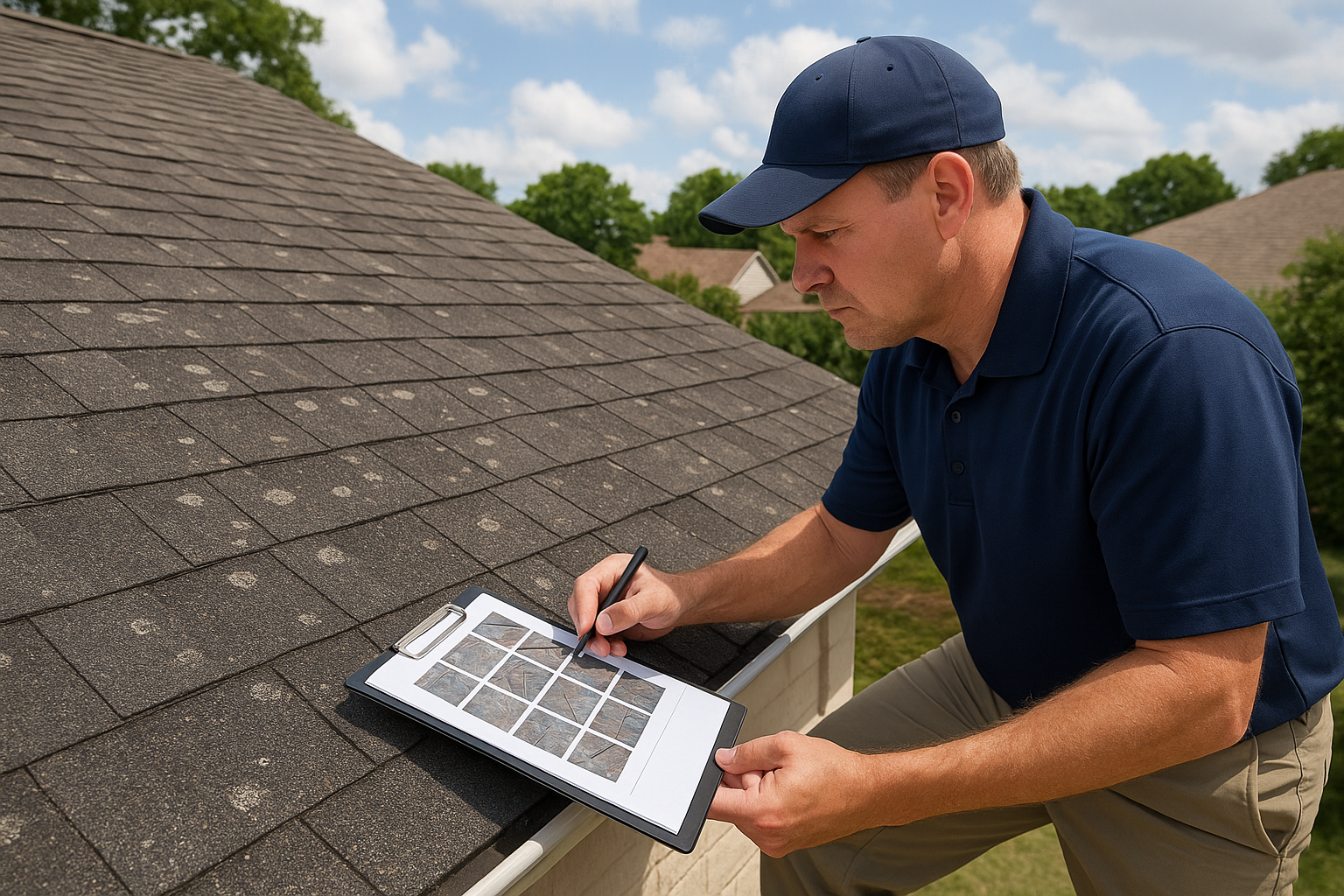
The free inspection ends with an Integrity Report with 100+ photos and an honest repair-versus-replace recommendation. If hail hit only part of the roof, repairs start at $395+ and finish with 20+ photos of the completed fix, matched to the look of your current roof. If the roof is past patching, replacement starts at $7,900+ and includes full tear-off to the deck, synthetic underlayment, and architectural shingles.
For the claim, Defend documents the storm damage, works directly with insurance companies, and meets the adjuster on-site. You are not left to explain the roof alone.
A photo record you own means the adjuster's report is not the only one on file.
This option fits homeowners in Cedar Park, Avery Ranch, Steiner Ranch, Jonestown, Leander, and nearby neighborhoods who want straight advice and dislike upselling. Chris and Greyson Buster, a father and son with three generations of roofing behind them, run the company.
Installations come from a certified IKO, Owens Corning, and CertainTeed installer, backed by limited lifetime manufacturer warranties and a workmanship guarantee. Financing through Enhancify is available to qualified homeowners.
Defend works on residential roofs in Central Texas. A commercial building or a home far outside the Austin area needs one of the other options below.
An honest inspection can also show that your damage is smaller than your deductible, or that there is no functional damage at all. That is a useful answer, not a wasted visit. Whoever you hire, us included, ask for the findings in writing.
A locally owned roofing company with a long track record in your area is the classic choice, and it works well when you do the vetting yourself.
Expect a hail inspection, a written estimate, and repairs or replacement by the owner's own crew. Claim help varies widely. Some local roofers provide full photo documentation and meet adjusters. Others hand you an estimate and leave the paperwork to you, so ask exactly what the report includes.
Collect two or three written bids. Comparing scope line by line tells you more than comparing the bottom-line price.
The cheapest bid often leaves out something the others include.
Homeowners who like to shop around, or who have neighbors with recent roof work they can check in person, get the most from this route. It also suits smaller jobs, such as a few damaged vents or a single slope, where a quick local visit can be enough.
Texas has no state roofing license, so verification falls to you. Before you sign, confirm these:
A big roofing company is the right call when your roof is large or complex, or when a storm hit so many homes that you need crews fast.

Larger firms often bring dedicated project and claims staff, standardized warranties, and financing programs. Their size means bigger crews and quicker installation once your materials are in.
That scale has a cost in personal attention. Ask who your single point of contact will be from inspection to final cleanup.
Size buys capacity, but you still need one named person who answers for your roof.
Owners of large or multi-section roofs, or homeowners who want corporate warranty backing and are willing to wait in a busy-season queue, are the best fit. It also suits anyone comfortable with a more formal, sales-driven process.
Ask whether the crew on your roof is made up of employees or subcontractors. Out-of-area storm teams that arrive after a big hail event are not the same as a company with an office you can visit in Texas, so ask for that office address.
Read the contract for scope, material brands, and cancellation terms. Do not let a limited-time offer rush your signature.
An independent inspector or engineer is the pro to call when you doubt a roofer's findings or your insurer's. They inspect and report but do not sell repairs, so they have nothing to gain from your answer.
You receive a written report with photos of the hail damage, often with measurements and a clear statement of what is functional damage and what is wear. That report becomes evidence if you need to question an adjuster's estimate or settle a conflict between two contractors' opinions.
Fees vary, so ask what the inspection costs before you book.
An independent report settles arguments that two sales estimates cannot.
This option fits homeowners with a denied or underpaid claim, or with contradictory estimates on the table. It also helps when you are buying or selling a home after a storm and need a neutral record of the roof's condition.
An inspector does not fix anything, so you still need a roofer afterward. Confirm the inspector has no financial tie to a contractor, and ask whether insurers commonly accept the report format. A strong report supports your case, but it does not force an insurer to pay.
Choose by matching the pro to your situation, then protect your claim with documentation before any repair starts.
| Option | Best for | Claim help | Main trade-off |
|---|---|---|---|
| Defend Roofing | Austin-area homeowners wanting a free photo inspection | Documents damage, meets the adjuster | Residential, Central Texas only |
| Independent local roofer | Bid shoppers with local references | Varies by company | Quality and paperwork differ |
| Regional or national company | Large, complex, or urgent jobs | Often has claims staff | Subcontracted crews, sales pressure |
| Independent inspector | Disputed or denied claims | Written report, no repairs | Extra fee, still need a roofer |
Many homeowners combine two options. A roofer's inspection comes first, and an independent report follows only if the insurer's estimate looks wrong.
Hail damage can be repaired when it is isolated, such as a few cracked shingles or dented vents on an otherwise sound roof. When hits are spread across most slopes, replacement usually makes more sense. No universal percentage decides this, and carriers use their own tests, such as counting hits in a 10 by 10 foot square.
Insurance can pay for repair or replacement when the hail damage is covered and functional, minus your deductible. Some policies exclude cosmetic damage, so read yours. Wind and hail deductibles in Texas are often a percentage of your dwelling coverage. On a $400,000 dwelling limit, 1% is $4,000 and 2% is $8,000.
Here is a worked example. A $12,000 replacement under a 2% deductible leaves a payout of $4,000 ($12,000 minus $8,000). Under a 1% deductible, the payout is $8,000. A $1,200 repair falls below either deductible, so filing a claim would not pay anything.
Decide whether to file only after you know the damage and your deductible.
Check your policy for a filing deadline, since many set about one year from the storm. Under Texas law, your insurer must acknowledge your claim within 15 days and decide within 15 business days of receiving what it requested. Payment follows within 5 business days of approval.
Put these questions to every contractor, then compare the written answers:
Walk away from anyone who offers to cover or waive your deductible. Texas law prohibits it, and a roofer also cannot negotiate your claim for you. A good one documents, advises, and shows up.

Hail damage is a documentation problem as much as a roofing one. Whichever of the four pros you pick, get a written, photo-backed inspection first, know your deductible, and keep the scope in writing before any work starts.
If you live in the Austin area and want a family crew to handle it, call or text us for a free hail inspection. We will show you what is on your roof, photo by photo, and tell you whether it needs a repair, a replacement, or nothing at all.