See how a roof inspection drone speeds up damage detection, boosts insurance documentation, and compares to walk-on checks for Austin homeowners.
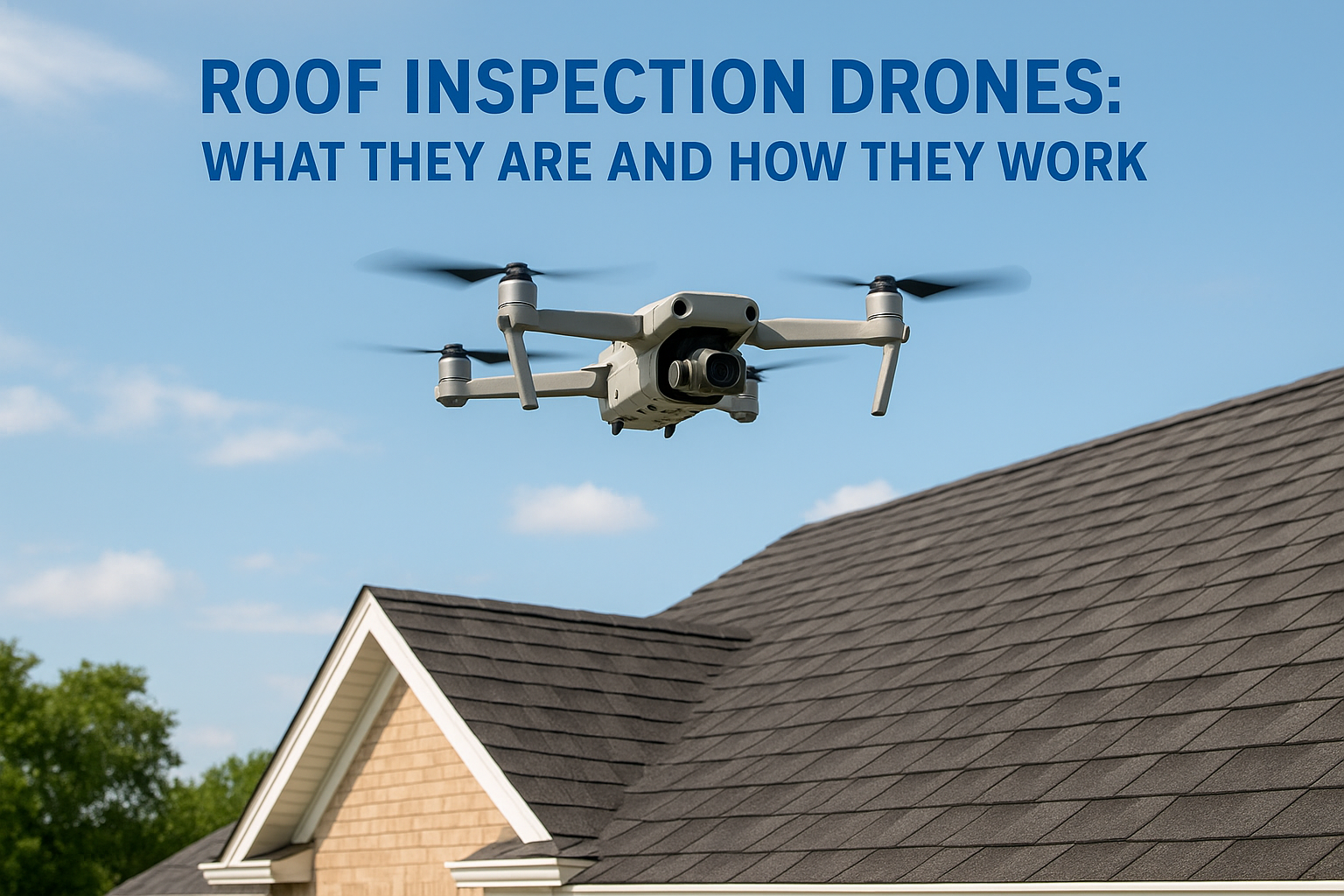
You've probably seen a contractor fly a small quadcopter over a roof and wondered what it's actually doing up there. A roof inspection drone is a camera-equipped aircraft that captures close-up, high-resolution footage of a roof surface without anyone climbing a ladder. For Central Texas homeowners dealing with hail damage or a roof nearing the end of its life, that camera can catch cracked shingles, granule loss, and flashing issues that are easy to miss from the ground.
If you're trying to figure out how drone roof inspection actually works, or whether it's worth paying for versus a traditional walk-on inspection, the short answer is that it depends on your roof's pitch, your safety concerns, and how much documentation you want for an insurance claim. Drones excel at speed and thorough photo coverage, but they don't replace a trained eye checking for soft spots or subtle wear.
In this article, we'll break down how drones for roof inspection actually operate, what they cost, the benefits and limits compared to manual inspections, and which drone options contractors and homeowners rely on most.
Homeowners who need roofing help in Cedar Park, TX, plus those in Steiner Ranch and Jonestown, deal with steep roof pitches, two-story homes, and Texas hailstorms that hit hard and fast. A drone roof inspection solves a real problem: getting a close, honest look at roof damage without putting anyone on a ladder or a slippery shingle surface. When a roof pitches at 8/12 or higher, or when a storm has just rolled through and shingles are loose, sending a person up there is a genuine safety risk. A drone removes that risk entirely while still capturing the detail an insurance adjuster or a homeowner needs to see.
Roofers fall. It happens more than most homeowners realize, and it's one of the leading causes of injury in the construction trades. After a hailstorm or high wind event, a roof surface can hide compromised decking, torn flashing, or granule loss that makes footing unpredictable, which is exactly why checking a roof after a hail storm calls for care. Drone for roof inspection work sidesteps all of that. The aircraft flies a grid pattern over the roof, capturing every plane and valley, while the technician stays on the ground with a controller and a live video feed. Nobody has to test whether a damaged roof deck will hold their weight.
A drone can inspect a roof just as thoroughly as a person, without ever putting a person at risk.
Insurance adjusters want evidence, not opinions. A roof inspection by drone typically produces dozens or even a hundred-plus high-resolution photos covering every square foot of the roof, from wide shots that show overall wear patterns to tight close-ups of individual hail hits or lifted shingles. That volume of documentation matters because insurance companies are quick to dispute vague or incomplete claims, so knowing what an insurance claim inspection has to prove pays off. When you show up with time-stamped, geo-tagged photos covering the entire roof surface, you remove a lot of the guesswork and pushback that homeowners run into during the claims process.
Here's what strong drone documentation typically includes:
Small roof issues rarely stay small in Central Texas heat and sudden storms. A lifted shingle corner today can become a water intrusion problem in six months if nobody catches it. Roof inspection drones fly close enough to spot early warning signs, cracked sealant, granule loss around vents, or minor flashing separation, that are nearly invisible from a ladder glance or binoculars from the yard. Catching these issues early usually means a repair costs a few hundred dollars instead of a full replacement running into the thousands.
One advantage that doesn't get talked about enough is coverage. A person walking a roof tends to check the obvious spots and move on, especially on a hot day or a roof with a tricky pitch. A drone doesn't get tired or rush. It systematically covers the entire roof, including hips, valleys, and ridge lines that are awkward or dangerous to reach on foot. That's part of why a genuinely thorough roof inspection with drone technology paired with an experienced eye reviewing the footage tends to catch more than a rushed walk-through.
Austin-area homes see a particular combination of threats: intense UV exposure that degrades shingles faster than in milder climates, sudden hailstorms that can hit a neighborhood hard, and long dry stretches that make roof materials brittle. Homeowners who invest in drone roof inspection services from roof inspection companies serving Austin, TX get a clear, documented baseline of their roof's condition, which is useful whether you're filing an insurance claim, deciding whether to repair or replace, or just planning ahead for a home sale. It's not about flashy technology for its own sake. It's about getting an honest, complete picture of what's actually happening over your head.
A drone roof inspection isn't just someone launching a quadcopter and snapping a few photos. It follows a repeatable process that trained operators use to make sure nothing on the roof gets missed. Knowing the steps helps you ask the right questions before hiring anyone to fly over your home.
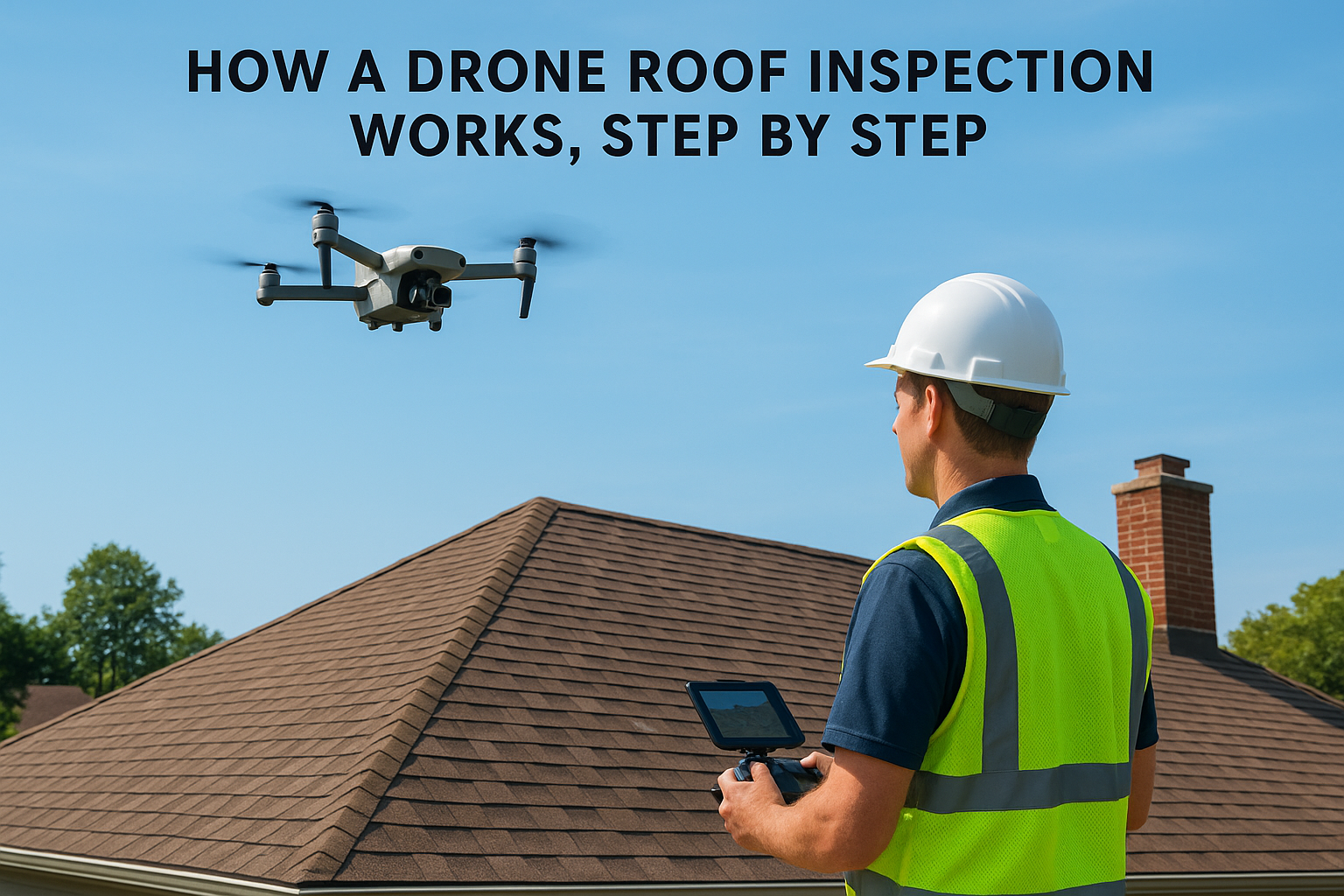
Before the drone ever leaves the ground, the technician checks wind speed, weather conditions, and airspace restrictions. Most residential neighborhoods are clear for flight, but homes near airports or certain flight paths require quick FAA airspace verification. The operator also walks the property to note obstacles like power lines, tall trees, or chimneys that could interfere with the flight path. This step matters because a rushed setup leads to gaps in coverage later.
Once cleared, the drone flies a systematic grid over the entire roof surface, capturing overlapping images from multiple angles and altitudes. Good operators fly low passes for close-up shingle detail and higher passes for a full overview of the roof's condition. This is where drone roof inspections really separate themselves from a quick ground-level glance: the aircraft covers ridges, valleys, and hips that would otherwise require a ladder and a steady set of nerves.
The grid pattern is what turns a drone flight into a real inspection instead of a few random snapshots.
Modern inspection drones carry cameras capable of 4K video and photos sharp enough to show individual granule loss on a shingle. The technician typically captures:
Here's the part homeowners often overlook: the drone collects the data, but a person still has to interpret it. An experienced roofer reviews every image looking for cracked shingles, exposed nail heads, lifted flashing, or the visual clues of hail damage on a roof that separate storm impact from normal wear. Software helps organize and tag photos by roof section, but deciding between repairing and replacing a roof still comes from someone who's spent years on actual roofs, not just behind a screen.
Finally, the findings get compiled into a report, usually with annotated photos, a summary of the roof's condition, and clear recommendations. This is the document you hand to an insurance adjuster or keep for your own records. A solid roof inspection with drones process ends with something concrete in your hands, not just a verbal "looks fine" from someone standing in your driveway.
Pricing for a drone roof inspection ranges widely, from free when it's bundled into a full roof assessment to $150-$400 for a standalone service with a detailed report, much like what a roof inspection costs and why it varies. The final number depends on roof size, the type of imaging used, and whether you're paying for a one-time flight or a full documented package built for an insurance claim. Homeowners comparing quotes should ask exactly what's included before assuming a lower price means a lower-quality inspection.
Square footage matters, but so does roof geometry. A simple gable roof on a single-story home takes far less flight time than a sprawling roof with multiple hips, valleys, dormers, and steep pitches. More planes mean more flight passes, more photos to review, and more time for the technician to compile findings. Roof inspection drones still finish faster than a ladder crew working the same complex roof, but complexity still drives the price up.
| Cost factor | Lower cost | Higher cost |
|---|---|---|
| Roof size | Under 2,000 sq ft | 3,500+ sq ft |
| Roof pitch | Low slope, easy angles | Steep 8/12+ pitch |
| Roof features | Simple gable | Multiple valleys, dormers, chimneys |
| Imaging type | Standard photo/video | Thermal or infrared included |
| Report detail | Photo set only | Annotated report with recommendations |
Standard photo and video coverage costs less than a package that adds thermal imaging, which detects trapped moisture under shingles that a normal camera can't see. A basic flight with a handful of overview shots is cheap, but it won't hold up well with an adjuster. A roof inspection by drone built for an insurance claim needs a full annotated report with close-ups of every problem area, not just a folder of raw images.
The cheapest drone inspection isn't a bargain if the photos aren't good enough to win your insurance claim.
Travel distance affects pricing too, especially for homes further out from a contractor's service area. Obstacles like tall trees, power lines, or restricted airspace near an airport can also add time, since the operator needs to plan a more careful flight path. In practice, most Central Texas homeowners find that a drone roof inspection costs less than expected, particularly when it's bundled into a broader assessment. Defend Roofing includes drone imagery as part of its Precision Roof Assessment, so homeowners get the documentation without a separate line-item charge.
Comparing a drone roof inspection to a traditional walk-on inspection isn't about picking a winner across the board. Each method has strengths, and the smartest approach often combines them: a drone for coverage and documentation, a trained roofer's hands and eyes for the final judgment call on repair versus replacement.

Traditional inspections rely on someone physically walking the roof, checking accessible areas closely but often glancing over steep sections or high ridgelines from a distance, so it helps to know which parts of a roof get checked. Roof inspection with drone technology flips that limitation. The aircraft captures every plane at multiple altitudes and angles, including spots a person would never safely reach on foot, like a steep valley behind a chimney or a ridge line on a three-story home. That said, a drone camera can't feel a soft spot underfoot or press on a shingle to test its flexibility, which is where a hands-on inspection still adds value.
A camera can show you damage, but only a trained hand can feel whether a roof deck is actually sound.
Speed is where drones separate themselves clearly. A roof inspection drone can cover a large, complex roof in 15 to 30 minutes, compared to the 45 to 120 minutes a manual roof inspection takes with the same level of photo documentation. Safety follows the same logic: nobody climbs a ladder onto a wet, steep, or storm-damaged surface. Cost tends to land close to parity when both methods include a full written report, though a bare-bones manual inspection without documentation is often cheaper upfront and worth far less during an insurance dispute.
| Factor | Drone inspection | Traditional inspection |
|---|---|---|
| Coverage of steep or high areas | Complete, every angle | Limited by safety and reach |
| Physical touch testing | Not possible | Yes, can press and feel |
| Speed on complex roofs | Faster | Slower |
| Photo documentation volume | High, systematic | Varies by inspector |
| Safety risk | Minimal | Higher on steep or damaged roofs |
| Best for | Insurance documentation, steep roofs | Confirming soft spots, structural concerns |
Relying only on drones for roof inspection without a follow-up walk-through, when access is safe, can miss soft decking or subtle structural give that a camera simply can't detect. Relying only on a manual inspection risks missing damage on sections nobody can safely reach or photograph closely. Defend Roofing's Precision Roof Assessment pairs drone imagery with an experienced roofer's on-site evaluation, so homeowners get the full picture instead of half of it.
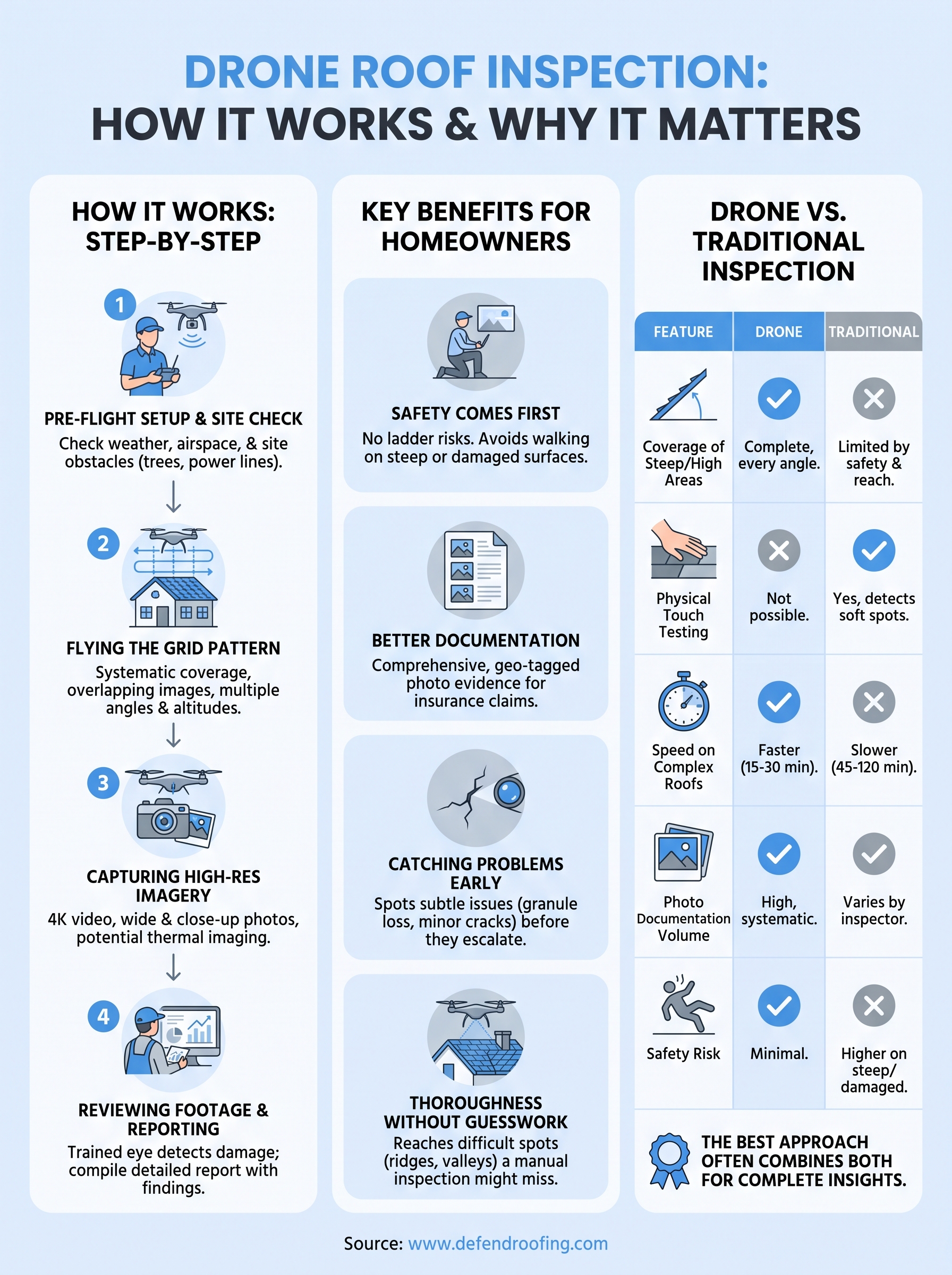
A drone roof inspection gives you speed, safety, and documentation that a ladder-only inspection can't match, but the camera alone isn't the whole answer. Pairing that aerial coverage with a trained roofer's judgment on the ground is what actually protects you when it's time to decide between a repair and a full replacement.
Storm damage, steep pitches, and Central Texas heat don't wait for a convenient time to show up. If your roof took a hit last season, or you just want an honest, documented look before small problems turn into expensive ones, don't guess from the driveway. Chris and Greyson Buster built Defend Roofing on three generations of hands-on roofing experience, backed by drone imagery that leaves nothing hidden. Ready for a straight answer about your roof's condition? Get an instant quote and schedule your inspection with our team directly.