Learn 5 key steps to vet roof repair contractors near Austin, licensing, photo documentation, warranties, and pricing, before you hire.
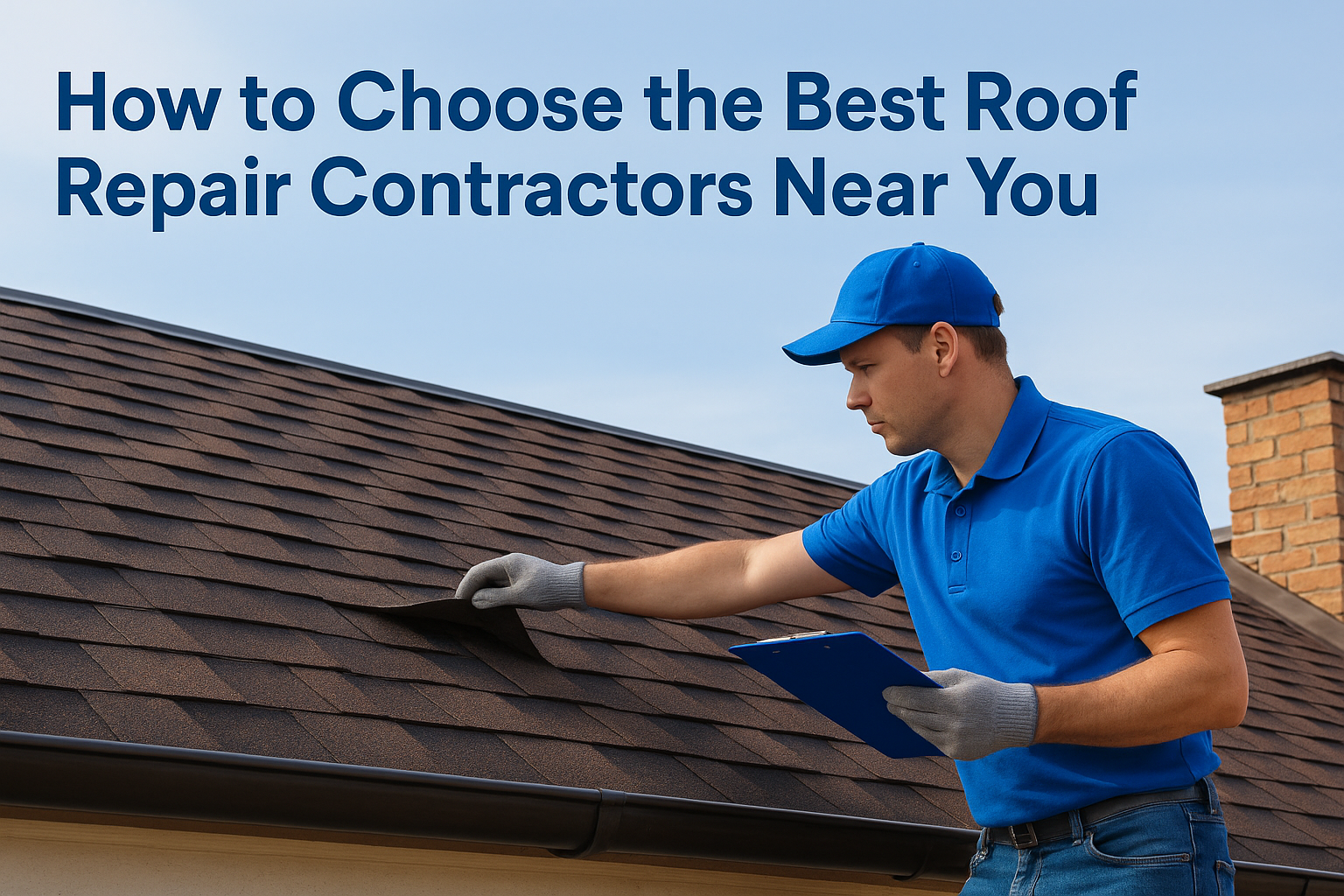
Your roof is leaking, a storm just rolled through your Cedar Park neighborhood, or you noticed missing shingles after a windy week, and now you're stuck scrolling through a dozen ads trying to find roof repair contractors you can actually trust. That search gets messy fast. Every company claims to be licensed, insured, and the best in Central Texas, but the reviews are mixed, the quotes vary wildly, and you have no idea who's giving you an honest assessment versus who's just trying to close a sale before your insurance adjuster even shows up.
This article cuts through that noise. You'll get a practical, step-by-step way to vet local contractors based on what actually matters: licensing, insurance, documentation practices, warranty terms, and how they handle insurance claims. No fluff, just the questions to ask and the red flags to avoid before you sign anything.
We'll walk through credential checks, how to read a repair estimate, what a real roof inspection covers, and why a detailed photo assessment separates a contractor who respects your home from one who's guessing. By the end, you'll know exactly how to pick a roofer near you who does the work right the first time.
Before you let anyone touch your roof, confirm they're actually qualified to do the job in Texas. Texas doesn't issue a statewide roofing license, so general liability insurance and workers' compensation coverage matter even more than a wall full of certificates. A legitimate contractor will hand over proof of insurance without hesitation, and they'll have a physical business address and phone number tied to Central Texas, not a call center three states away.
Check for active general liability insurance, workers' comp for their crew, and manufacturer certifications from brands like GAF or Owens Corning. Ask how long they've worked specifically in your area, since Austin's heat, hail patterns, and building codes differ from other markets. Local experience shows up in details: knowing which HOA rules apply in Steiner Ranch or how Cedar Park's permit office handles roof replacement paperwork.
An uninsured crew that gets hurt on your property can leave you liable for medical bills. A contractor with no local track record might disappear after the job, leaving warranty claims unanswered. Companies that have handled hundreds of Central Texas roofs already understand local storm patterns, insurance adjusters, and code requirements, which shortens your repair timeline and reduces surprises.
A roofer who can't produce proof of insurance in five minutes isn't someone you want on your roof.
Defend Roofing, run by a father-and-son team with three generations of roofing experience in Central Texas, is the kind of operation that answers the questions every homeowner should ask a roofer before you even ask.
A trustworthy roofer doesn't just glance at your roof from the ladder and hand you a quote. They climb up, document everything, and show you proof before recommending repair or replacement. If a contractor won't provide photos of the damage they claim to have found, you have no way to verify their conclusions or compare them against a second opinion.
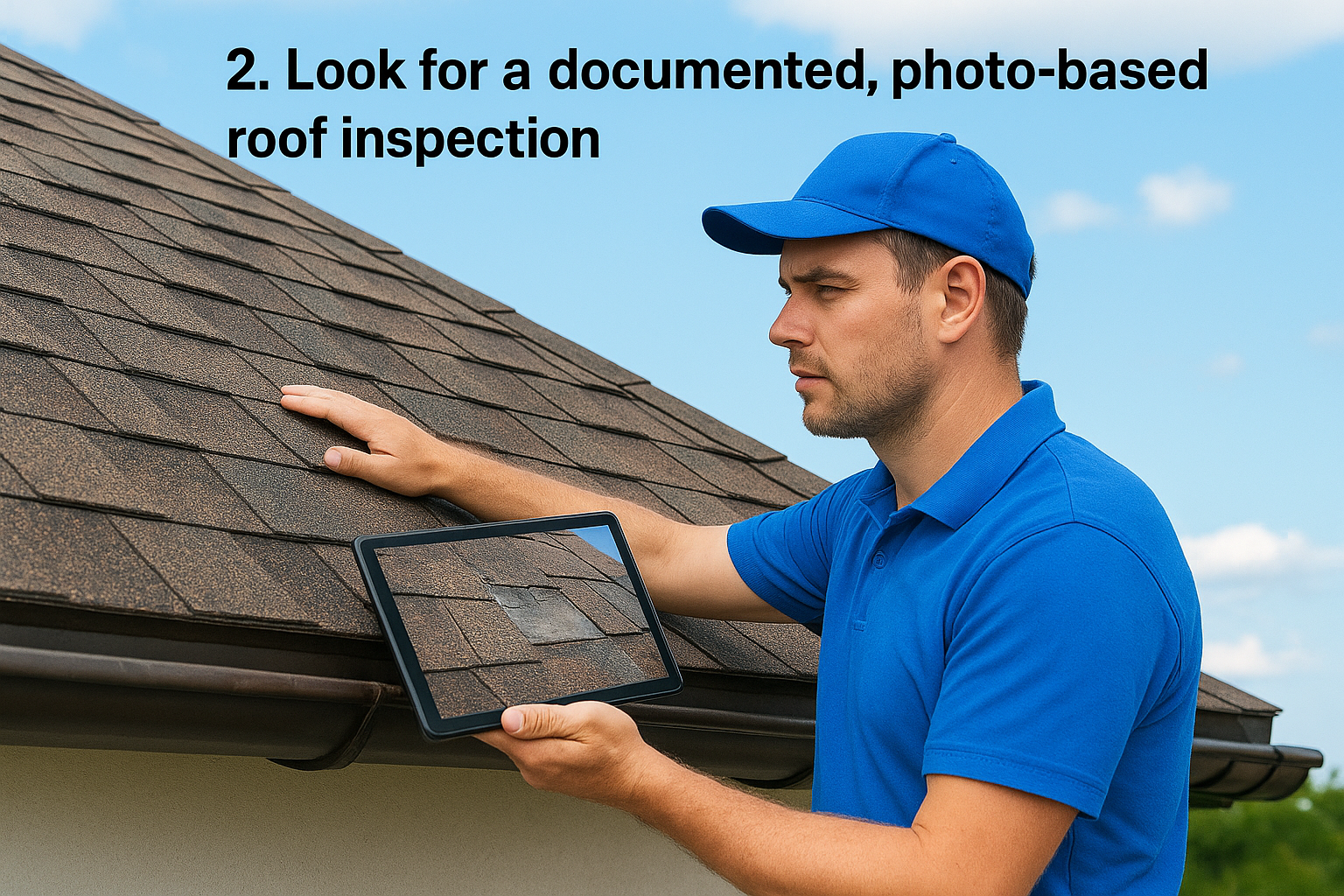
Ask whether the inspection includes close-up photos of flashing, decking, shingles, and any problem areas, not just a summary paragraph. A precision roof assessment with 100+ photos gives you a real record of your roof's condition, not a sales pitch dressed up as an evaluation.
Photo documentation protects you twice: it justifies the scope of work to you, and it gives your insurance adjuster the evidence a claim inspection has to produce to approve a claim without pushback. Contractors who skip this step often push unnecessary upsells or miss damage that surfaces later.
If you can't see the damage in a photo, you shouldn't be paying to fix it.
Hail and wind storms roll through Central Texas every spring, and that means plenty of contractors show up chasing storm damage without knowing the area at all. A roofer with genuine local reputation has a paper trail of real jobs in your neighborhood, not just a stock photo gallery and five-star reviews that appeared overnight, and there are clear ways to spot a reputable roofer near you.
Search Google Reviews and the Better Business Bureau for patterns, not just star ratings. Look for mentions of specific neighborhoods like Avery Ranch, Jonestown, or Leander, and check how the company responds to negative feedback. Storm damage experience should show up in how they talk about hail size, wind speed thresholds, and what insurance carriers typically approve in your zip code.
Out-of-town storm chasers often collect deposits, do rushed work, then vanish before problems surface, which is why it pays to compare storm damage roof repair options near you. A contractor rooted in Central Texas has a reputation to protect and neighbors who'll vouch for them.
If a roofer can't name a street near your house where they've worked, keep looking.
A solid warranty tells you how much a contractor trusts their own work. Before you sign anything, find out exactly what's covered, for how long, and who's responsible if something fails, the manufacturer or the installer. Roofing contractor warranties vary wildly, so it helps to know how long a workmanship warranty should last and what it covers, because vague language like "limited warranty" without specifics usually means limited protection.
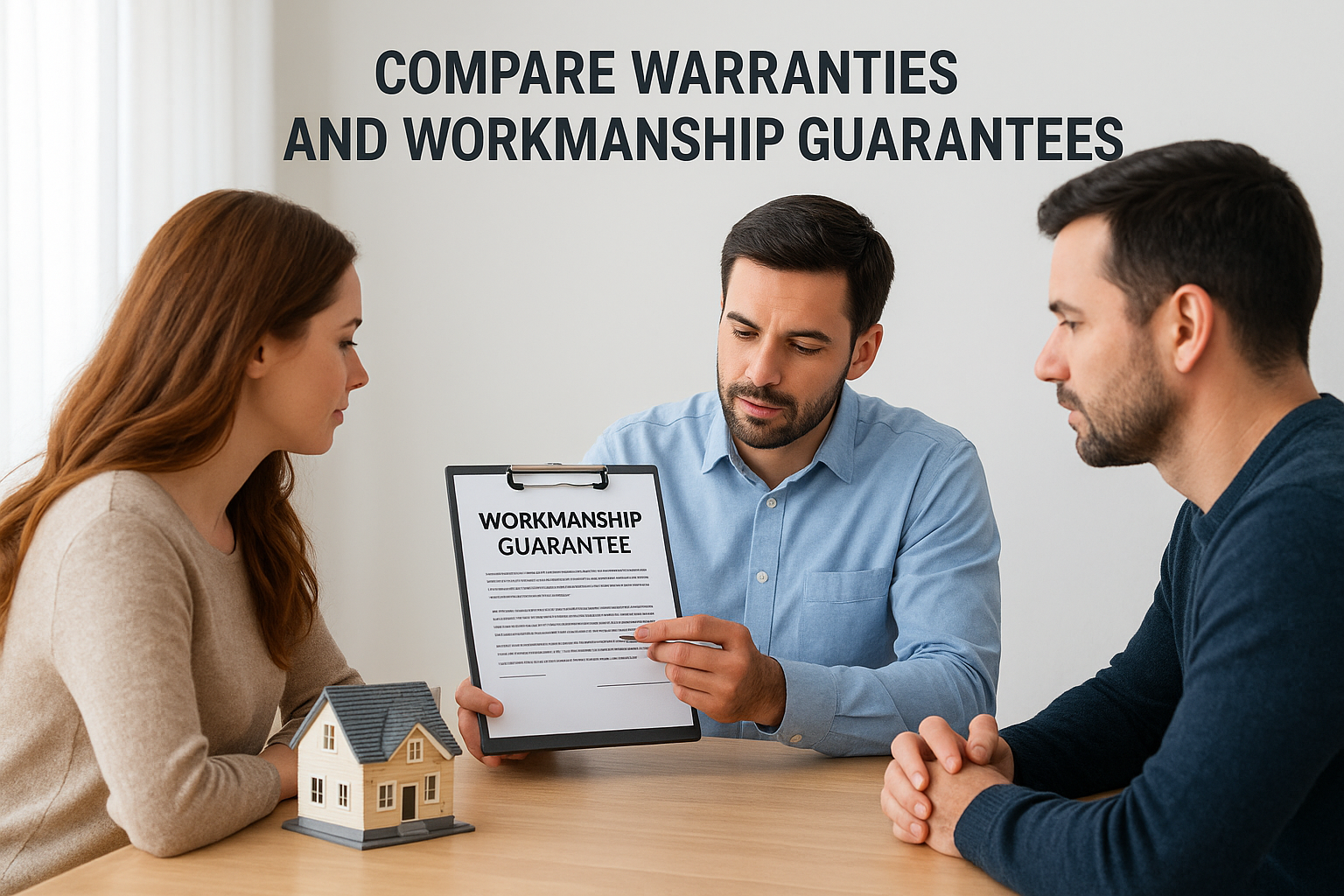
Compare the manufacturer's material warranty against the contractor's own workmanship guarantee. Materials from GAF or Owens Corning typically carry 25 to 50 year coverage, but that only protects against defective shingles, not installation errors. Ask for the guarantee in writing, including what voids it, like skipped maintenance or unlicensed repairs by another crew.
Most roof failures trace back to bad installation, not bad shingles. A contractor offering a Limited Lifetime Workmanship Warranty is telling you they'll stand behind their labor for as long as you own the home, not just the first year or two.
A warranty that only covers materials, not labor, leaves you paying for someone else's mistake.
Money questions separate honest roof repair contractors from the ones hoping you won't read the fine print. A detailed estimate should break down materials, labor, and disposal costs line by line, not just hand you a single lump number. If a contractor pressures you to sign before your adjuster inspects the damage, that's a warning sign, not a favor.
Request a written, itemized quote, check it against what roof repairs typically cost by damage type, and compare it against at least one other bid. Ask whether the price is based on the actual scope of damage or a generic package deal. A contractor who offers insurance claim support, including meeting your adjuster on-site and providing photo documentation, saves you weeks of back-and-forth confusion.
Unclear pricing often hides shortcuts, cheaper materials, skipped flashing work, or corners cut on decking replacement. Contractors experienced with adjuster coordination know how to present evidence so your claim gets approved fairly, instead of leaving you to argue with your insurance company alone.
A contractor who won't put pricing in writing shouldn't be handling your insurance claim either.
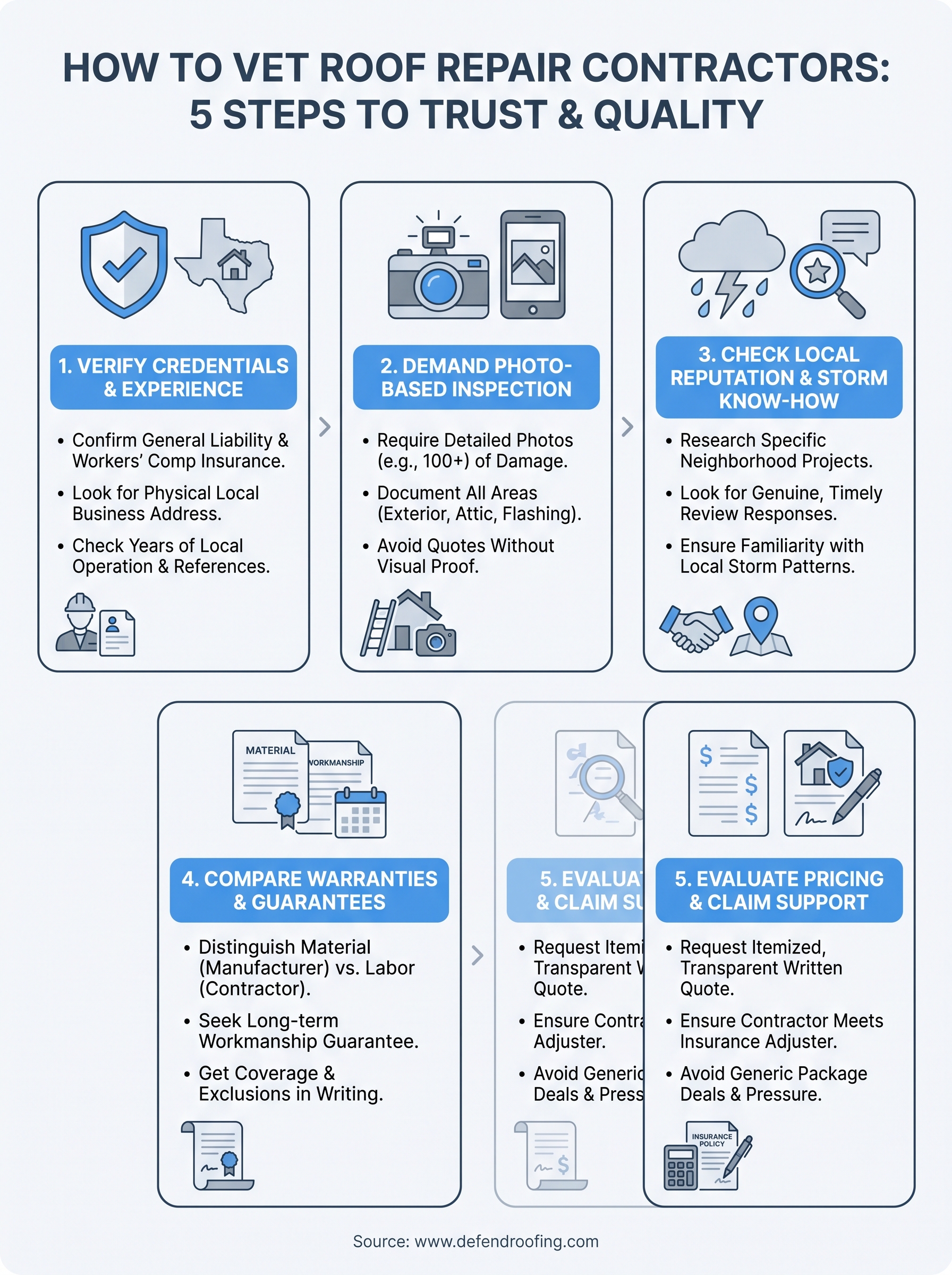
Finding trustworthy roof repair contractors near you comes down to five checks: licensing and insurance, photo-based documentation, local reputation, real warranty terms, and honest pricing. Skip any of these steps and you're gambling with your home and your insurance claim. Run through the questions in this guide before you sign anything, and don't let a pushy sales pitch rush you past them.
Greyson and Chris Buster built Defend Roofing around exactly this kind of transparency: a 100+ photo Precision Roof Assessment, straightforward repair-versus-replace recommendations, and a Limited Lifetime Workmanship Warranty backed by three generations of family roofing experience in Central Texas. No upselling, no pressure, just documented evidence and fair pricing based on what your roof actually needs.
If you're dealing with storm damage, a slow leak, or just want a second opinion before your insurance deadline passes, call, text, or get a free quote online and see the difference a documented inspection makes.