See what drives roof replacement cost per square foot: pitch, materials, tear-off, and size—plus a DIY formula to estimate your own price.
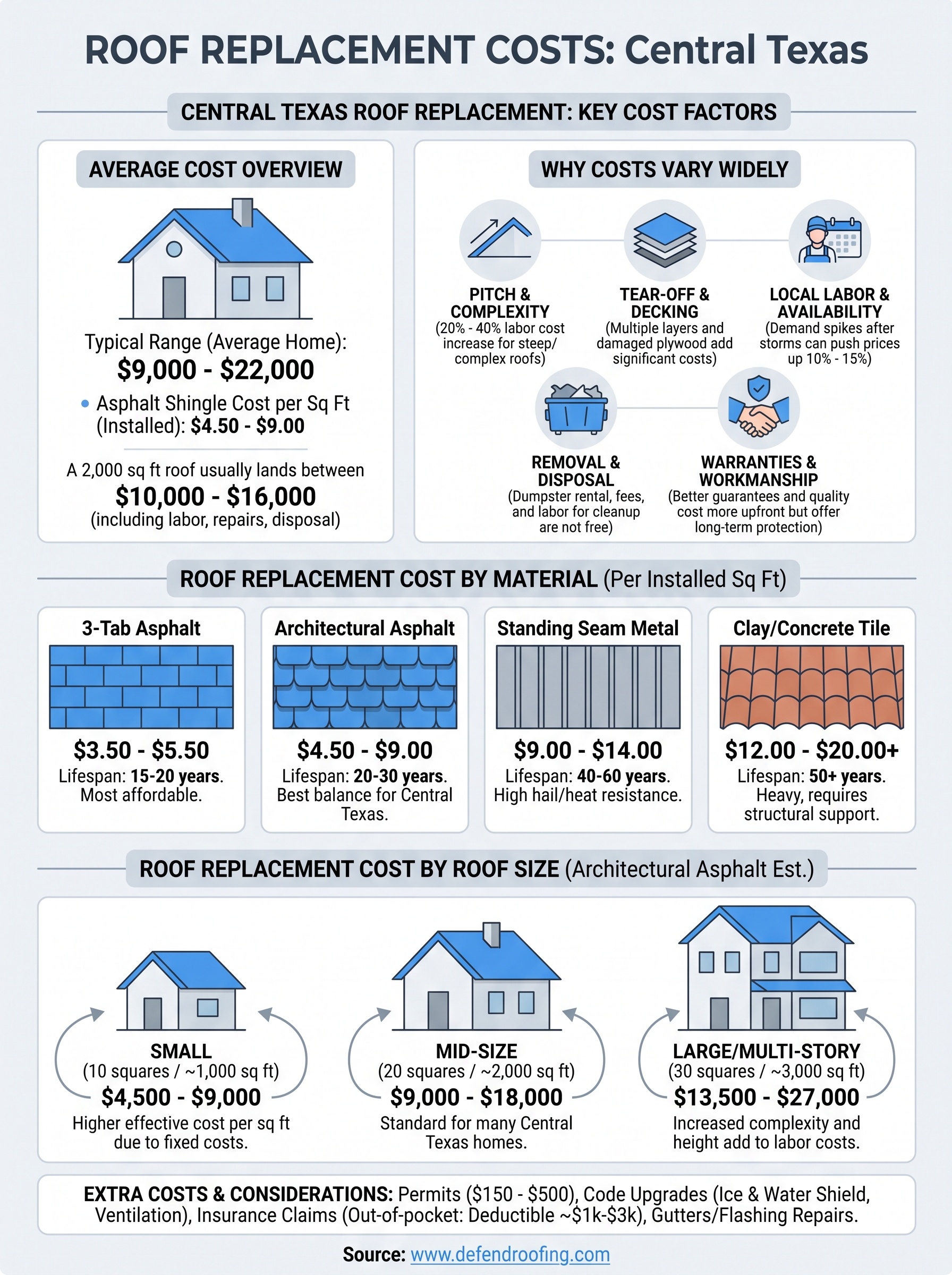
You need a new roof and you want a real number before a salesperson walks your property. Roof replacement cost in Central Texas typically runs between $9,000 and $22,000 for an average home, but that range hides a lot of detail that actually matters for your specific house.
The short answer: average cost per square foot for asphalt shingle replacement in the Austin area falls between $4.50 and $9.00 installed, depending on material, roof pitch, and how many layers of tear-off you need. A 2,000 square foot roof footprint, for example, often lands between $10,000 and $16,000 once labor, decking repairs, and disposal are factored in. Steeper roofs, multiple stories, and premium materials like metal or tile push those numbers higher.
Below, we break down pricing by roof size, material choice, and the labor factors that swing your quote up or down. We also cover what a fair, itemized estimate should include so you can tell the difference between honest scope-based pricing and padded numbers designed to upsell you on work your roof doesn't need.
Two homes on the same street, same square footage, can get quotes that differ by $6,000 or more. That's not a sign someone's getting ripped off. It's a sign the underlying roof isn't the same, even when the footprint looks identical from the curb. Roof size alone doesn't determine cost. Pitch, layers, decking condition, and access all move the number just as much as square footage does.
Steep roofs cost more to work on, period. A low-slope ranch roof lets crews walk, carry materials, and set up safely without much extra gear. A steep Austin Hill Country roof with multiple valleys, dormers, and hips demands harnesses, roof jacks, and slower, more careful work. Roof pitch and complexity can add 20% to 40% to labor costs on their own, and cut-up roofs waste more material since every valley, hip, and ridge needs extra flashing and trim. A simple gable roof and a roof with six intersecting planes might cover the exact same square footage and still land thousands apart on the final invoice.
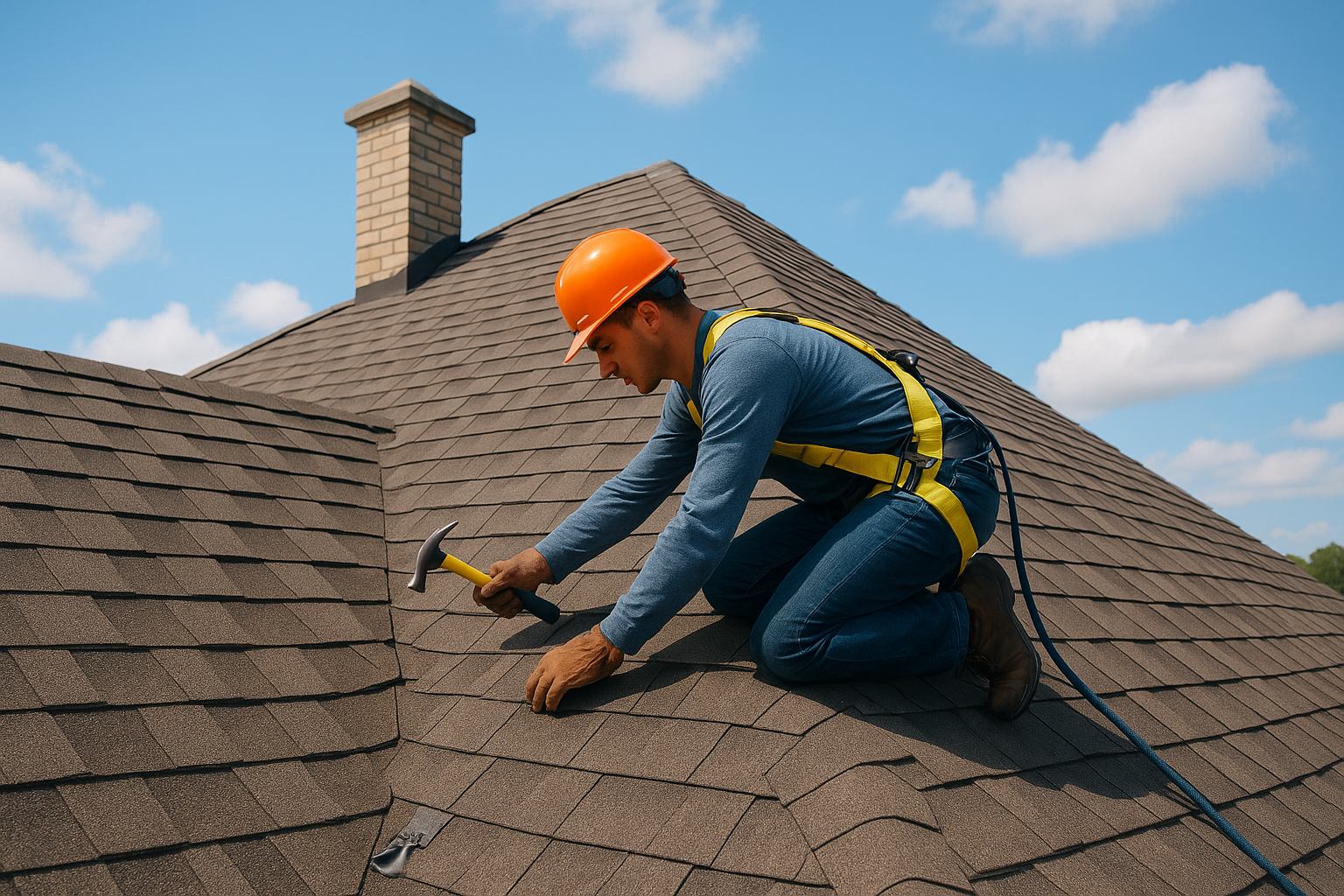
What's under your current shingles matters as much as what goes on top. A single layer tear-off is straightforward. A roof with two or three layers of old shingles stacked on top of each other takes longer to strip, generates more disposal weight, and often reveals rotted decking once the crew gets down to the sheathing. Replacing damaged plywood or OSB isn't optional, and it's rarely included in a generic square-footage quote.
The roof you can't see, the decking, the flashing, the ventilation, usually decides whether your quote comes in low or climbs fast.
Central Texas labor rates shift based on demand, and demand spikes hard after hailstorms. When a major storm rolls through Cedar Park or Leander, every roofing crew in the area gets booked out, and material suppliers see run on certain shingle colors and metal panel profiles. That squeeze can temporarily push prices up 10% to 15% until supply catches up. Outside of storm season, rates settle back down, which is one reason the same roof can get different quotes depending on when you call.
Old shingles and decking have to go somewhere, and disposal isn't free. Dumpster rental, landfill tipping fees, and the labor to load debris all factor into your total. A 2,000 square foot tear-off can generate two to three tons of waste, and multi-layer removals generate even more. Contractors who skip mentioning disposal in their estimate either bury it in the total or plan to skip proper cleanup, neither of which serves you well.
A cheap quote sometimes trades away protection you'll want later. Manufacturer warranties on shingles vary widely, and workmanship warranties, the guarantee that covers installation errors rather than product defects, vary even more between contractors. A Limited Lifetime Workmanship Warranty, for example, costs more upfront than a bare one-year labor guarantee, but it protects you against leaks caused by installation mistakes for as long as you own the home. Comparing quotes without comparing what's actually guaranteed is comparing incomplete information.
Getting a ballpark figure before you call a contractor takes about ten minutes and a tape measure, or better yet, a look at your last insurance appraisal or property records. Estimating your roof replacement cost starts with knowing your roof's actual square footage, not your home's living space, since roof footage almost always runs larger once you account for overhangs and pitch.
Measure the footprint of your home (length times width for each section) and add roughly 10% to 15% more for overhangs. Then apply a pitch multiplier, since a sloped roof always has more surface area than the flat footprint below it.
| Roof pitch | Pitch multiplier | Example (1,500 sq ft footprint) |
|---|---|---|
| Low slope (2:12-4:12) | 1.05 | ~1,575 sq ft |
| Moderate (5:12-7:12) | 1.15 | ~1,725 sq ft |
| Steep (8:12-12:12) | 1.30 | ~1,950 sq ft |
Roofers also talk in "squares," where one square equals 100 square feet. That 1,950 square foot steep roof translates to roughly 19.5 squares, and most Austin-area quotes get built around that unit.
Once you know your square footage, multiply by the going rate for your chosen material. For how much does roof replacement cost per square foot, asphalt shingles in Central Texas run $4.50 to $9.00 installed, while metal and tile climb higher. Multiply low and high estimates separately to get a real range, not a single misleading number.
A single price-per-square-foot number without a pitch adjustment will almost always undersell what you actually owe.
Add 10% to 15% on top of your estimate for decking repairs, code-required upgrades, or ventilation work that only becomes visible once the old roof comes off. Contractors who find zero surprises on every job are rare, and homeowners who budget for none often get blindsided at invoice time.
A tape-measure estimate gets you in the right neighborhood, but it can't catch rotted decking, undersized flashing, or ventilation gaps hiding under your current shingles. A documented, photo-based assessment closes that gap and turns your rough number into an accurate, itemized quote before any work starts.
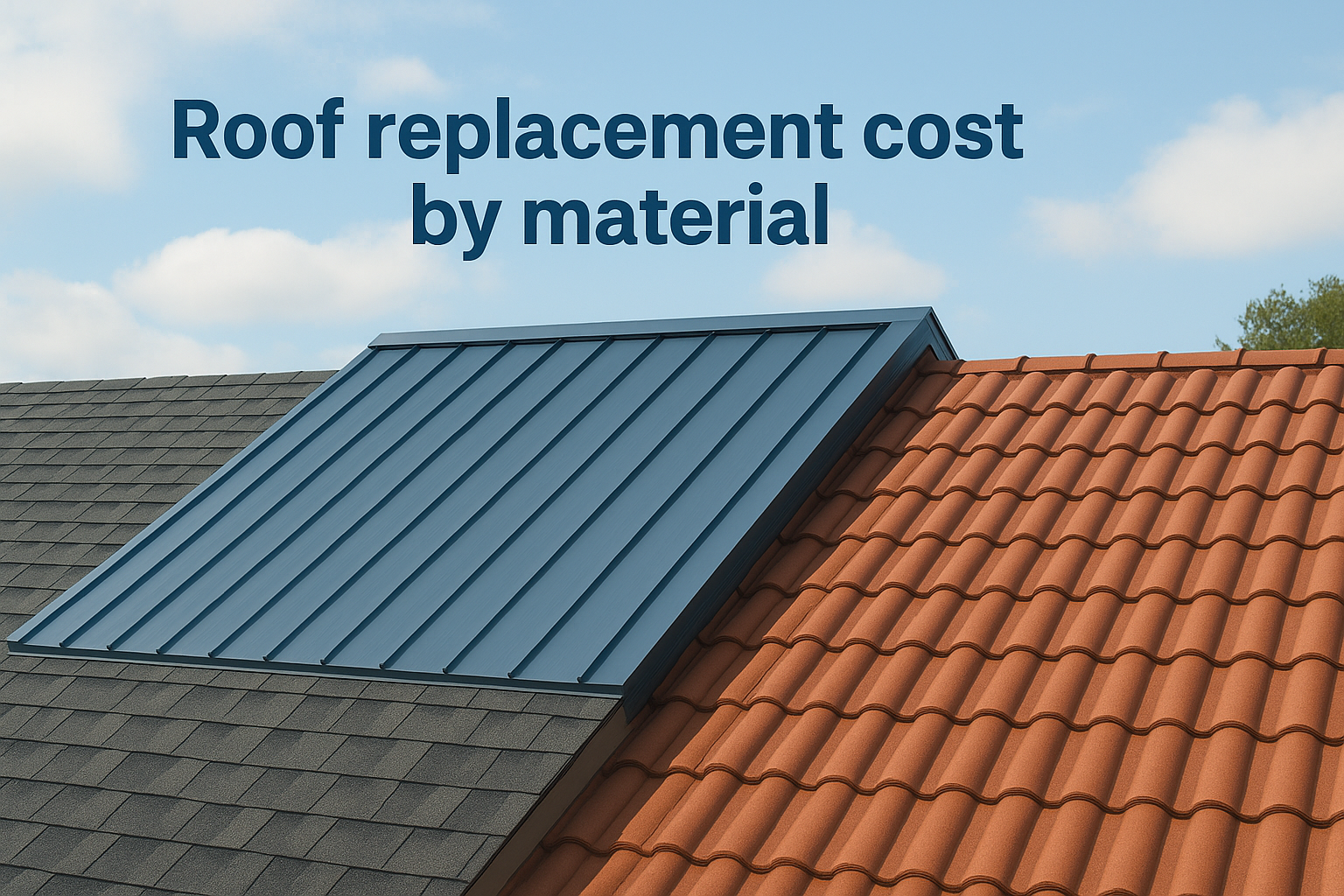
Material choice moves your total more than almost any other single decision you'll make. Roof replacement cost by material swings from budget-friendly asphalt to premium standing seam metal or clay tile, and each option carries its own lifespan, maintenance load, and installation labor requirements. Picking the right material isn't just about upfront price, it's about matching the product to how long you plan to stay in the home and how much upkeep you're willing to handle.
| Material | Installed cost per sq ft | Typical lifespan | Notes |
|---|---|---|---|
| Asphalt shingles (3-tab) | $3.50-$5.50 | 15-20 years | Most affordable, widest availability |
| Asphalt shingles (architectural) | $4.50-$9.00 | 20-30 years | Best balance of cost and durability in Central Texas |
| Standing seam metal | $9.00-$14.00 | 40-60 years | Higher upfront cost, strong hail and heat resistance |
| Clay or concrete tile | $12.00-$20.00+ | 50+ years | Heavy, requires reinforced framing, common on older Austin homes |
Picking a material isn't about the cheapest square foot price, it's about matching lifespan to how long you'll actually own the house.
Architectural asphalt shingles dominate residential roofs across Cedar Park, Leander, and Avery Ranch for good reason. Architectural asphalt shingles hold up well against Hill Country heat and hail while staying affordable enough that most homeowners can replace a full roof without financing gymnastics. They also install faster than metal or tile, which keeps labor costs down.
Standing seam metal costs roughly double asphalt per square foot, but it can outlast two or three shingle roofs over the life of the home. Homeowners planning to stay put for decades often find the math works in their favor, especially with metal's superior hail resistance, a real consideration given how often Central Texas sees storm damage.
Clay and concrete tile show up on older Austin-area homes and carry the highest price tag on this list. Tile demands a structurally sound roof deck since the material weighs far more than shingles or metal, and repairs after storm damage require a specialist familiar with matching existing profiles.
Square footage drives your total more directly than any other single factor, but the relationship isn't perfectly linear. Roof replacement cost by roof size scales up with material and labor, yet fixed costs like permits, dumpster rental, and crew setup stay roughly the same whether you're covering 1,200 square feet or 3,500. That means smaller roofs often carry a higher effective cost per square foot, since fixed expenses get spread across less area.
| Roof size (squares) | Approx. sq ft | Architectural asphalt cost range |
|---|---|---|
| 10 squares | 1,000 sq ft | $4,500-$9,000 |
| 15 squares | 1,500 sq ft | $6,750-$13,500 |
| 20 squares | 2,000 sq ft | $9,000-$18,000 |
| 25 squares | 2,500 sq ft | $11,250-$22,500 |
| 30 squares | 3,000 sq ft | $13,500-$27,000 |
A bigger roof costs more overall, but a smaller roof often costs more per square foot once you factor in fixed labor and setup.
Homes under 1,800 square feet, common in older Cedar Park and Leander neighborhoods, tend to land on the lower end of these ranges in total dollars but sometimes see quotes that feel disproportionately high per square foot. Small roof footprints still require the same crew, the same dumpster, and the same permit paperwork as a larger job, so those fixed costs don't shrink with the roof.
Jonestown and Steiner Ranch properties often push past 3,000 square feet of roof surface, especially with multiple gables and dormers common in newer construction. Multi-story roofs add scaffolding and safety equipment costs on top of the raw material increase, and steep sections layered across two stories slow crews down further than the same pitch on a single-story home. Expect quotes on these homes to reflect both the added square footage and the added complexity of working at height, which is why two 3,000 square foot roofs on different lots can still land thousands apart depending on how the roof is actually shaped.
Your roof quote doesn't stop at material and labor. Extra costs and insurance considerations often decide whether your final invoice matches your original estimate or comes in higher than expected. Permits, code upgrades, and storm-related insurance claims all add line items that a bare price-per-square-foot number never captures, so it pays to know what's likely to show up before you sign anything.
Most Central Texas municipalities require a permit for a full roof replacement, and that fee typically runs $150 to $500 depending on the jurisdiction. Beyond the permit itself, current building code often requires upgraded ice and water shield in valleys, improved attic ventilation, or drip edge that wasn't standard when your original roof went on. These aren't upsells, they're code-required upgrades that a licensed contractor has to include to pull a passing inspection, and skipping them isn't legal even if it's cheaper.
Hail and wind damage change the math entirely. If your roof qualifies for an insurance claim, your out-of-pocket cost often shrinks to your deductible, which typically runs $1,000 to $3,000 for Central Texas homeowners, rather than the full replacement price. The catch is documentation. Adjusters need clear evidence of hail hits, wind-lifted shingles, or granule loss, and a contractor who shows up with 100+ photos and a written damage report gives you a far stronger claim than a verbal opinion. The Insurance Information Institute notes that homeowners policies generally cover storm damage repair or replacement, but coverage details and depreciation schedules vary by carrier, so read your policy before assuming full replacement cost coverage.
A well-documented claim can turn a $15,000 roof into a $1,500 out-of-pocket expense, but only if the damage gets recorded properly the first time.
Storms rarely damage just the roof. Gutters, fascia, and flashing often need repair or replacement alongside shingles, and bundling that work into one project usually costs less than hiring separate crews later.
A real number beats a guess every time. Roof replacement cost depends on your roof's actual size, pitch, material, and condition, not a single price-per-square-foot figure pulled from a national average. Use the ranges above to set expectations, then get a documented, photo-based assessment before you commit to a contractor or sign off on an insurance settlement.
Homeowners who walk into a roof replacement with real numbers make better decisions and avoid padded quotes built on vague scope. Fair, itemized pricing shows you exactly what you're paying for, whether that's tear-off, decking repair, code upgrades, or material upgrades you actually chose.
If you're in Cedar Park, Avery Ranch, Steiner Ranch, Jonestown, or Leander and want a straight answer on what your roof will actually cost, get an instant online quote from our family-owned crew. No pressure, no upsells, just documented facts about your roof.