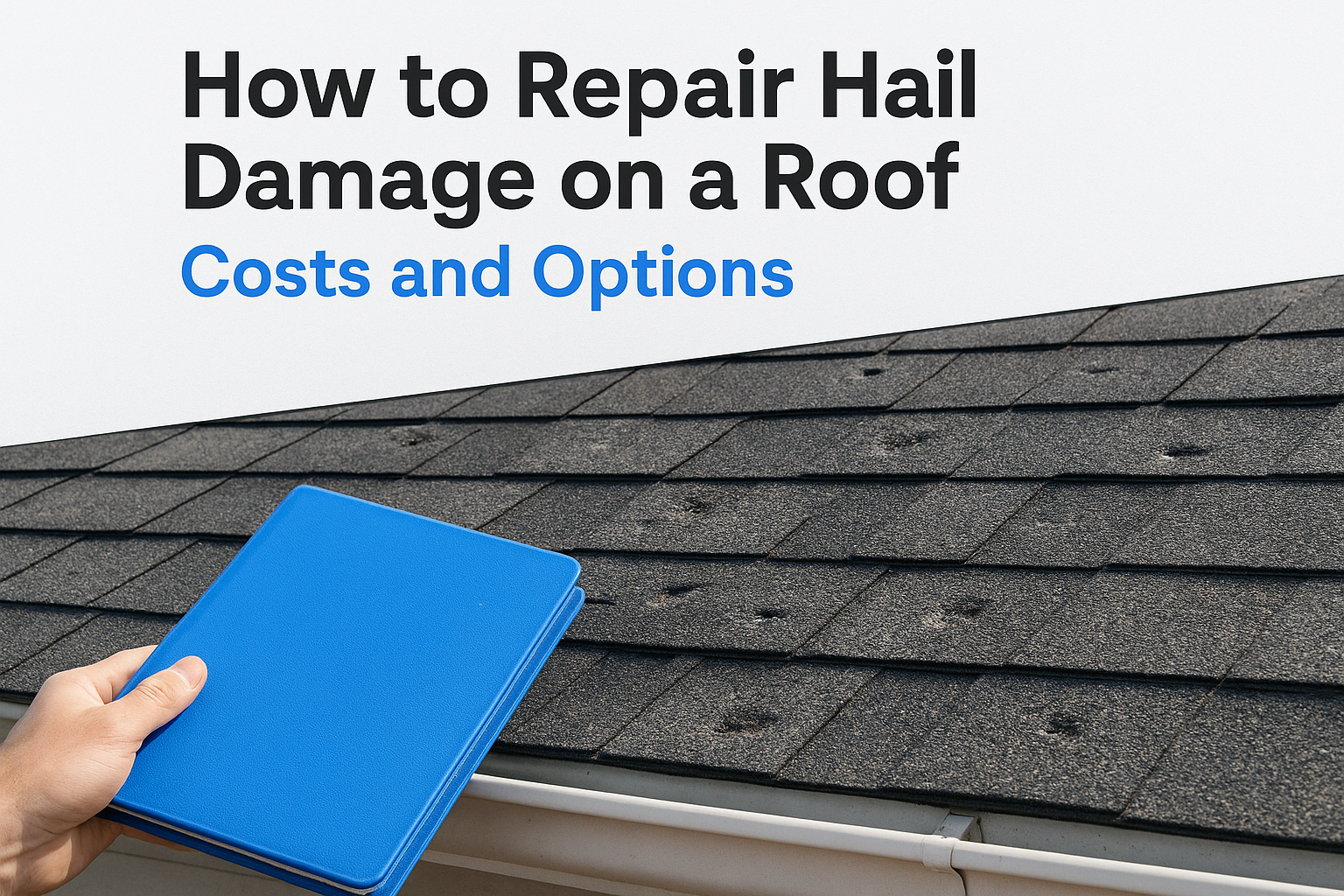
Need emergency roof leak repair? Learn which leaks can't wait, how to contain water safely, document damage for insurance, and when to call a roofer.
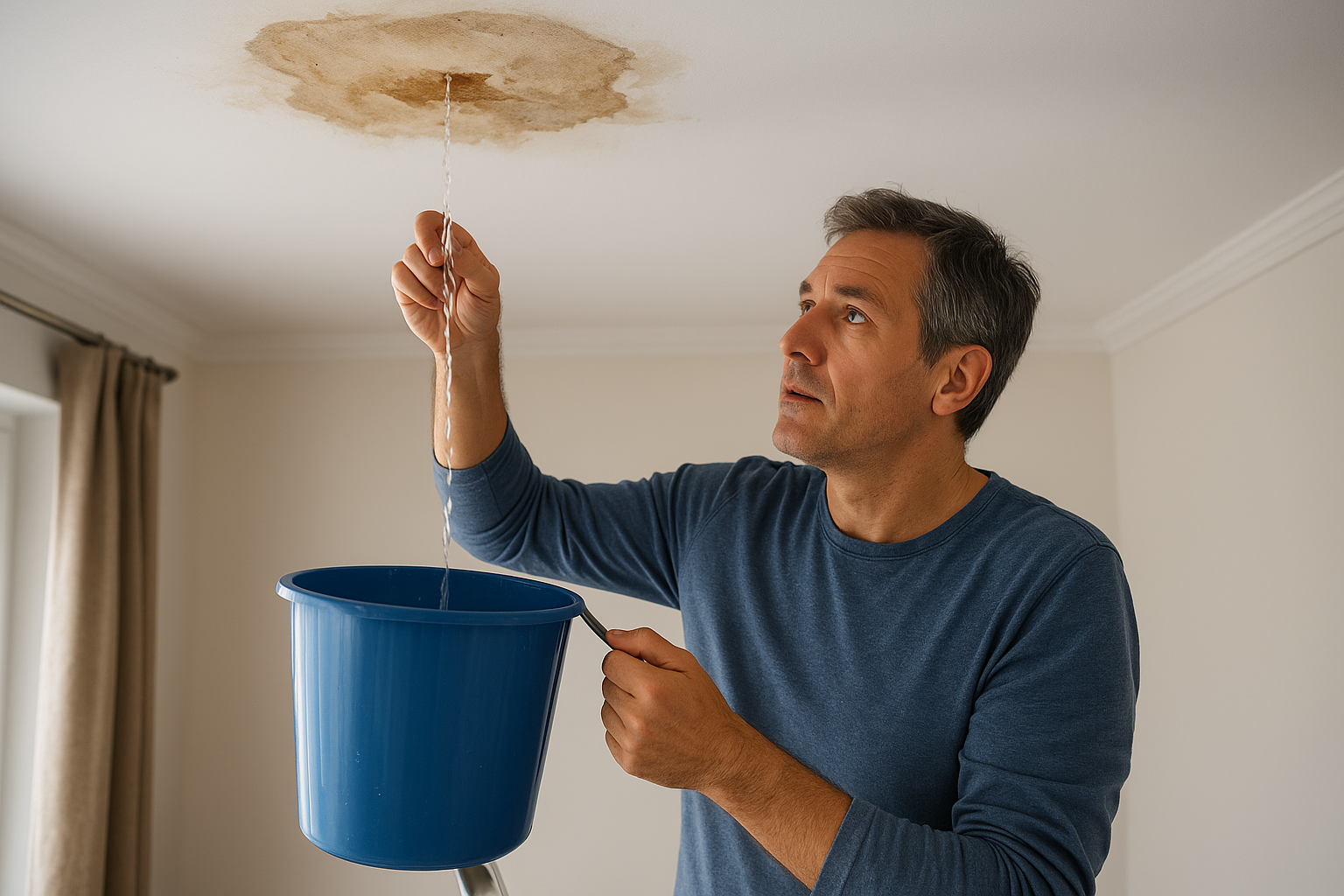
Water is coming through your ceiling right now, and every minute counts. Whether it's a steady drip after a Central Texas thunderstorm or a stain spreading across the drywall, emergency roof leak repair starts with limiting the damage before anyone gets on the roof. Stay calm, and stay off a wet roof yourself. It's slick and dangerous.
Here is the short answer. Move valuables, set out a bucket, and poke a small hole to drain trapped water from a bulging ceiling. Then photograph everything and call a roofer. A tarp or sealant buys you days, not years, so treat any temporary fix as a bridge to a proper repair.
Below, we walk through the exact steps to contain a roof leak emergency, what a temporary fix can and can't do, typical costs, and how insurance usually treats storm-related leaks. At Defend Roofing, we've seen what rushed fixes and missing documentation do to a claim. As a family-owned roofer serving Austin, Cedar Park, and Leander, we'll show you how to protect your home and your paperwork.
Not every drip demands a midnight call, but some do. A leak is an emergency when water is actively entering the home faster than you can contain it, or when it threatens safety or structure. Use the table below to sort your situation in under a minute.
| What you see | Emergency? | Why it matters |
|---|---|---|
| Water near light fixtures, outlets, or ceiling fans | Yes | Shock and fire risk |
| Bulging or sagging ceiling | Yes | Trapped water can bring down drywall |
| Steady flow during a storm | Yes | Damage grows by the minute |
| Shingles missing or peeled back by wind | Yes | The roof deck is open to rain |
| Tree limb or hail impact through the roof | Yes | Open hole, possible structural damage |
| Small stain, no active drip | No, book soon | May be old or intermittent |
| One drip in heavy rain, caught by a bucket | Urgent, not overnight | Contained, but it will return |
Any of the first five rows calls for roof leak emergency repair the same day. Electrical contact is the most serious one. If water reaches wiring, keep everyone away from that area until the power is off and an electrician has checked it.
If water is moving toward wiring or the ceiling is bulging, treat it as an emergency, no matter how small the drip looks.
Slow, contained leaks still need attention, just not at 2 a.m. A stain that isn't growing, or a drip that shows up only in wind-driven rain, can usually wait until the next business day. Contain it, photograph it, and book an inspection within a few days.
Hidden leaks are the trap. A brown-edged stain, a musty smell, or paint that bubbles means water has been getting in for a while. Mold can start within 24 to 48 hours on wet materials, so a leak that looks minor can turn expensive if you ignore it. When you're unsure which category you're in, act like it's an emergency. The cost of a quick call is far lower than the cost of wet insulation and rotted decking.
Emergency roof leak repair begins inside your home, not on the roof. Your first job is containment. Five minutes of prep can save you thousands in ruined furniture and flooring, and it keeps everyone out of harm's way while you sort out the rest.
If water is dripping near fixtures, outlets, or a ceiling fan, turn off power to that room at the breaker panel. Don't touch the panel with wet hands or while standing in water. If you can't reach it safely, call your utility company or 911.
Water and wiring is the one hazard that can't wait, so cut the power before you touch anything else.
Start with what costs the most to replace. Electronics and upholstered furniture go first, then rugs and wall art. Leave a three-foot buffer around the drip zone, and then work through this list:
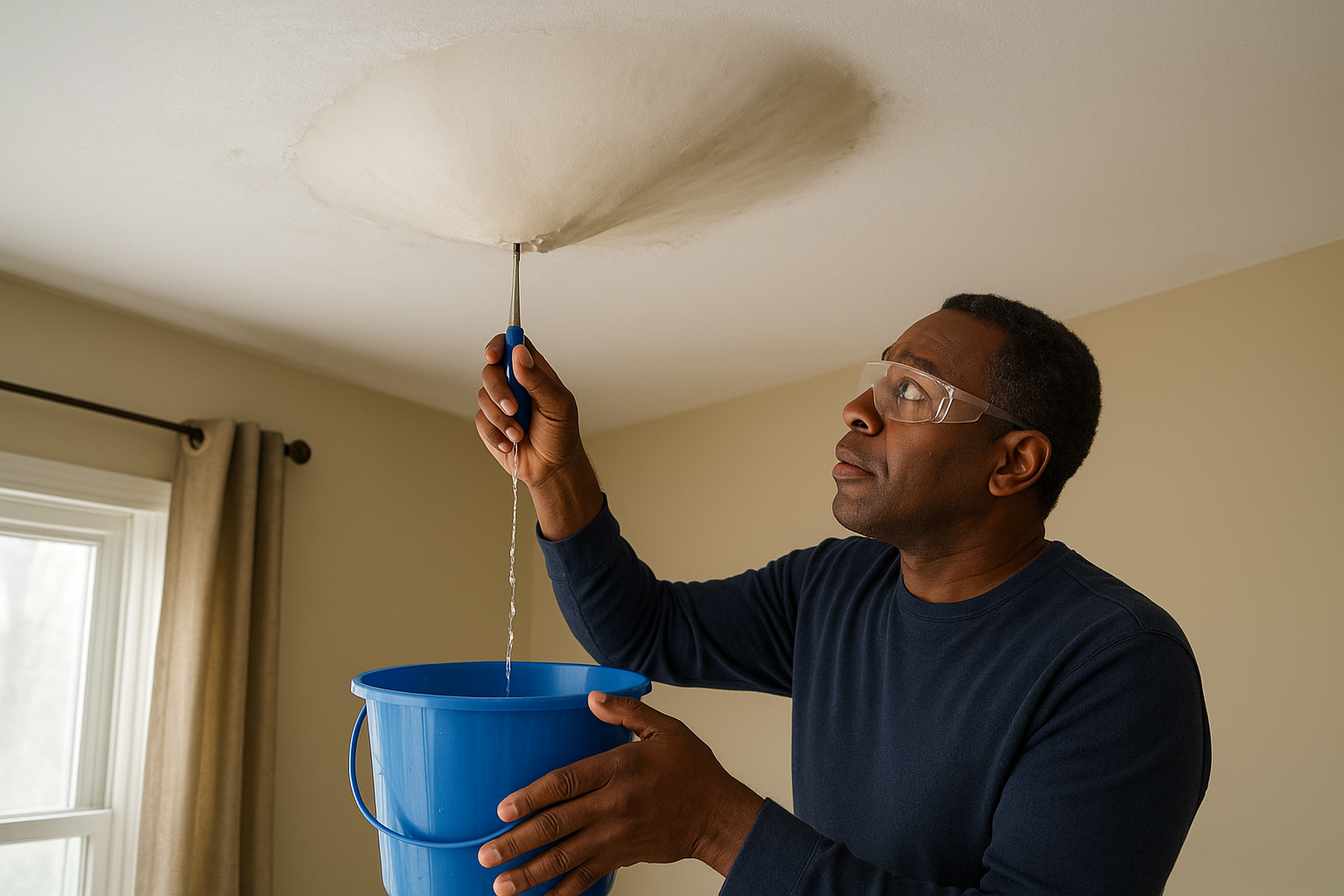
A bulging ceiling can hold dozens of pounds of water, and it can collapse without warning. Stand to the side, never directly under it. Wear safety glasses, put a bucket below, and poke a small hole with a screwdriver at the lowest point of the bulge. The water drains in a controlled stream instead of dumping all at once.
Water rarely drops straight down from the hole. It runs along rafters and decking, so the stain on your ceiling can sit several feet from the real entry point. Finding the true source of the leak is what makes emergency roof leak repair work, because a tarp in the wrong place does nothing.
The drip you see is rarely directly under the hole in your roof.
Grab a flashlight and check the attic, but only if the floor is dry and no wiring is wet. Step only on the joists, never on bare drywall, and work uphill from the stain. Look for:
Snap a photo of anything you find. Then mark the spot with tape or chalk and measure from a fixed landmark like a chimney or vent pipe, so a roofer can locate it from outside.
Once the rain eases, scan the roof with binoculars. Never climb up to look. Focus on flashing around chimneys, vents, and skylights, then roof valleys, then missing, cracked, or lifted shingles.
Hail and fallen limbs leave obvious marks. Failed flashing and sealant don't, and they cause a large share of Central Texas leaks. If you can't spot the source, that's fine. Your attic notes and photos give a roofer a head start.
A temporary fix has one job: keep rain out until a roofer can make a real repair. You can handle the inside work yourself. The outside work is another story, and it carries most of the risk.
Once you've found the entry point, redirect the flow instead of letting it spread. Set a bucket on the attic floor under the wet spot, and lay plastic sheeting over the insulation around it. If water runs down a rafter, tack a plastic strip or rag below the drip so it channels into the bucket. Empty it every hour during a storm.
Tarping is the standard outside fix for emergency roof leak repair, and it's also where homeowners get hurt. Never climb a wet or steep roof to do it yourself. A trained crew has harnesses and the experience to secure it right. Here is what a good tarp job looks like:
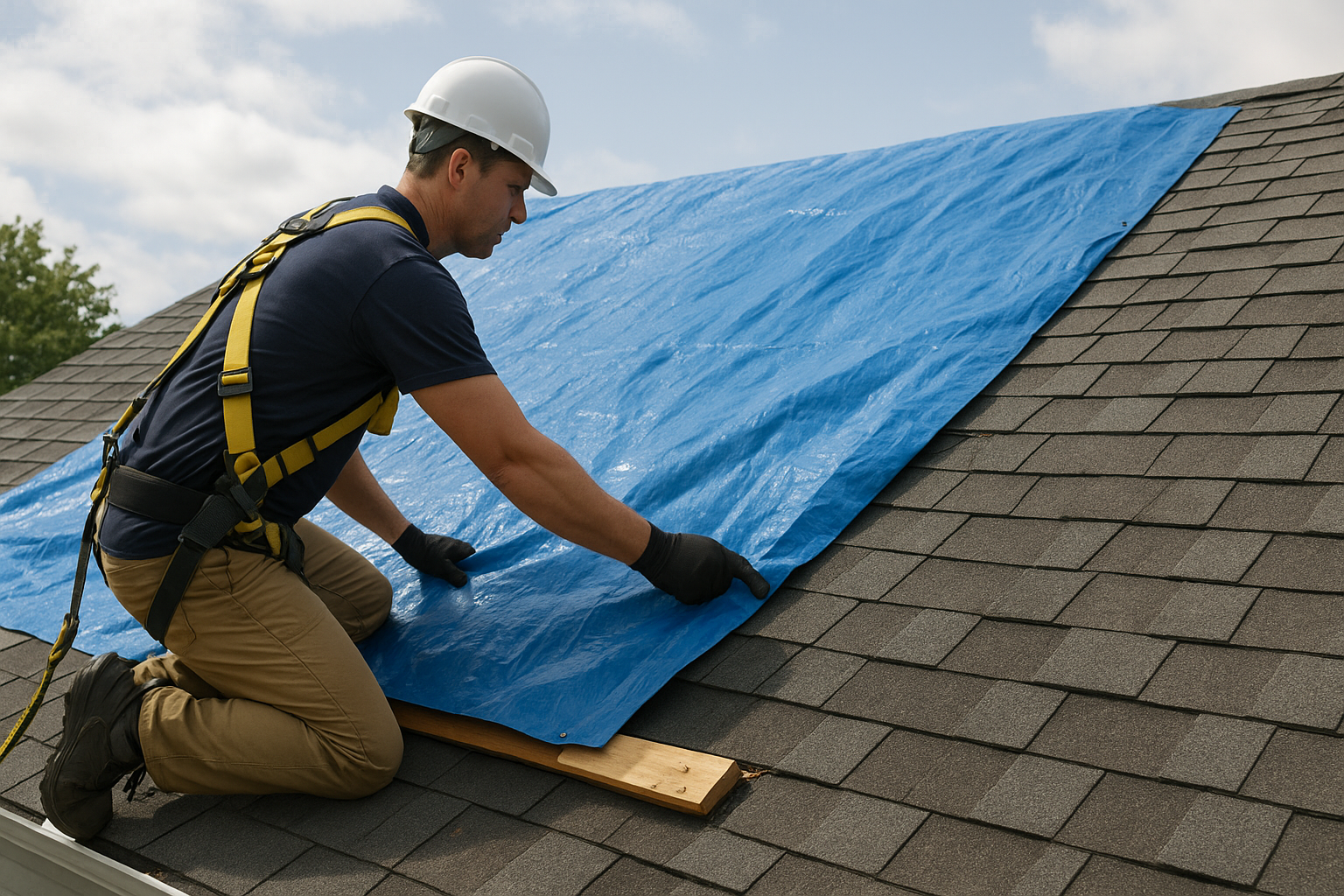
A tarp is a job for a harnessed crew, not a homeowner on a wet roof.
Roofing cement can close a small crack at flashing or a popped nail, but only on a dry surface in dry weather. It fails on wet shingles, and a thick layer can hide damage a roofer needs to see. Whatever you use, keep every receipt for tarps and materials. Many policies reimburse reasonable temporary repairs, and you'll want those records in Step 4.
Documentation decides how smoothly a claim goes. Before you mop up or toss anything, take photos and video of every wet area, inside and out. Adjusters need proof of what the storm did, and dated evidence beats memory every time.
Shoot more than you think you need. Wide shots show the room, and close-ups show the damage.
Photos taken before the cleanup are the strongest evidence you will ever have for a claim.
Next, call a local roofer who handles emergency roof leak repair and ask for a same-day tarp and inspection. Ask whether they document the roof condition in detail. A roofer's photo report gives your adjuster something concrete to review.
Then contact your insurance company to open a claim. Most policies expect you to take reasonable steps to prevent further damage, so your tarp and receipts count in your favor. Ask about your deductible too. Texas wind and hail deductibles are often a percentage of your home's insured value, not a flat amount, so know yours before you decide how to proceed.
Finally, don't sign any contract or paperwork under pressure, especially from door-knockers after a storm. Get the assessment first, then decide.
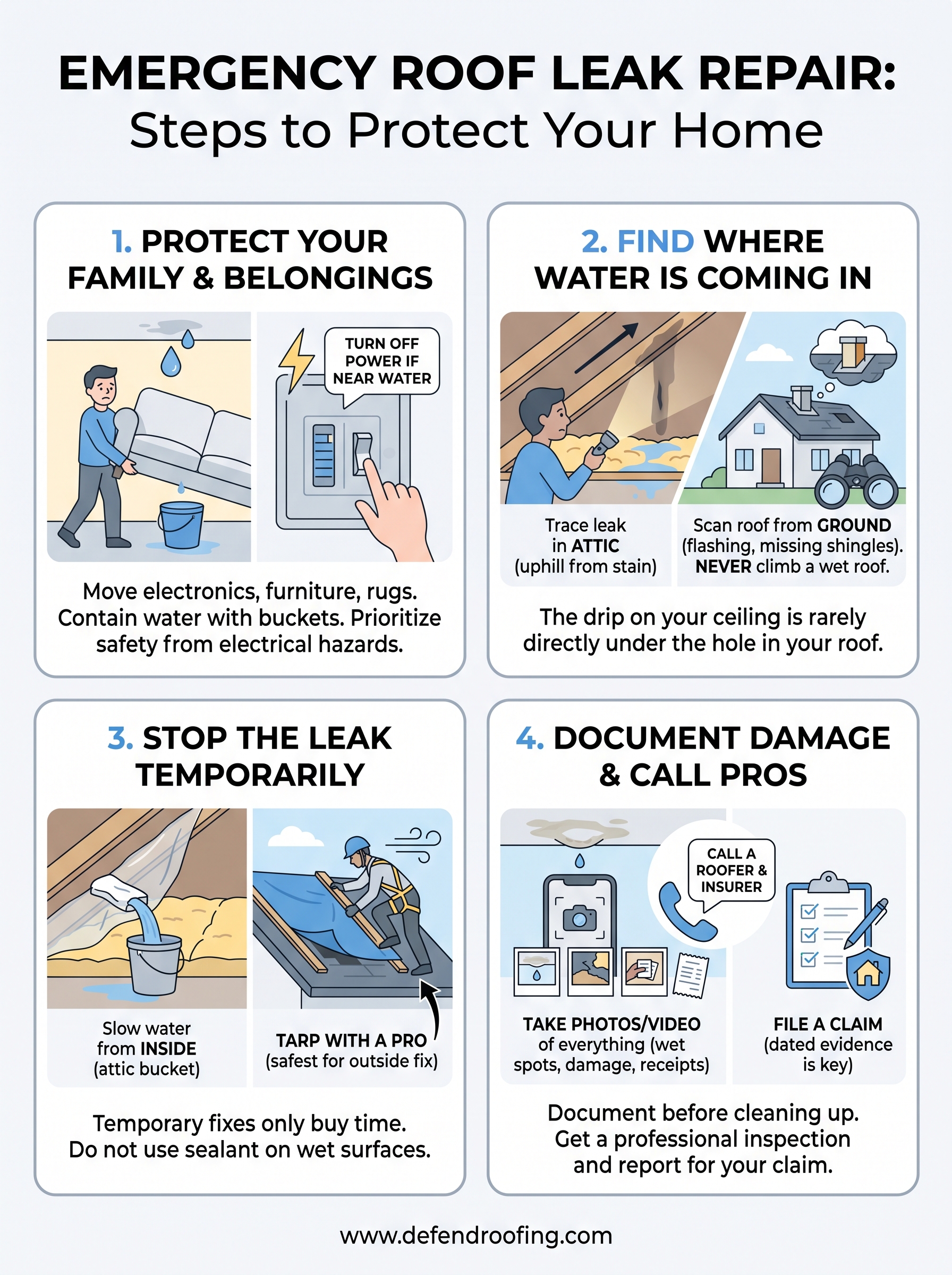
A tarp, a bucket, and a dab of sealant all do the same thing: they buy you time. The real work of emergency roof leak repair is what comes next, a permanent fix at the true source of the leak. Contain the water, find the entry point, cover the roof safely, and document everything before you clean up.
Once the storm passes, don't let a temporary patch sit for weeks. Tarps loosen, sealant cracks, and wet decking keeps rotting underneath. Get a full inspection so you know whether you need a repair or a replacement, and ask for photos that prove it.
At Defend Roofing, every assessment includes 100+ photos and an honest repair-or-replace recommendation, with no pressure to upsell. If water is coming in now, call or text us for an instant online quote and we'll help you protect your home and your claim.