Search 'repair roof leak near me'? Learn the first 10 minutes to act, contain damage, and vet Central Texas roofers before hiring one.

Water spreading across your ceiling doesn't wait for business hours, and neither should your search for help. When you type repair roof leak near me into Google at 9pm with a bucket catching drips in your hallway, you need answers, not a company history page. You want to know who can show up soon, what it's going to cost, and whether you're about to get taken advantage of during an emergency.
This guide gives you a straightforward process for finding a qualified roofer fast, without falling for the first ad or the highest-pressure sales call. You'll learn what questions separate a legitimate contractor from someone chasing storm damage for a quick payday, and how to get a fair, documented estimate before anyone climbs on your roof.
We'll walk through how to spot warning signs while you wait for help, what a real leak diagnosis looks like versus guesswork, and how insurance factors into your repair costs. As a family-owned crew working Cedar Park, Leander, and the rest of Central Texas, we've seen what goes wrong when homeowners rush into repairs blind. This is the roadmap we wish every neighbor had before that first call.
Your first ten minutes matter more than you think. Before you even pick up the phone to search for someone to repair a roof leak near you, take a breath and move through a quick mental checklist. Panicking leads to skipped steps, and skipped steps lead to bigger repair bills later. Treat this like a small emergency response, not a full-blown crisis, because most active leaks can be managed safely for a few hours while you line up the right help.
Grab a flashlight and look at the ceiling or wall where water is showing up. Check for sagging drywall, bubbling paint, or a growing wet spot, since these signs mean water is pooling above and could let go without warning. If you see sagging or hear dripping inside a wall cavity, move furniture and electronics out of the area immediately. Never touch a ceiling fixture or outlet near water intrusion. Wet drywall next to electrical wiring is a shock hazard, not a DIY project.
A leak you catch and contain in the first hour costs far less than one you discover after it's soaked through insulation and framing.
Not every leak needs a 2am emergency tarp crew, and knowing which leaks need help right now keeps you from making the panic call. Use this quick gut check:
Quickly document what you're seeing. Snap photos and short videos of the wet area, the ceiling, and any visible roof damage from the ground. Time-stamped photos help both your contractor and your insurance adjuster later, and they cost you nothing but thirty seconds. This documentation becomes your evidence trail the moment you start calling around for repair quotes.
Getting a bucket under the drip is obvious, but real containment goes further than that. Move quickly to protect your flooring and belongings before you worry about anything else, since water damage to furniture or hardwood often costs more than the roof repair itself. A tarp over the wet area, a fan aimed at the damp spot, and a shop vac ready for standing water are the kind of stopgap steps you can take before help arrives, and they buy you time until a roofer shows up.
Don't rely on a single bucket for an active leak. Set up a layered system so you're not mopping up an overflow at midnight:
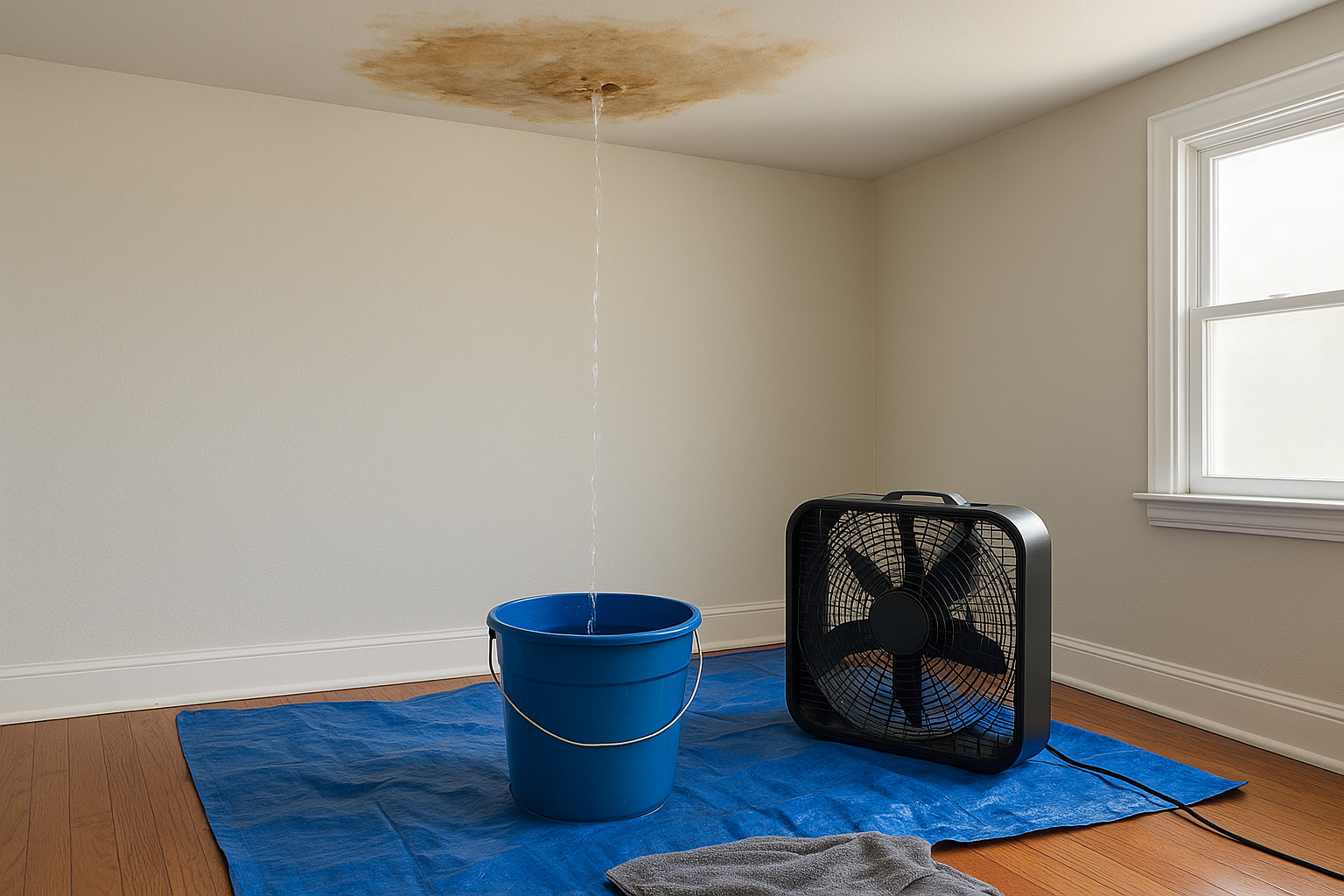
Controlling water indoors buys you time to hire the right roofer instead of the fastest one.
Only go up on the roof if it's dry, daylight, and you're comfortable on a ladder. If any of those conditions aren't met, skip it entirely and wait for a professional. A tarp secured over an obvious hole can slow further intrusion, but climbing a wet or steep roof to chase a leak near you isn't worth the injury risk.
Water rarely drips straight down from where it entered your roof. It travels along rafters, pools at low points, then finds a nail hole or seam to drop through, so the wet ceiling spot is often feet away from the actual roof penetration. Guessing at the source wastes time and money, so it helps to know how to track a leak back to its entry point before a contractor patches the wrong spot and the leak comes right back after the next storm.
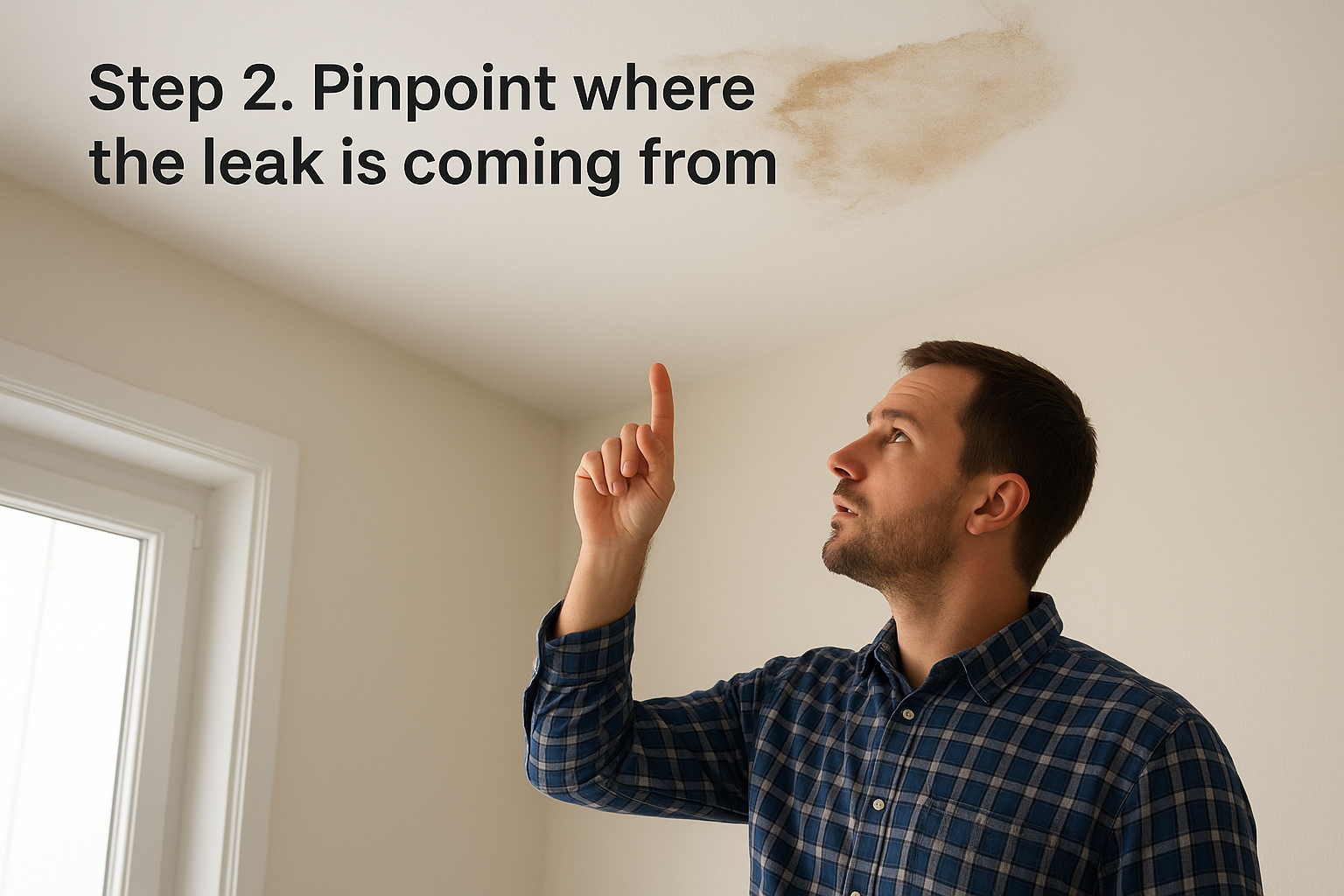
Before anyone climbs a ladder, narrow down the reasons a roof springs a leak based on where the stain shows up inside your home:
Fixing the visible drip without finding the actual entry point almost guarantees a repeat leak.
A thorough inspection means someone gets on the roof, checks the attic for water trails, and photographs every suspect area, not just a quick glance from the ground. Our Precision Roof Assessment documents 100+ photos of your entire roof system, so you see exactly what's failing before you approve any repair.
Searching repair roof leak near me pulls up a dozen ads in seconds, but not all of them belong on your roof. Some are legitimate local crews. Others are storm-chasing outfits that show up after big weather events, collect a deposit, and vanish before the warranty means anything. Slow down enough to check who you're actually hiring, even when water is dripping in your hallway.
Verify that any contractor carries general liability and workers' comp insurance, and ask for a certificate of insurance before they touch a ladder. Look for a physical address in your area, not just a phone number and a truck. Texas doesn't require a state roofing license, so a real local track record, reviews tied to your neighborhood, and years in business matter more here than a certification badge, and those are the traits that mark a roofer as reputable.
A contractor who won't show proof of insurance shouldn't be climbing your roof, no matter how fast they can arrive.
Run through this quick list of questions worth asking before you hire a roofer on the phone before scheduling anyone:
Straight answers here tell you more than any five-star review.
Once you've got two or three estimates in hand, resist the urge to pick whoever's cheapest. Pricing on a roof leak repair swings widely based on the scope of damage, roof pitch, and material match, so it pays to know what leak repairs cost by damage type before assuming a lowball quote is a better deal rather than missing steps. Look at what's actually included: is decking replacement covered if it's rotted, or does that show up as a surprise change order later?
A solid quote spells out materials, labor, and warranty terms in writing, not just a total dollar figure. Compare estimates side by side using a simple table:
| Line item | Contractor A | Contractor B |
|---|---|---|
| Flashing repair/replacement | Included | Extra charge |
| Decking replacement (if needed) | Per sq ft rate listed | Not mentioned |
| Workmanship warranty | 5 years written | Verbal only |
| Cleanup and disposal | Included | Included |
The cheapest number on paper rarely stays the cheapest number once repairs start.
Storm-related leaks often qualify for a homeowners insurance claim, but only if the damage is documented before repairs begin. Ask your contractor whether they'll meet the adjuster on-site and provide photo evidence supporting a roof claim filed step by step. Defend Roofing handles insurance claim support directly, so you're not translating adjuster jargon alone. If a full replacement isn't covered, ask about financing options before assuming repairs are out of reach financially.

A roof leak feels urgent because it is urgent, but panic doesn't fix drywall or find the actual entry point. Contain the water, document what you see, and slow down long enough to hire someone who inspects instead of guesses. Being methodical here saves you from repeat leaks, inflated invoices, and the headache of chasing a storm-chaser crew that's long gone by the time your warranty matters.
Central Texas homeowners deal with hail, wind, and sudden downpours every season, and that means finding a repair roof leak near me search that actually leads somewhere reliable isn't optional. It's part of owning a home here. Get the diagnosis right, get the paperwork straight with your insurer, and get a crew on your roof who'll still answer the phone next year.
If water's already dripping and you want a straight answer fast, call, text, or get an instant quote for a documented leak inspection instead of a guess.