Learn to spot roof hail damage repair needs, document storm damage for insurance claims, and decide repair vs. replace with Defend Roofing's guide.

A hailstorm rolls through Central Texas, and a few days later you notice dents on your gutters or granules piling up in the downspout. Now you're standing in your yard wondering if your roof needs a patch job or a full teardown, and whether your insurance company will even cover it. Roof hail damage repair isn't something most homeowners deal with often, so it's easy to feel unsure about what's actually necessary versus what a contractor might be pushing on you.
This guide walks you through exactly what to look for, how professionals evaluate hail damage on roof surfaces, and what determines whether repair makes sense or replacement is the smarter long-term call. You'll also get realistic cost estimates for materials and labor in the Austin area, so you're not caught off guard by a quote.
We'll cover how to spot the warning signs after a storm, what a proper damage assessment involves, how the insurance claim process typically plays out, and when it's worth calling in a local roofing crew instead of tackling repairs yourself. If you're trying to figure out your next move after a hailstorm, this is where you start.
Hail doesn't need to be baseball-sized to cause real problems. Even hail as small as one inch in diameter, moving at 30 to 60 mph, can bruise asphalt shingles, crack the fiberglass mat underneath, and knock loose the granules that protect your roof from UV rays, so it helps to know how big hail has to be to damage a roof. Granule loss exposes the asphalt layer to sun and moisture, which speeds up aging and can shave years off a roof's lifespan even when there's no visible hole.
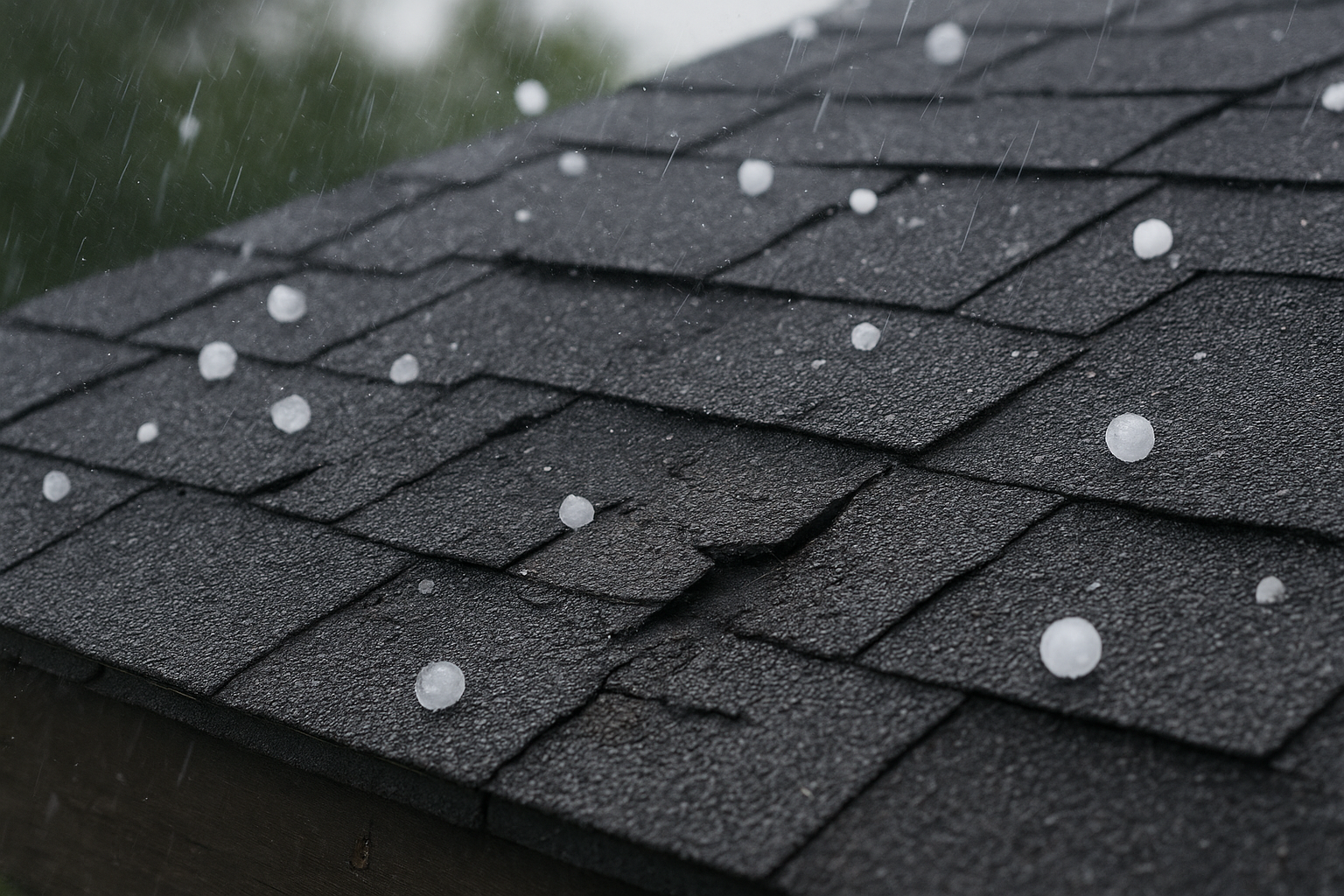
A roof doesn't have to look destroyed to be seriously damaged.
The angle a hailstone hits at matters as much as its size. A direct hit on a steep slope does more damage than a glancing blow on a low-pitch roof, which is why roof pitch and storm direction both factor into how professionals assess a claim. Wind-driven hail also tends to concentrate damage on one or two roof faces rather than spreading it evenly, so an inspector will check every slope separately.
Not every roofing material takes a hit the same way, and comparing how residential roofing materials hold up helps you understand what your contractor is looking for during a hail damage repair on roof inspection.
| Material | Common Hail Damage |
|---|---|
| Asphalt shingles | Bruising, granule loss, cracked mat |
| Metal panels | Dents, denting at seams |
| Wood shakes | Splitting, cracking |
| Tile | Cracks, chipped edges |
Gutters, vents, and flashing take hits too, and damage there is often the first visible clue that your roof needs a closer look.
Before you call anyone, take a walk around your property and look for the obvious clues. Check your gutters, downspouts, and any metal vents or flashing for dents, since these softer metals show impact marks long before shingles do. Look at your yard and driveway too. Torn leaves, dented AC units, or dinged patio furniture are all signs the storm packed enough punch to affect your roof surface.
If your gutters are dented, assume your roof took a hit too.
Don't climb up there yourself. Wet or granule-covered shingles get slick fast, and hail damage often isn't visible from a ladder anyway. Instead:
Once you've spotted warning signs, schedule a professional inspection. A trained eye can tell the difference between cosmetic wear and structural hail damage that needs documentation before you file a claim, and it helps to learn the 12 signs that point to hail damage yourself.
Once you suspect storm damage, get a licensed roofer out for a full Precision Roof Assessment before you call your insurance company. Photos taken during a professional inspection, ideally 100 or more, give an adjuster clear evidence instead of vague descriptions, which speeds up approval and reduces the chance of a lowball offer.
An insurance claim is only as strong as the documentation behind it.
A solid claim file needs more than a few snapshots. Ask your contractor for:
Most Central Texas insurers give you one year from the storm date to file, but don't wait that long. Report the claim promptly, request an adjuster visit, and have your contractor present during the inspection so nothing gets missed or underestimated in the final scope of work, and work through a step-by-step roof claim checklist as you go.
Once the adjuster's report comes back, you and your contractor need to weigh whether a roof repair hail damage scope actually solves the problem or just delays a bigger expense. A handful of cracked shingles on one slope might only need spot repairs, but widespread bruising, granule loss, or damage on multiple roof faces usually points to full replacement.
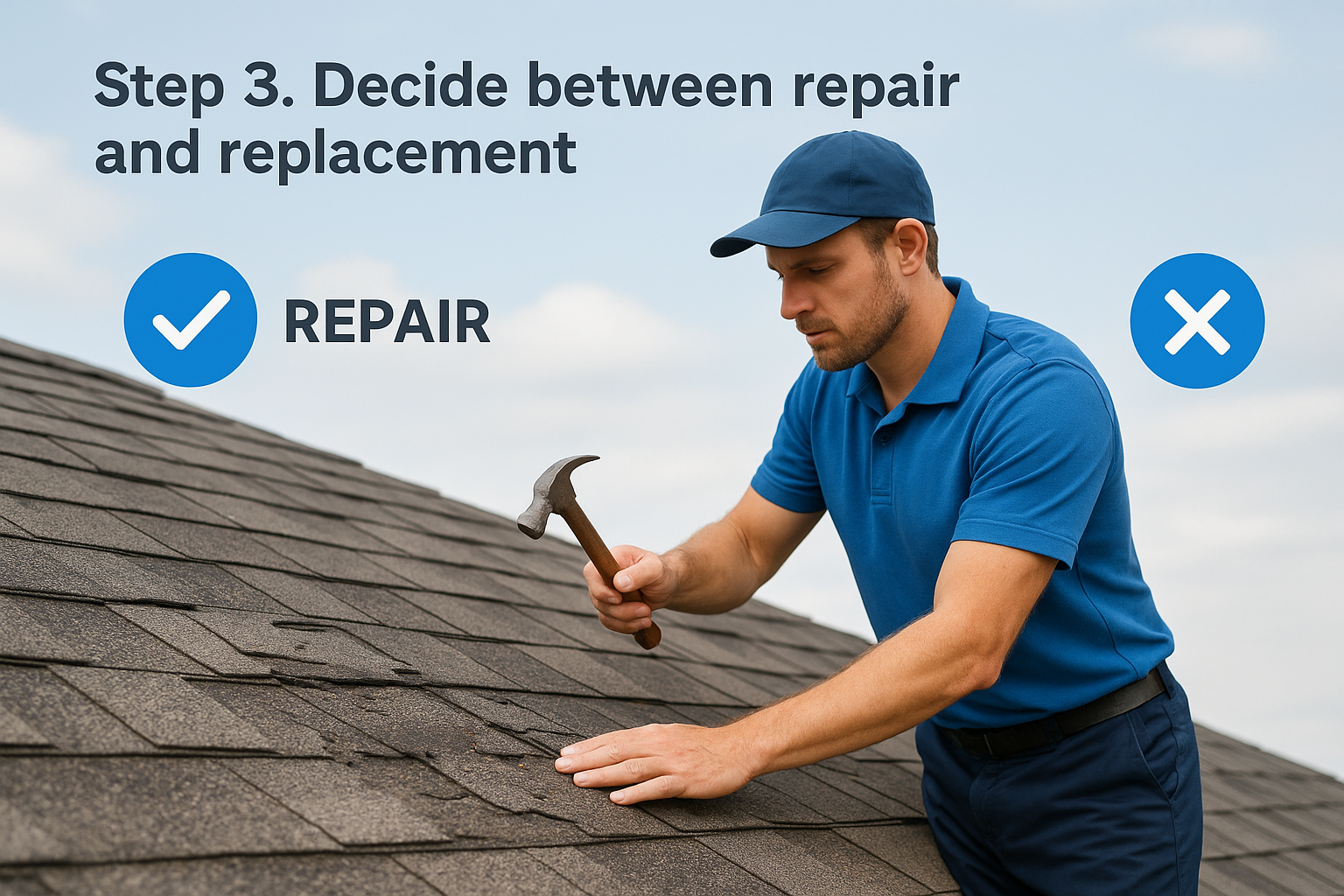
Patching a roof that's failing everywhere just delays the inevitable and costs more overall.
Work through these before signing off on any repair estimate:
Roofs older than 15 years, or those with damage on three or more slopes, almost always come out ahead financially with full replacement rather than a patchwork of repairs that won't match existing shingles or hold up as well long-term, which is the heart of how to decide repair versus replacement for your home.
Once you've settled on repair or replacement, picking the right crew matters as much as the decision itself. Look for a licensed roofing contractor with local references, proof of insurance, and a workmanship warranty that backs up their labor, not just the shingle manufacturer's coverage, and know the red flags to watch for before hiring. Defend Roofing offers a Limited Lifetime Workmanship Warranty on installations, and understanding how long workmanship coverage lasts and what it includes tells you what to ask every bidder before you sign anything.
A warranty that only covers materials leaves you exposed if the installation fails.
Get these details in writing before the crew shows up:
Good crews protect landscaping, use magnetic sweepers to catch stray nails, and photograph the finished work for your records. Reputable contractors won't rush a job just to move to the next one, and they'll walk you through exactly how to repair roof hail damage properly so it holds up through the next storm season.
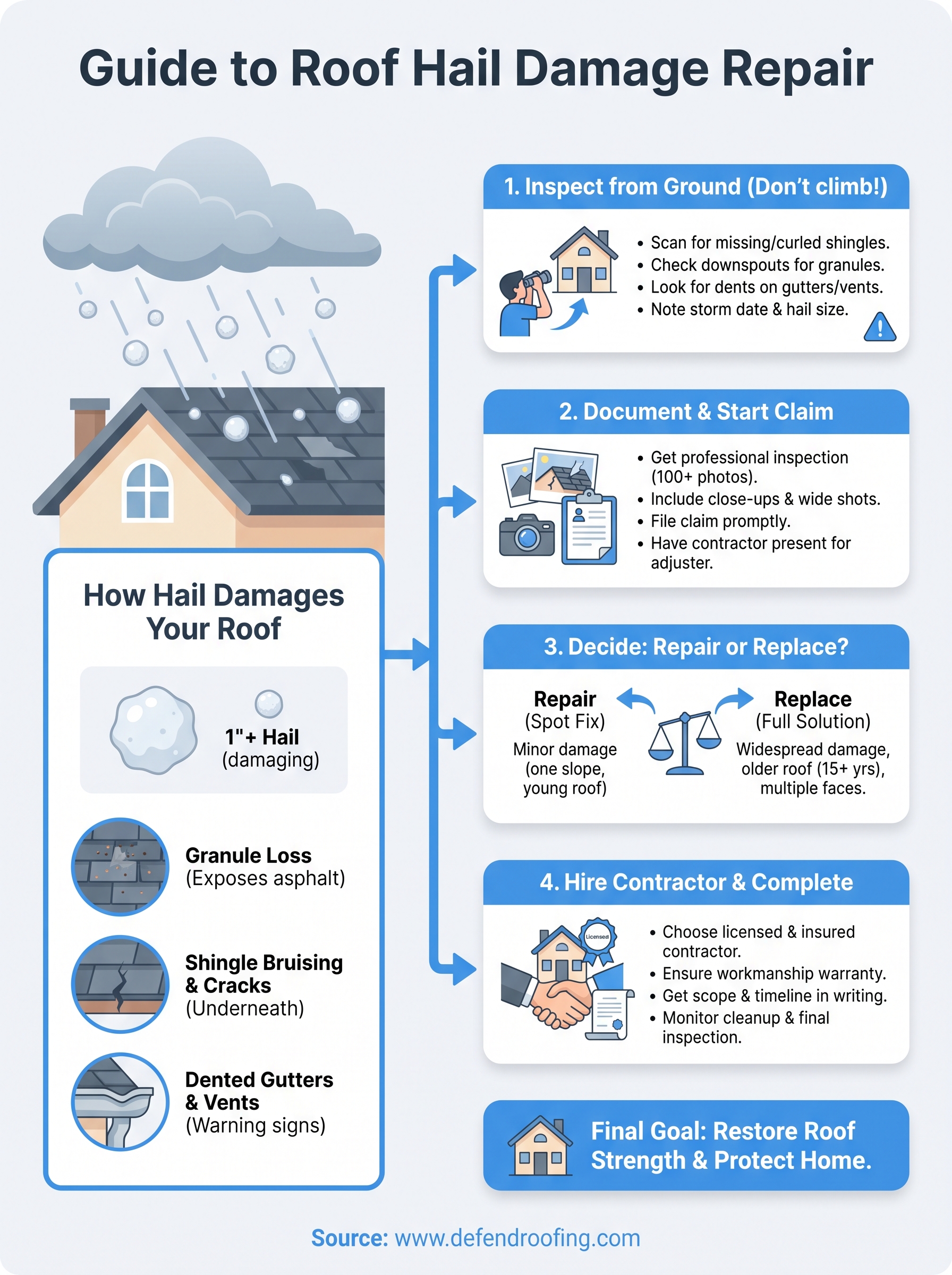
Hail damage rarely announces itself with a hole in the ceiling. It shows up as granule loss, dented flashing, and bruised shingles that quietly shorten your roof's lifespan until a leak forces the issue. Catching it early, documenting it thoroughly, and choosing repair or replacement based on facts rather than guesswork protects both your home and your wallet.
Getting roof hail damage repair right comes down to the steps you've just read: inspect carefully, build a strong insurance file, weigh repair against replacement honestly, and hire a crew that backs its work with a real warranty. Skip any of those steps and you risk paying twice, once for a patch job and again for the full replacement you needed all along.
If a recent storm has you second-guessing your roof's condition, don't wait for a leak to confirm it. Call, text, or get an instant quote for a hail damage assessment from Defend Roofing, with numbers you can trust.