Protect your Austin home with this seasonal roof maintenance checklist. Learn how to spot damage, clear gutters, and handle Texas heat in 5 simple steps.
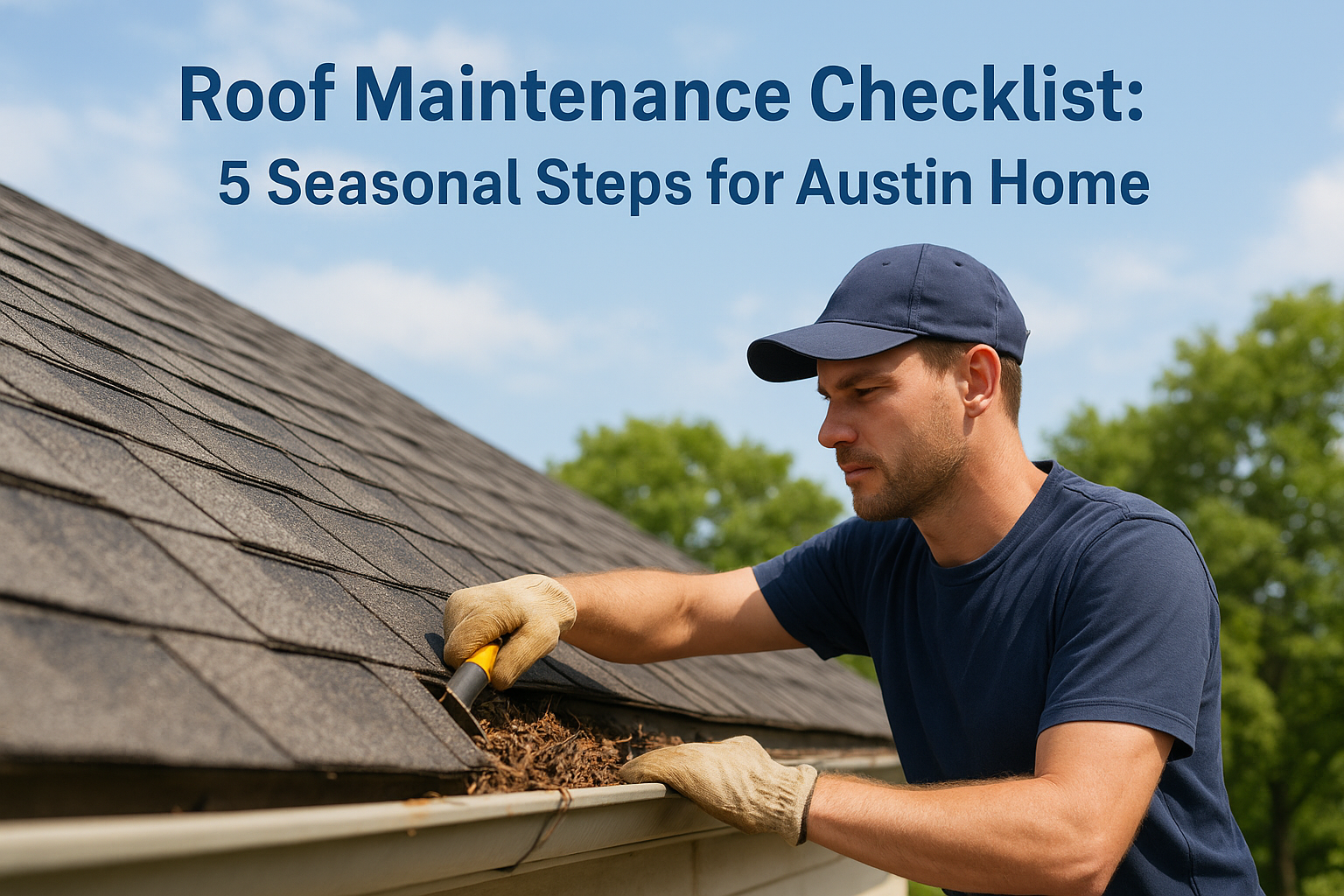
Austin roofs take a beating. Between hailstorms in spring, triple-digit heat through summer, and the occasional ice event in winter, your roof deals with more than most homeowners realize. A solid roof maintenance checklist gives you a clear plan to catch small problems before they turn into expensive repairs or a full replacement.
The tricky part is knowing what to look for and when. Most roof damage doesn't announce itself, it builds quietly over months or years until a leak shows up on your ceiling. Seasonal inspections change that. They put you ahead of the damage cycle instead of behind it, and they help you make smarter decisions about when to repair and when to replace.
At Defend Roofing, we've spent three generations working on Central Texas roofs, and we've seen firsthand what skipped maintenance costs homeowners. Chris and Greyson Buster built this company around honest assessments and thorough documentation, the same principles behind the checklist below. Here are five seasonal steps to keep your Austin home's roof in strong shape year-round.
Every solid roof maintenance checklist starts with a baseline: knowing exactly what condition your roof is in right now. Without that foundation, you're guessing. A documented inspection with photos, notes, and specific damage locations gives you a reference point to measure against each season and helps you catch deterioration before it turns into a serious problem.
Start with a visual inspection from the ground using binoculars. Walk the full perimeter of your home slowly and scan the entire roof surface from multiple angles. If you can safely access your attic, go inside and check for daylight coming through the decking, water stains, or soft spots in the sheathing. Keep a simple log with the date, what you observed, and photos taken from your phone.
Your inspection should focus on areas where water is most likely to enter: flashing around chimneys, vents, and skylights, along with the valleys where two roof planes meet. Look for cracked, curling, or missing shingles across the field of the roof. Granule buildup collecting in your gutters is another reliable indicator that your asphalt shingles are breaking down faster than normal.
If you notice granules filling your gutters after every rain, your shingles are aging out and you need a professional assessment soon.
Call a professional when your inspection turns up anything you cannot clearly identify or any active leak, regardless of how minor it seems. You should also bring in a roofer after any hail event or severe storm in Central Texas, even if nothing looks obviously wrong from the ground. Storm damage frequently hides beneath the surface, and a trained contractor can document it properly if you need to file an insurance claim.
Spring in Central Texas brings heavy rain and active storm season, which makes it the most critical time to clear your roof and gutters. Debris and standing water from winter accumulation can block drainage fast, and blocked drainage is one of the most common causes of preventable roof and fascia damage homeowners face.
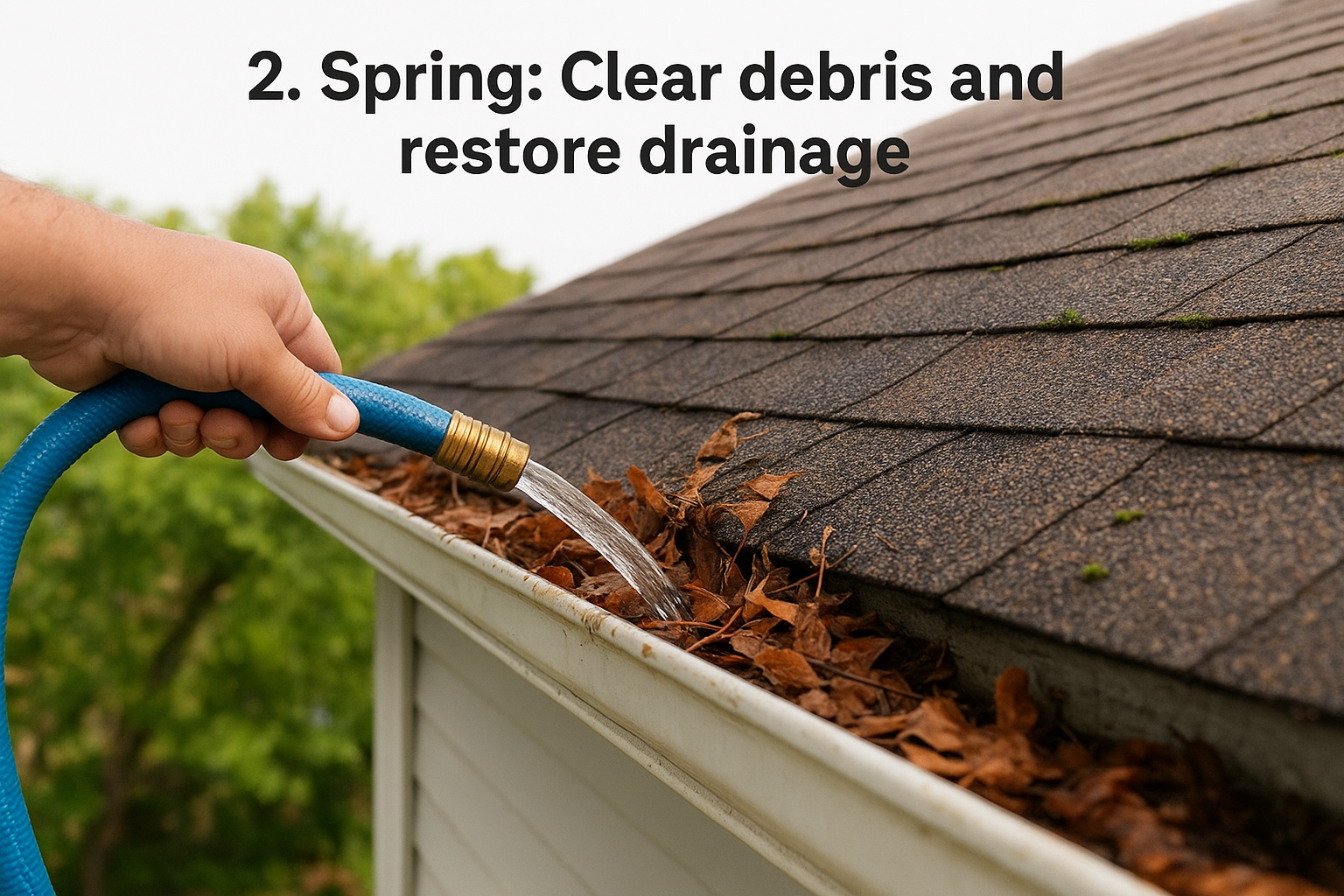
Start by clearing all leaves, twigs, and buildup from your gutters and downspouts. Run water through the gutters with a garden hose to confirm it flows freely. While you're at it, rinse the roof surface gently to wash loose granules and debris toward the gutters so you can see what's coming off.
This part of your roof maintenance checklist should focus on drainage and surface integrity. Look closely at the granule runoff collecting in your gutters. Excessive granule loss after mild rain indicates shingles that are approaching the end of their service life, not just normal weathering.
If your downspouts are clogged and water is pooling on the roof surface, you're accelerating damage to both the shingles and the underlying decking.
Call a professional if you spot sagging gutters, rotted fascia, or soft spots along the roof edge. These issues go beyond routine cleaning and usually signal water has already been sitting longer than it should.
Austin summers are brutal. Sustained heat above 100°F accelerates shingle degradation and puts real stress on your attic ventilation system. Poor ventilation traps heat, which drives up attic temperatures and shortens the lifespan of your roof deck and shingles faster than almost any other single factor.
Summer is the right time to check whether your attic ventilation is functioning properly. Head into the attic during the hottest part of the day and note how hot the space feels compared to outside. You should also inspect the roof surface for shingles that appear blistered, buckled, or separating from the decking.
Your roof maintenance checklist for summer should focus on heat-related surface damage and ventilation failure. Blistered shingles appear as raised bubbles on the surface and signal trapped moisture or inadequate ventilation beneath the shingles. Either problem needs attention before fall storm season arrives.
If your attic consistently runs more than 20°F above the outdoor temperature, your ventilation system is failing and actively accelerating roof wear.
Call a professional if you find blistered or buckled shingles across more than a small isolated section of the roof. A roofer can determine whether the damage stems from blocked vents, a ventilation design problem, or shingles that need replacement before the next storm season hits.
Fall is your last window to prepare before winter weather arrives. In Central Texas, that means getting ahead of potential ice events, wind-driven rain, and debris from oak and cedar trees. Overhanging branches and unsealed flashing are the two biggest vulnerabilities heading into colder months.
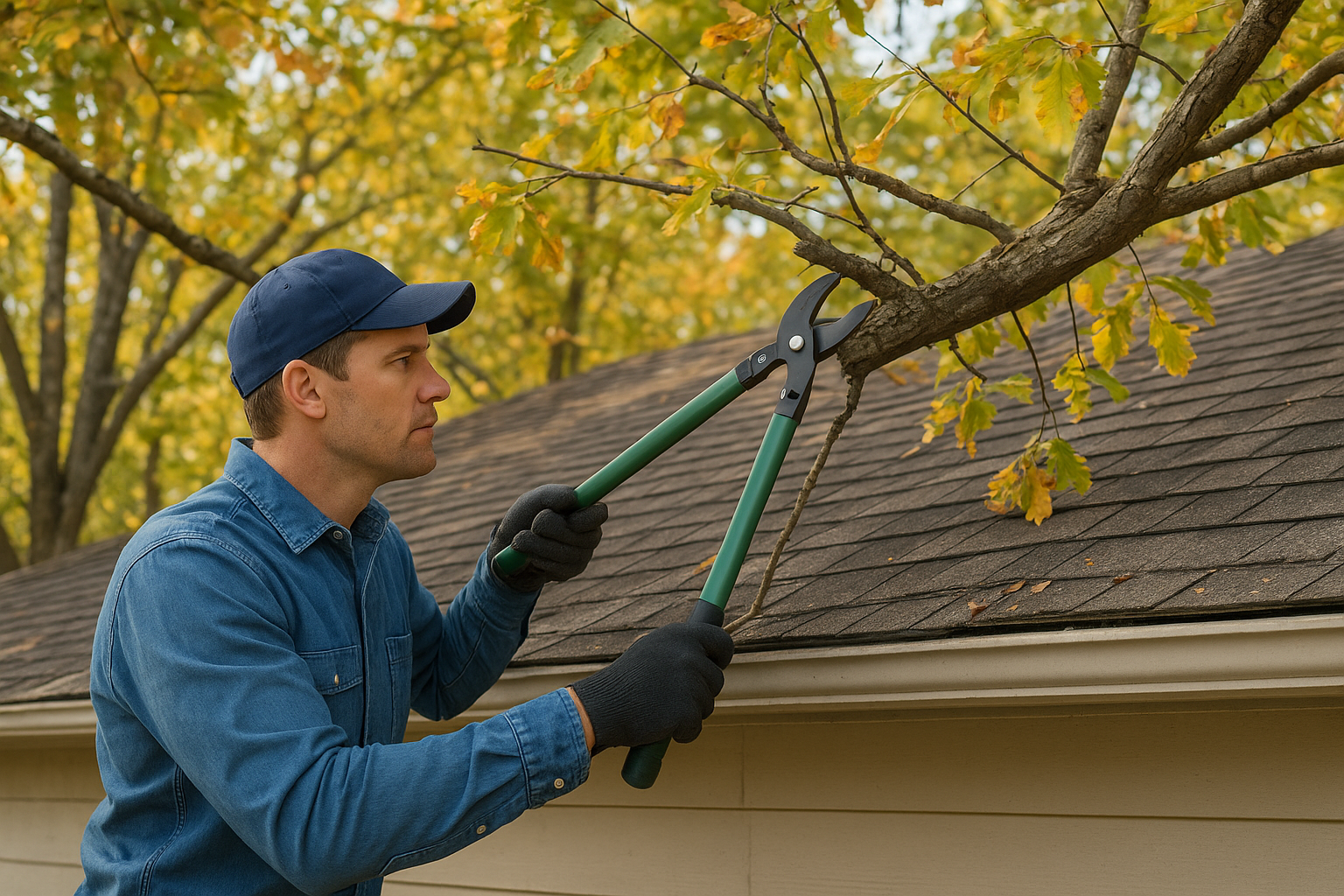
Focus fall maintenance on cutting back any tree branches that hang within six feet of your roof surface and sealing exposed areas where water can work its way in. Apply roofing caulk or flashing sealant around chimney bases, pipe boots, and any penetrations showing dried or cracked material from summer heat.
Your roof maintenance checklist in fall should focus on flashing condition and physical vulnerabilities. Look for lifted flashing edges, cracked sealant, or shingles that have shifted near any roof penetration. These spots fail first under ice or heavy winter rain.
A failed pipe boot seal is one of the most common causes of interior water damage during winter rain events in Central Texas.
Call a professional if you find flashing that has separated from the roof surface or sealant that has deteriorated across multiple areas. These repairs require proper technique to hold through winter weather, and a missed seal can allow moisture to reach your roof deck before spring inspections catch it.
Winter in Central Texas may be mild compared to northern states, but freeze-thaw cycles and prolonged rain still create real roof risk. Water that enters through even a small gap during cold months sits longer, dries slower, and creates the right conditions for mold and wood rot to take hold before you notice anything from inside the house.
Your roof maintenance checklist for winter centers on early leak detection and moisture control. Check your attic and ceiling surfaces after every significant rain event, not just once per season.
Focus your attention on attic condensation and ceiling stains near exterior walls. Mold growth often starts in the attic well before it becomes visible on finished ceilings, so checking insulation directly gives you a faster warning than waiting for interior signs to appear on your living space ceilings.
If you spot dark discoloration on attic insulation or wood framing after a rain event, treat it as an active leak until a professional confirms otherwise.
Call a professional if you find any active moisture in your attic or ceiling during winter. Leaks that sit through a wet season cause structural damage that costs significantly more to fix than the original roof repair would have.
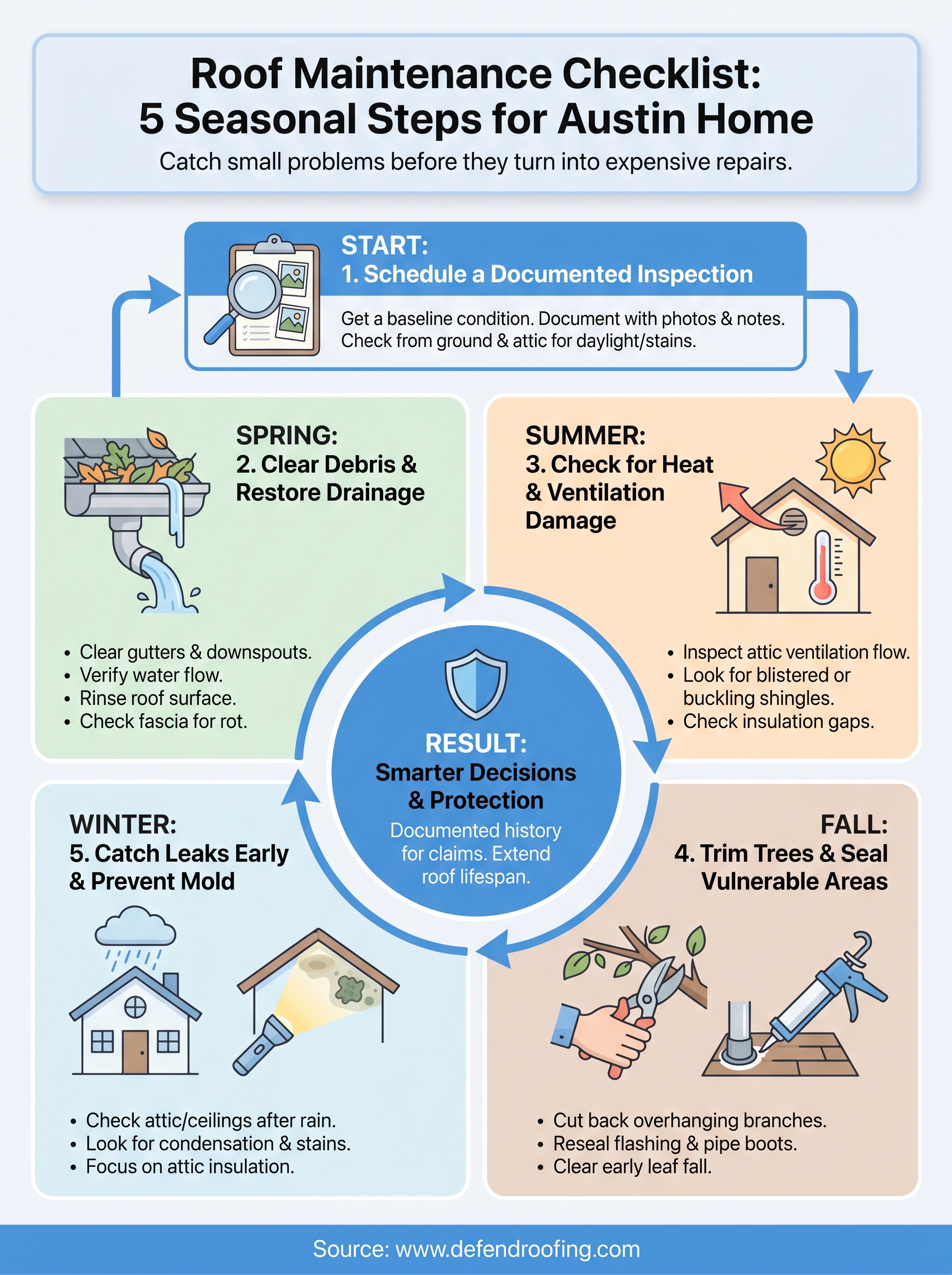
Following this roof maintenance checklist season by season gives you real control over one of your home's biggest assets. Small inspections done consistently cost far less than the repairs you avoid by catching problems early. Austin's climate moves fast between extremes, and roofs that get regular attention outlast those that only get looked at after something goes wrong.
Your biggest advantage is documentation. Every photo you take, every date you log, and every repair you track builds a record that protects you when it's time to file an insurance claim or decide between a patch and a full replacement. Honest, evidence-based decisions keep more money in your pocket over time.
If you want a professional set of eyes on your roof before the next storm season, Defend Roofing provides thorough assessments with 100+ photos and clear findings for every project. Schedule your roof inspection today and know exactly what you're working with.