Compare costs and fixes for roof leaks repair, from DIY sealant to full replacement, and learn when Defend Roofing's photo-documented assessment is needed.
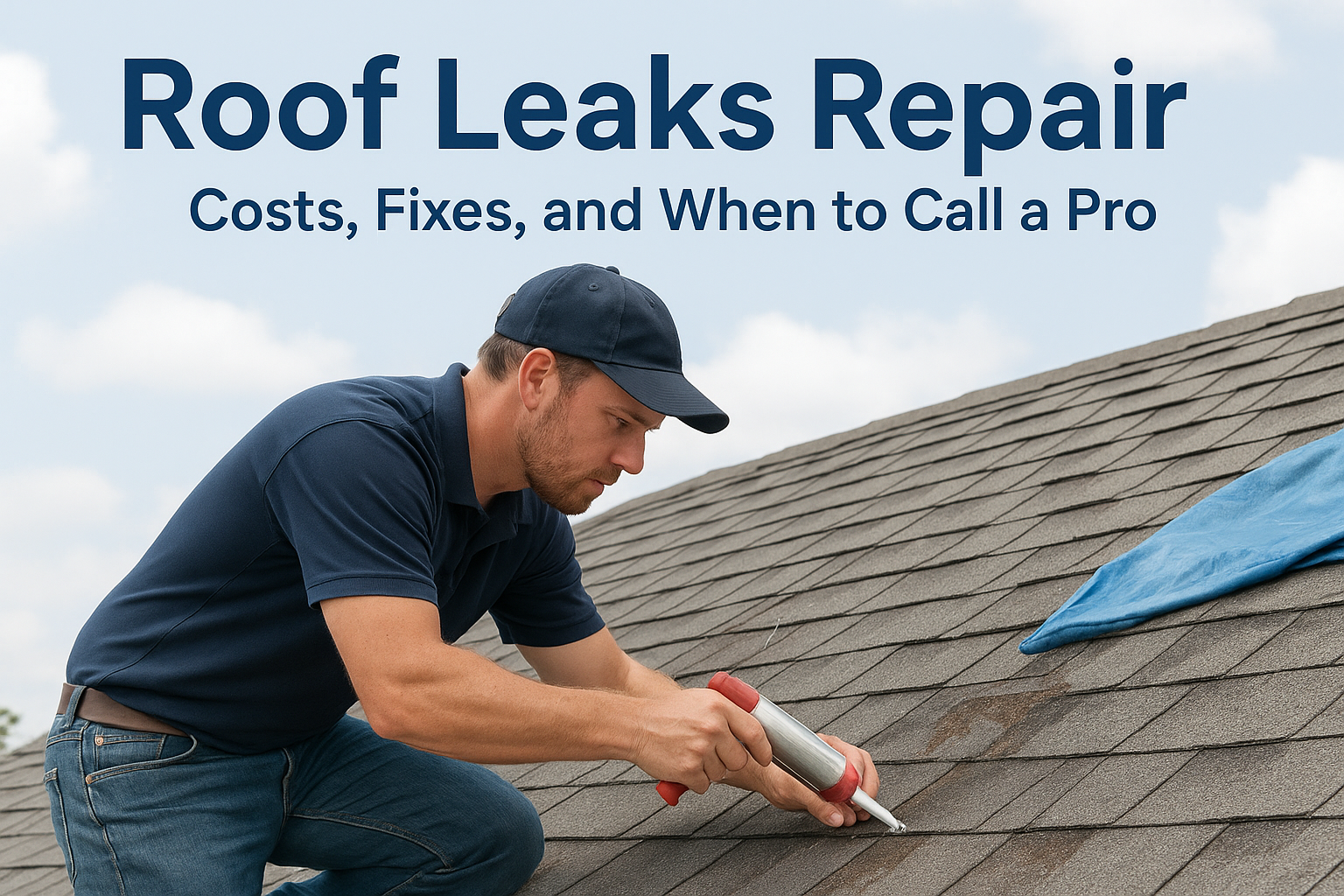
A water stain spreading across your ceiling never stays small. What starts as a faint yellow ring after one storm can turn into rotted decking and a much bigger bill if you wait. If you're searching for roof leaks repair options right now, you're probably trying to figure out three things fast: what's actually causing the drip, whether you can patch it yourself, and how much a real fix costs in Central Texas.
This guide answers all three. We'll walk through the most common leak sources we find on Austin-area roofs, from cracked flashing to failed pipe boots, and break down what roof repairs really cost by damage type based on what we actually see on jobsites, not national averages that don't reflect Texas labor and material pricing. You'll also get a clear read on which fixes are safe to attempt yourself and which ones need a licensed pro on the roof.
We wrote this from three generations of hands-on roofing work, the same documented, no-upsell approach we use on every Precision Roof Assessment. By the end, you'll know exactly what's wrong, what it should cost to fix, and when it's time to call a professional instead of climbing up there yourself.
When a roof is actively leaking, guessing at the cause wastes time you don't have. Defend Roofing starts every job with a Precision Roof Assessment, a documented, 100+ photo inspection that traces the leak back to its actual source instead of just patching the spot where water shows up inside the house. This is the fix most homeowners in Cedar Park, Avery Ranch, and Steiner Ranch call for once they've noticed a stain that keeps coming back.
A licensed roofer climbs the roof, checks flashing, vent boots, shingle courses, and decking around the leak point, and photographs everything as evidence. That documentation matters twice over: it tells you exactly what failed, and it gives your insurance adjuster photo proof for a storm damage claim to review if storm damage is involved. From there, Defend Roofing repairs only what's broken, whether that's a section of flashing or a full slope of shingles, and explains the reasoning before any work starts.
A documented repair protects your wallet twice: once from unnecessary work, and once from a denied insurance claim.
This approach fits homeowners dealing with a persistent or recurring leak, anyone filing an insurance claim, and property owners who want a repair-versus-replace recommendation they can actually trust. It's also the right call if a previous contractor patched the same spot more than once without solving it.
Professional roof leak repairs in the Austin area typically run $350 to $1,500, depending on how much decking, flashing, or shingle area needs work. Full roof replacement runs higher when the damage is widespread, but Defend Roofing will tell you upfront if repair is the smarter move instead of pushing a replacement you don't need.
This is a professional job, full stop. Diagnosing the true source of a leak often means checking areas you can't see from the ground or even from inside the attic, and misdiagnosing it means paying for the same fix twice. If you want a documented, no-upsell assessment before you spend a dollar, contact Defend Roofing for a free evaluation.
When water is pouring in during a storm and no roofer can get up there safely until the weather clears, a tarp buys you time. It's not a repair, it's damage control, and it's the single most useful thing you can do to stop a small leak from becoming a ceiling collapse or ruined insulation.
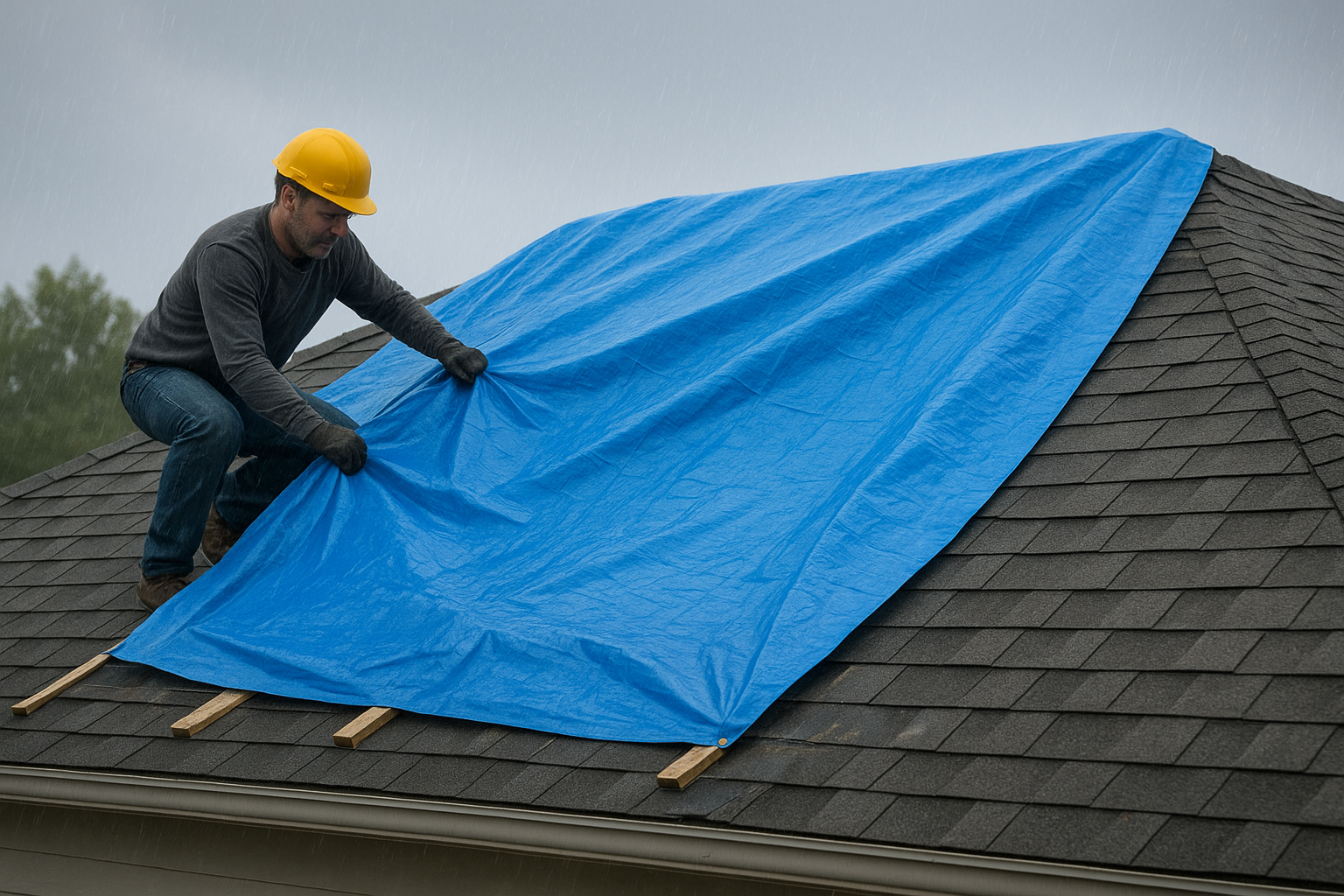
A heavy-duty poly tarp gets stretched over the damaged section and secured with furring strips screwed into the roof deck, not just nails through the tarp itself, which tear loose in wind. The tarp needs to extend past the ridge line so water sheds over it rather than running underneath. Defend Roofing tarps roofs as part of 24/7 storm response for an actively leaking roof, then schedules the real repair once conditions are safe.
A tarp isn't a fix, it's a race against the next rainfall.
This solution fits active storm damage, a missing shingle section exposed overnight, or any situation where a permanent repair has to wait a day or two for materials or safe roof access.
Professional emergency tarping in the Austin area generally runs $150 to $500, depending on roof size and pitch. Many roofers, Defend Roofing included, apply that cost toward the final repair if you hire them for the full job.
A small, low-slope section might be tarp-able yourself if you have fall protection and steady footing. Anything above one story, steep pitch, or a large opening calls for a professional. Climbing a wet roof in a storm is how minor leaks turn into serious injuries.
Missing or curling shingles are the most visible sign of a roof that's starting to fail, and they're often the easiest leak source to catch early. Wind lifts a shingle's edge, the seal breaks, and water starts working underneath on the next rain. Catching this before it spreads to the decking is one of the cheapest ways to stop a leak for good.
Repairing roof shingles step by step means pulling the damaged shingles, checking the underlayment beneath them for softness or staining, and installing new shingles matched to the existing course. Nail placement matters here: too high and the shingle won't seal, too low and it splits. Defend Roofing matches shingle color and profile as closely as possible so the repair doesn't stand out from the street.
A single missing shingle left alone for one season can turn into a full sheet of rotted decking.
This fix suits isolated wind or hail damage affecting a handful of shingles, aging roofs shedding granules in one spot, and homeowners who caught the problem before water reached the attic.
Shingle repair in Central Texas typically runs $300 to $800 for a small section, depending on shingle type and how much decking needs replacing underneath.
Swapping a few shingles is within reach for a comfortable DIYer with the right tools and a stable ladder. But matching the seal strip correctly and checking hidden decking damage is where most homeowner attempts fall short, so a second opinion from a pro is worth the call.
Flashing and vent boots are where most roof leaks actually start, even though homeowners rarely think to look there. These are the metal strips and rubber collars sealing every place something interrupts the roof plane: chimneys, skylights, plumbing vents, and roof-to-wall junctions. Once the rubber cracks or the metal pulls loose, water finds a direct path into the attic without ever touching a shingle.
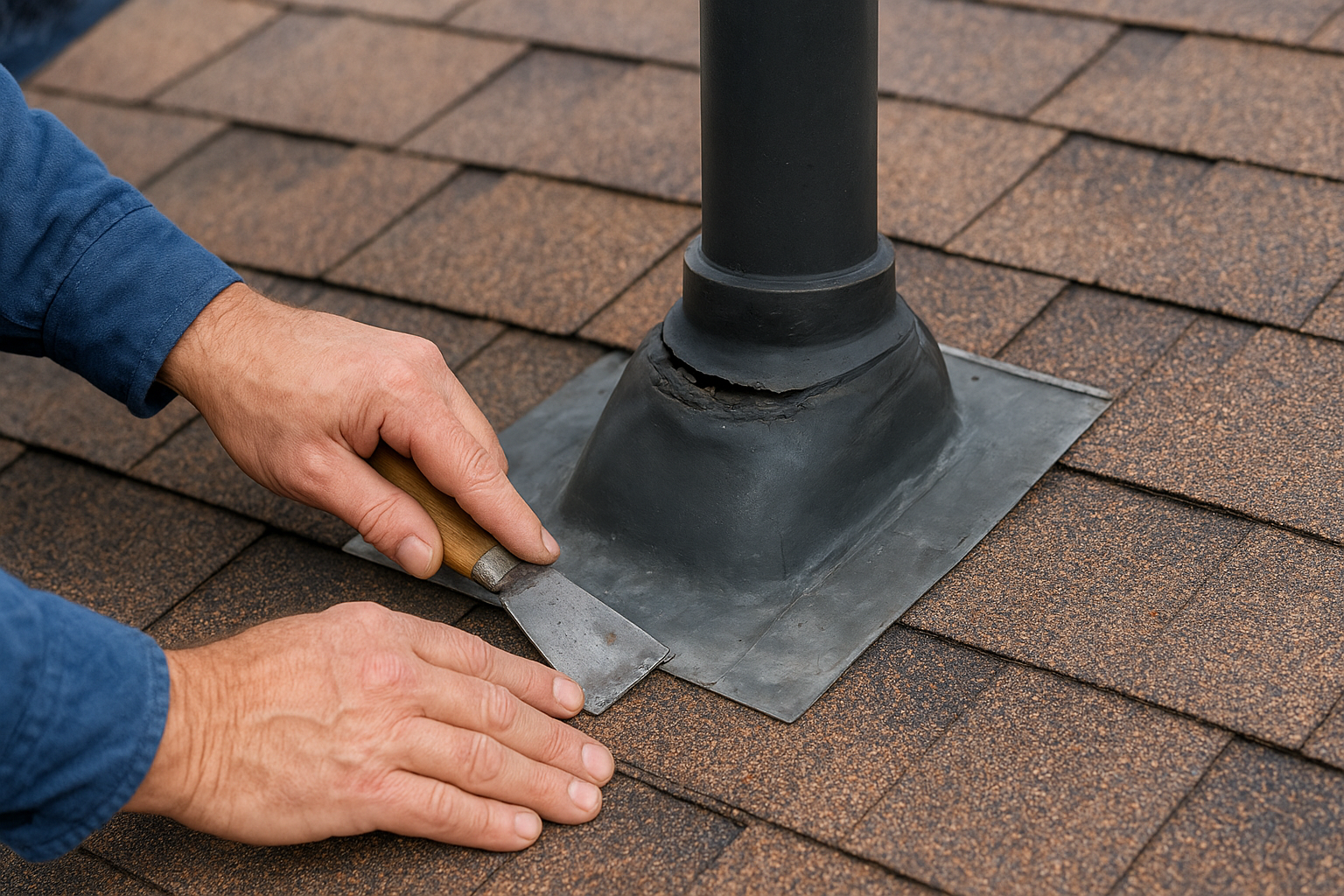
A roofer removes the surrounding shingles, pulls the failed flashing or vent boot, and installs new material sealed properly under the shingle courses above it, not caulked on top where it'll fail again in a year. Pipe boots especially need replacing every 10 to 15 years since the rubber degrades faster than the shingles around it. Defend Roofing checks every penetration point during a Precision Roof Assessment because these small failures cause a disproportionate share of the interior leaks we see.
Most roof leaks don't start with a missing shingle, they start with a cracked vent boot nobody ever looks at.
This repair fits leaks tracing back to a chimney, skylight, or vent stack rather than an open shingle field, and roofs older than 10 years where the original rubber boots are due for replacement anyway.
Flashing and vent boot repair in the Austin area typically runs $200 to $600 per penetration, depending on accessibility and whether surrounding shingles need pulling.
This one calls for a professional. Proper flashing installation depends on correct layering with the shingles, and a boot that isn't sealed right underneath will leak again within a season no matter how much caulk goes on top.
Sometimes a leak is small enough that a tube of sealant and a caulk gun really can buy you time. This is the one fix on this list most homeowners can handle themselves, but it comes with a catch: sealant covers a symptom, not the cause, and it fails faster than it should if applied wrong.
You clean the damaged area with a wire brush, let it dry completely, then apply roofing-grade sealant (not standard exterior caulk) over small cracks in flashing, minor nail pops, or hairline gaps around a vent boot collar. Silicone-based or polyurethane roofing sealant holds up best against Texas heat swings. It needs a dry, warm day to cure properly, and it should never go over an area that's actively wet.
Sealant buys you weeks, not years, and it only works if the surface underneath is actually dry.
This approach suits tiny, cosmetic gaps you've already diagnosed correctly, like a nail head backing out or a hairline seam near a pipe collar. It's one of several stopgap patches that hold until a scheduled repair, not a substitute for one.
A tube of quality roofing sealant runs $8 to $20, making this the cheapest option on the list by far.
This is genuinely DIY-friendly for small, clearly identified spots. Just don't mistake a temporary patch for a permanent solution. If the same spot needs re-sealing every season, the underlying flashing or boot needs real replacement, not more caulk.
Some roofs pass the point where repair makes financial sense. When leaks show up in multiple rooms, decking has widespread rot, or shingles are failing across the whole surface instead of one section, patching becomes a short-term fix for a long-term problem. This is the option nobody wants to hear, but when a roof has genuinely reached the end of its life, weighing replacement against another round of repairs gives you the honest answer.
A full tear-off strips the roof down to bare decking, replaces any rotted or damaged sheathing, and installs new underlayment, flashing, and shingles as a complete system. Defend Roofing backs installations with manufacturer warranties and a Limited Lifetime Workmanship Warranty, so you're not just buying materials, you're buying a roof that holds up.
Replacing a roof twice as often as necessary costs more than replacing it right the first time.
This fits roofs 15 to 20+ years old with widespread hail or wind damage, homeowners who've had three or more leak repairs in as many years, and anyone whose insurance adjuster has already approved a full replacement claim.
Full roof replacement in the Austin area typically runs $8,000 to $20,000, depending on roof size, pitch, and material choice, and you can estimate the cost of a replacement roof before you commit. Financing options are available for qualified homeowners who need to spread out the cost.
This is strictly professional work. A full tear-off involves structural decisions, code compliance, and warranty terms that only a licensed roofing contractor can properly deliver and back up.
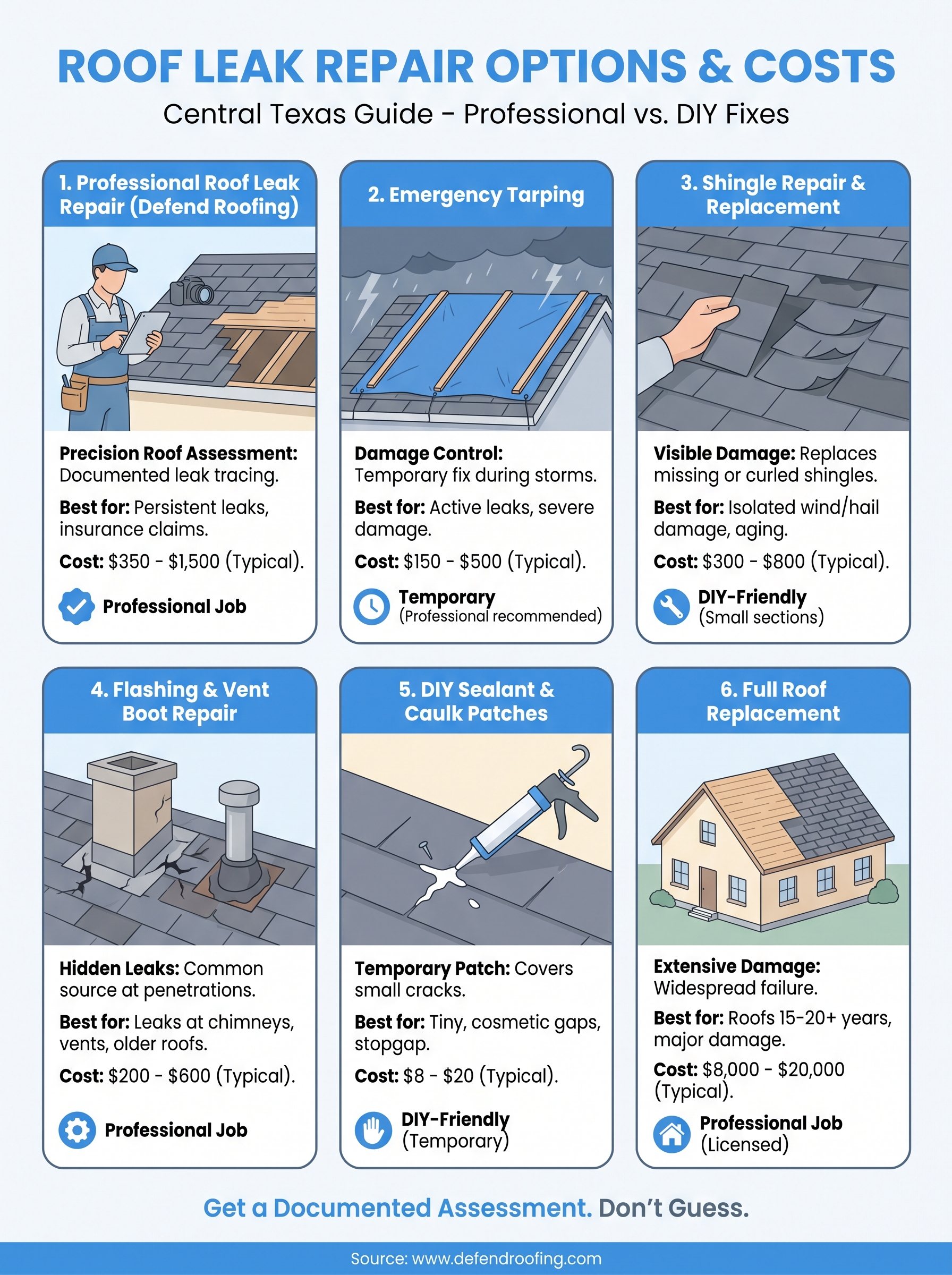
Most roof leaks fall into one of two buckets: small, clearly diagnosed problems you can patch yourself, or hidden damage that needs a trained eye and real documentation to fix correctly. A tube of sealant or a few swapped shingles handles the first kind. Anything involving flashing, vent boots, recurring stains, or storm damage belongs to the second, and guessing there almost always costs more than calling a pro upfront.
If you've read this far because water is showing up somewhere it shouldn't, don't wait for the next storm to find out how bad it's gotten. Central Texas weather doesn't give small leaks time to stay small. Get a documented Precision Roof Assessment before you spend money on a patch that might not address the real cause, and get a clear, honest answer on whether repair or replacement actually makes sense for your roof. Schedule your free roof evaluation with Defend Roofing and get a straight answer, no upsell attached.