Compare 3-tab vs. architectural shingles to find your shingle roof lifespan. Learn how Texas heat impacts longevity and when to repair or replace.

Your roof's age matters, but it doesn't tell the whole story. Shingle roof lifespan depends on the type of shingle installed, the quality of the installation, and what Central Texas weather has thrown at it over the years. A 3-tab roof and an architectural roof installed on the same day can wear out a decade or more apart, and knowing where yours falls makes a real difference when you're deciding between a repair and a full replacement.
At Defend Roofing, we inspect roofs across the Austin area every week as a father-and-son team with three generations of roofing experience. We've seen 20-year-old roofs with plenty of life left and 12-year-old roofs that needed replacing yesterday. The difference almost always comes down to a handful of factors that most homeowners never hear about, until there's a leak. Our 100+ photo Precision Roof Assessments give homeowners clear, documented evidence of where their roof actually stands, not a sales pitch.
This article breaks down what you can realistically expect from 3-tab and architectural shingles, what shortens or extends their service life, and how to tell if your roof is approaching the end. Whether you're planning ahead or responding to storm damage, this guide will help you make a confident, informed decision about your roof.
When someone asks how long a shingle roof lasts, the honest answer is: it depends. Shingle roof lifespan isn't a fixed number you read off a label. Two roofs made from the same materials can age at completely different rates depending on how they were installed, how the structure beneath them performs, and what kind of weather they've faced year after year.
The shingles themselves are only part of the equation. Manufacturer warranties give you a baseline, but installation quality determines whether you actually reach those years. A roof installed with improper nail placement, inadequate underlayment, or skipped flashing will fail well before its expected age. Bargain-tier shingles use thinner granule layers that wear down faster under UV exposure and thermal cycling, which means spending more upfront often buys you a decade of additional service life.
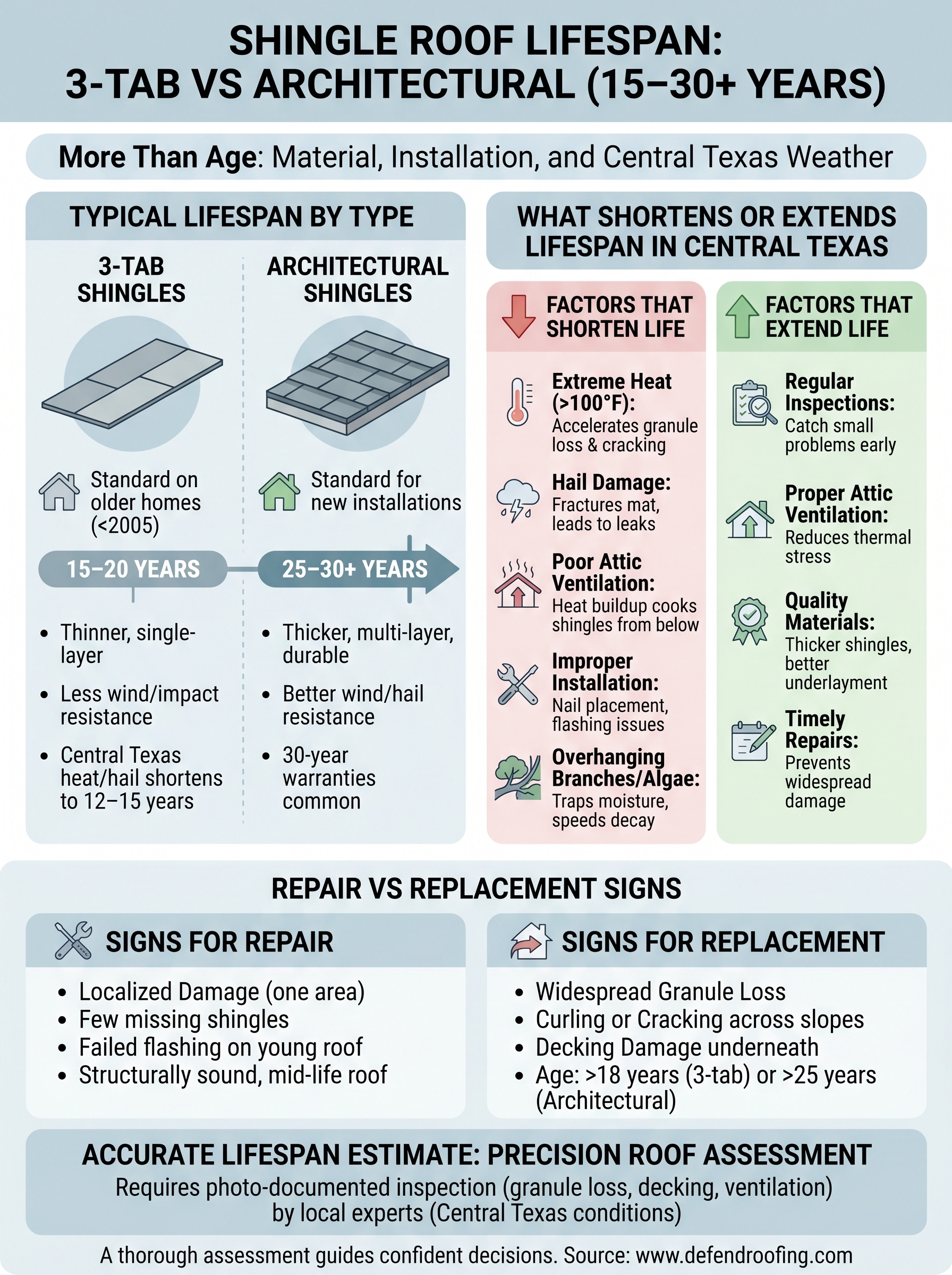
Central Texas is genuinely hard on roofs. Summer temperatures in Austin regularly push past 100°F, which accelerates granule loss and causes shingles to dry out and crack. That heat cycling through thousands of days breaks down the asphalt binder faster than you'd see in cooler climates.
Hail is the single most common reason Austin-area roofs fail ahead of schedule, even when the shingles look intact from the ground.
Hailstorms hit the Austin area multiple times a year, and visible damage isn't always present even when the roof has been compromised. A hail impact can fracture the mat beneath the granules without leaving a dent, allowing water to infiltrate slowly for months before a leak appears inside your home.
Poor ventilation is one of the most overlooked factors in roof longevity. Heat buildup in an unventilated attic can reach 160°F or more in summer, cooking shingles from below while the sun hits them from above. A properly ventilated attic allows heat and moisture to escape, reducing thermal stress on the shingles and protecting the wood decking from warping. When we assess roofs across Austin, poor ventilation shows up as a contributing factor far more often than homeowners expect.
Not all asphalt shingles age the same way. The shingle roof lifespan you can realistically expect depends heavily on which type covers your home, and the difference between the two most common options is larger than most homeowners realize.
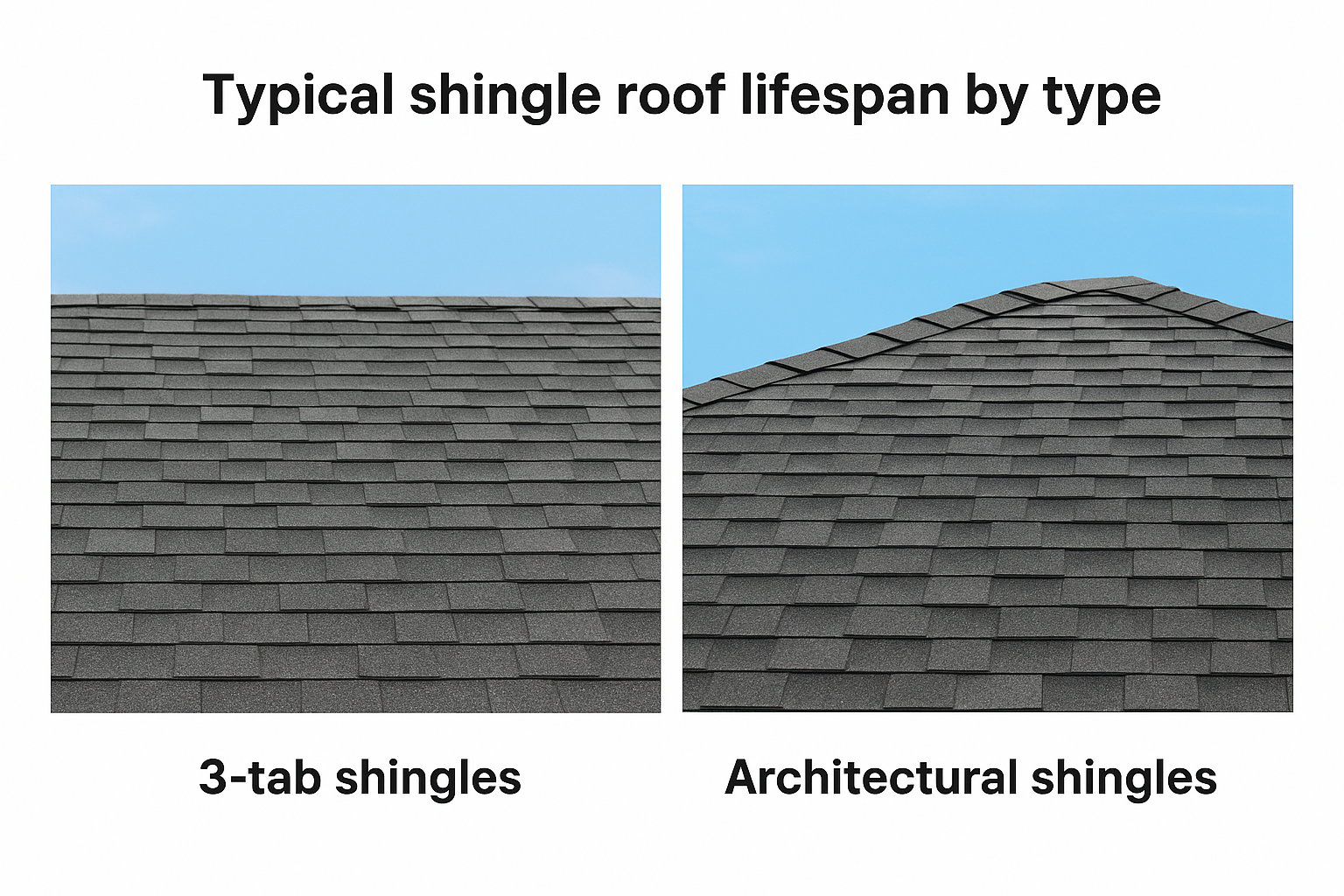
3-tab shingles are the thinner, flat-profile shingles standard on most homes built before the mid-2000s. Their expected lifespan runs 15 to 20 years under normal conditions, though Central Texas heat and hail can push that number closer to 12 to 15 years. Because they're single-layer, they offer less wind resistance and less protection against impact damage.
If your home was built before 2005 and still has the original roof, you may already be working with 3-tab shingles near or past their useful life.
Architectural shingles, also called dimensional shingles, are thicker and built in multiple layers, which gives them better durability and a longer service life. Most carry manufacturer warranties of 30 years, and quality installations in well-ventilated homes regularly reach 25 to 30 years of actual performance.
These shingles handle wind uplift and hail impact better than 3-tab, which is why they've become the standard choice for new installations and replacements across the Austin area. When you're replacing a roof today, architectural shingles are almost always the right starting point for Central Texas conditions.
Understanding what drives shingle roof lifespan helps you make smarter calls on maintenance, ventilation upgrades, and when replacement actually makes sense. Some factors are outside your control, but several are not.
Several conditions accelerate shingle wear faster than normal aging. Overhanging branches drop debris that traps moisture against shingles and speeds granule loss. Algae and moss hold water against the surface and break down the asphalt layer, especially on north-facing slopes that stay shaded and damp. Poor installation, though, remains the biggest threat regardless of shingle quality.
Letting algae or moss sit untreated for a single season can shave years off an otherwise healthy roof.
Common factors that shorten roof life include:
Regular inspections after major storms catch small problems before they become expensive structural issues. A lifted shingle or cracked piece of flashing costs little to fix early but can cause serious decking damage if ignored for a season.
Proper attic ventilation is the most impactful upgrade you can make without touching the shingles themselves. Keeping attic temperatures in check reduces thermal stress from below, which directly extends how long your shingles perform.
Knowing when to repair versus replace comes down to age, damage pattern, and scope. A single isolated issue on a relatively young roof almost always makes sense to fix. But when damage is widespread or your shingle roof lifespan is already near its end, repairs just delay an inevitable replacement while you spend money on both.
Localized damage after a storm, a few missing shingles, or one section of failed flashing are all situations where a targeted repair makes financial sense. If the rest of your roof is structurally sound and within its expected age range, patching the problem area protects your home without the cost of a full replacement.
A well-done repair on a mid-life roof can buy you five or more years before replacement becomes the right call.
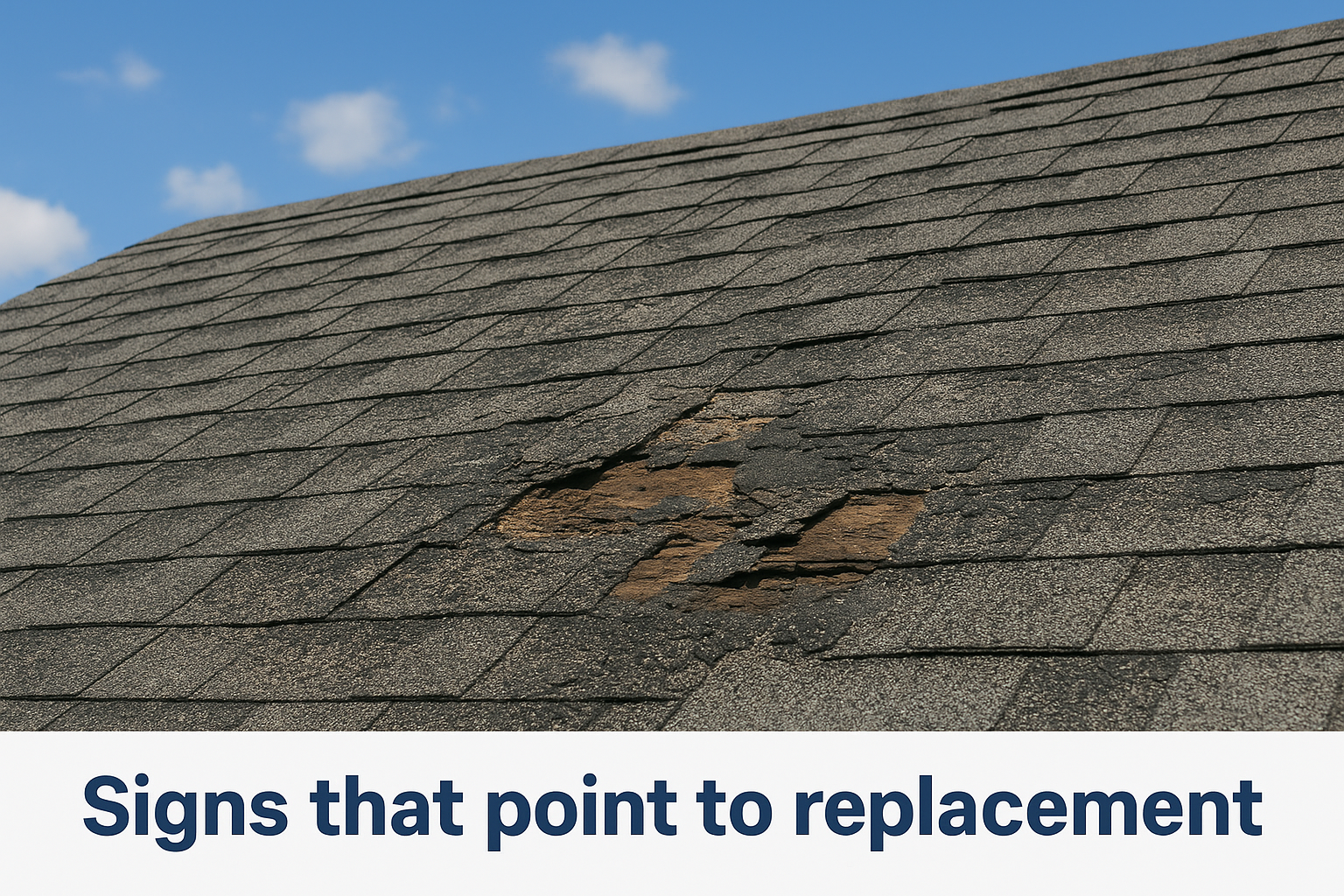
Widespread granule loss, shingles that are curling or cracking across multiple slopes, or any sign of decking damage underneath all point toward replacement rather than repair. Age matters too. When a 3-tab roof crosses 18 years or an architectural roof passes 25, repairs become less cost-effective because new problems will keep appearing. Replacing the full system at that stage protects your investment and gives you a clean warranty baseline going forward.
Getting a reliable estimate of your shingle roof lifespan starts with a thorough, documented inspection by someone who knows what to look for in Central Texas conditions. A quick visual from the ground or even from a ladder misses the subtle signs that matter most, including granule loss patterns, decking softness, and underlayment condition that only show up during a close-up assessment.
A professional roof inspection should go well beyond a glance at a few shingles. At Defend Roofing, every Precision Roof Assessment includes 100+ photos documenting the actual condition of your shingles, flashing, ventilation, and decking. That documentation gives you clear evidence to support repair decisions, plan for replacement, or file an insurance claim if storm damage is involved.
A photo-documented assessment removes the guesswork and gives you a factual baseline for every decision you make about your roof going forward.
A thorough inspection should cover at minimum:
Austin's combination of extreme heat, hail frequency, and humidity creates wear patterns that differ from roofs in other parts of the country. A contractor with local experience recognizes those patterns quickly and can give you an honest estimate of how much life your roof actually has left, rather than a generic number pulled from a manufacturer's spec sheet.
Your shingle roof lifespan depends on more than age alone, but age combined with visible wear signals is usually enough to tell you whether it's time to act. If your roof is approaching the end of its expected range, has taken hail hits without a follow-up inspection, or shows any of the warning signs covered in this article, the next step is a thorough inspection backed by documented evidence you can actually rely on.
Defend Roofing serves homeowners across the Austin area with 100+ photo Precision Roof Assessments that show you exactly what your roof looks like today, what needs attention, and what can wait. There's no pressure and no upselling, just honest recommendations from a father-and-son team with three generations of roofing experience. When you know where your roof actually stands, you can plan and budget with confidence instead of waiting for the next leak to force your hand. Schedule your roof assessment today and get a clear picture of what comes next.