See the true cost of metal roof replacement per sq ft, panel type comparisons, and proven ways Central Texas homeowners cut costs without sacrificing quality.

Getting a metal roof quote can feel like a guessing game when every contractor throws out a different number. The cost of metal roof replacement in Central Texas typically runs between $9 and $16 per square foot installed, but that range hides a lot of detail you need before you sign a contract or file an insurance claim.
If you're comparing bids or trying to figure out why one quote is double another, the answer usually comes down to panel type, roof pitch, and labor complexity, not just the price of steel. A metal roof replacement cost estimate for a 2,000 square foot home can land anywhere from $18,000 to $32,000 depending on whether you choose standing seam, corrugated, or stone-coated steel, plus what's underneath your old shingles.
We've priced hundreds of roofs across Cedar Park, Steiner Ranch, and Leander, and we're breaking down the real numbers here: cost per square foot by material, total price ranges by home size, and the factors, like decking repair or steep slopes, that push your final bill higher or lower.
Asphalt shingles run $4 to $7 per square foot installed in Central Texas, so a metal roof at $9 to $16 per square foot can look like a steep jump. That gap isn't padding. It reflects raw material pricing, specialized labor, and a manufacturing process that's simply more involved than stamping out shingle bundles. Once you understand where the money goes, and how metal stacks up against shingles on cost, lifespan, and insurance, the higher steel roof replacement cost starts to make sense, especially if you plan to stay in your home for another 20 years.
Steel, aluminum, and galvalume all cost more per ton than asphalt and fiberglass, and metal panels require rolling, cutting, and coating equipment that shingle manufacturers don't need. Standing seam panels, in particular, are often fabricated to your roof's exact measurements, which adds precision but also cost. A tin roof replacement cost estimate reflects this directly: painted or Kynar-coated finishes that resist fading and chalking cost more upfront than a basic granule-coated shingle, but they also don't need replacing every 15 to 20 years.
| Feature | Asphalt Shingles | Metal Roofing |
|---|---|---|
| Installed cost per sq ft | $4 to $7 | $9 to $16 |
| Typical lifespan | 15 to 25 years | 40 to 70 years |
| Wind resistance | Up to 110 mph | Up to 140 mph |
| Replacement over 50 years | 2 to 3 roofs | 0 to 1 roof |
Installing metal panels takes more time and a different skill set than laying shingles. Crews have to work with sharp panel edges, precise fastener spacing, and specialty tools for seaming and cutting, and mistakes here cause leaks that don't show up until months later. Roof pitch matters too. Steep roofs above a 6:12 pitch require additional safety equipment and slow the crew down, which adds labor hours regardless of material. Fewer roofing companies in Austin are certified to install standing seam correctly, and that scarcity keeps labor rates higher than what you'd pay for a shingle crew.
Homeowners who focus only on the sticker price miss the bigger picture. A metal roof lasts two to three times longer than asphalt, often carries a Class 4 impact rating that can lower your insurance premium, and ranks among the roofing materials that cut cooling costs, reflecting heat instead of absorbing it and trimming summer bills by 10 to 25 percent according to the U.S. Department of Energy. Spread across four decades, the true annual cost of metal often beats asphalt once you factor in two or three shingle replacements over the same period.
A metal roof isn't the cheaper choice today, but it's almost always the cheaper choice by year 20.
That's why we walk every Central Texas homeowner through a full roof replacement cost comparison before they commit, so the decision is based on lifetime value, not just the number on page one of the quote.
Estimating your metal roof replacement cost starts with a simple formula: total roof square footage multiplied by the installed price per square foot in 2026 for your chosen panel type. A 2,000 square foot ranch home isn't automatically a 2,000 square foot roof, though. Roofers measure in "squares," where one square equals 100 square feet, and your actual roof area depends on pitch, overhangs, and roof shape, not your home's floor plan. Get this number wrong and every other estimate you build on top of it is off too.
Your roof's square footage, not your home's, is the number that drives every estimate you'll get.
Floor plan square footage undercounts roof area on anything but a flat-roofed box, so a licensed contractor should measure the actual roof surface, factoring in pitch, before quoting a price. Here's what changes the math:
Once you know your square footage, ask every contractor for a line-item breakdown rather than a single lump sum. A trustworthy quote separates tear-off and disposal, decking repair, underlayment, panel material, flashing, and labor, so you can see exactly where your money goes and compare bids apples to apples. If a contractor won't itemize, that's a warning sign worth taking seriously, and one of several things to ask a roofer before hiring on a job this size.
Panel type drives price more than any other factor in a metal roof replacement cost estimate, so picking the right one for your budget and your roof's exposure matters before you request quotes. Corrugated and exposed-fastener panels sit at the low end, standing seam sits at the top, and stone-coated steel lands somewhere in between depending on the profile you choose. Knowing where your preferred style falls on this scale keeps you from getting blindsided when quotes come back.
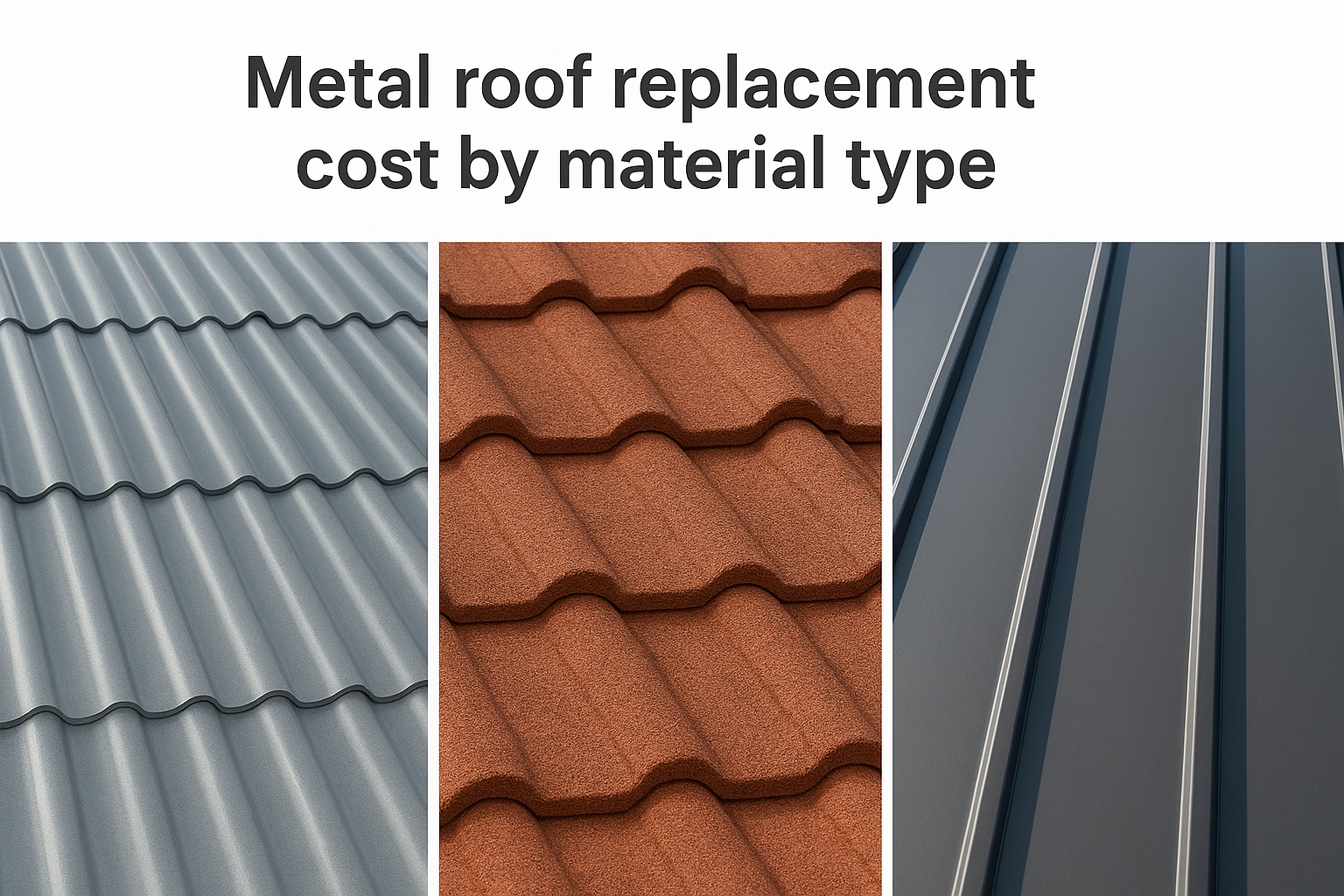
| Panel Type | Installed Cost per Sq Ft | Typical Lifespan | Best For | |---|---|---| | Corrugated / exposed-fastener steel | $9 to $11 | 30 to 45 years | Budget-conscious homeowners, outbuildings | | Stone-coated steel | $11 to $14 | 40 to 60 years | Homes wanting a shingle or tile look | | Standing seam steel | $12 to $16 | 50 to 70 years | Long-term ownership, concealed fasteners | | Aluminum standing seam | $14 to $18 | 50 to 70 years | Coastal-adjacent or corrosive climates |
Exposed-fastener panels keep costs down because installation is faster and the panels themselves are simpler to manufacture, but the screws that hold them down need re-tightening or replacement every 10 to 15 years. Standing seam eliminates that maintenance because its hidden clip system has no exposed fasteners to fail, one of the pros, cons, and cost differences between standing seam and corrugated metal that explains why a steel roof replacement cost per square foot for standing seam runs several dollars higher.
The panel profile you choose affects your maintenance bill just as much as your installation bill.
Stone-coated steel occupies the middle ground, giving you the look of tile or heavy shakes with the durability of steel underneath, and it holds up well against the eight popular residential roofing options for homeowners in neighborhoods with HOA appearance standards. Aluminum costs more upfront than steel, but it resists corrosion better in humid conditions, which matters less in landlocked Central Texas than it would along the coast.
Lowering your metal roof replacement cost doesn't mean cutting corners on material or skipping the underlayment your roof actually needs. It means controlling the variables you have influence over: timing, scope, and contractor selection. Homeowners who plan ahead instead of scrambling after a storm consistently pay less for the same square footage.
Spring and early summer bring the highest demand for roofing crews in Central Texas, since hail season pushes every homeowner with damage toward the same contractors at once. Booking your metal roof replacement in late fall or winter often gets you better scheduling flexibility and, occasionally, lower labor rates simply because crews have more open calendar time. Waiting until your roof visibly fails also removes your ability to negotiate, and if storm damage is involved, knowing how Texas insurers fund a new roof matters, since emergency repairs rarely come with room to shop multiple bids.
The homeowners who plan their roof replacement instead of reacting to a leak almost always pay less per square foot.
Simple roof shapes with fewer valleys, hips, and dormers use less material and take less labor to cut and seam, so if you're building an addition or redesigning your roofline, ask your contractor how shape changes affect your final price. A few other ways to trim cost without sacrificing quality:
Our team walks every Central Texas homeowner through a Precision Roof Assessment before quoting, so you know exactly what needs replacing and what doesn't, which keeps your final number honest from the start.
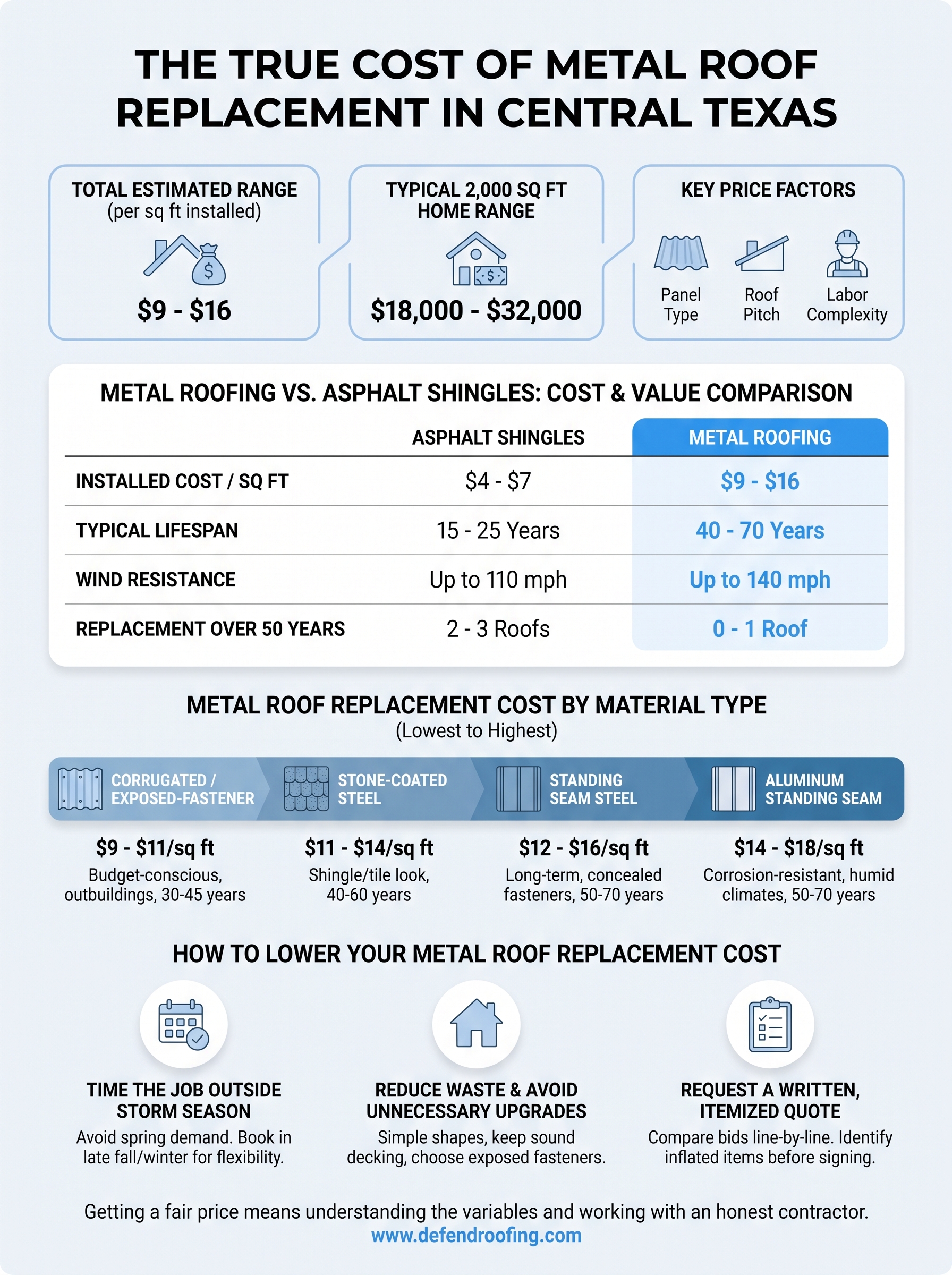
The cost of metal roof replacement in Central Texas comes down to three things: panel type, roof complexity, and timing. Standing seam costs more than corrugated, steep pitches cost more than simple gable roofs, and storm season costs more than a planned winter install. None of that changes the fact that metal outlasts asphalt by decades, which is why the higher price tag holds up over time.
Getting a fair number means working with a contractor who itemizes every line, measures your actual roof instead of guessing from your floor plan, and tells you honestly when repair beats replacement. That's how we've always operated, whether we're pricing a roof in Cedar Park or Jonestown.
If you want a real number instead of a range, call, text, or get an instant quote on your metal roof and see exactly what it costs before you commit to anything.