Fix roof repair leaks right: learn what to inspect, hiring tips, cost ranges, and how Defend Roofing's photo-based assessments find the true cause.

A water stain spreading across your ceiling never waits for a convenient time. It shows up after a summer storm rolls through Cedar Park or Leander, and suddenly you're searching for roof repair leaks solutions at 9pm while a bucket catches drips in your living room. That stain is a symptom, not the actual problem, and chasing it yourself with caulk or a tarp usually buys you weeks, not a fix.
Here's what you actually need to know: how to find a contractor who tells you the truth about what's wrong, and what a legitimate repair should cost. Prices vary widely depending on the source of the leak, whether it's a cracked pipe boot, damaged flashing, or wind-lifted shingles, and how much decking underneath has been compromised by water.
This guide walks you through the whole process. You'll learn the questions to ask before signing anything, the red flags that separate honest contractors from ones padding the invoice, and real cost ranges for the most common leak repairs Central Texas homeowners face. By the end, you'll know exactly how to hire a pro who fixes the actual problem instead of just chasing the stain.
Grabbing a tube of roofing cement and climbing a ladder feels productive, but sealant applied to shingles from the outside rarely touches the actual failure point. A cracked pipe boot or lifted shingle tab lets water in from an angle you can't see from the roofline, and caulk smeared over the surface just traps moisture against wood that's already breaking down. Homeowners who patch their own roofs typically call a contractor again within a season, once the same stain reappears a few feet over.
Once water gets past your shingles, it follows the path of least resistance along the decking, down a rafter, or across a layer of insulation before it ever shows up as a stain on your ceiling. That means the water spot in your hallway might trace back to a failed flashing near the chimney ten feet away, not the spot directly above it. Tracing that path takes someone who's spent years crawling attics and pulling shingles, not a homeowner guessing from a ladder.
A stain on your ceiling almost never sits above the actual hole in your roof.
A trained roofer brings tools and experience you don't have on hand: moisture meters that detect wet decking before it's visibly sagging, infrared cameras that reveal temperature differences hidden water leaves behind, and a trained eye that spots cracked pipe boots, lifted nails, or granule loss from ground level. They also know how to document what they find, which matters if you end up filing an insurance claim. At Defend Roofing, every repair starts with the same Precision Roof Assessment we use on full replacements: 100+ photos documenting the source of the leak, the extent of the damage, and exactly what it will take to fix it right, not just patch it.
Given enough time, every unrepaired leak grows worse underneath the surface. Rotted decking, waterlogged insulation, and mold behind drywall all turn a $300 repair into a $3,000 one. Comparing what typically happens with a DIY patch versus a professional repair makes the stakes clear:
| Approach | Typical outcome |
|---|---|
| DIY sealant or tarp | Leak returns within one storm season; hidden rot continues |
| Unlicensed handyman | No documentation, no warranty, insurance may deny claim |
| Licensed roofing contractor | Source identified, repair warrantied, decking damage caught early |
Hiring a licensed roofing contractor early is what actually stops the cycle of roof repair leaks costing you more every year you wait.
Before you call anyone, spend fifteen minutes doing your own walkthrough. Not to fix anything yourself, but to gather details that help a contractor move faster once they arrive. A water stain on the ceiling, a musty smell in the attic, or peeling paint near an exterior wall are all signs worth writing down, along with when you first noticed them and whether they show up during every rain or only heavy storms.
Check your attic from the inside and outside if you can safely access it, using a flashlight rather than climbing around in the dark. Look for dark streaks on the rafters, damp insulation, or daylight coming through anywhere it shouldn't. These clues point toward where the water is entering, even though the entry point is often several feet from where the stain appears on your ceiling below.
Write down what you find so nothing gets lost between your walkthrough and the inspection. A short list works fine:
Resist the urge to get on the roof to look for the source, and stick to a safe stopgap from inside the house until help arrives. Wet or sloped shingles are dangerous, and walking on damaged decking can turn a contained leak into a much bigger structural problem. Roofers carry harnesses, fall protection, and years of experience walking roofs safely, none of which you have standing on a ladder with a phone camera.
Thinking you've found the cause yourself is fine, but treat it as a starting point rather than a diagnosis. The real value of the notes and photos you gather here is speed: a contractor who shows up already knowing when the leak started and what you've observed inside can move straight to confirming the source instead of starting from zero.
Call a licensed contractor within a day or two of noticing the leak, especially if you're in the middle of storm season. Waiting a week to schedule an inspection gives water more time to spread through decking and insulation, turning a simple roof repair leak job into a bigger project once someone finally gets on the roof. Most reputable companies in the Austin area, including Defend Roofing, offer a free roof inspection with no obligation to book a repair afterward, and it's worth comparing roof inspection companies in Austin before you call.
A rushed walk around the yard with binoculars isn't an inspection, so it helps to know what a real roof inspection includes. Expect the contractor to get on the roof itself and check these areas:
If a contractor won't get on your roof before quoting a price, walk away.
Greyson or Chris at Defend Roofing walk every roof with the same process used on full replacements: a Precision Roof Assessment that captures 100+ photos of the leak source, surrounding shingles, flashing, and decking condition. Photos matter because they give you proof of what's actually wrong, not just a contractor's word for it, and they become essential if you file an insurance claim later.
Expect a written report at the end, not a verbal guess. Solid documentation should include close-up photos of the failure point, notes on decking condition underneath, and a clear explanation of what caused the leak in plain language. If a contractor can't show you the actual damage on camera or in person, that's a sign to get a second opinion before you agree to any repair.
Once your inspection report is in hand, get at least two or three quotes before you sign anything. Comparing quotes side by side reveals whether one number is wildly out of line, either too low to cover proper materials or high enough to suggest padding. Central Texas roofers see enough storm damage each season that pricing for common leak repairs shouldn't swing more than a few hundred dollars between reputable companies.
Watch for quotes that list a single lump sum without breaking down labor, materials, and the source of the leak. A detailed scope of work should name the specific repair, whether that's replacing a pipe boot, resealing flashing, or swapping out damaged decking, along with the materials used and an expected timeline. Vague language like "general roof repair" with no specifics is a sign the contractor hasn't actually diagnosed the problem yet.
A quote without a documented scope of work is a guess dressed up as a price.
Before you hire anyone, run through these key questions for a roofer before hiring directly and pay attention to how confidently each contractor answers:
Getting straight answers to these questions tells you more than any glossy brochure ever will. Contractors who hesitate on licensing, dodge warranty details, or can't produce a single photo of your roof are telling you something important before you've spent a dollar. Defend Roofing backs every job with a Limited Lifetime Workmanship Warranty, which is the kind of detail worth confirming in writing with anyone bidding on your roof repair leak.
Most leak repairs in Central Texas land in a fairly predictable range once a contractor has actually diagnosed the source. Repair costs by damage type depend heavily on what's failing and how much decking underneath needs replacing, not just the size of the visible stain on your ceiling.
| Repair type | Typical cost range |
|---|---|
| Pipe boot replacement | $150 to $350 |
| Flashing repair or replacement | $300 to $800 |
| Shingle replacement (small area) | $250 to $600 |
| Decking replacement (per damaged section) | $500 to $1,500+ |
The exact price always comes down to how far the water traveled before anyone found it.
If your leak traces back to a specific storm, hail impact, or wind event, your homeowner's policy likely covers some or all of the repair. Insurance rarely covers leaks caused by age, poor maintenance, or a roof that was already past its service life, so it pays to know what a homeowners policy covers for roof damage before you call. A contractor who documents the leak with dated photos and ties it to a specific weather event gives you real leverage when you file a claim.
Bring your contractor's inspection report when you file a roof insurance claim, not just your own description of the damage. Defend Roofing coordinates directly with adjusters and provides insurance claim support built around the same photo documentation used on every inspection, so the scope of work matches what the adjuster actually sees on the roof. That alignment matters because a mismatch between your contractor's estimate and the adjuster's scope is the single biggest reason claims get delayed or underpaid. Homeowners who show up with a documented, dated, storm-linked repair scope get paid faster and argue less than those who show up with a stain and a guess.
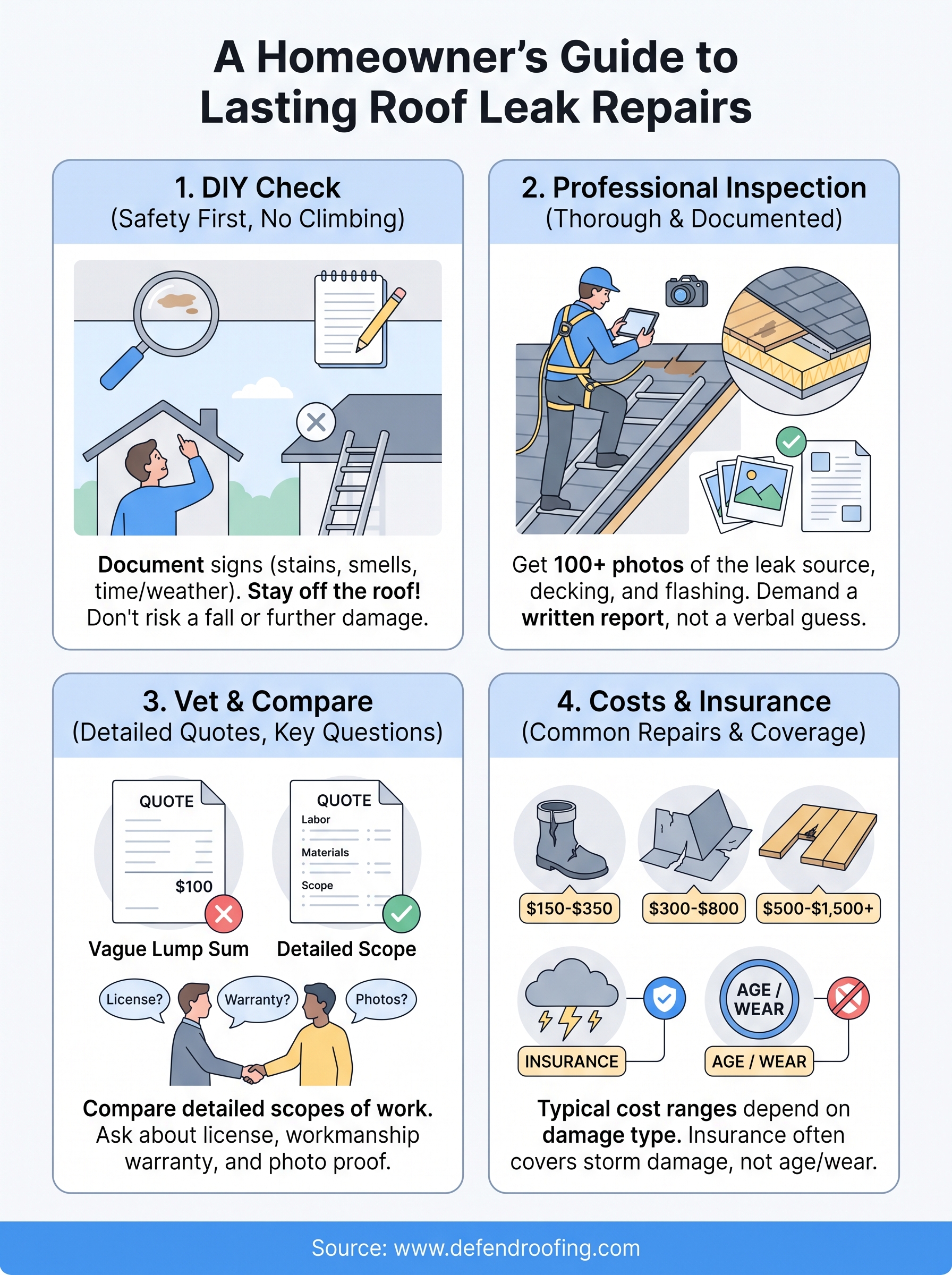
A leak never fixes itself, and every week you wait gives water more time to spread through decking you can't see. The fastest path to a real solution is the same one this guide has walked through: document what you're seeing, get a professional inspection with actual photos, compare detailed quotes, and understand what the repair should cost before you sign anything. Skip any of those steps and you risk paying twice, once for a patch that fails and again for the damage it left behind.
Chris and Greyson built Defend Roofing around that exact process, three generations of roofing experience backing every Precision Roof Assessment we run in Cedar Park, Leander, and across Central Texas. If water is finding its way into your home right now, don't wait for the next storm to make the decision for you. Call, text, or get an instant quote for your leak repair and get a straight answer about what's actually wrong and what it takes to fix it.