Learn what a roof inspection roof visit covers, typical Central Texas costs, and how to pick a qualified inspector who documents everything with photos.
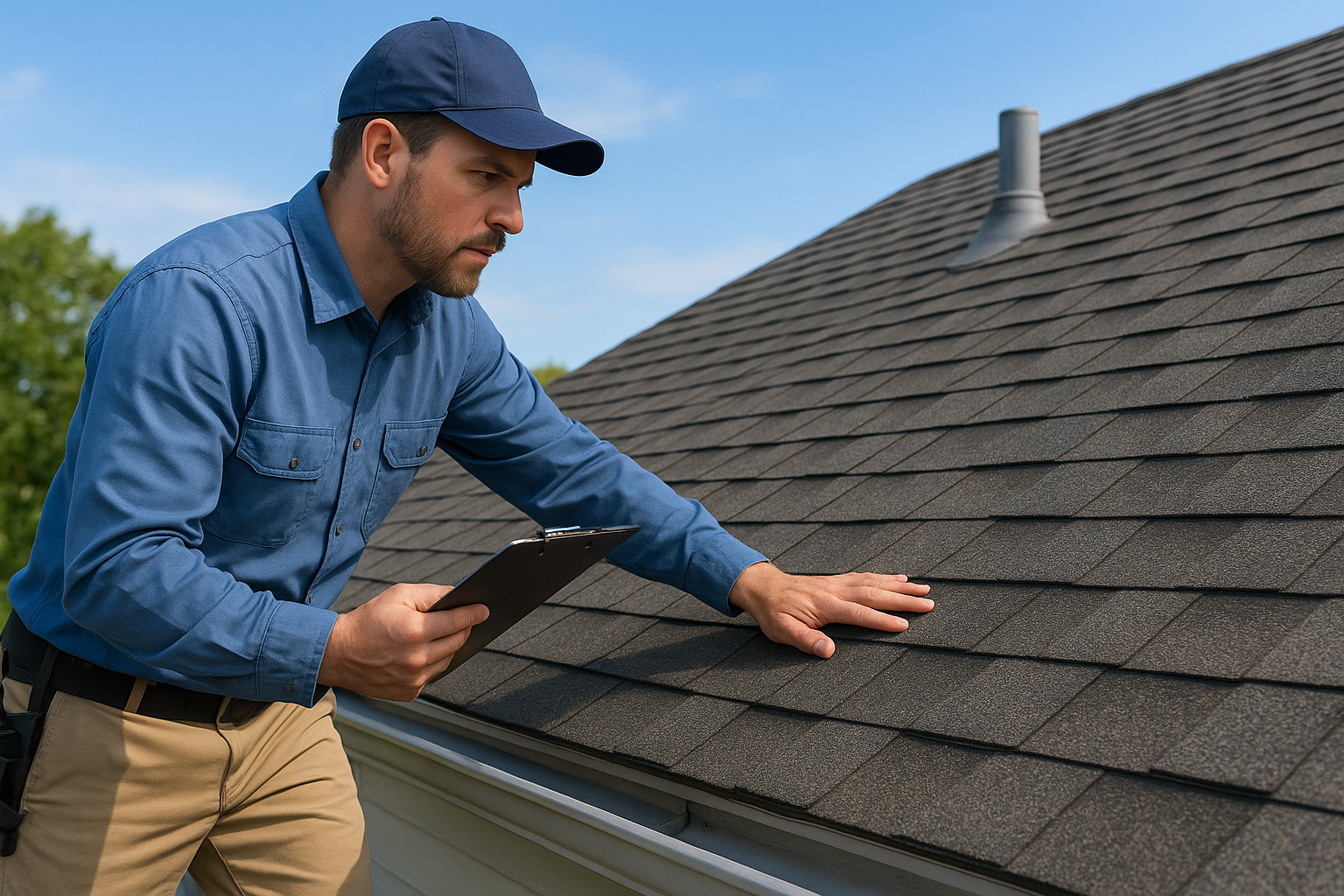
Maybe you're buying a house and the lender wants proof the roof has years left. Maybe a hailstorm rolled through Cedar Park last month and you're staring at your shingles wondering if that's damage or just wear. Either way, you need a straight answer, and that starts with a proper inspection roof professionals actually stand behind, not a five-minute look from the driveway.
A real roof inspection is a documented, close-up evaluation of your shingles, flashing, vents, gutters, and decking, checking for storm damage, age-related wear, and anything that could turn into a leak. Whether you call it a home inspection roof check for a real estate closing, an insurance assessment after a storm, or routine maintenance, the process should follow the same standard: get on the roof, document everything, and give you a clear repair-or-replace recommendation, not a sales pitch.
In this article, we'll walk through what happens during an inspection, how long it takes, what it typically costs in Central Texas, and what kind of report you should expect to receive afterward.
Skipping a roof inspection is a bit like skipping a dentist visit because your teeth don't hurt yet. Small problems on a roof rarely stay small. A cracked pipe boot, a lifted shingle tab, or a hairline crack in flashing are the small failures that turn into roof leaks, letting water in for months before you ever see a stain on your ceiling. By the time you notice the damage indoors, you're often looking at rotted decking, ruined insulation, or mold remediation instead of a simple $300 repair.
Granular loss, cracked flashing, and soft spots in the decking don't announce themselves from the ground. A trained inspector climbs onto the roof, walks the field, and checks the transitions where leaks actually start: chimneys, skylights, valleys, and vent boots. Catching these issues during a scheduled inspection, rather than after a leak shows up on your living room ceiling, is almost always cheaper and less disruptive.
A $250 roof inspection now beats a $9,000 decking replacement later.
After a hailstorm or a windstorm rolls through Central Texas, insurance adjusters look for evidence, not opinions. A documented roof inspection gives you dated, timestamped photos of hail hits, bruised shingles, or torn ridge caps before anyone disputes whether the damage exists or when it happened. Homeowners who wait to inspect their roof often run into a harder claims process, because insurers can argue the damage is old wear rather than storm-related. Our team's approach to storm damage assessment and insurance claim navigation exists specifically to close that gap between what happened on your roof and what adjusters need from a claim inspection on paper.
Real estate transactions and manufacturer warranties both lean on inspection paperwork. Lenders frequently require proof that a roof has a reasonable remaining lifespan before approving a mortgage, and buyers use inspection findings to negotiate price or repairs before closing. Manufacturers, meanwhile, can deny warranty claims if a roof was never inspected or maintained on schedule. Getting ahead of these requirements with a proactive inspection saves you from scrambling during a tight closing window or losing coverage you already paid for.
Here's a quick rundown of who typically needs a roof inspection, and why:
Regardless of which category you fall into, the underlying goal is the same: know the true condition of your roof before it costs you more than it should, which is why it helps to know how many inspections a year your roof actually needs. Skipping this step doesn't make the roof last longer, it just delays the moment you find out how much trouble you're actually in.
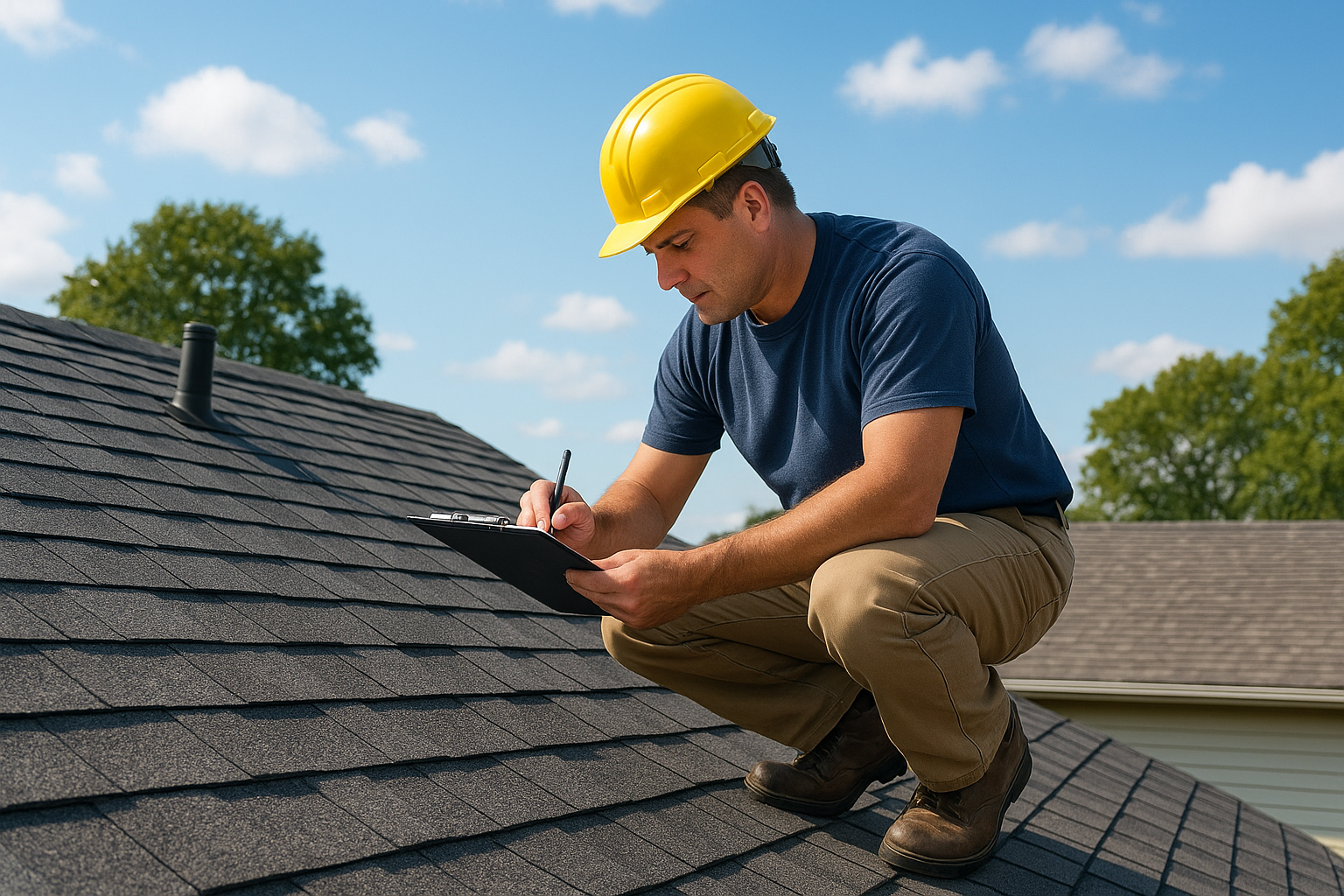
A proper roof inspection isn't a drive-by glance from the street. Expect the inspector to spend 30 to 60 minutes on site, most of it walking your actual roof, not just your yard, though the time a thorough roof inspection needs can stretch further on a complex home. Before climbing up, a good inspector introduces themselves, checks in about any known problem areas, and confirms weather conditions are safe for a walk-on inspection. Rain, high wind, or ice on the deck means rescheduling, since a fall risk isn't worth a same-day appointment.
Once up top, the inspector works methodically across every section of the roof an inspection should examine, not just the parts visible from a ladder. That means checking shingle granule loss, flashing around chimneys and skylights, sealant on pipe boots, ridge caps, valleys, and the condition of the decking underneath where accessible. Gutters, downspouts, and fascia get the same attention, since water damage almost always starts at a transition point rather than the open field of shingles.
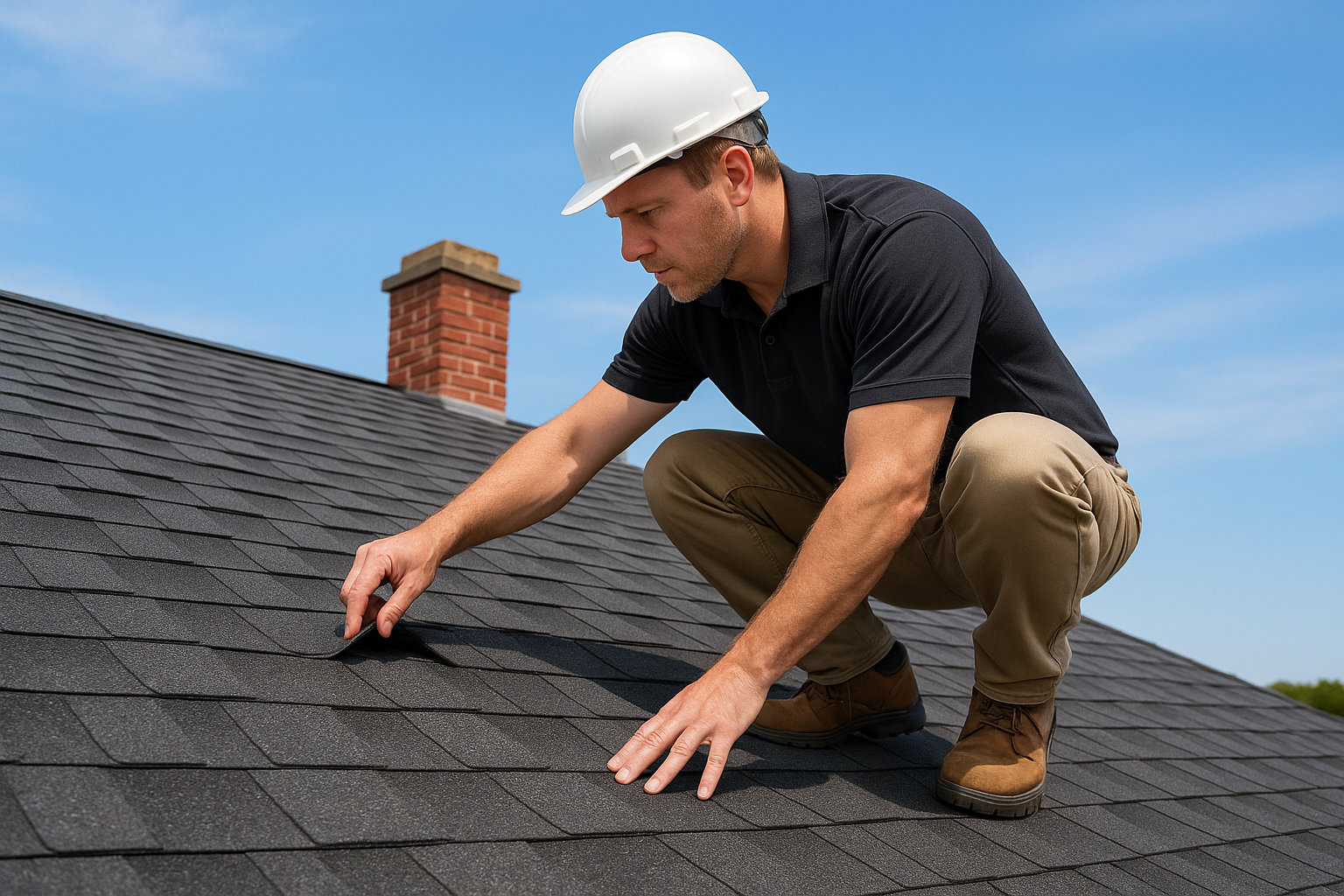
If your inspector isn't walking the roof and photographing every angle, they're guessing, not inspecting.
Here's what a thorough field inspection typically covers:
Before they leave, expect the inspector to walk you through what they found, in plain language, before you ever see a written report. Our own Precision Roof Assessment takes this further, with 100+ timestamped photos covering every section of the roof so you have visual proof, not just a checklist with boxes ticked. That level of documentation matters whether you're negotiating a home sale, filing an insurance claim, or just deciding whether a repair can wait another year.
Same-day findings should include a clear repair-or-replace recommendation, not a vague "it's fine for now." A written report typically follows within a day or two, giving you something concrete to hand to a lender, an adjuster, or a future buyer. If an inspector can't produce that kind of paper trail, you're not getting an inspection, you're getting an opinion.
Cost depends on why you're getting the inspection in the first place. A routine maintenance check on a single-story home typically runs $150 to $300, in line with what Central Texas homeowners pay for a roof inspection, while a full documented assessment tied to an insurance claim or real estate closing can run higher because of the added photo documentation and written reporting involved. Roof size, pitch, and accessibility all factor in too. A steep roof with multiple chimneys and skylights takes longer to walk than a simple ranch-style home, and that time shows up in the price.
Free doesn't mean thorough. If an inspection costs nothing, ask what you're actually getting for it.
Several factors push a roof inspection toward the higher end of the range, and it's worth understanding why inspection prices vary so much house to house. Steep or multi-level roofs require more time and safety equipment, and homes with complex features like dormers, valleys, or multiple vent penetrations take longer to document properly. Attic access for moisture checks, second visits after a storm, or rush scheduling before a closing deadline can also add to the cost. On the other end, a straightforward single-story home with easy roof access and no known problem areas usually falls at the lower end of local pricing.
| Inspection type | Typical cost range | What's included |
|---|---|---|
| Basic visual inspection | $150 - $250 | Ground and roof walk, verbal summary |
| Documented maintenance inspection | $250 - $350 | Photos, written report, repair recommendations |
| Storm damage assessment | Often free with repair estimate | Insurance-ready photo documentation, adjuster coordination |
| Pre-listing or buyer's inspection | $250 - $400 | Full report for lender or closing negotiations |
Plenty of roofing companies advertise free inspections, and that's not automatically a red flag. Storm damage assessments tied to a potential insurance claim are commonly offered at no cost, since the company expects to earn the repair work if damage is confirmed. The catch comes when a "free" inspection skips documentation entirely and jumps straight to a sales pitch for a full replacement. Before you agree to any inspection, ask what documentation you'll receive afterward. A company that can't answer that question clearly probably isn't planning to hand you anything you can actually use with an adjuster or a lender.
Not every roofer who offers to "take a look" is qualified to give you a real inspection. Licensing and insurance are the baseline, but you also want someone with documented storm and hail experience specific to Central Texas, since roofs here take a different beating than roofs in Ohio or Oregon. Ask how long the company has operated locally and whether the inspector who shows up is an employee or a subcontractor pulled in for the day. A father-and-son crew with three generations of roofing experience, like ours at Defend Roofing, has seen enough Cedar Park and Steiner Ranch roofs to know what normal wear looks like versus what an adjuster will flag as storm damage.
Before you schedule anyone, confirm a few basics over the phone. A qualified inspector should be comfortable answering direct questions worth putting to any roofer before hiring, not deflecting into a sales pitch.
If a company won't show you a sample report, don't expect a good one after they've been paid.
Certain behaviors signal you're dealing with a sales operation wearing an inspector's clothes, so it helps to know what separates a trustworthy local roofer from the rest. Door-knocking crews who show up unsolicited after a storm and pressure you to sign a contract before any damage is confirmed should raise your guard immediately. Watch for inspectors who push straight to full replacement without walking you through repair options, or who can't explain their photo documentation process when you ask. Genuine inspectors welcome scrutiny because their findings hold up; the ones rushing you toward a signature usually know their claims won't survive a second opinion.
Once you've vetted a company on licensing, local experience, and documentation practices, the decision usually becomes obvious. Reputation matters too: check for verifiable reviews from homeowners in your specific neighborhood, since a company that's earned trust in Avery Ranch or Jonestown has already proven it can handle the roofs and insurance carriers common in your area.
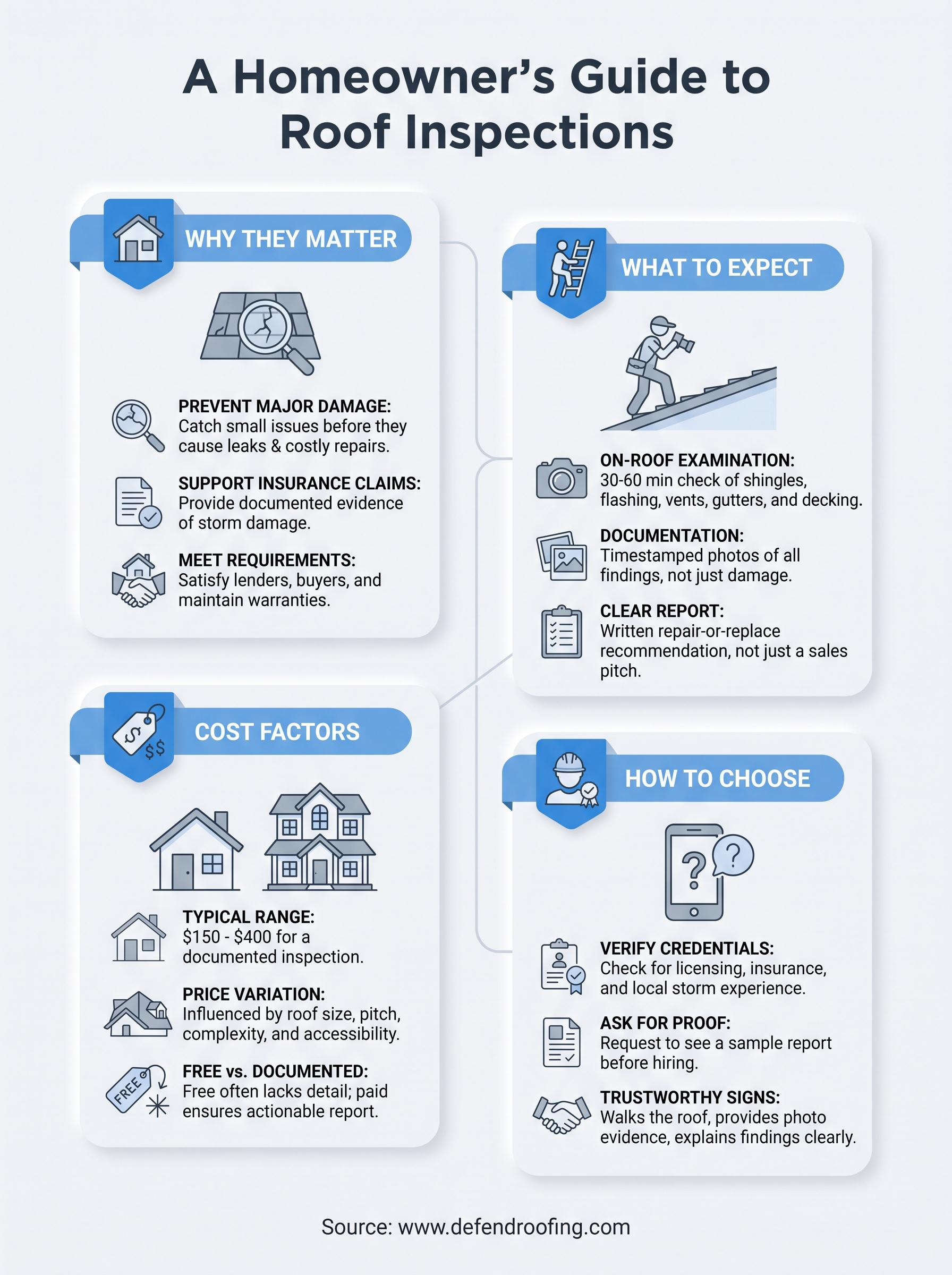
A roof inspection only pays off if you act on what it tells you. A clear report gives you leverage, whether that's negotiating a closing, filing a stronger insurance claim, or scheduling a repair before a small leak becomes a rotted deck. Don't let a stack of photos and a written summary sit in your inbox while the next storm rolls through Central Texas.
Getting a straight answer about your roof shouldn't require guesswork or a pushy sales pitch. Defend Roofing built our Precision Roof Assessment around documentation you can actually use, whether that's an adjuster, a lender, or your own peace of mind. If you're ready to find out what's really going on up there, schedule a photo-documented roof inspection and free quote and we'll get you a straight answer, backed by evidence, not opinion.