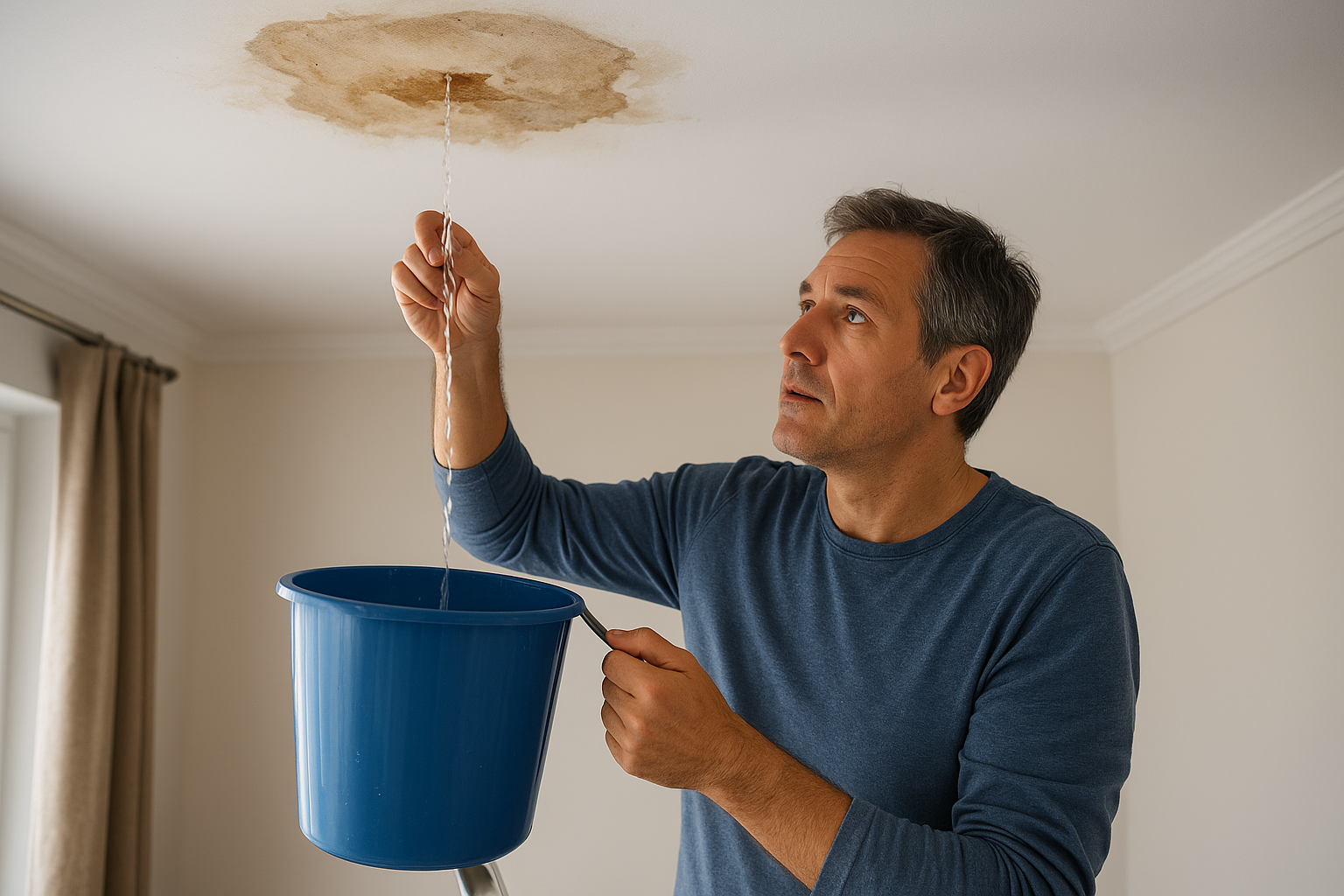
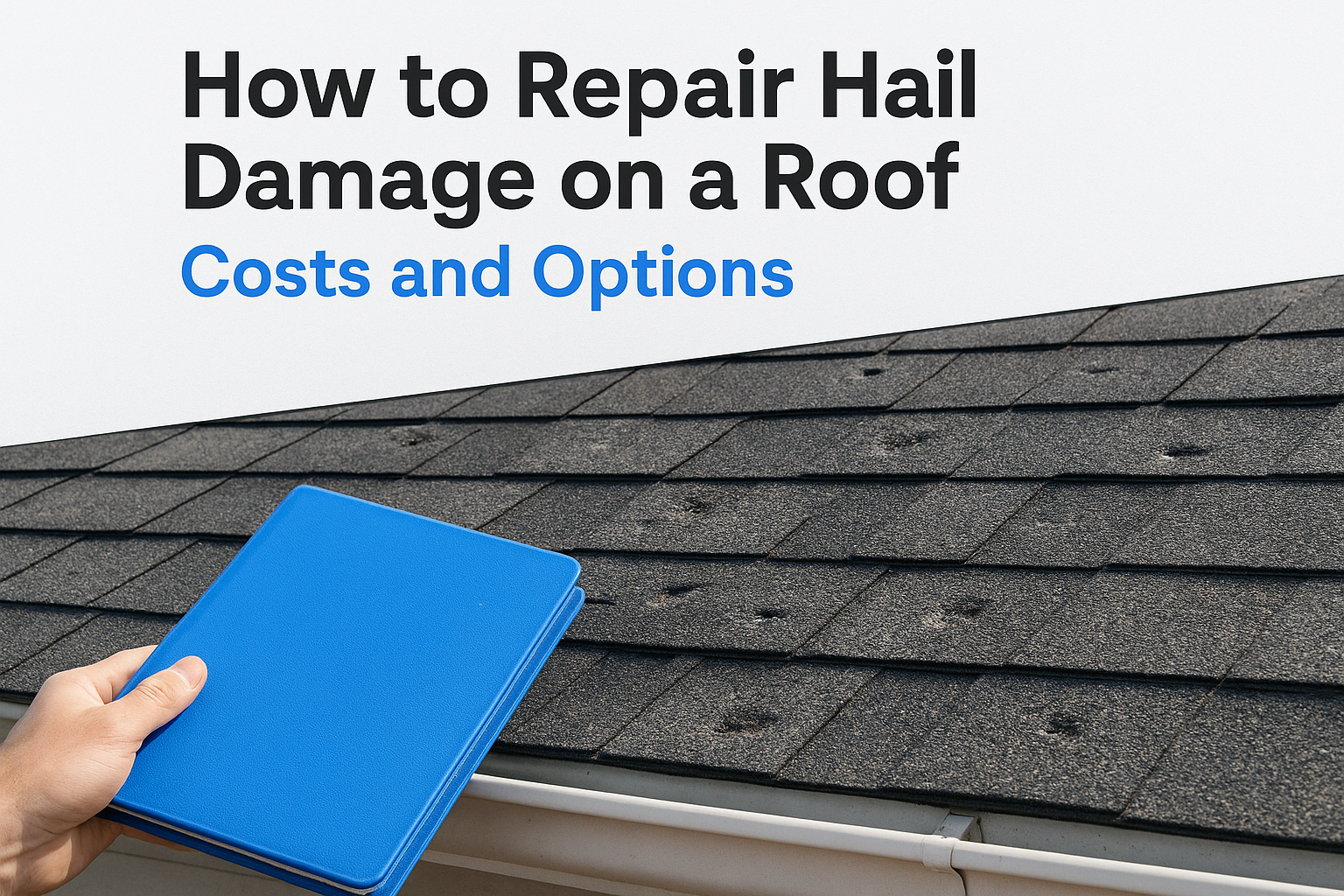
See replacement roof costs in Austin ($9K-$25K), how to vet contractors, and repair-vs-replace tips before requesting Defend Roofing's free quote.
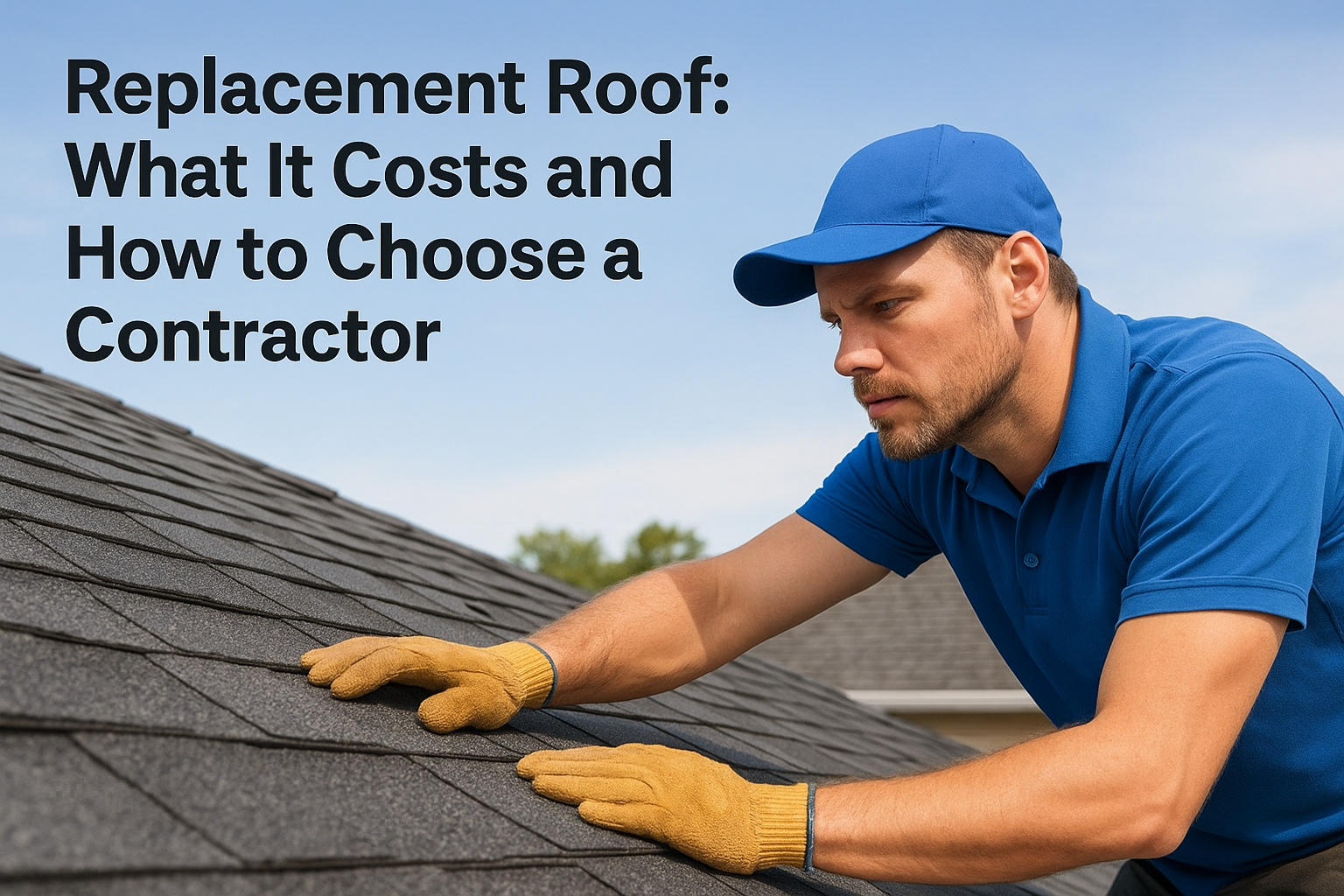
If your roof is leaking, missing shingles, or nearing the end of its life, you're probably staring down the same question every Central Texas homeowner asks: what does a replacement roof actually cost, and who do you trust to install it? Between hail season, aging shingles, and contractors who show up after every storm promising quick fixes, it's easy to feel unsure whether you need a full replacement or just a repair.
This article gives you straight answers. We break down real cost ranges for Austin-area homes, the factors that push those numbers up or down, and what separates a fair estimate from an inflated one. You'll also learn what an honest insurance claim process looks like, since many roof replacements around here follow storm damage rather than simple wear.
We've spent three generations installing and repairing roofs across Cedar Park, Leander, and the surrounding areas, so we're writing this from the jobsite, not a sales script. By the end, you'll know what questions to ask, what red flags to avoid, and how to pick a licensed contractor who documents the work instead of just pitching it.
Ask five roofing contractors for a quote on the same house, and you'll likely get five different numbers. That's not a scam, it's math. A replacement roof for an average Austin-area home runs anywhere from $9,000 to $25,000, and the spread comes down to size, materials, roof complexity, and local conditions that don't show up in a quick online calculator, which is why a 2026 price breakdown of what a new roof costs is more useful than a single number. Understanding these variables helps you spot a fair estimate versus one that's padded or, worse, one that's suspiciously low because corners will get cut.
A roof quote is only as trustworthy as the measurements and materials behind it, not the number on the page.
Contractors price roofing jobs in "squares," with one square equal to 100 square feet of roof surface, which is also how a roof replacement price per square foot gets calculated. A 2,000-square-foot single-story home with a simple gable roof might only need 20 to 24 squares, while a sprawling two-story home with dormers and multiple roof planes can push past 35 squares. Roof pitch matters just as much as square footage. Steep roofs require safety equipment, slower work, and more waste, which adds labor cost even when the footprint is identical to a flatter roof next door.
Material selection causes the widest cost gap of any factor on this list. Basic three-tab asphalt shingles sit at the low end, architectural shingles dominate the Central Texas market for their balance of durability and price, and metal or tile roofing climb well beyond that, so it helps to compare popular roofing materials side by side before you decide.
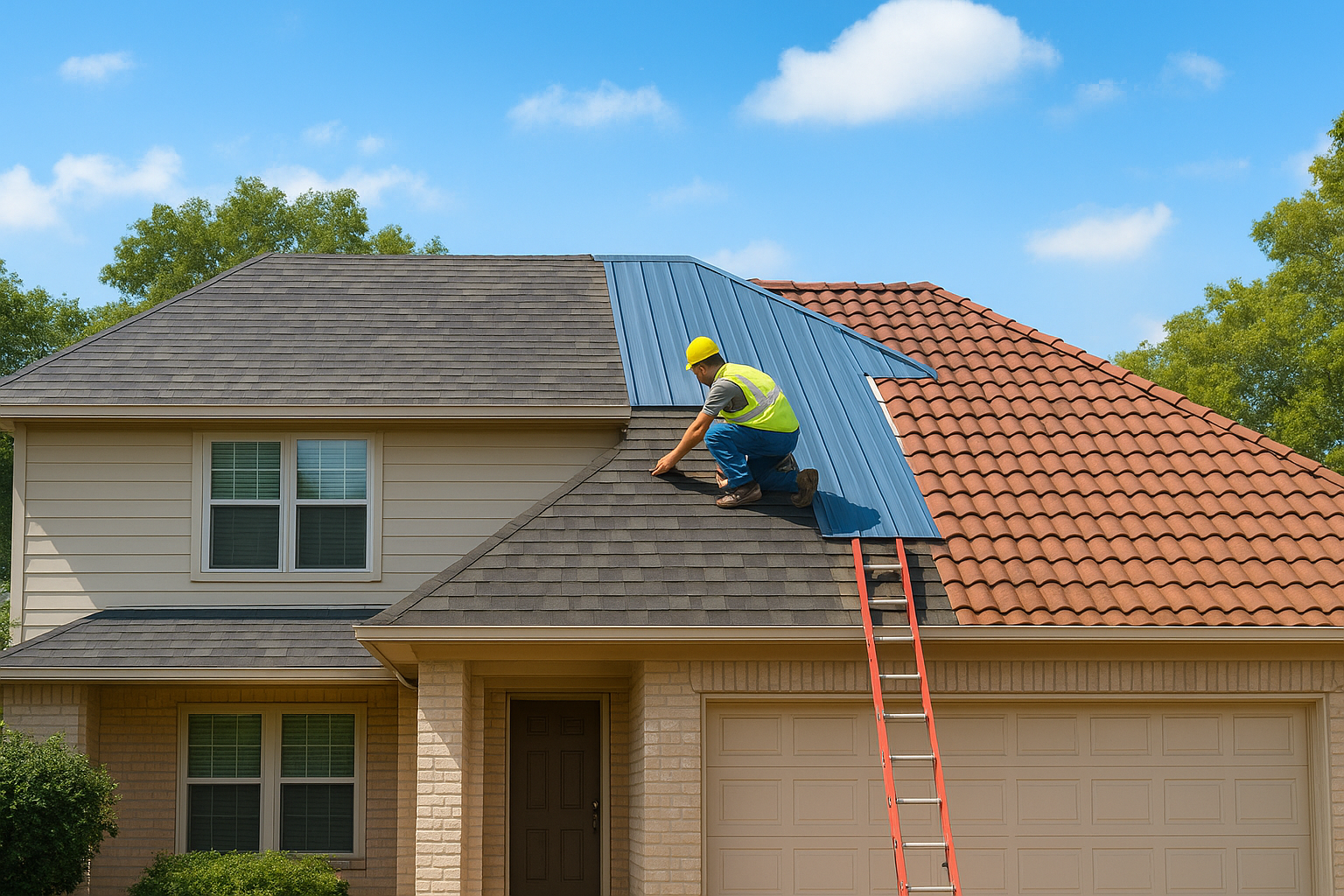
| Material | Typical Cost per Square (Installed) | Expected Lifespan |
|---|---|---|
| 3-tab asphalt shingles | $350 - $450 | 15-20 years |
| Architectural (dimensional) shingles | $450 - $650 | 25-30 years |
| Standing seam metal | $900 - $1,400 | 40-60 years |
| Concrete or clay tile | $1,000 - $1,800 | 50+ years |
Most homeowners we work with in Cedar Park, Steiner Ranch, and Avery Ranch choose architectural shingles because they hold up well against Central Texas hail and heat without the upfront asphalt shingle roof replacement price of metal or tile. That said, homeowners planning to stay in a house long-term sometimes find the higher lifespan of metal roofing worth the investment.
A quote that skips a tear-off inspection is a red flag. If your roof has one existing layer, removal is straightforward. If a previous contractor installed shingles over old shingles, which is common on older homes bought before current code enforcement, tear-off takes longer and costs more. Once the old material is off, roofers often find sections of rotted or water-damaged decking that need replacing before new shingles go down. This is one of the most common sources of cost overruns on replacement jobs, and it's also why a lowball quote that assumes zero decking repair almost never survives contact with the actual roof.
Central Texas sits in one of the more active hail corridors in the country, and that shapes both material demand and insurance underwriting in ways homeowners in milder climates never deal with. Many Austin-area municipalities require impact-resistant shingle ratings or specific underlayment standards, and permit fees vary by city. Jonestown and Leander, for example, have different permitting timelines than Austin proper, which can shift your project schedule by a week or more. A roof replacement cost estimate should always account for your specific municipality's requirements, not a generic statewide average.
Finally, labor rates and warranty coverage account for real cost differences between contractors, even when material and size are identical. A contractor offering a Limited Lifetime Workmanship Warranty builds that guarantee into the price, because they're financially accountable if something fails down the road. A contractor who disappears after the check clears has no such cost baked in, which is part of why their number looks lower on paper. When you compare quotes, always ask what a workmanship warranty actually covers on the labor, not just the shingles.
Knowing how to choose a roofing contractor and spot red flags matters just as much as picking the right shingle, because even premium materials fail when installed poorly. Central Texas sees a wave of out-of-state crews after every hail storm, and some of them vanish before a warranty claim ever surfaces, so learn the signs of a reputable roofer you can trust first. Vetting a contractor properly before signing anything protects your investment far more than chasing the lowest bid.
Before you let anyone on your roof, confirm they carry general liability insurance and workers' compensation coverage, since Texas doesn't require a state roofing license but reputable contractors carry proper insurance regardless. Ask for a certificate of insurance directly from the provider, not just a verbal promise. A local contractor with a physical address and a track record in your specific neighborhood, whether that's Cedar Park, Avery Ranch, or Jonestown, is accountable in a way a truck with an out-of-state plate simply isn't.
If a contractor can't produce proof of insurance on request, that's the only red flag you need to walk away.
Storm chasers follow bad weather from city to city, knock on doors, and pressure homeowners into signing contracts before an insurance adjuster even shows up. Recognizing their tactics early saves you from a rushed decision:
Spotting even one of these should slow you down. A fair estimate always comes with time to think it over.
Genuine expertise shows up in the details a contractor is willing to document. Before recommending a repair or a full tear-off, a trustworthy roofer should walk your roof, photograph every problem area, and explain exactly why replacement makes sense over repair, or vice versa. That's the reasoning behind our own Precision Roof Assessment, which captures 100+ photos of every roof we inspect so you see the actual damage instead of taking our word for it.
Essential questions worth asking any contractor before hiring:
A contractor who answers all four without hesitation has probably earned your business.
Not every damaged roof needs a full teardown, and a trustworthy contractor should be willing to tell you that even when replacement pays them more. Choosing the right fix usually comes down to three things: how much of the roof is affected, how many years are left in the current material, and whether the cost of patching approaches the cost of starting fresh. Getting this call right saves you thousands, which is exactly why we document every inspection with photos instead of just handing you a verbal recommendation.
Small, isolated problems on a roof that's otherwise in good shape almost always point toward repair. A handful of cracked shingles from a falling branch, a small leak around a single vent boot, or minor granule loss on a roof under 10 years old are textbook repair situations. If the damage covers less than 20% of the total roof area and the decking underneath is dry and sound, a targeted repair fixes the problem without touching money you don't need to spend.
Full replacement becomes the right call once damage is widespread, recurring, or tied to a roof already near the end of its expected lifespan, and there are six signs it's time to replace a roof in Texas worth watching for. Watch for these signals:
Any two of these together usually mean repair costs will approach replacement costs anyway, at which point replacement protects you longer for similar money.
Insurance adjusters in Texas commonly apply a rough guideline: if repair costs exceed roughly 30% of what full replacement would cost, replacement becomes the more defensible recommendation on the claim, which matters when you're working out how to get insurance to pay for a roof replacement. This isn't an arbitrary number, it reflects the reality that older roofing materials get harder to match, and stacking new shingles next to weathered ones rarely holds up to inspection or resale value.
If patching the damage costs nearly a third of a new roof, you're not really saving money, you're delaying the inevitable at a discount.
Understanding this threshold helps you evaluate an adjuster's decision instead of just accepting it at face value, and it gives you leverage to ask for documentation if a contractor pushes replacement without clearly showing why repair falls short.
Once you sign a contract, a roof replacement project moves through a predictable sequence, and knowing what to expect during a roof replacement, step by step keeps you from panicking over normal noise, dust, or a delayed delivery truck. Most Central Texas homes go from signed contract to finished roof within one to three weeks, depending on material availability and weather windows, since crews avoid installing shingles during active rain or extreme heat.
Before anyone touches your roof, a materials order goes in, a permit gets pulled if your municipality requires one, and your crew gets scheduled around the forecast. Expect a rough timeline like this:
A roof replacement isn't a single event, it's a chain of scheduled steps, and any weak link delays the whole job.
Installation day starts early and loud. Crews begin tear-off first, stripping old shingles down to the decking, and this is when hidden problems like rotted plywood or damaged flashing surface. Your contractor should inspect the exposed decking on the spot and show you photos of anything that needs replacing before covering it back up, since once new shingles go down, that evidence disappears. New underlayment, flashing, and ventilation components go in next, followed by the shingles themselves, working from the eaves up. A single-story home with a straightforward roof typically wraps in one day; larger or steeper homes can run two.
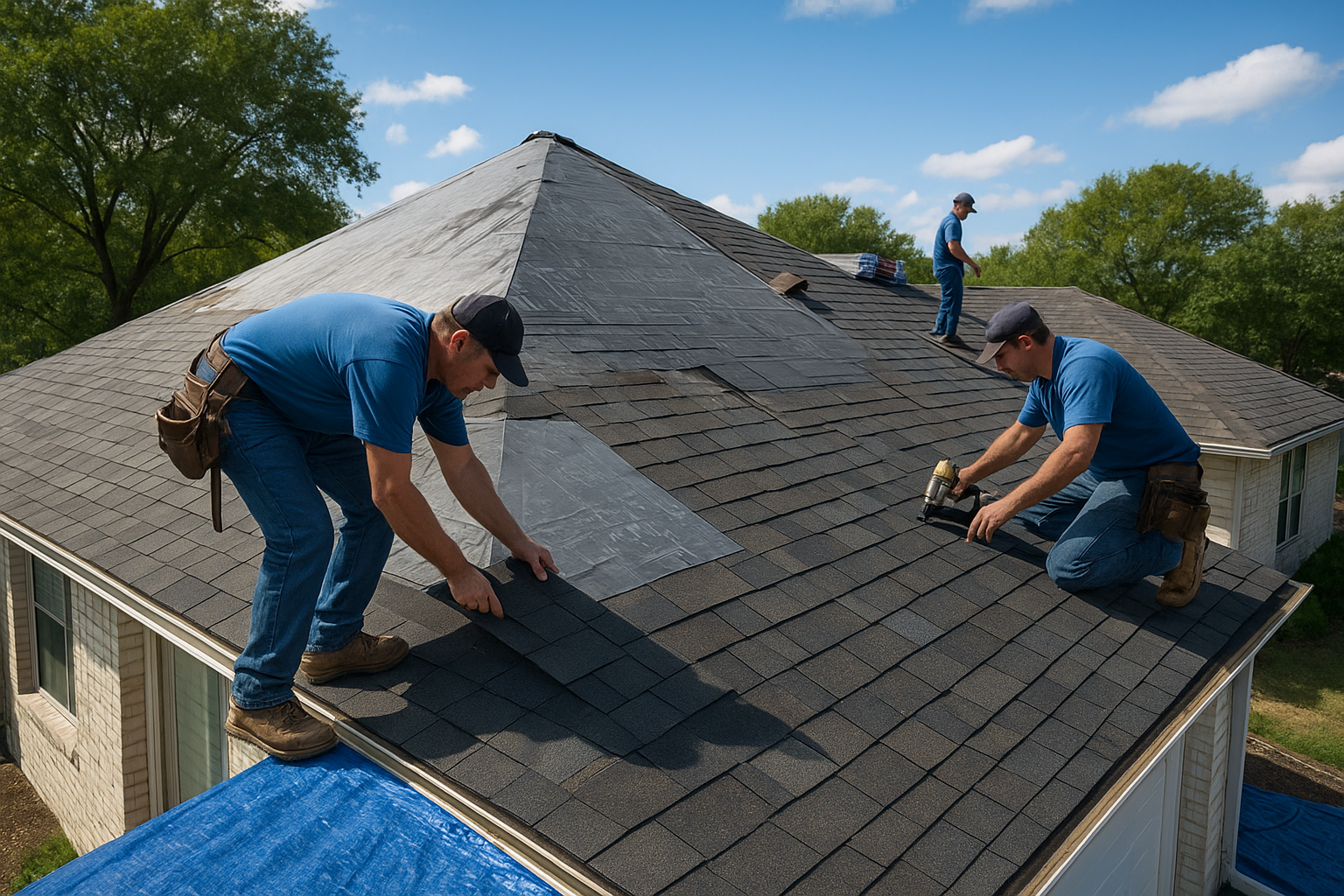
Debris management separates careful contractors from careless ones. A magnetic roller sweep for stray nails should happen around the entire perimeter of your home, including your driveway and flower beds, not just directly under the roofline. Before the crew leaves, a final walkthrough should cover the completed work, confirm ridge vents and flashing are sealed properly, and give you a copy of your manufacturer warranty paperwork along with the workmanship warranty documentation.
Give your new roof a visual check from the ground after the first heavy rain, and keep the warranty paperwork somewhere you can find it, since you'll need it if you ever sell the house. A contractor who stands behind a Limited Lifetime Workmanship Warranty should also be reachable months or years later if a question comes up, not just during the sales process.
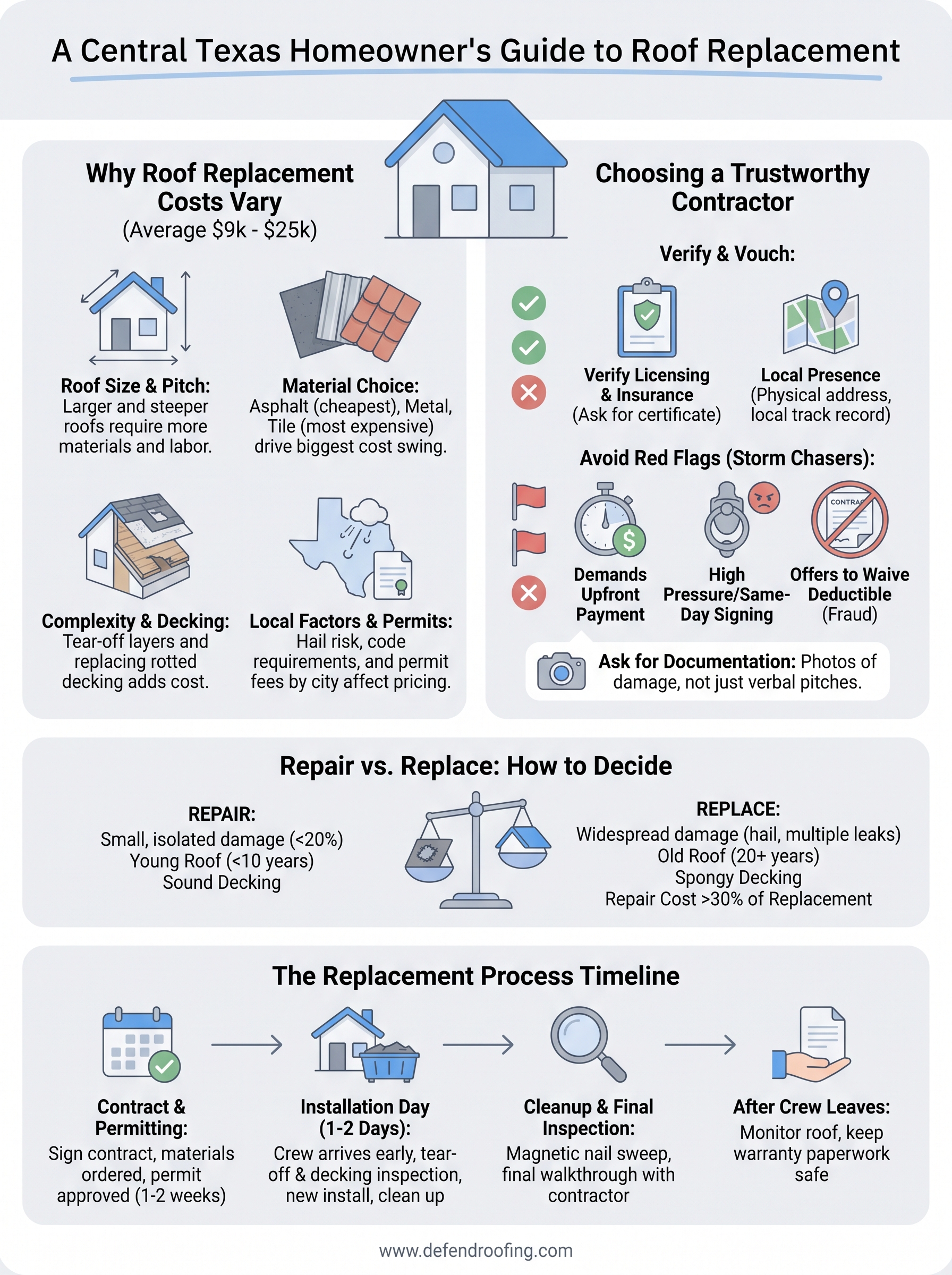
A replacement roof is a major investment, but it doesn't have to feel like a gamble. You now know why costs swing from $9,000 to $25,000, what separates a fair contractor from a storm chaser, and when repair genuinely beats replacement. The pattern behind all of it is the same: documentation and honesty protect you far more than the lowest bid ever will.
Before you commit to any crew, get a real inspection with photos, not a driveway guess. If you're in Cedar Park, Leander, Avery Ranch, Steiner Ranch, or Jonestown and want a straight answer about your roof's condition, book a free photo-documented roof inspection with Defend Roofing. You'll get a documented assessment, a fair scope-based price, and a team that tells you the truth about what your roof actually needs.