See roof-replacement costs by material, learn what drives quotes in Austin, and get questions to vet contractors before you sign a contract.

If you're staring at a roof that's leaking, curling, or hail-battered, you've probably already typed roof replacement into Google looking for a straight answer on price. Most homeowners in Cedar Park, Steiner Ranch, or anywhere else in Central Texas hit the same wall: contractor estimates that swing wildly with no explanation, and no real sense of what's fair.
Here's the direct answer: a full roof replacement in the Austin area typically runs a wide range depending on materials, roof size, and pitch, and the contractor you choose matters just as much as the price you're quoted. This article breaks down the real cost drivers, from shingle type to labor and permitting, so you know what you're actually paying for before a single nail goes in.
We'll also walk through how to vet a local roofing contractor, what separates a documented, honest assessment from a sales pitch, and the questions to ask before signing anything. As a father-son crew with three generations of roofing behind us, we've seen homeowners get burned by vague estimates and rushed inspections, and this guide is built to help you avoid that.
Ask five contractors for a roof replacement cost and you'll likely get five different numbers, sometimes thousands of dollars apart. That's not always a red flag. Roofing is a project with real variables that shift the price, and understanding them helps you tell a fair estimate from a padded one or a lowball that's hiding corners cut.
The biggest driver is simple math: square footage. Roofers price by the "square," a 10x10 foot section, which is how square footage turns into a price per square foot, and a 2,500 square foot ranch home costs less to cover than a 4,500 square foot two-story with dormers and valleys. Pitch matters just as much. A steep roof requires safety equipment, slows down the crew, and increases labor cost per square, even if the footprint is identical to a low-slope home down the street.
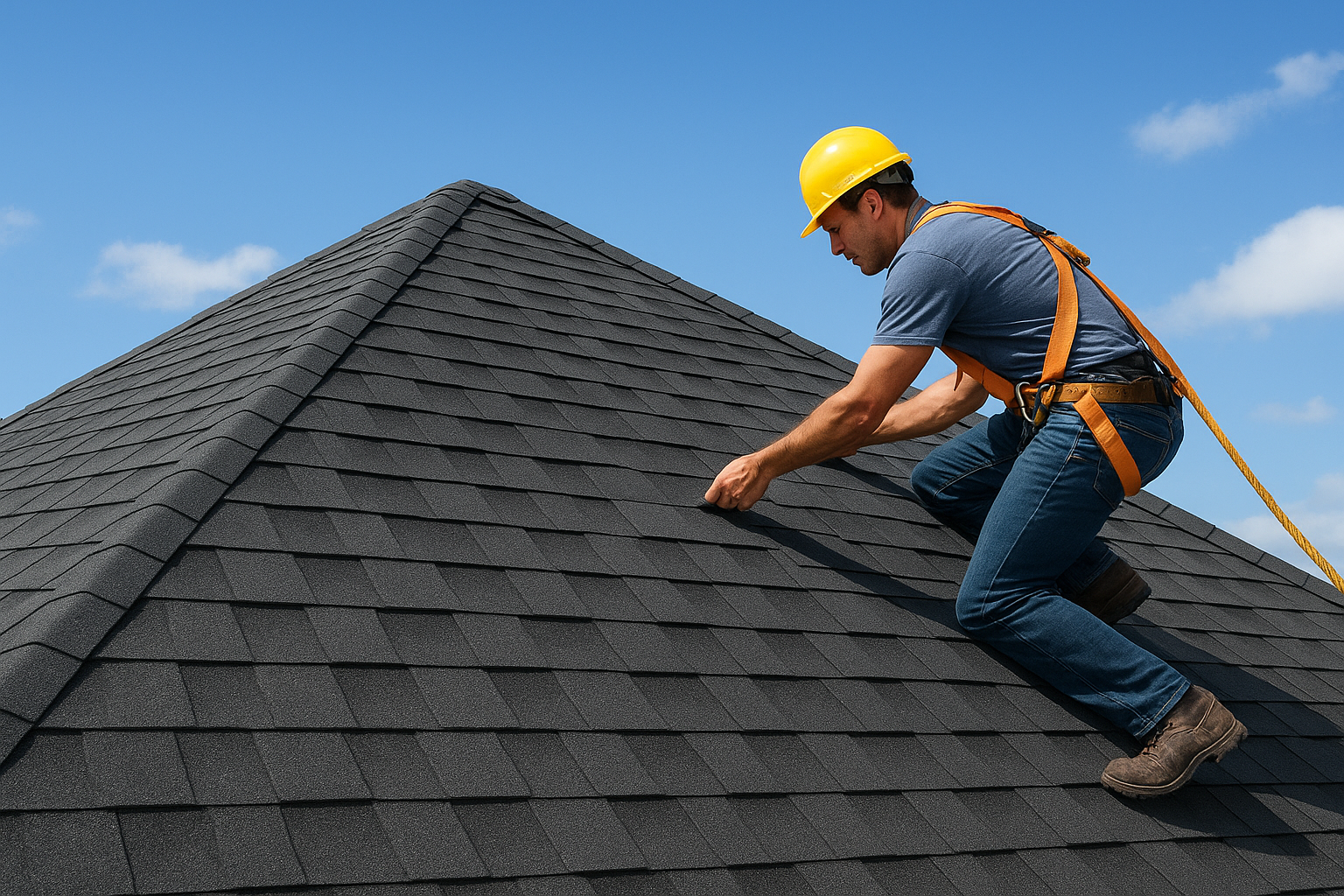
Asphalt shingles, metal panels, and tile all carry different price tags, different lifespans, and different labor requirements. A roof replacement estimate built around architectural shingles will look nothing like one for standing seam metal, and comparing shingles versus metal on cost, lifespan, and insurance shows why, before you even factor in underlayment upgrades or ventilation changes. We break down specific price ranges by material in the next section.
What's underneath your current shingles matters more than most homeowners realize. If your roof has one layer and the decking is solid, tear-off goes fast. If there are two or three layers stacked up, or the plywood underneath is soft from years of hidden leaks, expect added labor and material costs to replace rotted sheathing. This is exactly why we photograph every inch of a roof deck during our Precision Roof Assessment, so you see the actual condition before we quote a number, not after demo has already started.
A roof estimate is only as honest as the inspection behind it.
Austin-area permitting, disposal fees, and code-required upgrades (like updated flashing or ventilation to meet current standards) all get baked into your total. Skilled labor isn't cheap either, and a crew that's properly trained and insured costs more to employ than one cutting corners on safety or experience. When a bid comes in dramatically lower than everyone else's, ask what's being left out.
If a hailstorm or high wind event triggered your need for a new roof, your cost of a new roof may be largely covered by insurance, but the process introduces its own variables: adjuster estimates, supplement negotiations, and code-upgrade coverage that varies by policy. Homeowners navigating a claim need documentation that holds up to adjuster scrutiny, which is a big part of what we handle for clients working on getting insurance to cover a roof replacement in Texas.
Here's a quick snapshot of how these factors typically move the price:
| Cost Factor | Impact on Price |
|---|---|
| Roof size (squares) | Larger footprint = higher total cost |
| Roof pitch | Steeper roofs add labor and safety costs |
| Material type | Metal and tile cost more upfront than asphalt |
| Layers of old shingles | Multiple layers increase tear-off labor |
| Decking condition | Rotted plywood adds material and labor |
| Permits and code upgrades | Local requirements add fixed fees |
Once you understand these variables, a wide range of quotes starts to make sense, and you're in a much better position to compare bids on substance instead of just the bottom-line number.
Material choice swings your roof replacement cost more than almost any other factor, so let's put real numbers next to the options homeowners in Central Texas actually choose and see how they compare to typical roof replacement prices. These are typical installed price ranges per square (100 square feet) for a standard residential roof in the Austin area, not including major decking repairs or steep-pitch premiums.
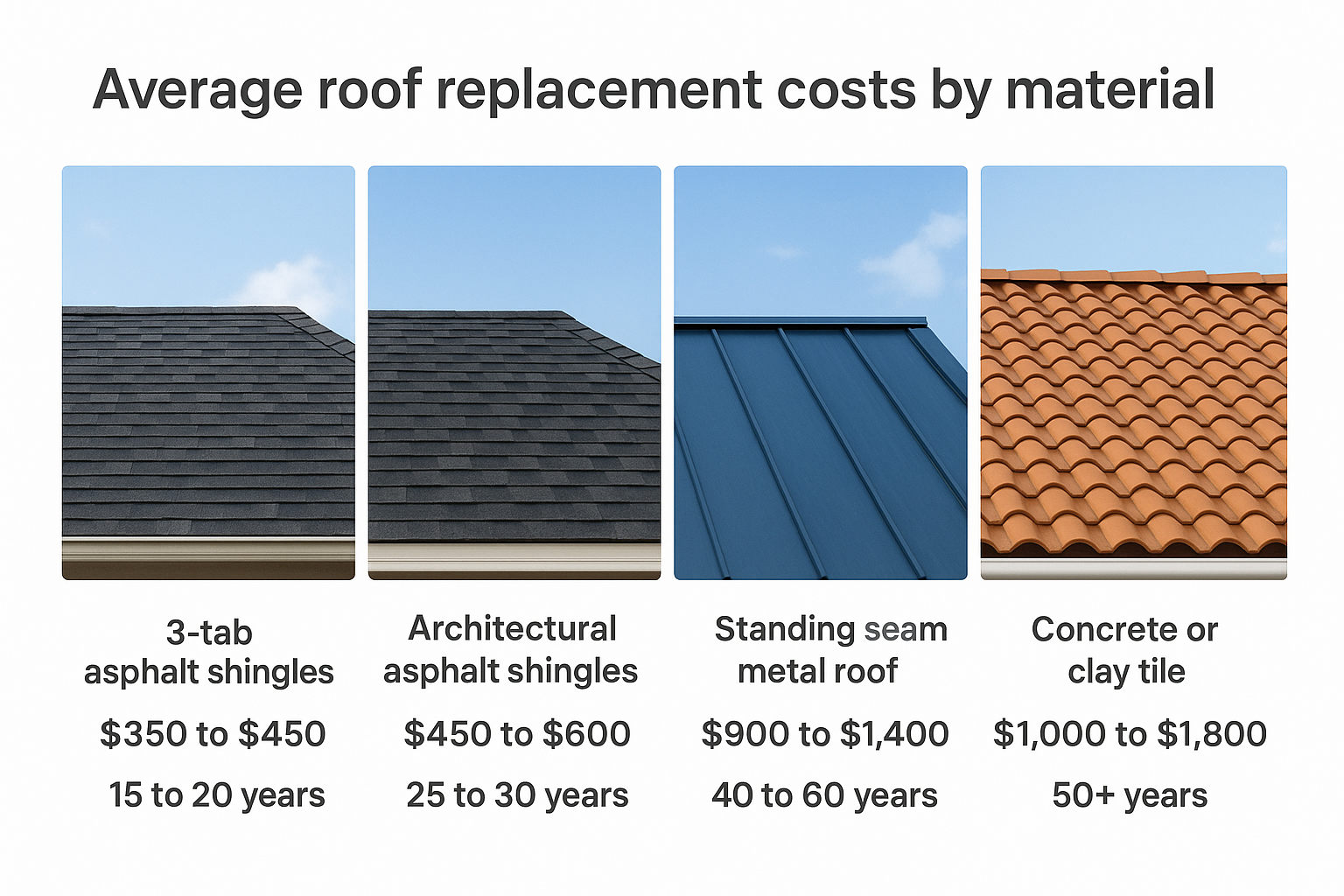
| Material | Typical Cost Per Square (Installed) | Expected Lifespan |
|---|---|---|
| 3-tab asphalt shingles | $350 to $450 | 15 to 20 years |
| Architectural asphalt shingles | $450 to $600 | 25 to 30 years |
| Standing seam metal | $900 to $1,400 | 40 to 60 years |
| Concrete or clay tile | $1,000 to $1,800 | 50+ years |
Architectural shingles cover the majority of homes we work on, and for good reason, as the 2026 price guide for asphalt shingle replacement shows. They balance upfront cost with solid wind and hail resistance, especially the impact-rated products many insurers now favor after storm claims. If your new roof cost needs to stay reasonable while still holding up to Hill Country weather, this is almost always the right starting point.
The cheapest material rarely stays cheap once you factor in how often you'll replace it.
Standing seam metal costs roughly double an asphalt shingle roof upfront, but it can outlast two or three shingle replacements over the life of your home. Homeowners planning to stay long-term, or those wanting stronger hail and fire performance, often find the math works in their favor over a 20-year horizon once they weigh the pros and cons of metal roofing.
Concrete and clay tile sit at the top of the price range and carry structural considerations, since tile is heavier than shingles or metal. Not every roof deck or truss system is built to support it without reinforcement, which is something we flag during our roof inspection process before quoting anything.
Understanding these baseline numbers gives you a real reference point when a contractor hands you a quote. If a bid falls far outside these ranges in either direction, that's your cue to ask more questions before signing.
Price matters, but the contractor you hire determines whether your roof replacement actually holds up through the next hailstorm or fails at the first heavy rain. Central Texas has no shortage of storm-chasing crews that show up after a big weather event, collect a deposit, and disappear before the job's finished. Choosing well up front saves you from chasing down a warranty claim later.
Start with the basics, since the clearest signs of a roofer worth hiring are easy to verify: confirm the company carries general liability insurance and workers' compensation, and ask how long they've operated in your specific area. A crew with three generations of experience in Central Texas understands local wind patterns, hail history, and code requirements in a way an out-of-state outfit never will. Check a few things, along with the ten questions worth asking any roofer, before you sign anything:
Honest contractors show you evidence instead of asking you to trust their word. Our Precision Roof Assessment includes over 100 photos of your roof's actual condition, so you see exactly what's driving a repair or replacement recommendation before you commit to either one.
If a contractor won't show you the damage, don't take their word for how bad it is.
Questioning a contractor who pushes full replacement without documentation is fair. A roofing contractor confident in their findings will happily walk you through photos, not just a verbal summary.
Manufacturer material warranties only cover product defects, not installation errors, which is why how workmanship warranty coverage and length work matters just as much. We stand behind every installation with a Limited Lifetime Workmanship Warranty, covering our labor for as long as you own the home. Verifying that a contractor offers this kind of guarantee, in writing, before work begins protects you long after the crew has packed up and moved to the next job.
Signing a contract is only the start. Knowing the actual roof replacement process and what happens on each day of the job helps you plan around the noise, spot problems early, and hold your contractor accountable to what they promised on paper. A well-run crew treats your property like it matters, not like a job site to tear through and abandon by 5 p.m.
Most standard asphalt shingle replacements in Central Texas take one to two days from tear-off to final cleanup, weather permitting. Metal or tile jobs run longer, sometimes three to five days, given the extra care standing seam panels or heavy tile require, so it helps to review replacement timelines by material. Your crew should walk you through a rough schedule before the first shingle comes off, including what happens if rain pushes things back. A reputable team doesn't leave your roof exposed overnight without protection, especially during Texas storm season.
Demo and installation are loud and messy by nature, but a professional crew limits the collateral damage. Before work starts, expect tarps over landscaping, plywood protection for driveways under dumpsters or material staging, and magnetic nail sweeps run daily and again at the end of the project. Ask these questions before day one:
A clean job site every single day is a better indicator of quality than almost anything in the contract.
Once installation wraps up, a trustworthy contractor doesn't just hand you an invoice and leave. Expect a final walkthrough where someone points out completed flashing, ridge caps, and ventilation work, ideally backed by photos matching your original assessment. This closing documentation matters just as much for insurance purposes as it does for your own peace of mind, since it gives you a record tied to your new roof cost and the workmanship warranty behind it. We handle this step the same way we handle the initial Precision Roof Assessment, with photos that show the finished work, not just a signature on a paper.
Getting this level of transparency from tear-off through final cleanup isn't a bonus feature. It's the baseline every homeowner should expect before agreeing to a project this size.
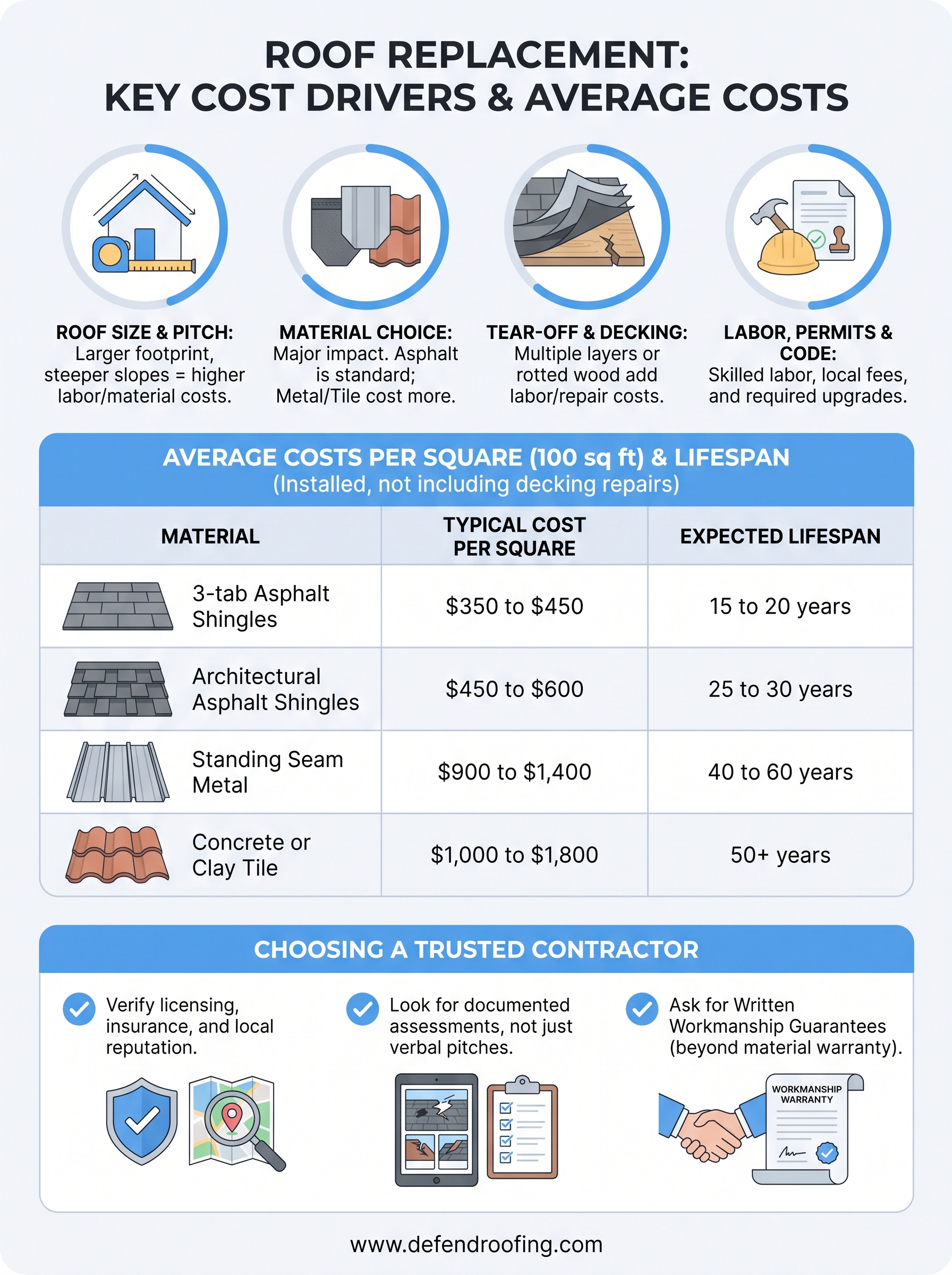
A roof replacement is one of the biggest investments you'll make in your home, and the right decision comes down to two things: understanding the real cost drivers behind your quote, and hiring a crew that documents everything instead of asking you to just trust them. Material, pitch, decking condition, and labor all shape your number, but transparency is what separates a fair estimate from a padded one.
Before you sign with anyone, insist on photos, ask about workmanship warranties, and compare bids on substance, not just the bottom line. Three generations of roofing experience taught us that homeowners who ask hard questions upfront avoid headaches later.
Ready to see where your roof actually stands? Get a straightforward roofing quote from Defend Roofing and honest answers, no pressure attached.