See real per-square-foot pricing to understand the cost of flat roof replacement, compare materials, hidden fees, and repair-vs-replace tips from Defend Roofing.
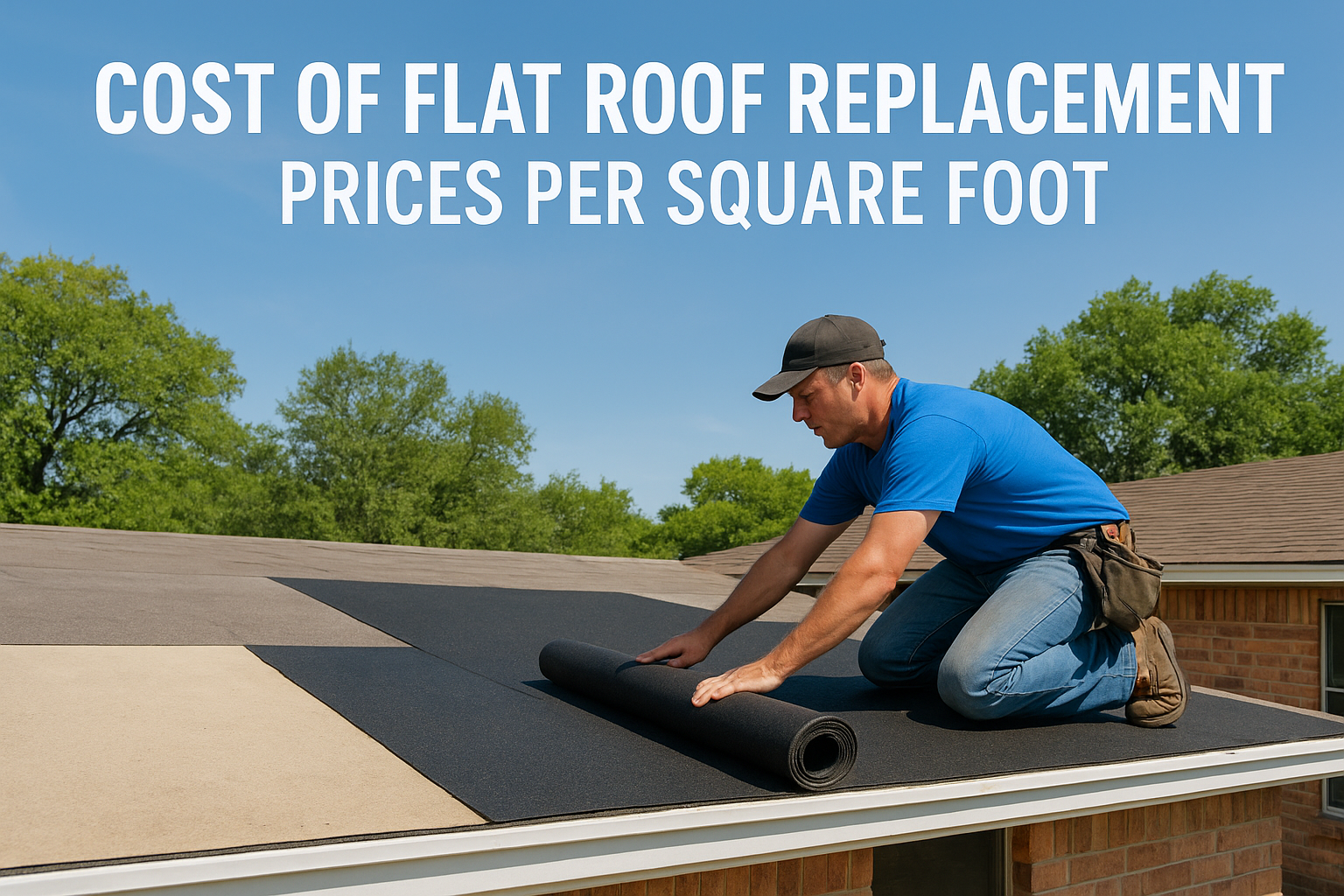
You've got a flat roof that's past its prime, or maybe an inspector just flagged it, and now you're staring at a decision that could cost anywhere from a few thousand dollars to well over $20,000. That's a wide range, and without real numbers, it's hard to know if a quote is fair or if you're being taken for a ride. The cost of flat roof replacement depends on more variables than most homeowners expect, and guessing isn't a good strategy when you're signing a contract this size.
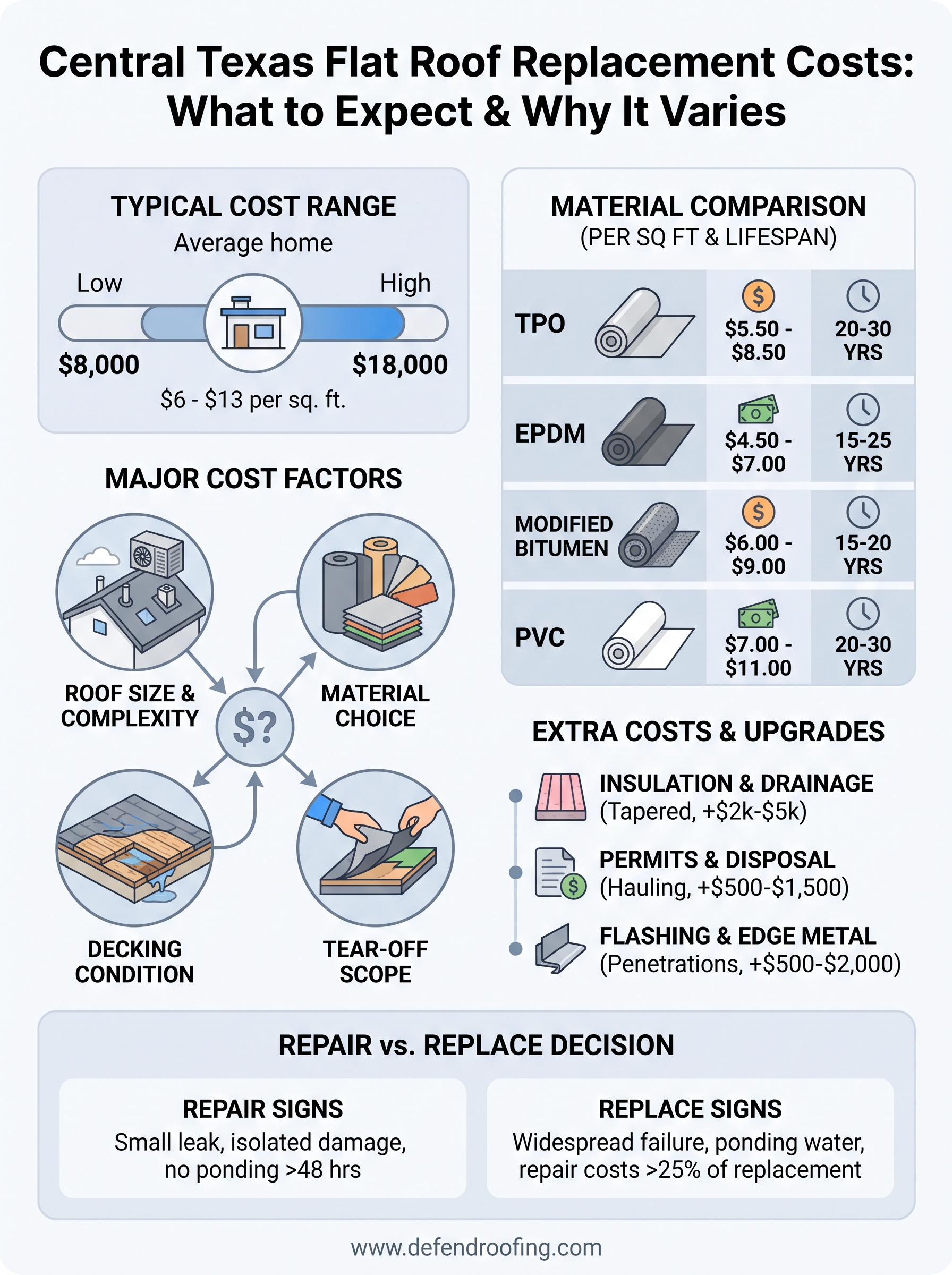
Here's the short answer: most Central Texas homeowners pay between $6 and $13 per square foot for a full flat roof replacement, with total project costs typically landing between $8,000 and $18,000 for an average home. The flat roof replacement cost per square foot shifts based on material choice, roof size, decking condition, and how much tear-off is involved.
In this article, we'll break down real pricing by material, walk through the labor and material factors that move your final number up or down, and explain how a documented roof assessment helps you avoid paying for work you don't actually need.
Ask five roofing contractors for a quote on the same flat roof, and you'll likely get five different numbers. That's not because someone's padding the bill. Flat roof pricing swings based on a handful of factors that don't show up in a quick online estimate, and understanding them is the only way to know if a bid actually makes sense for your house.
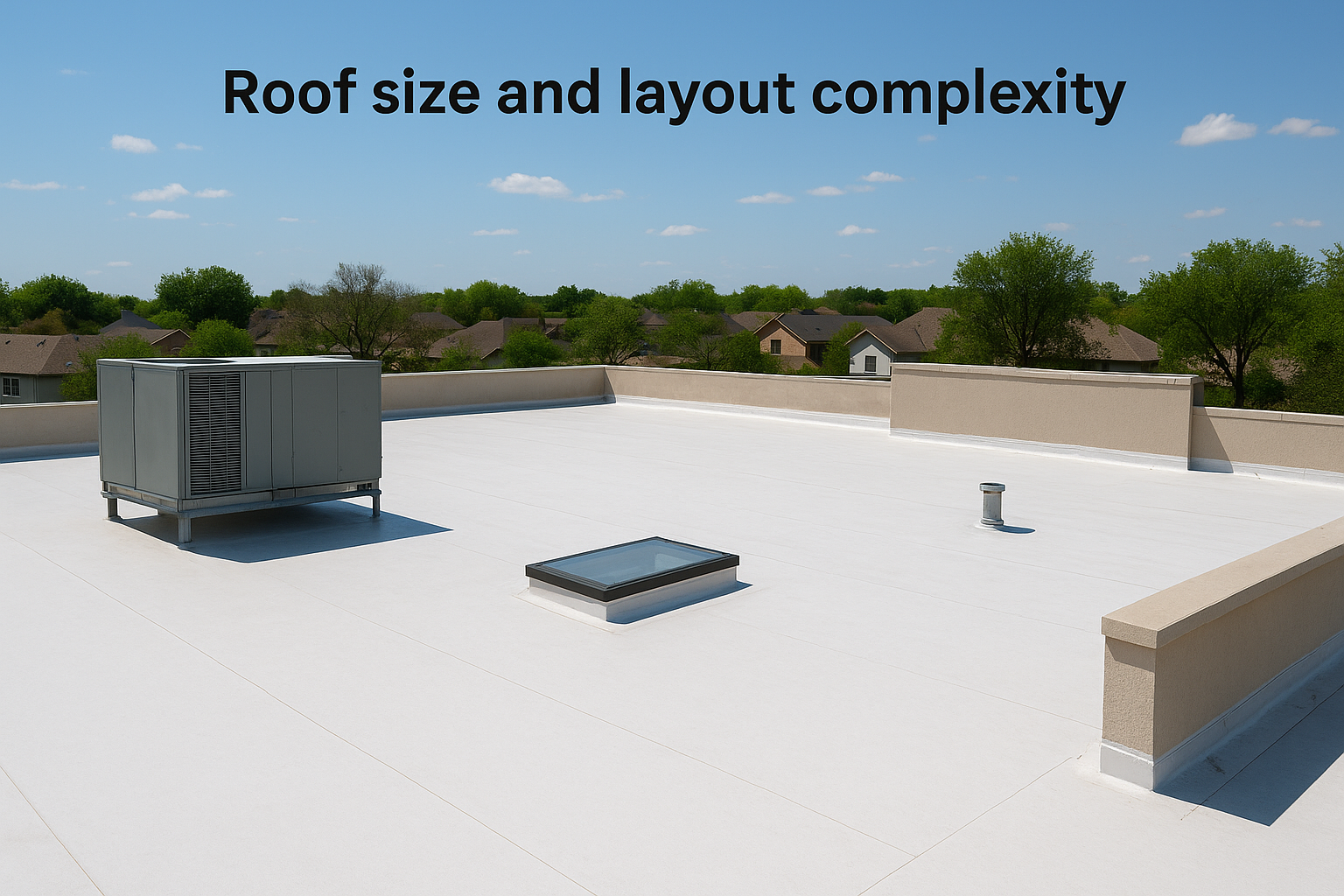
Square footage matters, obviously, but shape matters just as much. A simple rectangular roof with no obstructions costs less per square foot to install than one chopped up by HVAC units, skylights, parapet walls, or multiple roof levels. Every penetration needs flashing, and every corner needs extra material and labor time. A 1,500 square foot flat roof with a clean layout might run $9,000, while a similarly sized roof crowded with equipment can push past $13,000 for the same material.
TPO, EPDM, modified bitumen, and PVC all carry different price tags, and the gap between the cheapest and most durable option can be $4 or more per square foot. We'll break down exact ranges for each material in the next section, but material selection alone can shift a total project cost by several thousand dollars.
What's underneath the membrane matters more than most homeowners realize. If your roof deck has water damage, rot, or sagging from years of ponding water, that wood has to come out and get replaced before any new membrane goes down. Decking repair isn't optional and it isn't cheap. This is exactly why a thorough roof assessment before any tear-off starts is worth insisting on. Contractors who skip this step and quote a flat number without checking the deck are guessing, and you're the one who pays for that guess later when hidden damage turns into a change order, long after the point where a simple do-it-yourself roof repair could have helped.
A quote without a real deck inspection isn't a price, it's a placeholder.
Some flat roof jobs allow a recover, meaning the new membrane goes over the old one. Others require a full tear-off down to the deck, which adds labor and disposal costs. Local building codes and the number of existing layers on your roof determine which option is even legal, and tear-off jobs typically add $1 to $2 per square foot compared to a recover.
Central Texas labor costs aren't the same as what you'd pay in a smaller rural market or a major coastal city, and steep or hard-to-access roofs cost more to work on safely regardless of location. Here's a quick look at how these variables stack up:
| Cost Factor | Typical Impact on Price |
|---|---|
| Complex layout (multiple penetrations) | +$1 to $3 per sq ft |
| Deck repair or replacement | +$1 to $5 per sq ft |
| Full tear-off vs. recover | +$1 to $2 per sq ft |
| Steep pitch or difficult access | +$0.50 to $1.50 per sq ft |
| Premium material upgrade | +$2 to $4 per sq ft |
Once you factor in these variables together, it becomes clear why two homes with roughly the same square footage can end up with quotes thousands of dollars apart. The number itself isn't the problem. What matters is whether the contractor can explain exactly why that number is what it is.
Most roofing quotes get expressed as a price per square foot, but the math behind what a roof replacement costs per square foot in 2026 confuses a lot of homeowners. Roofers actually work in "squares," not individual square feet, and knowing this helps you translate any bid into a number you can compare apples to apples across contractors.
A roofing square equals 100 square feet. So a 1,600 square foot flat roof works out to 16 squares. Multiply your total square footage by the per-square-foot price a contractor quotes, and you get your material and labor estimate before extras. Here's the simple version:
Total roof square footage ÷ 100 = number of squares
Number of squares × price per square foot × 100 = base project cost
For example, a 1,600 square foot roof at $9 per square foot comes out to $14,400 before any deck repair, tear-off fees, or upgrades get added.
Get your exact square footage first. Every other number in your quote depends on it.
Guessing your square footage from a satellite photo or a rough walk-around leads to bad estimates on both ends. Precise measurements matter because a 5% error on a 2,000 square foot roof means a swing of $900 to $1,300 depending on material. Here's what an accurate measurement process should include:
This is exactly why we run a full Precision Roof Assessment with over 100 photos before quoting any project, and it helps to know what a professional inspection should check before anyone climbs up there. It gives you a real number tied to your actual roof, not a rough estimate based on square footage alone.
Running your own numbers before you call a contractor puts you in a much stronger position. If a quote comes in far outside the range your own math produces, that's your cue to ask why, and a contractor confident in their pricing will walk you through every line item without hesitation.
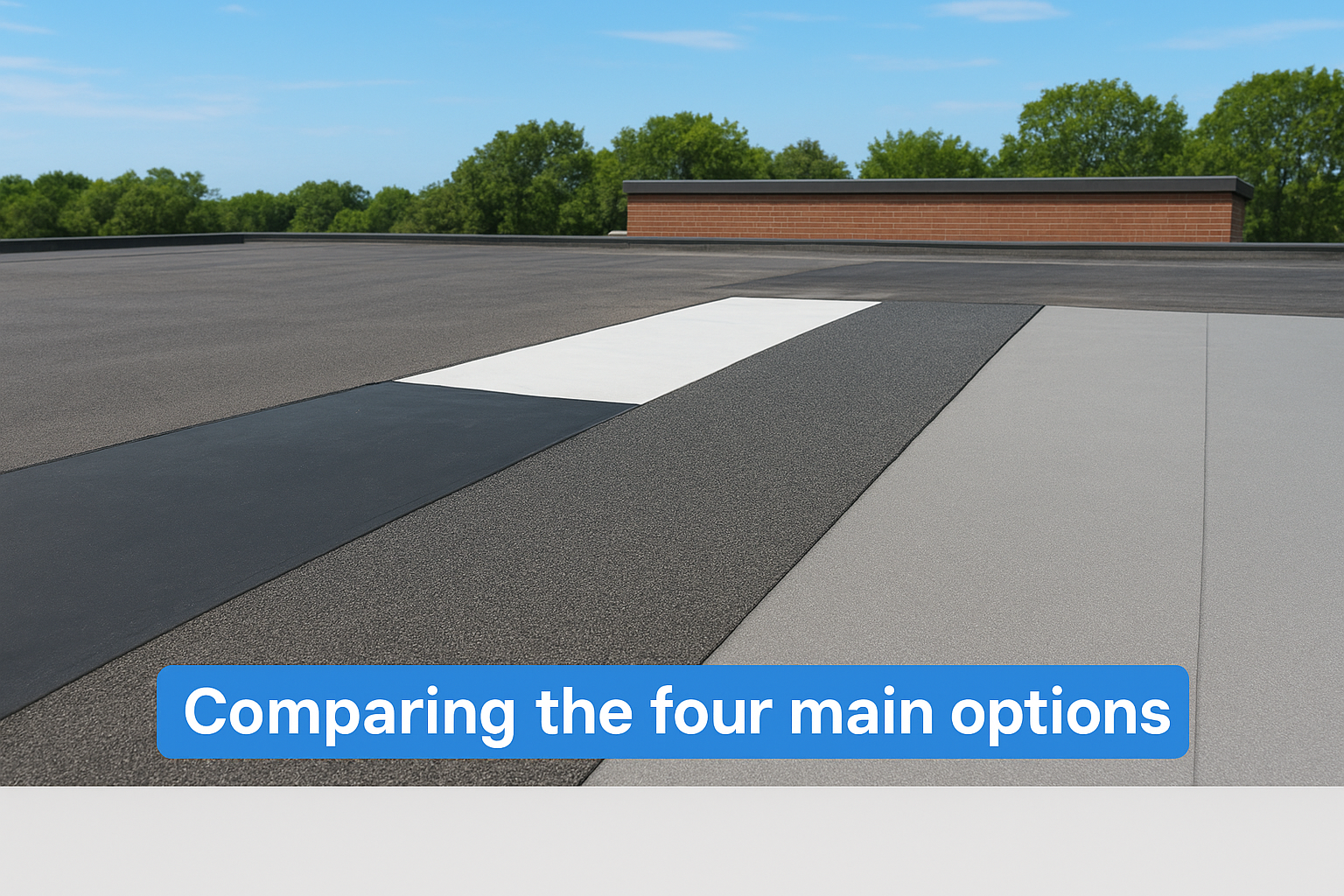
Material choice drives more of your final price than almost any other single factor, and the four main options used on flat roofs today land in very different price brackets, so it's worth comparing roofing materials side by side before you commit. TPO membrane is the most common choice for Central Texas homeowners right now, running roughly $5.50 to $8.50 per square foot installed. It reflects heat well, which matters here, and it welds into a seamless surface that resists ponding water better than older materials.
EPDM, the classic black rubber membrane, typically costs $4.50 to $7 per square foot, making it one of the more budget-friendly options. It's been around for decades and holds up fine in mild climates, but black membrane absorbs heat, and in a Central Texas summer that means higher attic temperatures and, over time, faster material breakdown from UV exposure.
Modified bitumen sits in the middle at $6 to $9 per square foot. It's a solid, proven system, torch-applied or self-adhered, and it handles foot traffic well if you've got equipment on the roof. PVC comes in as the premium option at $7 to $11 per square foot, and it earns that price with the best chemical and grease resistance of the bunch, which matters if you're near a kitchen exhaust or have rooftop equipment leaking oils.
The cheapest membrane per square foot rarely ends up cheapest over the life of the roof.
Here's how the flat roof replacement cost per square foot breaks down by material, along with how long a flat roof lasts by material so you can weigh upfront cost against long-term value:
| Material | Cost per Sq Ft | Typical Lifespan |
|---|---|---|
| EPDM (rubber) | $4.50 - $7.00 | 15-25 years |
| TPO | $5.50 - $8.50 | 20-30 years |
| Modified Bitumen | $6.00 - $9.00 | 15-20 years |
| PVC | $7.00 - $11.00 | 20-30 years |
Weighing these numbers against your roof's actual conditions matters more than chasing the lowest bid. A roof with heavy rooftop equipment or grease exposure needs PVC's chemical resistance regardless of the higher upfront cost, while a straightforward residential flat roof with no unusual exposure often does perfectly well with TPO. Your contractor should walk you through which material fits your specific roof, not just quote whichever one they happen to have on hand that week.
Even a detailed quote can miss line items that show up later, and knowing what to ask about upfront keeps your final invoice close to your original estimate. Beyond the base material and labor cost, several add-ons commonly push a flat roof replacement budget higher, and a few of them are worth paying for even when they weren't part of your original plan.
Building codes have tightened insulation requirements over the past decade, and if your current roof doesn't meet current standards, your contractor may need to add rigid insulation board during replacement. This typically adds $1 to $2 per square foot, but it also lowers your energy bills the same way energy efficient roofing materials do, so it's rarely money wasted. Drainage is the bigger concern on flat roofs specifically. Ponding water is the number one cause of premature membrane failure, and if your roof holds water for more than 48 hours after rain, a tapered insulation system to redirect flow toward drains can add $2,000 to $5,000 depending on roof size.
Fixing drainage now costs less than replacing a membrane again in five years.
Most municipalities in Central Texas require a permit for full tear-off roof replacement, and permit fees generally run $150 to $500 depending on your city. Disposal costs add up fast too, since a full tear-off on a 1,600 square foot roof can generate several tons of debris, and dumpster and hauling fees typically add $500 to $1,500 to the project. If your roof has more layers than code allows for a recover, you're required to tear off down to the deck regardless of what you'd prefer, which removes any option to save money with a simple overlay.
New flashing around every penetration, parapet wall cap, and drain is not optional on a proper installation, and skipping it is exactly how leaks start within the first year. Expect $500 to $2,000 in flashing and edge metal costs depending on how many penetrations your roof has. Here's a quick rundown of the extras most homeowners underestimate:
Asking your contractor to itemize these costs before signing protects you from surprise change orders once the tear-off begins.
Deciding between a patch job and a full flat roof replacement comes down to age, damage pattern, and how much you'd spend keeping a dying roof alive versus starting fresh. Homeowners often wait too long on this decision because a single leak feels like a repair problem, when the real issue is a membrane that's failing across its entire surface.
Small, isolated problems usually point toward repair rather than full replacement, and what a flat roof repair actually costs is often a fraction of a new membrane. Look for these signs before assuming the worst:
Getting an honest roof assessment from someone who documents the damage with photos, rather than someone eyeballing it from the ground, is the only reliable way to know which side of the repair-or-replace line your roof falls on.
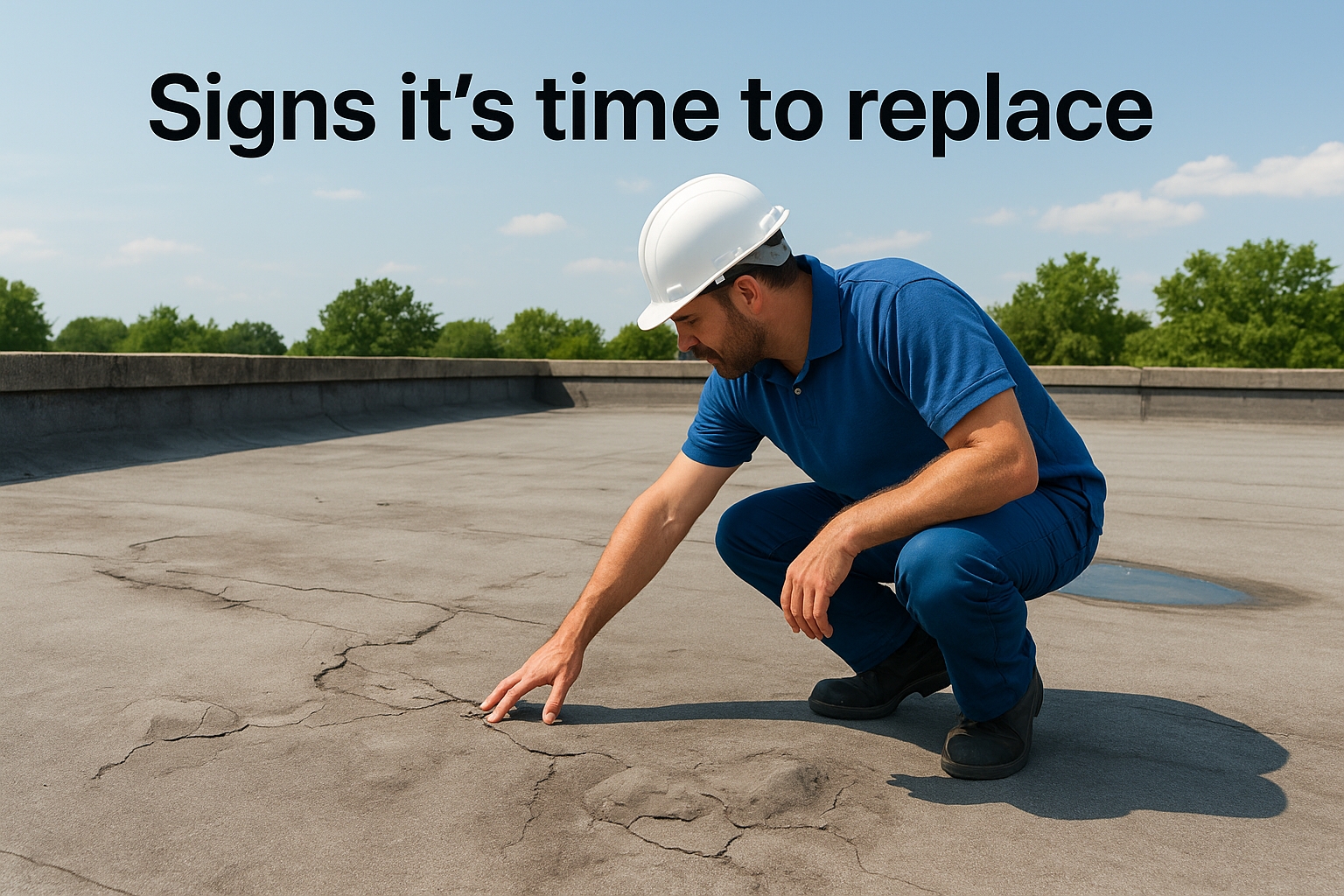
Once a membrane starts failing in multiple spots, repair becomes a temporary fix that costs money without solving anything, which is why knowing when replacement is the right fix saves you money. Widespread blistering, brittle or cracked material across large sections, recurring leaks in different locations, and a roof already past its expected lifespan all point toward replacement. Ponding water that doesn't drain within two days is another red flag, since it signals a structural or drainage issue that a patch won't fix.
Patching a roof that's failing everywhere just delays the invoice, it doesn't lower it.
Many roofing professionals use a simple guideline: if repairs would cost more than 25% of a full replacement, replacement is the smarter financial move. Spending $4,000 on repairs for a roof that would cost $12,000 to fully replace rarely makes sense, especially when that roof is already 15 years into a 20-year lifespan. Insurance adjusters often apply similar logic when evaluating storm damage claims, which is why documented evidence matters so much during that process.
Our team walks every roof in person before recommending either path, and we'll tell you honestly when repair is the better call, even though replacement is the bigger job. You can see exactly what that process looks like on our flat roof repair page.
Getting a fair price isn't about finding the cheapest bid. It's about matching your spending to a roof that actually holds up in Central Texas heat and storms. A few smart moves during the planning phase can save you thousands over the life of your roof without cutting corners on the installation itself.
Comparing quotes only works when they break down the same line items. A detailed quote should separate material cost, labor, tear-off, disposal, permits, and any deck repair contingency, rather than lumping everything into one number, which is why we publish our starting rates for Central Texas homes. Ask each contractor to walk you through their pricing the same way, ask the right questions before you hire, and be wary of any bid that's dramatically lower than the others without a clear explanation for why.
A vague quote almost always turns into an expensive change order.
Only upgrading materials where it matters keeps your budget focused. If you've got rooftop HVAC units, foot traffic, or exposure to grease vents, spending more on PVC or modified bitumen pays off in fewer repairs down the road. Reserve budget-friendly EPDM or standard TPO for simpler roofs without heavy equipment, since paying for chemical resistance you'll never need is money wasted.
Manufacturer warranties and workmanship warranties cover different failures, and homeowners often assume one covers what the other doesn't. Confirm exactly what's included:
Our installations come with a Limited Lifetime Workmanship Warranty, and we walk every homeowner through what workmanship coverage includes and how long it lasts before work starts.
Sometimes the best value move is timing, not shopping harder. Putting off a replacement on a roof that's already failing usually costs more once interior damage, mold, or structural issues set in. If cash flow is the concern rather than the roof's condition, exploring the options for financing a new roof lets you handle the problem now instead of gambling on one more storm season.
Your final number comes down to three things: material choice, roof condition underneath the membrane, and how much tear-off the job actually requires. Budget for the middle of the range we've outlined rather than the lowest price you find, since the cheapest bid almost always leaves out deck repair, drainage fixes, or proper flashing until it becomes a change order mid-project.
Honestly, the number on paper matters less than who's standing on your roof measuring it. A documented assessment with real photos tells you what you're actually paying for, and it protects you from both overpaying for unnecessary work and underpaying for a job that skips steps you won't notice until the next storm.
Ready to get real numbers for your roof instead of a rough guess? Call, text, or get an instant quote for your flat roof replacement and we'll walk your roof, document what we find, and give you pricing you can actually trust.