See replacement garage roof cost by size and material, plus hidden fees to watch for and how to get an accurate, itemized quote.
Your garage roof is leaking, sagging, or shedding shingles, and you want a real number before you call anyone. Search around and you will find vague ranges that swing from $1,500 to $10,000 with no explanation of why, which leaves you no closer to a budget. The replacement garage roof cost actually depends on a short list of factors: square footage, roofing material, roof pitch, and whether your decking underneath needs repair.
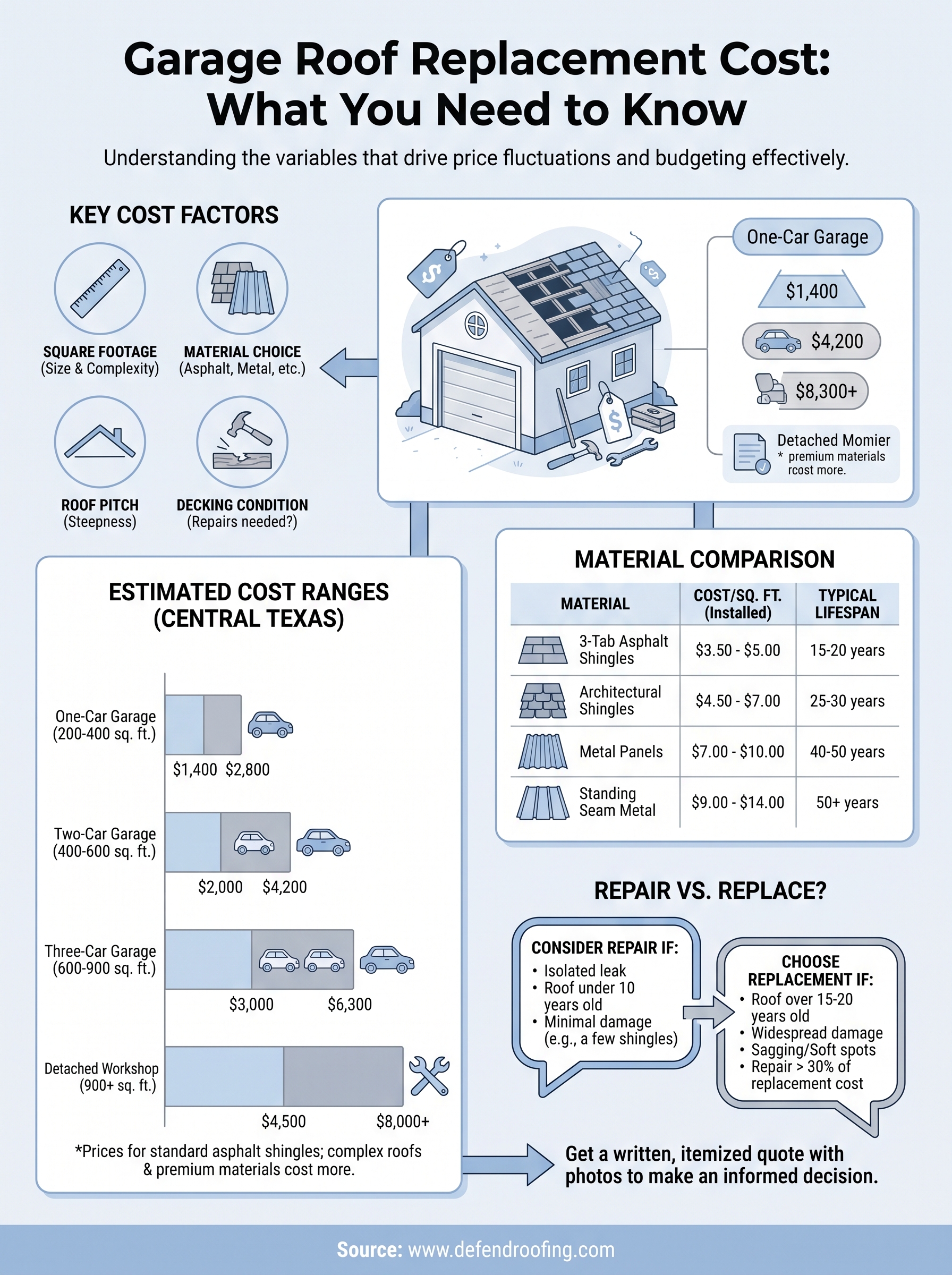
For most detached garages in Central Texas, homeowners pay between $4 and $9 per square foot installed, meaning a standard two-car garage roof typically runs $2,000 to $6,000 depending on material choice. Asphalt shingles sit at the low end, as our 2026 price guide for asphalt shingle roof replacement shows, while metal and architectural shingles push the garage roof replacement cost higher but last longer and hold up better against Austin's hail and heat.
In this article, we break down the cost of garage roof replacement by garage size, from one-car to three-car and detached workshop structures, and compare material options side by side so you can see exactly where your money goes. We also cover the hidden factors, like decking damage and steep pitches, that push quotes above the average, so you walk into any estimate knowing what a fair price actually looks like.
Size alone does not explain why one homeowner pays $2,200 and another pays $7,500 for what looks like the same job. Roof pitch, material grade, decking condition, and even the number of layers already on your roof all stack together to move the final number. A flat quote you saw online rarely accounts for any of this, which is why two garages of identical square footage can land in completely different price brackets once a contractor actually gets on the roof.
Square footage is the starting point, but it is not the whole story. A one-car garage roof might only run 200 to 400 square feet, while a three-car garage or detached workshop can top 900 square feet, and every additional square foot adds material and labor cost in a fairly linear way. Where size gets tricky is roofline complexity: a simple gable roof on a one-car garage costs less per square foot to install than a hip roof with multiple valleys on a larger structure, because valleys and edges need extra flashing and cutting.
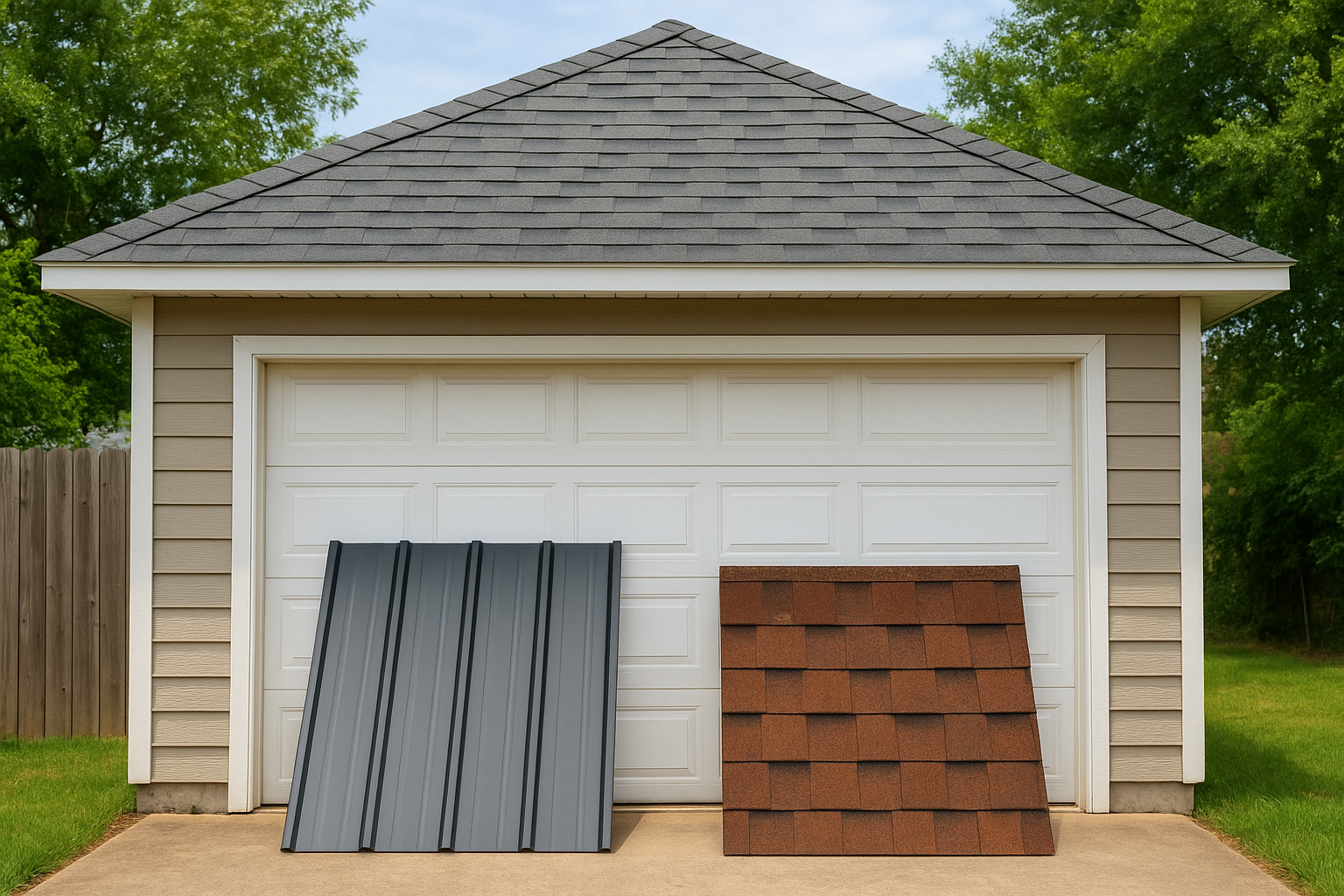
Material is usually the single biggest lever on your final price, and the metal roof versus asphalt shingle comparison on cost, lifespan, and insurance is where most homeowners start. Basic three-tab asphalt shingles remain the cheapest option, but architectural shingles, metal panels, and standing seam metal all cost more upfront while lasting significantly longer, especially against Central Texas hail, and a side-by-side look at residential roofing materials makes those tradeoffs easier to weigh.
| Material | Cost per sq. ft. installed | Typical lifespan |
|---|---|---|
| 3-tab asphalt shingles | $3.50 - $5.00 | 15-20 years |
| Architectural shingles | $4.50 - $7.00 | 25-30 years |
| Metal panels | $7.00 - $10.00 | 40-50 years |
| Standing seam metal | $9.00 - $14.00 | 50+ years |
The material you choose affects your total price more than any other single decision you make.
Getting to your garage roof matters just as much as what covers it. Steep pitches slow crews down and require additional safety equipment, which adds labor hours regardless of material. Garages tucked behind a house, next to a fence line, or with limited driveway clearance also make material staging harder, and that extra time shows up on your invoice even though it has nothing to do with the shingles themselves.
Hidden decking damage is the factor most homeowners never budget for until the crew tears off the old roof. Once the old shingles come off, plywood decking that has absorbed moisture from a slow leak often needs replacing before new material goes down, and that discovery can add $50 to $150 per sheet depending on how much of the deck is compromised. Skipping this step to save money is one of the fastest ways to end up with a roof that fails again within a few years, so any honest contractor will build a decking allowance into your quote or, at minimum, walk you through what happens if rot turns up mid-project.
Jurisdictions typically cap the number of shingle layers allowed on a structure, and if your garage already has two layers, a full tear-off becomes mandatory rather than optional, adding both labor and disposal cost. Local building codes in the Austin area, along with permit fees, also factor into your total, and a straightforward assessment like the Precision Roof Assessment Defend Roofing performs on every project documents these details with photos before work starts, so nothing gets discovered as a surprise mid-job.
Before you call a contractor, you can estimate what you'll pay for a replacement roof yourself with a tape measure and basic math. Multiply your garage's length by width to get square footage, then add 10 to 15 percent for roof overhang and pitch, since a sloped roof always covers more surface area than the footprint below it. Once you have that adjusted number, multiply it by the 2026 per-square-foot roofing prices explained for your chosen material from the table in the previous section, and you will land within a few hundred dollars of what most contractors quote.
Size-based ranges give you a faster gut check than doing the math yourself every time. Here is what typical garage roof replacement cost looks like across common Central Texas garage sizes with asphalt shingles installed:
| Garage type | Approx. square footage | Estimated cost range |
|---|---|---|
| One-car garage | 200-400 sq. ft. | $1,400 - $2,800 |
| Two-car garage | 400-600 sq. ft. | $2,000 - $4,200 |
| Three-car garage | 600-900 sq. ft. | $3,000 - $6,300 |
| Detached workshop | 900+ sq. ft. | $4,500 - $8,000+ |
A tape measure and a material price sheet get you a working estimate before anyone steps foot on your roof.
Missing pieces are where self-estimates go wrong. Underlayment, flashing around vents and edges, ridge caps, and drip edge all add cost beyond raw shingle square footage, typically another 10 to 20 percent on top of your base material estimate. Tear-off and disposal fees, which run $1 to $2 per square foot in most of the Austin area, also belong in your number, since almost no replacement job skips this step entirely.
Once your own math gives you a ballpark, use it to sanity-check any quote you receive rather than replacing the quote entirely. A contractor should break down materials, labor, tear-off, disposal, and any decking allowance separately rather than handing you a single lump sum, because a lump-sum number hides exactly where your money is going and makes it hard to compare bids apples to apples. If a quote comes in far below your own estimate, ask what is being left out, since corners cut on underlayment or flashing rarely show up until the next hard rain.
Not every damaged garage roof needs a full tear-off. Isolated leaks, a handful of cracked shingles, or minor flashing failures often get fixed for a few hundred dollars, and replacing the whole roof in those cases wastes money you could put toward something else. The real decision comes down to age, the extent of the damage, and whether the decking underneath is still sound, which is exactly how to decide between repairing and replacing a roof on your home.
Age works against you the moment a garage roof passes 15 to 20 years, even if it still looks fine from the driveway, because 3-tab and architectural shingle lifespans tell you the material has likely lost most of its flexibility and will crack under the next hailstorm. Widespread granule loss, multiple leak points, or decking that flexes underfoot all signal that a repair will only buy you another season before you're back to square one, spending money twice instead of once.
Repairing a roof that's already failing structurally doesn't save money, it just delays a bigger bill.
Compare that against the total cost of garage roof replacement, and replacement usually wins once repair costs would exceed 30 percent of a full replacement, a threshold most contractors use as a rule of thumb. Getting an honest answer here matters more than almost anything else in this process, since a contractor paid by the job has an incentive to recommend replacement even when repair would serve you just as well.
Defend Roofing's Precision Roof Assessment documents both options with photos before recommending either one, so you see the actual damage rather than taking someone's word for it. Ask any contractor for that same level of documentation before you commit to a five-figure decision based on a five-minute look from the ground.
Saving money on a garage roof does not mean cutting corners, it means being strategic about timing, material, and scope. A few smart decisions before work starts can shave hundreds off your final bill without touching the quality of the finished roof.
Scheduling matters more than most homeowners realize. Contractors in Central Texas book up fast after spring hailstorms, and rushed crews working overtime charge accordingly. Booking your garage roof replacement in the off-season, typically late fall or winter here, often gets you better pricing and more attention to detail because crews aren't stretched across a dozen storm-damage jobs at once.
The cheapest time to replace a roof is before everyone else needs one too.
Pairing your garage roof with other exterior work, like gutter replacement or a house roof already on your list, spreads the contractor's mobilization cost across a bigger job and usually lowers your per-square-foot rate. Getting three itemized quotes, not just three numbers, also protects you, since side-by-side comparison of materials and labor line items reveals padding that a single lump-sum bid hides.
Stretching your budget doesn't always mean picking the cheapest shingle. Architectural shingles cost more per square foot than basic three-tab, but their longer lifespan means a lower cost of garage roof replacement per year of service, which matters if you plan to stay in your home. Ask your contractor to show you the per-year math, not just the sticker price, before you default to the cheapest option on the sheet.
Qualified homeowners often assume premium materials are out of reach, but financing a roof replacement can turn a $9,000 metal roof into a manageable monthly payment instead of a lump sum you have to save for first. This matters especially in hail-prone areas, where a cheaper roof today can mean another full replacement in ten years instead of thirty.
Waiting on a known leak almost always costs more later. Addressing a small leak the season it appears, rather than letting it soak decking for years, keeps your replacement garage roof cost from ballooning with extra plywood sheets once the tear-off finally happens.
Hiring the wrong contractor costs more than a bad shingle choice ever could. Licensing and insurance are non-negotiable starting points, since an uninsured crew that gets hurt on your property can leave you liable for medical bills, and a contractor without proper credentials has no accountability if the work fails inspection. Ask for proof of both before anyone climbs a ladder, not after you've signed a contract, and keep the rest of the 10 essential questions worth asking a roofer handy while you do.
Quotes should read like a breakdown, not a guess. A trustworthy contractor separates materials, labor, tear-off, disposal, and any decking allowance into distinct line items, and backs the whole thing up with photo documentation of your existing roof's condition. Defend Roofing's Precision Roof Assessment includes 100+ photos for exactly this reason, so you see the damage yourself instead of trusting a verbal summary.
A quote you can't itemize is a quote you can't trust.
Certain sales tactics signal trouble before a single shingle gets installed, and these are the 7 tips for choosing a roofing contractor and avoiding red flags worth reviewing first. Watch for these warning signs during the estimate process:

Genuine roofing companies in Central Texas expect homeowners to compare bids, and they don't need scare tactics to close a sale.
Most garage roof replacements take one to two days from tear-off to final cleanup, weather permitting, which is short enough that you shouldn't need to vacate the property, though the full roof replacement timeline by material runs longer on a house. Warranty terms matter just as much as the install itself, since manufacturer warranties cover material defects while a workmanship warranty covers installation errors, and it pays to know what a workmanship warranty covers and how long it lasts because the two protect against completely different problems. Defend Roofing backs installations with a Limited Lifetime Workmanship Warranty, which means if flashing fails or a seam leaks because of how it was installed, the fix comes at no cost to you. Before the crew leaves, a thorough contractor walks the property for stray nails and debris, because a clean jobsite at the end of the day tells you as much about a company's standards as the roof itself.
Getting a real number for replacement garage roof cost always comes down to the same handful of variables: size, material, pitch, and whatever's hiding under your existing decking. Once you understand those factors, a $2,000 quote and an $8,000 quote stop looking random and start making sense based on what's actually being done to your garage.
Skip the guesswork by getting a quote built on documentation instead of a driveway estimate. A contractor who photographs the damage, itemizes every line, and explains the difference between a repair and a full replacement is protecting your money, not just quoting a job. That's the standard worth holding every bid to, whether you call Defend Roofing or someone else.
Ready to see where your garage roof actually stands? Call, text, or get an instant quote on your garage roof and get a straight answer before you spend a dollar.